Lenovo laptops are now shipping with YMTC SSDs, a sign of Chinese NAND entering the mainstream

Skye Jacobs

Posts: 2,010   +58
Staff
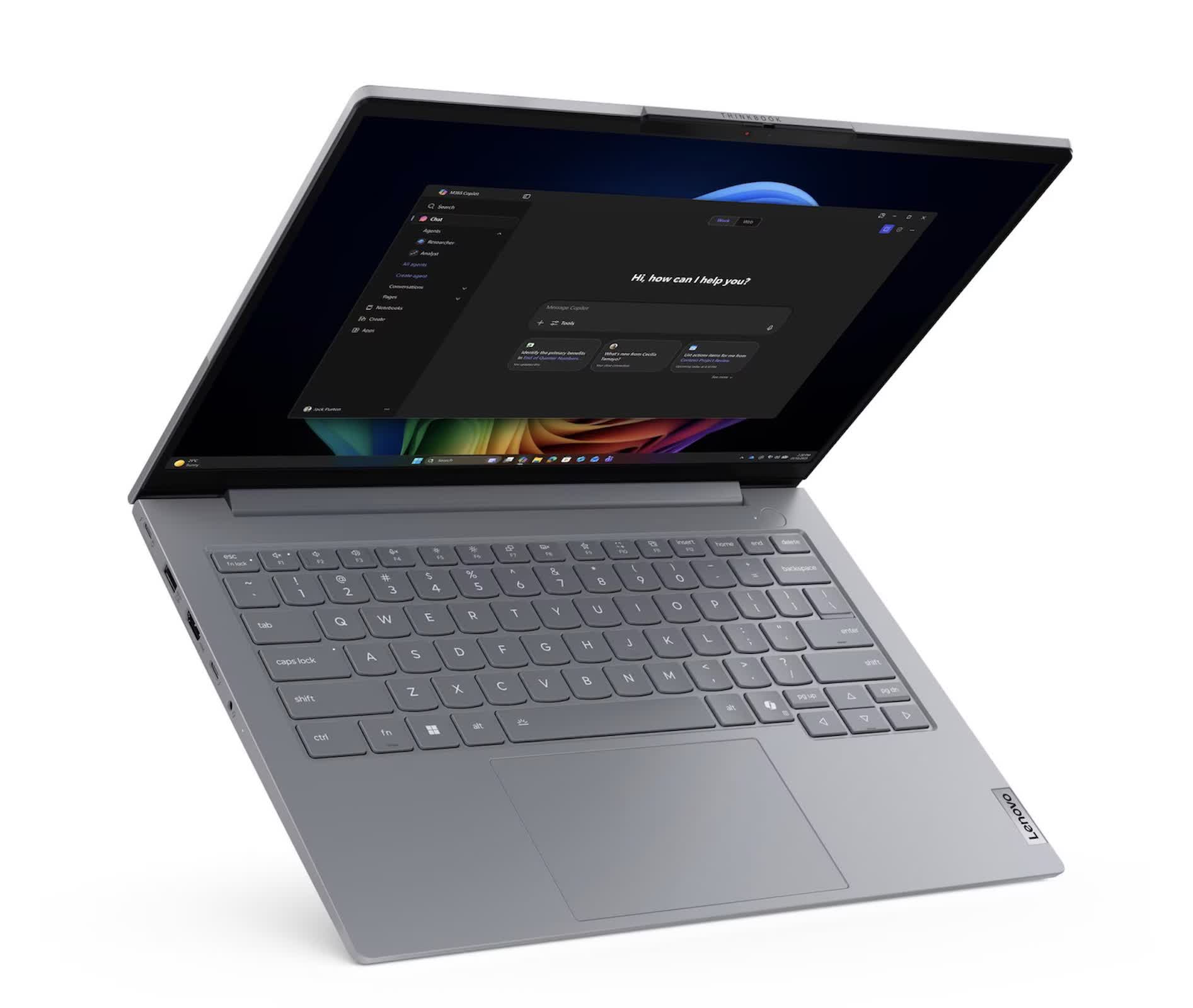
Why it matters: Chinese-made solid-state drives are starting to show up in everyday business laptops, and Lenovo is one of the first big PC makers to put one of them in a widely sold model. The company's ThinkBook 14 G9 IPL now ships in at least one configuration with an SSD from Yangtze Memory Technologies (YMTC), a major Chinese NAND flash supplier.

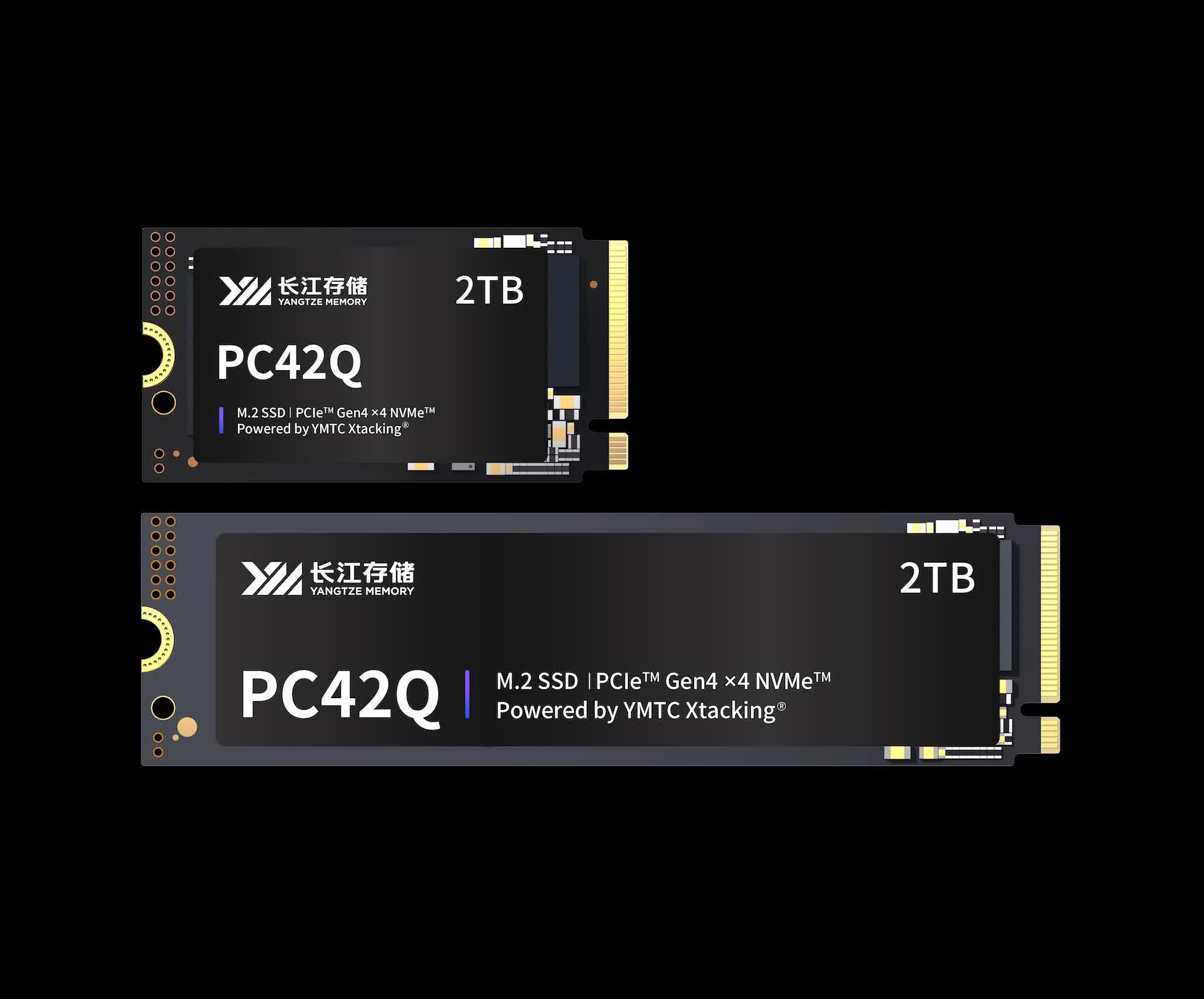
Notebookcheck says this is the first YMTC laptop SSD it has tested and reports that the ThinkBook uses a 512GB M.2 2242 PCIe 4.0 drive, according to its teardown and performance testing. The ThinkBook 14 G9 IPL is a 14-inch office notebook built around Intel Core Ultra 200-series processors. It targets office and productivity use rather than gaming, so its storage setup usually doesn't draw much attention.

What stands out here is the source of the NAND. YMTC is one of China's main NAND flash suppliers, and its SSD turning up in a Lenovo business notebook shows that Chinese-made storage is starting to appear alongside Samsung, Kioxia, and Western Digital drives in mainstream systems.

On paper, the YMTC drive looks like a modern PCIe 4.0 client SSD. In testing, though, Notebookcheck found that it runs slower than most SSDs it has measured in office laptops.

It reports sequential read speeds of up to 3,950 MB/s and write speeds of up to 2,514 MB/s. It also notes that the SSD throttles under load and that 4K performance is below average. Even so, the review says the drive is still fast enough for everyday office use.

The tested ThinkBook 14 G9 IPL unit uses a 512GB SSD in the smaller M.2 2242 form factor. A compact PCIe 4.0 boot drive fits the ThinkBook's office role and helps Lenovo balance performance, capacity, and cost amid tighter SSD supply.
The YMTC SSD arrives in Lenovo's office laptop as the broader memory and storage market deals with strong demand from AI data centers. Supply of NAND, DRAM, and HDDs has tightened, driving up component prices and making laptops more expensive.

Against that backdrop, Lenovo's use of a YMTC SSD appears to be part of a wider shift. As demand for AI reshapes the memory market, PC makers are looking beyond the traditional trio of flash suppliers to keep parts flowing and manage pricing.

The ThinkBook 14 G9 IPL is not a performance showcase for YMTC – the benchmarks are solid but unspectacular – but it is an early example of Chinese NAND turning up in a regular office notebook bought by ordinary users, not just in headlines about data centers and supply chains.

Permalink to story:


"Chinese made". They are all Chinese made for decades. Chinese brand maybe? YMTC flash is used for years in Team Group, Lexar, Acer.
I own Lexar nm790 for 3 years now. Solid drive, although cannot say much on performance as I run it in PCIE3.0 system - it maxes It out.
100%
The article makes it sound like YMTC is just now breaking onto the scene, but they've been the silent backbone of consumer SSDs from Kingston, Teamgroup, Lexar, and Silicon Power for years. I guess nobody bothers to look under the hood until the big headlines drop!
 
Honestly I’m hoping more Chinese DRAM and NAND manufacturers open to the world market and massively eat into the market share of Micron, SK and Samsung. Serves them right for abandoning the consumer market for a short term AI boom.
 
I recall from a comparison, theirs are a bit hotter than the Western brands.
I would wait for a few years to see how well they fair.
I am so used to having 100% reliable SSDs in the last decade that
I cannot afford to lose this luxury.
 
Honestly I’m hoping more Chinese DRAM and NAND manufacturers open to the world market and massively eat into the market share of Micron, SK and Samsung. Serves them right for abandoning the consumer market for a short term AI boom.
Maybe, but initially they will probably satisfy the big players, back end deals, prebuilt systems, big contracts, ai data centers. Once those are satisfied or saturated then one may hope for the consumer market get some level of correction to normalcy.
Things to consider; will China fuel it's own underdog status for ai dominance by satisfying the west's thirst for memory and storage? Or will they hold back the exotic high end parts to their own market 🤔?
 
Maybe, but initially they will probably satisfy the big players, back end deals, prebuilt systems, big contracts, ai data centers. Once those are satisfied or saturated then one may hope for the consumer market get some level of correction to normalcy.
Things to consider; will China fuel its own underdog status for ai dominance by satisfying the west's thirst for memory and storage? Or will they hold back the exotic high end parts to their own market 🤔?
DDR5 and NAND isn’t exactly exotic high end parts.
 
If they don't want China to take the market, they should stop providing opportunities for China to take the market because for some reason, they don't seem to have as much of a shortage over there.
 
I recall from a comparison, theirs are a bit hotter than the Western brands.
I would wait for a few years to see how well they fair.
I am so used to having 100% reliable SSDs in the last decade that
I cannot afford to lose this luxury.
How much hotter? Many new drives already need heatsinks to perform optimally. "A bit hotter" may not be meaningful. I'd like to see deep dive tests for a better understanding.
 
If they don't want China to take the market, they should stop providing opportunities for China to take the market because for some reason, they don't seem to have as much of a shortage over there.
LOL, exactly, but no one has shortage. If You have shortage, You see empty shelves in shops. Have You seen any empty shelves? They are running cartel, with AI excuse.
 
If they don't want China to take the market, they should stop providing opportunities for China to take the market because for some reason, they don't seem to have as much of a shortage over there.
There is not a shortage at all. Lets look at the whole picture.

I think people need to distinguish between a true shortage and what we're actually seeing in the memory market.

This doesn't look like the kind of shortage we saw with GPUs a few years ago, where shelves were empty and you simply couldn't buy the product. SSDs and DRAM are still widely available from just about every major retailer. The problem isn't availability...it's price.

What's happening seems more like supply is being allocated to the customers willing to pay the most. AI companies, hyperscalers, and enterprise customers are buying massive amounts of memory and are willing to sign long term contracts at premium prices. Manufacturers naturally prioritize those customers because that's where the margins are.

That doesn't mean consumers can't buy memory. It means consumers and PC OEMs are competing for production capacity that's increasingly being directed toward higher paying customers, so they're paying significantly more for the same components.

I think that's also why Lenovo using YMTC SSDs is interesting. It's probably not because Samsung, Micron, or SK hynix couldn't supply drives. It's more likely that Lenovo is looking at the economics and asking, "Can we source a reliable alternative at a lower cost and keep laptop prices competitive?" When you're building hundreds of thousands or even millions of laptops, saving just a few dollars per SSD adds up to a substantial amount of money.

That's why consumer prices can stay elevated even when you can still find plenty of SSDs on store shelves. The market isn't empty at all, it has simply settled at a new, higher price because demand from AI and enterprise customers is so strong. As long as those customers are willing to pay premium prices, there's very little incentive for memory manufacturers to lower prices for everyone else. They are making bank no matter what.

So I don't see this as evidence that the market has run out of NAND. I see it as evidence that the supply chain has shifted. The products are still available, but AI demand has changed who gets first priority, what manufacturers can charge, and ultimately how much everyone else ends up paying.
 
100%
The article makes it sound like YMTC is just now breaking onto the scene, but they've been the silent backbone of consumer SSDs from Kingston, Teamgroup, Lexar, and Silicon Power for years. I guess nobody bothers to look under the hood until the big headlines drop!
Backbone, huh? NONE of the top 5 NAND suppliers in the World are Chinese. These hold around 90% of the market.

In the top 10, there is ONE, YMTC. Hardly a "backbone".
 
Backbone, huh? NONE of the top 5 NAND suppliers in the World are Chinese. These hold around 90% of the market.

In the top 10, there is ONE, YMTC. Hardly a "backbone".
I never said China was the backbone of the NAND market today. Show me where I did...

My point is that seeing a company like Lenovo ship systems with YMTC SSDs is notable because it suggests Chinese NAND is starting to gain traction outside of China. That's a very different claim.

Samsung, SK hynix, Kioxia, Micron, and SanDisk/WD still dominate the market. No one's disputing that.

The interesting part is why Lenovo is sourcing from YMTC at all. If established suppliers have all the capacity OEMs need at the prices they want, there'd be little reason to qualify another supplier. Large OEMs don't change component suppliers on a whim...they do it because it makes economic or supply sense.

So the story isn't that China has taken over the NAND market. It's that a Chinese supplier is beginning to win business from a major global PC manufacturer. That's a development worth paying attention to, regardless of its current market share.
 
How much hotter? Many new drives already need heatsinks to perform optimally. "A bit hotter" may not be meaningful. I'd like to see deep dive tests for a better understanding.
They use less mature process because they joined the production a lot later than the monsters like Micron. There were very few differences with temperature being just a bit hotter.
But as I said, it would be a good idea to confirm that they can offer the same reliability as other SSD makers. And as they fill the market, we will have a good idea how reliable they are.
 
Back