What just happened? Linux has reached double-digit territory in North America's desktop usage share, according to StatCounter, but the size of the jump raises as many questions as it answers. The latest data shows Linux at 10.61% in June 2026, up from 3.56% in May, while Windows fell from 64.66% to 57.63% over the same period.

The shift stands out because the change was not gradual but abrupt. Linux's rise came largely at Windows' expense, while macOS saw only limited movement over the same period. That makes the month-to-month swing look less like a slow adoption trend and more like a sharp change in the mix of measured traffic.
StatCounter's figures are based on desktop web usage rather than a count of installed machines, so they reflect browsing activity rather than a direct census of operating systems. That matters because changes in who is browsing, how they browse, or what software is generating traffic can shift the results without reflecting a corresponding change in real-world desktop usage.
The latest reading is also part of a broader increase in Linux's share of StatCounter's North American desktop traffic. The June figure follows the sharp increase recorded in May, pushing Linux into a range that has long been out of reach in these monthly reports.
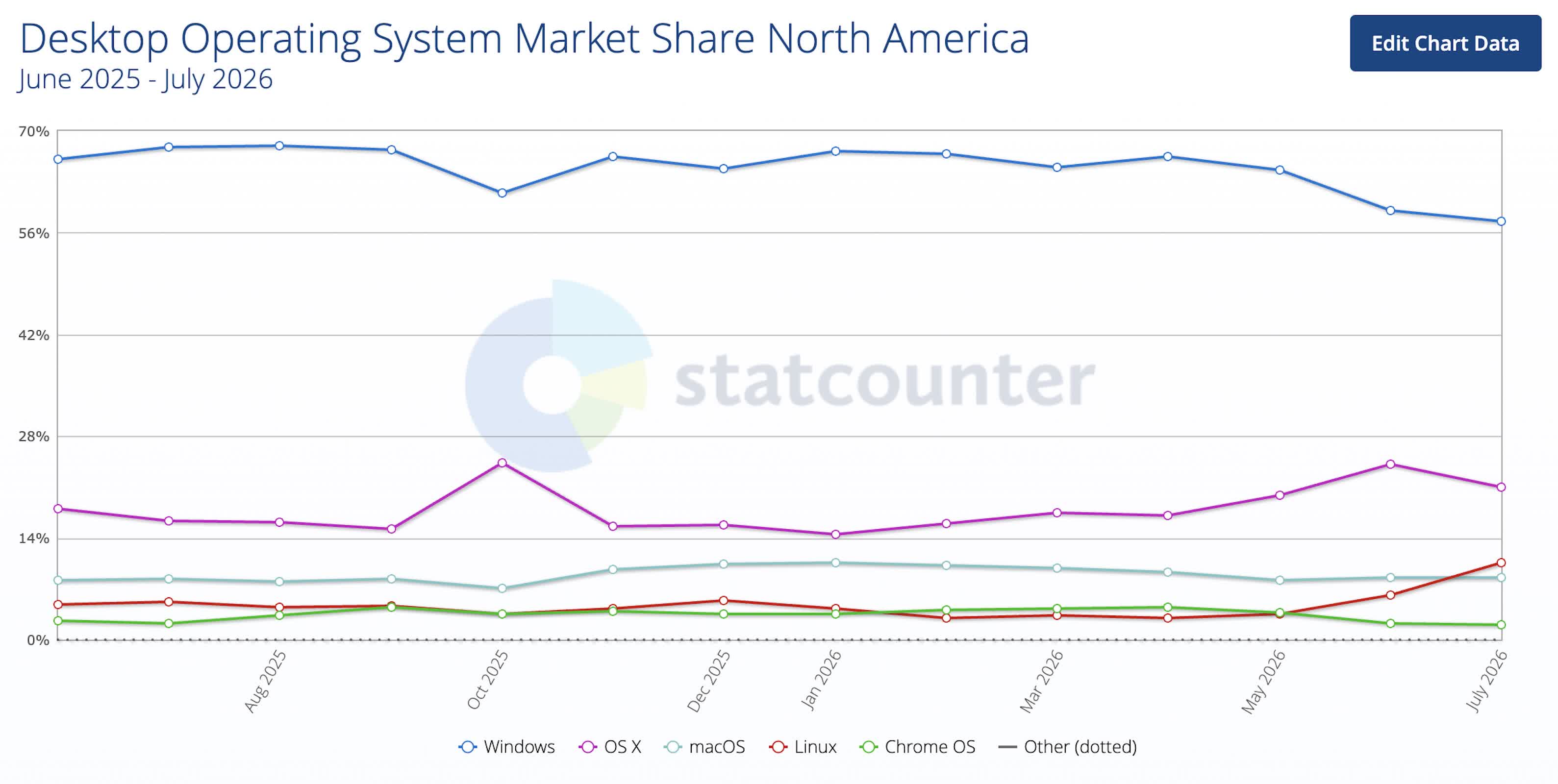
There is no definitive explanation for the spike, but the scale and speed of the increase suggest it may not be driven primarily by ordinary users migrating from Windows. Automated traffic is a very likely factor.
StatCounter itself has flagged the possibility that some of the new Linux activity could be bot-related, including traffic generated by AI agents and other automated workloads, which would make the jump appear much larger than a shift driven entirely by human users.
Data from Cloudflare Radar appears to support that explanation. Cloudflare reportedly recorded a similar rise in Linux traffic, but the spike largely disappeared when its data was filtered to include only traffic identified as human. The comparison is not a direct match for StatCounter's methodology, but it provides a strong indication that bots and automated systems are responsible for much of the sudden increase.
That possibility is especially relevant because Linux is widely used to run servers, bots, web crawlers, AI agents, and other automated systems capable of generating web traffic. The StatCounter reading still marks an unusual moment for a platform that has spent years well below mainstream desktop levels in North America, but it should not necessarily be interpreted as Linux suddenly running on one in ten consumer PCs.
For now, the numbers support a narrower conclusion: Linux has crossed 10% in StatCounter's North American desktop web-usage data, and the move appears to have come mostly at Windows' expense. Some genuine user growth may be part of the increase, but automated and AI-driven traffic appears to be a more plausible explanation for the sudden scale of the jump.
Linux just cracked 10% desktop usage in North America, but no one's sure why


