Windows Defender now works in Linux, because why not

Alfonso Maruccia

Posts: 2,784   +1,081
Staff
What the FOSS: Over the past few years, Microsoft has turned its "humble" Defender anti-malware tool into a comprehensive security solution for both Windows machines and cloud environments. Now, the Redmond corporation is expanding Defender support to Linux desktops and servers as well.

Microsoft believes Linux systems also need a corporate-oriented security solution such as Defender. Redmond's anti-malware solution, notorious for its arguably excessive false positives, is now offering expanded support for major Linux distributions. This allows organizations to use the same security platform to protect heterogeneous enterprise environments where Windows and Linux machines coexist.

Redmond introduced Microsoft Defender for Linux by highlighting the growing appeal of Linux systems to cybercriminals. Software developers who use Linux as their primary platform must contend with multiple components of the software stack, including remote code repositories, integration pipelines, and cloud infrastructure.

According to Microsoft, Defender can provide effective endpoint protection against threats targeting developers working on Linux. In particular, the anti-malware solution can "protect and detect" threats on Linux through its next-generation antivirus engine, while offering additional enterprise-focused capabilities such as vulnerability management, device inventory, and security settings management.
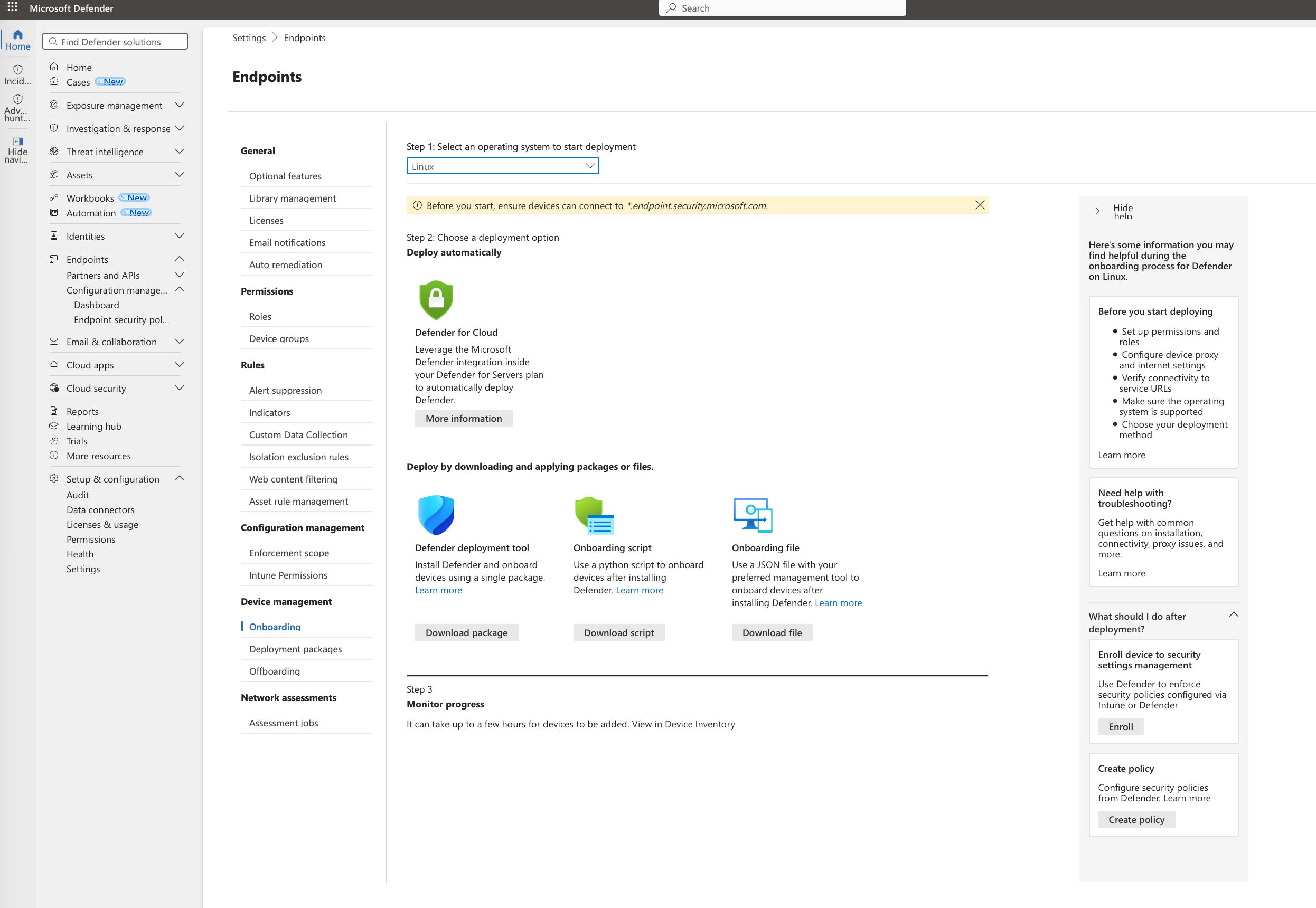
Defender for Linux is designed to respond to threats by providing additional threat-hunting capabilities, isolating infected devices, and more. These are the same tools that corporate security teams already rely on to protect Windows environments, Microsoft said. The idea is to let security teams manage Linux systems using familiar tools and workflows.

By offering dedicated Defender protection for Linux, Microsoft believes enterprise customers can better integrate Linux systems into their existing infrastructure. The endpoint security solution is designed to be easy to deploy on both desktops and servers, while reducing operational complexity and improving security in developer-heavy environments.

Microsoft Defender for Endpoint already supports a long list of major Linux distributions, including RHEL, Ubuntu, Debian, SUSE, Fedora, and Oracle Linux. Support extends to both desktop and server editions of these operating systems, allowing organizations to manage protection across their Linux environments.

The new security solution is available to customers with a Microsoft Defender for Endpoint Plan 2 subscription or a Microsoft 365 E5 or E7 subscription. Microsoft said Defender customers can manage threat response and analysis through a centralized portal, even when their Linux systems run in external cloud environments or remote data centers.

Permalink to story:

 
Defender for Linux has been available for at least half a decade. It's been crucial to our MDM and ISO 27001 certification. Still don't know what this news about "desktop Linux" support means. Console apps work just fine on the desktop lol.

Fun fact: once it prevented one of our self-entitled "Linux magician" devops "engineer" from performing rm -rf /etc. That was his idea of resetting the config.

Yes, IT is full of r*tards these days.
 
Do you really need antivirus protection in Linux?
Most likely not. Why? Because 90+ percent of the world runs on MS. LOL
Oh I know, there are those that run on Mac, but my point is that unless Linux
gains a TON of market share, especially in business environments, if you were
a hacker etc, why bother spending the time/resources to find a hole in Linux,
then write something to take advantage of the hole.
Oh I'm sure someone is currently trying to find a hole so they can "go down in history"
as the first to break it, but unless Linux really starts growing, and, the "ease" it has been
to screw with MS, why bother?
 
Do you really need antivirus protection in Linux?
Most likely not. Why? Because 90+ percent of the world runs on MS. LOL
Oh I know, there are those that run on Mac, but my point is that unless Linux
gains a TON of market share, especially in business environments, if you were
a hacker etc, why bother spending the time/resources to find a hole in Linux,
then write something to take advantage of the hole.
Oh I'm sure someone is currently trying to find a hole so they can "go down in history"
as the first to break it, but unless Linux really starts growing, and, the "ease" it has been
to screw with MS, why bother?

tell the world your a dullard without saying it.

PHONE == LINUX, 6.83 BILLION TARGETS
Routers == LINUX, 1.6 BILLION TARGETS
SMART TV'S == SUPPOSEDLY 2.4 BILLION TARGETS
TV BOXES == LINUX, AROUND 1.8 BILLION TARGETS WORLDWIDE
CARS == LINUX
SMART WATCHES == LINUX
DATA CENTERS == LINUX
GOOGLE AI == LINUX
AMAZON AI == LINUX
MICROSOFT AI == LOL ... LINUX
SQL RUNS ON LINUX NOW TO, LOL
WINDOWS RUNS LINUX AUTOMATICALLY IF IT IS A SUPPORTED KERNEL IN 'WSL'
PLAYSTATION == LINUX
NINTENDO == LINUX
PLC'S IN FACTORIES == LINUX
MODERN TRACTORS == LINUX
PLUTONIUM CENTRIFUGES == LINUX
THE KEYBOARD *YOU TYPED YOUR COMPLETE INEPT POST ON* RUNS LINUX ON A 8-BIT RISC CPU
YOUR KEYFOB RUNS LINUX
EVERY USB STICK ON EARTH RUNS RISC-LINUX ON THE CONTROLER
EVERY HARD DRIVE RUNS LINUX ON THE CONTROLLER, THATS HOW The Equation Group RE-INFECTED MACS AND PC'S AFTER A FULL WIPE


The only thing running windows, is the super tiny sub 1% population of the TOTAL computing world... windows is essentially a corpse especially since RUNNING GAMES IN A EMULATION LAYER NOW RUNS THEM FASTER THAN WIN10 AND WIN11..

I use windows for now, but everywhere else I use bazzite and cachey..


People who live in glass houses...etc... It might appear that YOU'RE the dullard. Specially if you use CACHY OS..........just saying. LOL
:: Synchronizing package databases...
error: failed retrieving file 'user-brain.db' from mirror.archlinux.org : 404 Not Found
error: target not found: intelligence (not available in core, extra, multilib, or AUR)

I think the Dullards are the ones who intentionally make things harder on themselves and possibly unstable to satisfy their own ego
 
This is for corporate clients who want to standardize on a single solution rather than separate ones for Windows and Linux, but whether it appeals to them is another matter.

Have an upvote.
Unfortunately the title and subtitle are bait.
They suggest the wrong angle and lead to the dumbest take.
 
Last edited:
Back