Massive leak details Intel's 900-series Nova Lake chipset

DragonSlayer101

Posts: 990   +14
Staff
The big picture: Intel is reportedly preparing five 900-series chipsets for its upcoming Nova Lake desktop processors. These new chips will succeed the 800-series platform, which supports Arrow Lake-S and Arrow Lake Refresh desktop CPUs. The motherboards will also debut the LGA 1954 socket, replacing the LGA 1851.
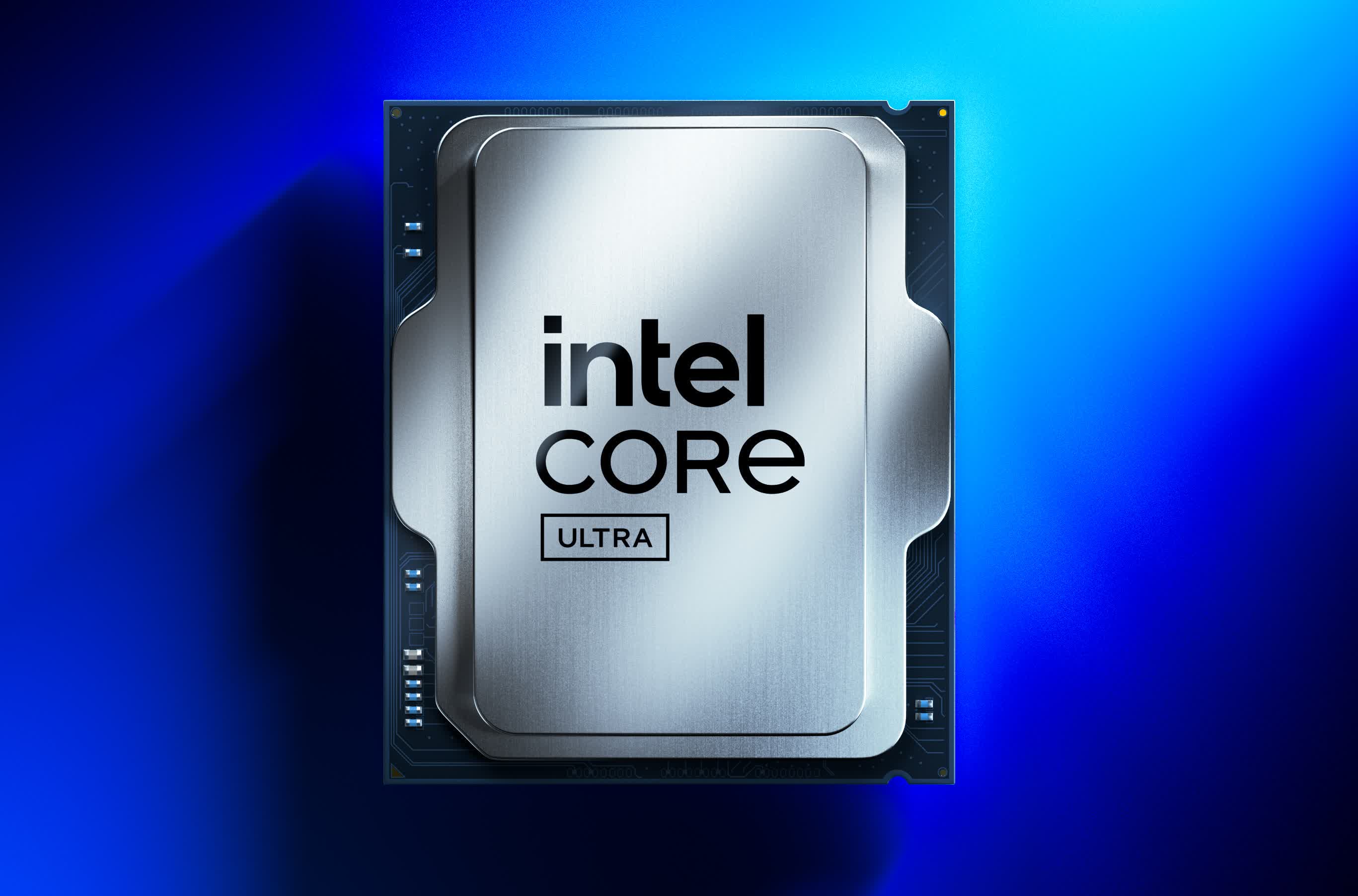
According to tipster Jaykihn, the 900-series platform will have five PCH variants: Z990, Z970, W980, Q970, and B960. All five are expected to appear on next-gen LGA 1954 motherboards, set to launch alongside Nova Lake-S later this year. The chipsets will reportedly differ in several areas, including the number of supported PCIe 5.0 lanes and overclocking capabilities.

The top-end Z990 and Z970 chipsets will both support CPU and memory overclocking. However, while the Z990 enables both core multiplier and base clock overclocking, the Z970 only allows multiplier OC. The Z990 will also offer 48 PCIe lanes, two USB 4/Thunderbolt 4 ports, 12 PCIe 5.0 lanes, 12 PCIe 4.0 lanes, eight SATA 3.0 ports, and up to five USB 3.2 20 Gbps ports.

The Z970 will sit just below the Z990, offering many of the same features as the flagship chip but without any PCIe Gen 5 lanes. Instead, it will provide 14 PCIe 4.0 lanes, four SATA ports, one USB 4/Thunderbolt 4 port, and up to two USB 3.2 20 Gbps ports. The W980, meanwhile, will match the Z990 in specifications but will lack any overclocking capabilities.

The Q970 is expected to offer similar I/O connectivity to the Z970, though it will not support overclocking. Rounding out the lineup is the entry-level B960, which also foregoes CPU overclocking. It will, however, still support memory OC, albeit with significantly reduced connectivity compared to the Z-series chips.

Intel CEO Lip-Bu Tan has confirmed plans to launch Nova Lake in the second half of 2026. These processors will be built on the company's 18A process node, use the new LGA 1954 socket, feature up to 52 CPU cores, and include Xe3 graphics.

Intel is also reportedly planning to follow a strategy similar to AMD's, supporting the LGA 1954 socket across at least four CPU generations. After Nova Lake, the roadmap includes several new server and HEDT processors on the 18A node, such as Diamond Rapids and Clearwater Forest in 2026, followed by Coral Rapids in 2028/2029.

Permalink to story:

 
In such times, no matter how good your chip is, I think the demand will be limited/ capped. Every part of a PC is progressively getting more expensive, with RAM and NAND leading the charge.
 
Nah, I think I trust AMD more than Intel to support multiple CPU generations.

Agreed. There will be some manufactured "Critical issue/reason," for this not happening.

If they support just two generations, even that would be somewhat surprising.
Intel share several aspects with MicroSlop. "Windows 10, the last operating system ever."

Neither can be trusted in the slightest. 1st prize does go to MS though. Intel isn't all bad. MSlop.. well..
Literally can't think of anything good, at least since Sataya.
 
Nah, I think I trust AMD more than Intel to support multiple CPU generations.
Exactly. The only way Intel can counter this is to publicly commit to at least three generations of CPU's to be supported on the new socket. But I very much doubt they'll do that.
With such ambiguity buyers cant trust support to continue past the Nova Lake refresh.
 
Seems that no one here (self included) has much trust in Intel.

As RaXellix mention, a public commitment. That would help, but still. Not sure if Intel know the meaning of commitment.

But, IF, they really did go 3 or 4 gens without need for a totally new Mobo I think they would sell more CPUs. Not sure if that would offset the kickback they get from mobo manuf. though who obviously like, new gen CPU = must buy new Mobo.
But the above collusion, Intel/Mobo manuf. is not something I would ever accuse them of, just a silly thought. HA.

Also as Raxellix said 3 gens. That would be a very good thing. But I'm spouting nonsense.
 
Supporting multiple generations of motherboards has never moved the needle for sales… AMD did it cause it was a way for them to “beat” Intel when they were getting clobbered and it was easier to manufacture similar chip designs …

Hardware partners WANT different sockets, so they can sell more product…
 
Supporting multiple generations of motherboards has never moved the needle for sales… AMD did it cause it was a way for them to “beat” Intel when they were getting clobbered and it was easier to manufacture similar chip designs …

Hardware partners WANT different sockets, so they can sell more product…
If that's not the case then why is AM4 selling so well despite being several generations behind?

Of course it matters and it's a big deal why AM4 was so successful even before they were behind in performance. It's not a literal upgrade thing. Most people dont make more than one upgrade within the same socket, but it's about the psychology.
People feel more confident buying a product they know will be supported longer than their competitors.

It's about having the choice and freedom to upgrade. It doesn't mean everyone who buys AMD board has to constantly upgrade their CPU to make the most out of it.

Intel needs to do the same long support to convince people to go with team blue again.
Having one competitive CPU generation is not enough. Just as it was not enough for AMD.

As for motherboard makers wanting sales - that is what the refresh boards are for. They did a small refresh for X870 boards last year. And ultimately motherboard makers sell more of a popular socket boards with long support rather than the unpopular alternative in low numbers every two years.
 
If that's not the case then why is AM4 selling so well despite being several generations behind?
Cause it's cheap... and still more than good enough for the majority of users
Of course it matters and it's a big deal why AM4 was so successful even before they were behind in performance. It's not a literal upgrade thing. Most people dont make more than one upgrade within the same socket, but it's about the psychology.
People feel more confident buying a product they know will be supported longer than their competitors.
90% of users couldn't care less... and 99% won't ever upgrade a CPU on their existing motherboard. When it gets slow, they buy a new PC. We preach it on sites like this because the users here are the VAST minority of tech-savvy individuals...
Intel needs to do the same long support to convince people to go with team blue again.
Having one competitive CPU generation is not enough. Just as it was not enough for AMD.
They won't... nor will they have to... if they build a CPU that can compete favourably to AMD and cost about the same, they'll regain their market share within a few years. Brand loyalty is a thing of the past - nowadays, people buy whatever is best for them.
As for motherboard makers wanting sales - that is what the refresh boards are for. They did a small refresh for X870 boards last year. And ultimately motherboard makers sell more of a popular socket boards with long support rather than the unpopular alternative in low numbers every two years.
Those don't drive as many sales...
 
Cause it's cheap... and still more than good enough for the majority of users
Intel is almost as cheap. AMD's 600 series AM5 boards were also almost as cheap.
I dont think price is the #1 factor here. It helps, but being cheap does not guarantee popularity. Just look at Z890 and Intel equivalents. Or even Radeon now or ATI back then.
90% of users couldn't care less... and 99% won't ever upgrade a CPU on their existing motherboard. When it gets slow, they buy a new PC. We preach it on sites like this because the users here are the VAST minority of tech-savvy individuals...
That's what I said: "Most people dont make more than one upgrade within the same socket"
That does not mean the option and freedom to do so shouldn't exist.
That would be like saying insurance is pointless because most people pay and only a minority actually need it.
They won't... nor will they have to... if they build a CPU that can compete favourably to AMD and cost about the same, they'll regain their market share within a few years. Brand loyalty is a thing of the past - nowadays, people buy whatever is best for them.
Yes they do. It is paramount that they do this. You're wrong thinking that one competitive CPU will reverse years of market share loss.

Look at Alder Lake. It was a genuinely good generation. Yet it did not reverse Intel's fortunes. Just for this very reason - people knew their next one could be bad and supported for a relatively short time.
Those don't drive as many sales...
Refresh boards may not, but popular socket does as evidenced by AIB's restarting AM4 production.
 
Intel is almost as cheap. AMD's 600 series AM5 boards were also almost as cheap.
I dont think price is the #1 factor here. It helps, but being cheap does not guarantee popularity. Just look at Z890 and Intel equivalents. Or even Radeon now or ATI back then.
Almost only counts in horseshoes…
That's what I said: "Most people dont make more than one upgrade within the same socket"
That does not mean the option and freedom to do so shouldn't exist.
That would be like saying insurance is pointless because most people pay and only a minority actually need it.
No - I said people make 0 upgrades on the same socket. The difference between 1 and 0 is crucial…
Yes they do. It is paramount that they do this. You're wrong thinking that one competitive CPU will reverse years of market share loss.

Look at Alder Lake. It was a genuinely good generation. Yet it did not reverse Intel's fortunes. Just for this very reason - people knew their next one could be bad and supported for a relatively short time.
Alder Lake wasn’t as good as the AMD counterpart…. If/When Intel offers a SUPERIOR offering to AMD, you’ll see market share move fast.
Refresh boards may not, but popular socket does as evidenced by AIB's restarting AM4 production.
Now you’re just spinning your wheels - refer back to “they are cheap”.
 
What I find ironic is that 9 years after AM4 launch there are still detractors arguing in the forums against platform longevity as irrelevant and totally not part of what made AM4 a success. I suspect after 9 more years there will still be some. Such is the Intel brainrot and preconditioning. I have nothing more to say on this topic.
 
What I find ironic is that 9 years after AM4 launch there are still detractors arguing in the forums against platform longevity as irrelevant and totally not part of what made AM4 a success. I suspect after 9 more years there will still be some. Such is the Intel brainrot and preconditioning. I have nothing more to say on this topic.
9 years after AM4 launch and Intel hasn’t launched a product that can compete… but it’s about performance and cost… no need to insult people…
 
Back