Mercedes is working on "solar paint" that could drastically reduce the need for charging

zohaibahd

Posts: 976   +19
Staff
In a nutshell: Mercedes-Benz is developing an innovative "solar paint" capable of generating electricity when applied to a car's entire body. The technology could potentially provide enough energy to power thousands of miles of driving annually, significantly increasing the range of electric vehicles while reducing the need for frequent charging stops during road trips.
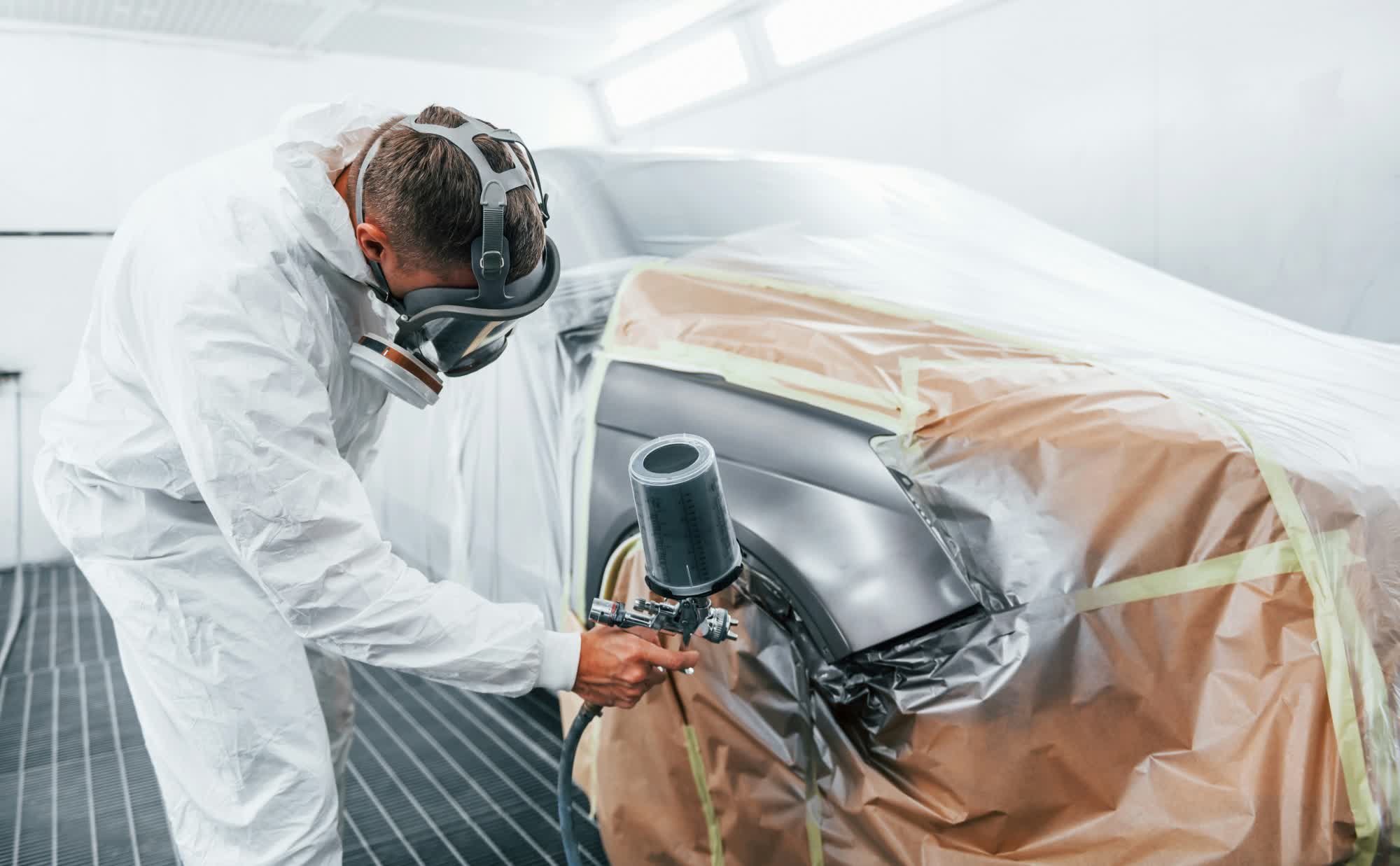
The company states that this groundbreaking solar paint is just five micrometers thick and weighs a mere 50 grams per square meter – practically weightless. Despite its lightness, it is packed with energy-generating potential. Notably, the paint contains no rare earth materials, no silicon, and is made from inexpensive, non-toxic ingredients that are easy to recycle.

What truly sets this technology apart is its efficiency. Mercedes claims that with an 11-square-meter surface area – roughly the size of a mid-sized SUV – the paint could produce enough energy to power up to 12,000 kilometers (7,456 miles) of driving annually under ideal conditions.

The energy harvested could either directly power the car's electric motors or recharge its high-voltage battery pack. Remarkably, the system would remain active even when the vehicle is parked, continuously generating electricity.
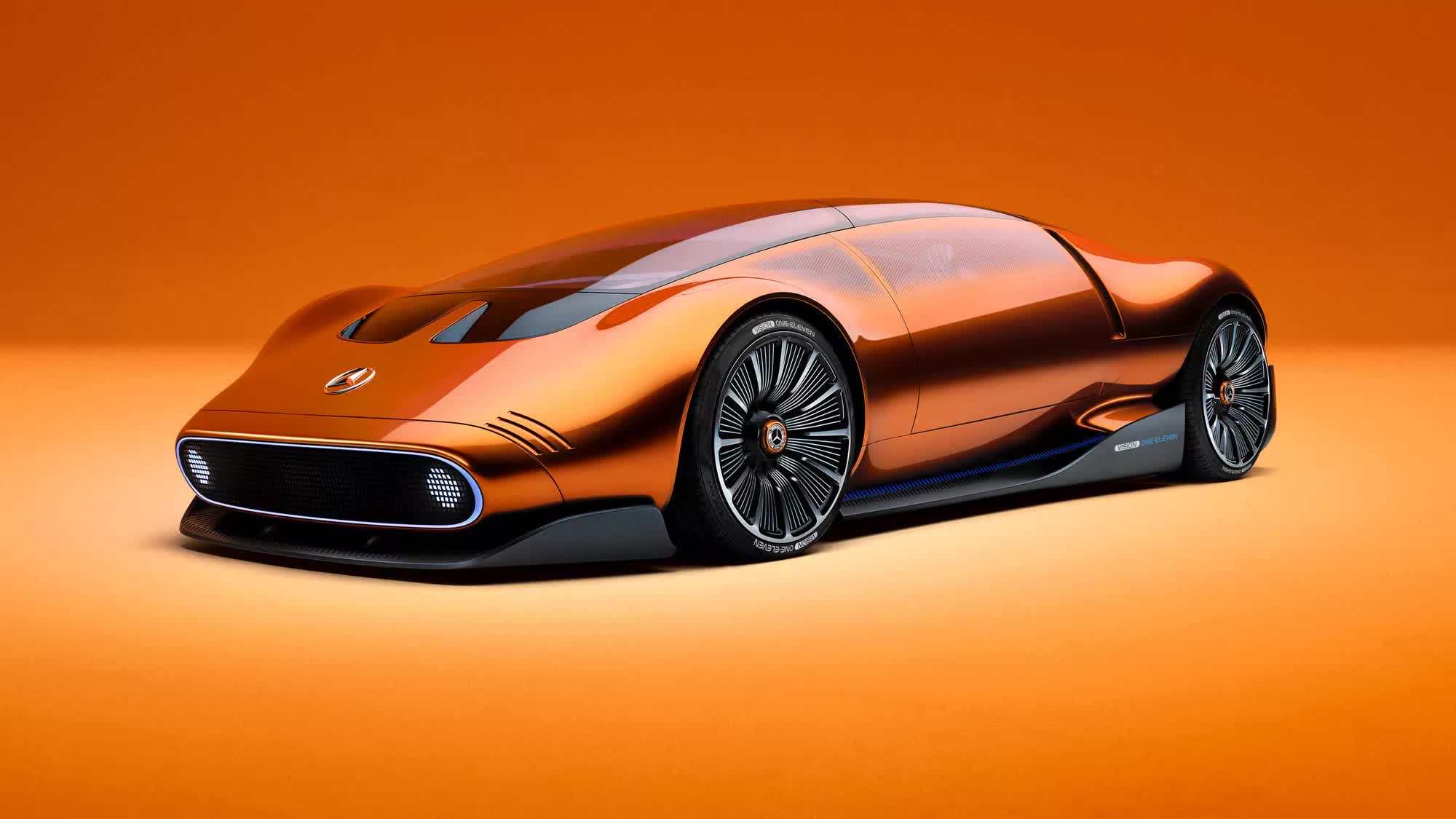
Of course, real-world performance would depend on variables such as shade, sun intensity, and geographic location. However, Mercedes has provided some theoretical examples to illustrate the paint's potential. In Stuttgart, Germany, the company's hometown, it estimates that the solar paint could supply enough energy to cover approximately 62 percent of the average daily driving distance of 52 kilometers, using solar power alone.

In sunnier regions, like Los Angeles, the solar paint could potentially generate enough electricity to meet 100 percent of the average driver's needs. Any surplus energy could be fed back into the home grid via bidirectional charging, offering additional utility beyond powering the vehicle.

For now, the exact composition of the paint remains a closely guarded secret. However, all indications suggest it may be a sprayable perovskite solution. Perovskites have demonstrated impressive solar efficiencies in laboratory settings and align with Mercedes' description of a cost-effective, non-toxic photovoltaic material free from rare metals and silicon.

The primary challenge with perovskites lies in enhancing their durability against water and UV exposure – issues that Mercedes' researchers are likely focused on addressing.

As promising as this technology sounds, it is still in the research phase, and Mercedes has not announced a firm timeline for making the paint production-ready. All estimates and figures should therefore be viewed with cautious optimism. However, if the company can overcome these challenges, the future might feature EVs whose very exteriors contribute to their journeys' power supply.

Permalink to story:

 
One of issues with solar on cars is what do you do with the surplus power so your car doesn't blow up. In the article they mention transferring it to your home grid. That is great if your house is already configured with the necessary invertor and legal stuff needed with the utility. But what about when you are not at home? One common option is to run the AC with the surplus but would that be enough?

Ever since I have heard about EVs, I have wondered how can we get solar to integrate with them. Especially now since you are limited range wise by changing stations and your battery.
 
Sounds great actually if it makes it into the market.

One of issues with solar on cars is what do you do with the surplus power so your car doesn't blow up. One common option is to run the AC with the surplus but would that be enough?

If it really was going to blow up, I guess you can run AC, engine in neutral, lights, audio/infotain system, and text the owner at the same time? lol
 
One of issues with solar on cars is what do you do with the surplus power so your car doesn't blow up. In the article they mention transferring it to your home grid. That is great if your house is already configured with the necessary invertor and legal stuff needed with the utility. But what about when you are not at home? One common option is to run the AC with the surplus but would that be enough?
What you are talking about is no different than controlling the charge from plugging in an EV at any charging station. The problem was solved a long, long time ago in a galaxy far, far away. EVs would have never gotten as far as they have without a solution to that problem. Its Battery Charging 101. Your, or any, cell-phone would also "blow up" if the problem had not been solved.
Ever since I have heard about EVs, I have wondered how can we get solar to integrate with them. Especially now since you are limited range wise by changing stations and your battery.
The problem is not Solar integrating with them. Its the efficiency of solar cells - as the article alludes. For instance, I bought a 2024 Prius Prime XSE. It has a "solar roof" option, however, it would take something like 6-days to charge even the 2024 Prius Prime's 14.6 kWh battery - which makes the solar roof option less than economical, IMO, for anyone.
 
Last edited:
One of issues with solar on cars is what do you do with the surplus power so your car doesn't blow up. In the article they mention transferring it to your home grid. That is great if your house is already configured with the necessary invertor and legal stuff needed with the utility. But what about when you are not at home? One common option is to run the AC with the surplus but would that be enough?

Ever since I have heard about EVs, I have wondered how can we get solar to integrate with them. Especially now since you are limited range wise by changing stations and your battery.
you leave the circuit open and the solar panels don't generate a charge. They can build up a tiny charge when not connected, but it's not like you're going to set a building on fire by leaving an disconnected solar panel in the sunlight. When the solar panel isn't connected, any collected "energy" is just radiated away as infrared heat. Considering that most solar panels are less than 20% efficient they already radiate about 80% of the energy they collect away.
 
Time to paint houses with this. Aptera, eat your heart out!

One of issues with solar on cars is what do you do with the surplus power so your car doesn't blow up.

Most basic solar charge controllers have this capability built right in. They do it by measuring the battery voltage level, and opening/closing the solar circuit at a specific voltage (fully charged batteries have a higher voltage than zero charge). A shunt can also do this by measuring the battery's stage of charge directly.
 
What you are talking about is no different than controlling the charge from plugging in an EV at any charging station. The problem was solved a long, long time ago in a galaxy far, far away. EVs would have never gotten as far as they have without a solution to that problem. Its Battery Charging 101. Your, or any, cell-phone would also "blow up" if the problem had not been solved.

The problem is not Solar integrating with them. Its the efficiency of solar cells - as the article alludes. For instance, I bought a 2024 Prius Prime XSE. It has a "solar roof" option, however, it would take something like 6-days to charge even the 2024 Prius Prime's 14.6 kWh battery - which makes the solar roof option less than economical, IMO, for anyone.
Correct, however I was not focusing on that issue.
 
A large solar panel array on a van or boat, and all pointing at the sun, can sometimes generate 1kWh. My guess here is you'd get less than half that because most of the panels are glass and half most of the rest won't be pointing at the sun. So 0.5kW if you're in a really sunny environment. Compared that to DC chargers that generate anywhere between 100kW to 350kW, I'd say the author should change the title so the word "negligibly" is swapped with the word "drastically".
 
A large solar panel array on a van or boat, and all pointing at the sun, can sometimes generate 1kWh. My guess here is you'd get less than half that because most of the panels are glass and half most of the rest won't be pointing at the sun. So 0.5kW if you're in a really sunny environment. Compared that to DC chargers that generate anywhere between 100kW to 350kW, I'd say the author should change the title so the word "negligibly" is swapped with the word "drastically".
But, the author of the article is not making the claims. It is Mercedes.
 
But, the author of the article is not making the claims. It is Mercedes.
If authors are just going to reproduce advertising copy then there's not much point having authors but I don't see anywhere where Mercedes claims this technology could drastically reduce charging times. It's fairly easy to do the maths and see that this can't be true unless Mercedes has discovered some star trek technology that the rest of the world has missed.
 
One of issues with solar on cars is what do you do with the surplus power so your car doesn't blow up. In the article they mention transferring it to your home grid. That is great if your house is already configured with the necessary invertor and legal stuff needed with the utility. But what about when you are not at home? One common option is to run the AC with the surplus but would that be enough?

Ever since I have heard about EVs, I have wondered how can we get solar to integrate with them. Especially now since you are limited range wise by changing stations and your battery.
Or, they add a chip that disables charging when at 100%, like a cell phone or laptop.
 
Oh great idea right up until the point the car is damaged and needs repainting. Good luck getting that repaired without a total respray at ungodly amounts of money.
 
A solar paint that charges your car during use and when the car is idle could mean less charging breaks when going for a road trip. Importantly, it’s lightweight, does not harm the environment, and does not use exotic materials. What you’re telling me is that the future of electric vehicles could be much, much more efficient, particularly in sunny climes. Of course, we have yet to observe how such an approach is to work in real-life conditions, but if they manage to achieve all of the mentioned above, it can come as a revolution in the sphere of the application of EVs!
<h5><strong>In a nutshell:</strong> Mercedes-Benz is developing an innovative "solar paint" capable of generating electricity when applied to a car's entire body. The technology could potentially provide enough energy to power thousands of miles of driving annually, significantly increasing the range of electric vehicles while reducing the need for frequent charging stops during road trips. </h5><p><img height="1237" src="https://www.techspot.com/images2/news/bigimage/2024/12/2024-12-09-image-11.jpg" width="2000" srcset="https://www.techspot.com/images2/news/bigimage/2024/12/2024-12-09-image-11-j_500.webp 500w, https://www.techspot.com/images2/news/bigimage/2024/12/2024-12-09-image-11-j_1100.webp 1100w, https://www.techspot.com/images2/news/bigimage/2024/12/2024-12-09-image-11-j.webp 2000w" sizes="(min-width: 901px) 600px, (min-width: 651px) 78vw, 100vw"></p> <p>The company states that this groundbreaking solar paint is just five micrometers thick and weighs a mere 50 grams per square meter – practically weightless. Despite its lightness, it is packed with energy-generating potential. Notably, the paint contains no rare earth materials, no silicon, and is made from inexpensive, non-toxic ingredients that are easy to recycle.</p> <p>What truly sets this technology apart is its efficiency. Mercedes claims that with an 11-square-meter surface area – roughly the size of a mid-sized SUV – the paint could produce enough energy to power up to <a href="https://media.mercedes-benz.com/article/e19821db-94b3-4f6f-9226-533f36aff630">12,000 kilometers</a> (7,456 miles) of driving annually under ideal conditions.</p> <p>The energy harvested could either directly power the car's electric motors or recharge its high-voltage battery pack. Remarkably, the system would remain active even when the vehicle is parked, continuously generating electricity.</p> <p><img height="1125" src="https://www.techspot.com/images2/news/bigimage/2024/12/2024-12-09-image-9.jpg" width="2000" srcset="https://www.techspot.com/images2/news/bigimage/2024/12/2024-12-09-image-9-j_500.webp 500w, https://www.techspot.com/images2/news/bigimage/2024/12/2024-12-09-image-9-j_1100.webp 1100w, https://www.techspot.com/images2/news/bigimage/2024/12/2024-12-09-image-9-j.webp 2000w" sizes="(min-width: 901px) 600px, (min-width: 651px) 78vw, 100vw"></p> <p>Of course, real-world performance would depend on variables such as shade, sun intensity, and geographic location. However, Mercedes has provided some theoretical examples to illustrate the paint's potential. In Stuttgart, Germany, the company's hometown, it estimates that the solar paint could supply enough energy to cover approximately 62 percent of the average daily driving distance of 52 kilometers, using solar power alone.</p> <p>In sunnier regions, like Los Angeles, the solar paint could potentially generate enough electricity to meet 100 percent of the average driver's needs. Any surplus energy could be fed back into the home grid via bidirectional charging, offering additional utility beyond powering the vehicle.</p> <p>For now, the exact composition of the paint remains a closely guarded secret. However, all indications suggest it may be a sprayable perovskite solution. Perovskites have <a href="https://www.techspot.com/news/99337-silicon-perovskite-solar-cells-verge-revolutionizing-power-generation.html">demonstrated</a> impressive solar efficiencies in laboratory settings and align with Mercedes' description of a cost-effective, non-toxic photovoltaic material free from rare metals and silicon.</p> <p>The primary challenge with perovskites lies in enhancing their durability against water and UV exposure – issues that Mercedes' researchers are likely focused on addressing.</p> <p>As promising as this technology sounds, it is still in the research phase, and Mercedes has not announced a firm timeline for making the paint production-ready. All estimates and figures should therefore be viewed with cautious optimism. However, if the company can overcome these challenges, the future might feature EVs whose very exteriors contribute to their journeys' power supply.</p><p><a class='permalinknews' rel='canonical' href='https://www.techspot.com/news/105884-mercedes-working-solar-paint-could-eliminate-need-charging.html'>Permalink to story:</a></p><p class='permalink'><a rel='canonical' href='https://www.techspot.com/news/105884-mercedes-working-solar-paint-could-eliminate-need-charging.html'>Mercedes is working on "solar paint" that could drastically reduce the need for charging</a></p>
 
If authors are just going to reproduce advertising copy then there's not much point having authors but I don't see anywhere where Mercedes claims this technology could drastically reduce charging times. It's fairly easy to do the maths and see that this can't be true unless Mercedes has discovered some star trek technology that the rest of the world has missed.
Its far from advertising copy. Here's the original source - https://www.pv-magazine.com/2024/12/02/mercedes-benz-testing-new-solar-paint/
The "star trek" like technology, as you are calling it, is nothing new. The panels themselves are only 20% efficient - not ground breaking or "Star Trek" like at all.

What is "novel" about this is the use of nano particles. When you reduced the size of a particle to that range, though it seems counter-intuitive, the surface area of the particle goes up, way up so that the vehicle with 11m^2 of body surface area, once coated with this material, is able to fully utilize all that surface area upon which solar energy falls, to generate much more energy than standard solar panels. Unfortunately, it appears that no measure of practical surface area available for collecting solar energy is given by Mercedes.

The same concept, using nano particles, has been applied elsewhere under laboratory conditions, to increase LiON battery capacity to 10X its current levels - another potential game changer for the battery industry. https://phys.org/news/2019-01-tiny-silicon-particles-power-lithium.html

The application of nano particles to energy storage technology also possibly extends to supercapacitors giving the same kind of increase in energy density - in theory - and if that ever plays out, think the end of batteries is in the wind.

And at least Mercedes admits that this is a concept that they are researching - it may never come to fruition.

IMO, its well worth the mention here at TS and well worth the research efforts Mercedes and others are putting into the concept.

But hey, if you want to poo-poo it, it's your right of free speech.
 
You have electronics that switch through a load resistor once the charging has been done.
Yeah, if that "load resistor" can dissipate the heat. The better method is, IMO, as others have already mentioned, to open-circuit the charging loop. There is no need to dissipate the "excess" energy from solar panels.
 
But hey, if you want to poo-poo it, it's your right of free speech.
I'm not poo pooing the concept. I like electric vehicles and, if I lived in a desert and didn't drive very much, then I might consider charging one via solar. All I'm pointing out is that the basic maths doesn't work out if you only have the surface area of the car to power the vehicle. If Mercedes were honestly proposing this as a solution, as opposed to a PR exercise, then they'd state how many KWh their paint generates. Unfortunately they don't. The author doesn't question this and they should. To be fair none of the articles on Mercedes solar paint question it's power output either.
 
My basic maths says this: 11 sqm of paint. At peak solar input, 90 degrees to the solar cell, we get near enough to 1 kW/sqm, so 11 sqm = 11kW. The best single-junction cells manage 26%, I doubt painted on is going to do that, but let's say 25% for easy calcs, giving 2.75 kW. Here in Australia, a hot country, on average in NSW we get 4 full hours worth of solar generation per day on average - less on rainy days and in winter, more in summer. Call it 11kW/h. At say 5kW/h per km, it sounds plausible.

But. That's for solar cells (paint) horizontal, angled right, with the sun hitting it all over. And, assuming that 25% efficiency. And, assuming it's clean. Car bodies aren't flat surfaces, we have a roof, bonnet, back, and then sides which are normally vertical not oriented to the sun. I doubt very much you'll get anything like 11 sqm efficiently facing the sun.

And, leaving it out in the sun, to get baking hot, including the batteries, something they generally don't like. My tesla turns on cooling if I do that. A nice car, I want it under cover when I'm not using it.

They say "12,000 km worth under ideal conditions". Ideal conditions for solar generation, maybe. Not ideal for how normal people use and look after their cars. Worth it if it's cheap, easy to repair, not much affected by scratches and dirt, but all in all probably better to paint your house with that, and charge it up in the garage. If it's cost-effective on a car, it should be cost-effective anywhere.
 
Back