Solar generation beats coal in the US for the first time ever

Skye Jacobs

Posts: 1,991   +58
Staff
What just happened? Solar power crossed an important threshold in May, as a rapidly expanding fleet of photovoltaic projects supplied more US electricity than coal for the first time on record. New data from global energy think tank Ember shows that US solar generation climbed to 45.5 terawatt-hours in May 2026, the highest monthly total ever recorded and a 17% increase from May of last year. That output gave solar 12.8% of all US electricity for the month, just enough to edge ahead of coal at 12.2%. For a technology that only recently accounted for a small share of the mix, it has now become a central part of the system.
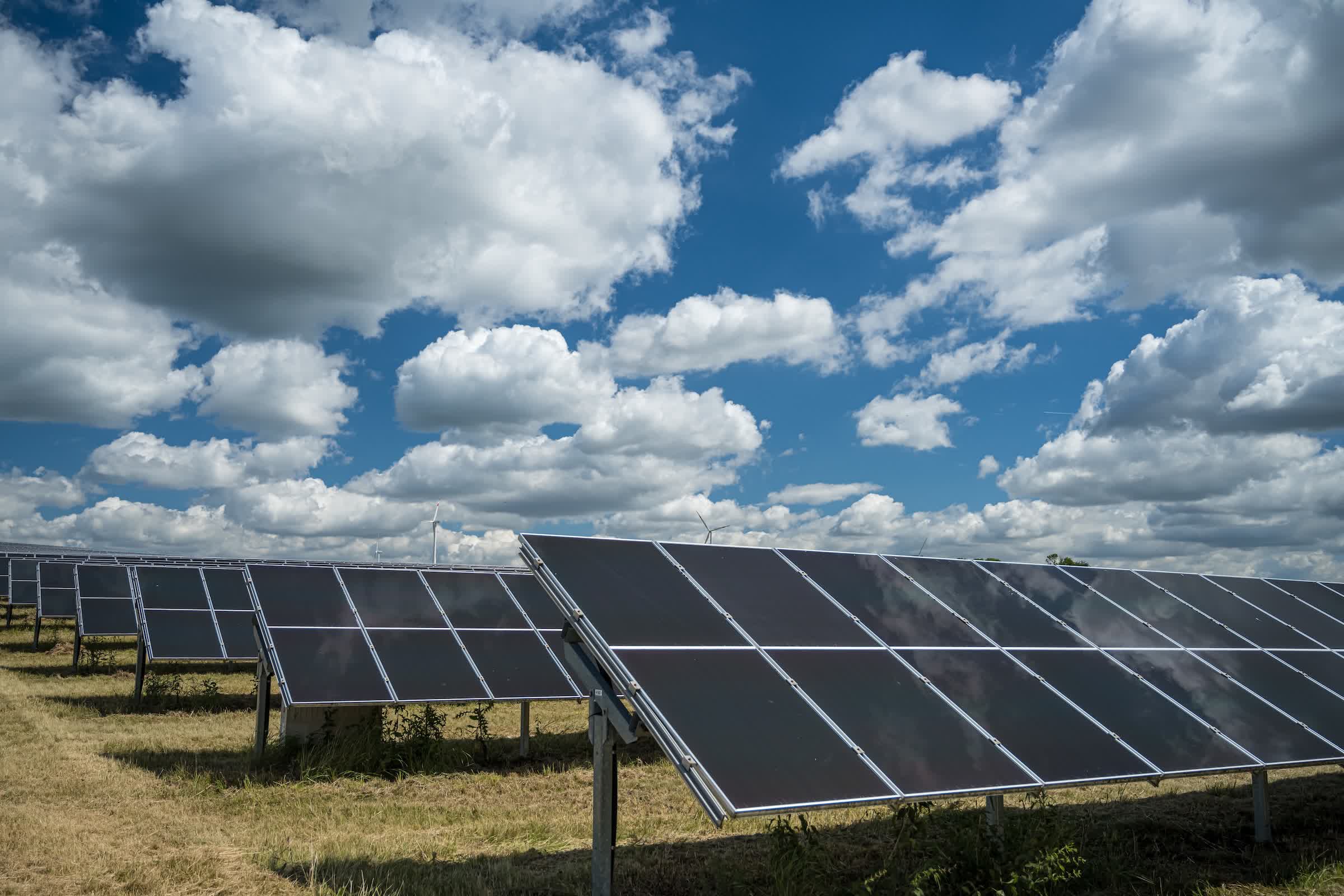
Five years make the shift look even sharper. In May 2021, coal supplied 19.7% of US electricity, while solar accounted for just 5.4%. Today, solar's share of the mix has risen to the point where coal is no longer ahead of it on the grid.

May also marked the first time solar ranked as the third-largest individual source of electricity in the country, behind only natural gas and nuclear. When grouped with other renewables, the category becomes the second-largest source overall. For utilities and grid planners, that is more than a change in rankings; it signals that solar must now be treated as a central part of the US power mix.

The seasonal pattern behind the May record aligns with broader trends in solar output. Solar generation often peaks in June or July, when sunlight is strongest, but its share of the generation mix tends to peak in spring. Longer, sunnier days and milder temperatures keep cooling loads lower, allowing solar to account for a larger share of total demand. This dynamic requires grid operators to manage a resource that ramps up quickly in the middle of the day and falls off in the evening.
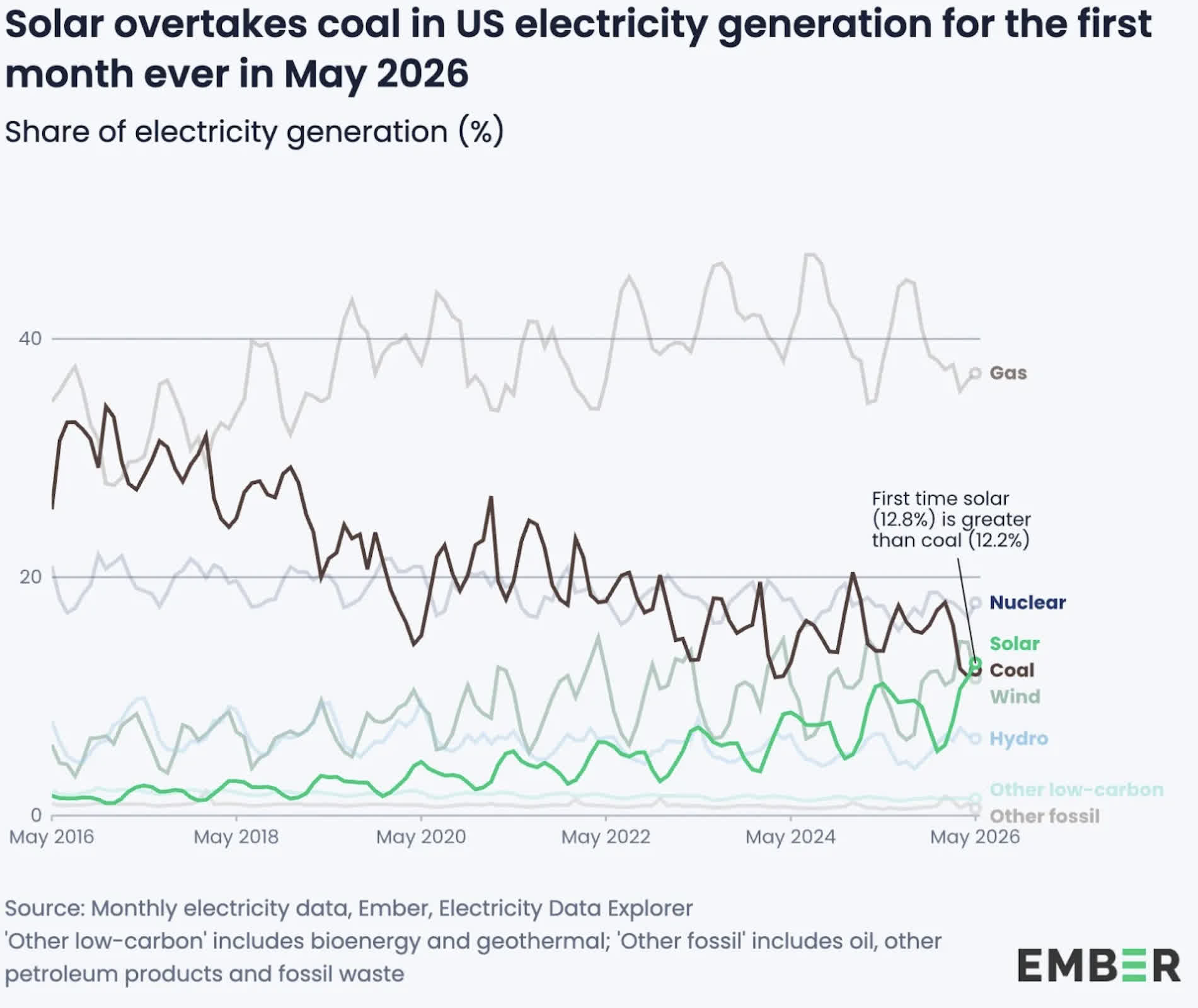
Coal is moving in the opposite direction. Coal-fired generation fell to an all-time monthly low of 39.3 terawatt-hours in April 2026, then rose slightly to 43.4 terawatt-hours in May. Even with that increase, coal output was still 11% below May 2025 levels and lagged far behind solar's expansion.

The May crossover is not the only recent milestone. In March, renewables as a group generated more electricity than gas in the US for the first time. Taken together, these milestones show how quickly clean energy is reshaping the US grid, even as the Trump administration continues to target clean energy projects and policies.

For Ember, the latest numbers are part of a longer arc, not a one-month blip. "US solar power continues to set new records," said Nicolas Fulghum, senior data analyst at Ember. "Overtaking coal for the first month on record shows just how far solar has come, from a niche contributor to the third-largest and fastest-growing source of power in the US electricity system."

The latest data points to a power system in which solar plays a much larger role than it did just a few years ago, and that role is still growing.

Permalink to story:

 
Like wow, You give credit for the greatness of all of the green stuff, but you leave out who should get the REAL credit for this event. The Federal ans State governments as well as the overall regulatory apparatus that was quietly built over the last several decades is the ACTUAL hero of this story. Without the punishment of fossil fuel generation and the subsidies and grants throughout all levels of government, this blessed event would not be possible.

Let's also give and honorable mention to the MEDIA, whom without the constant drumbeat of the dangers of fossil and nuclear, along with the one sided stories about how well solar works while excluding any actual downsides, problems, or actual cost, would have made this much harder to acheive.
 
Solar has gotten so stupidly cheap that it's basically just economics at this point. You need to keep feeding the coal plant fuel, fuel costs money even if coal is cheap. Coal also requires more ongoing maintenance and staff. Solar is pretty much set and forget once it's built.

We have gotten to the point where going solar is no longer about going green, it's simple economics. You have 300,000 square feet of warehouse space? It's stupid not to out solar on top.
 
We have gotten to the point where going solar is no longer about going green, it's simple economics. You have 300,000 square feet of warehouse space? It's stupid not to out solar on top.
Sadly there is so many dicks spinning **** talk about green tech that even the economics has been slowed up. But yep, it'll get there in the end. Just a pity we have to suffer the morons along the way.
 
Solar has gotten so stupidly cheap that it's basically just economics at this point.
This inanity is based on the flawed assumption that all kw-hours are created equal. Solar isn't a demand-based source: it is always either generating too little or too much -- and for a power grid, one is as bad as the other.

Most of the problems a utility faces isn't generating the raw power itself, but matching supply with demand in real time, second by second. Large amounts of wind and solar make that task impossible, which is why nations like Germany survive now only by offloading excess "green" power to their fossil-fuel powered neighbors when the sun is showing and the wind is blowing, then buying back power

Even still, Germany has times when the grid is overloaded, and they must make electricity costs negative: literally paying industrial and commercial customers to consume power -- while at other periods the spectre of blackouts loom, for the first time since WW2 and Germany utilities must pay 100X the retail cost of power to purchase it from abroad.
 
What is not often discussed in these graphs is that the coal plants are not disappearing - they are being converted into peaker plants that run on gas to smooth out the power generation of solar. Also you still have to make power at night. Gas has absorbed much of Coal's prior demand.

Nuclear should have taken that load but environmentalists are still scared of the green rock (it actually glows blue during a reaction but who's watching?).
 
Great, now build storage. Pump water up onto hills with the surplus and and drain it through turbines when demand peaks. Build flywheels. Build saltwater battery storage facilities on land that isn't viable for other uses where density isn't a concern. Stop yapping about it and build. Shoulda had all of this a decade ago.
 
Great, now build storage. Pump water up onto hills with the surplus and and drain it through turbines when demand peaks. Build flywheels. Build saltwater battery storage facilities on land that isn't viable for other uses where density isn't a concern. Stop yapping about it and build. Shoulda had all of this a decade ago.
This, and base load power plants, I.e. nuclear plants. Dump fossil fuels rn.
 
Great, now build storage. Pump water up onto hills with the surplus and and drain it through turbines when demand peaks. Build flywheels. Build saltwater battery storage facilities on land that isn't viable for other uses where density isn't a concern. Stop yapping about it and build. Shoulda had all of this a decade ago.

Again, level the playing field and we can have this conversation. As long as government tips the scales ONE WAY OR THE OTHER, none of this gets sorted. If your suggesting we now subsidize expensive gravity based storage, or battery based storage, to make this work on the taxpayer dime, now is the time to stop it. If it's truly cost effective to do all of this, companies will do this on their own. About a year ago, Texas was going to state finance a couple of natural gas power plants. Not because they wanted to, but because companies paid far more to build a gas plant because subsidies and finance deals and regulation made it so they couldn't find a company willing to build a new one. Wasn't as profitable. Decisions should not be made by banks and governments about power generation in a free market economy.

Get everyone out of it and let the market decide.
 
Get everyone out of it and let the market decide.
Well unfortunately, the current administration's version of the "free market" is letting big tech do whatever they want. Then the tax payers still pick up the tab in rising energy costs. We're paying for it either way and everything else is semantics
 
Well unfortunately, the current administration's version of the "free market" is letting big tech do whatever they want. Then the tax payers still pick up the tab in rising energy costs. We're paying for it either way and everything else is semantics
You're confused. The very definition of "free market" is free of government intervention. But the rising energy costs you see are largely FROM government intervention, demanding utilities invest hundreds of billions in green-energy boondoggles and ever-escalating regulations on the baseline power plants that provide cheap stable power.
 
This, and base load power plants, I.e. nuclear plants. Dump fossil fuels rn.
That's a great long-term solution. The problem with it -right now- is that wind and solar require load following, and our '70s-era nuke plants (and many coal plants, too) can't do load following ... that's why every nation that's drastically expanded wind and solar has ALSO been forced to build enormous quantities of natural gas plants to fill this role.
 
Great, now build storage. Pump water up onto hills with the surplus and and drain it through turbines when demand peaks. Build flywheels. Build saltwater battery storage facilities on land that isn't viable for other uses where density isn't a concern. Stop yapping about it and build. Shoulda had all of this a decade ago.
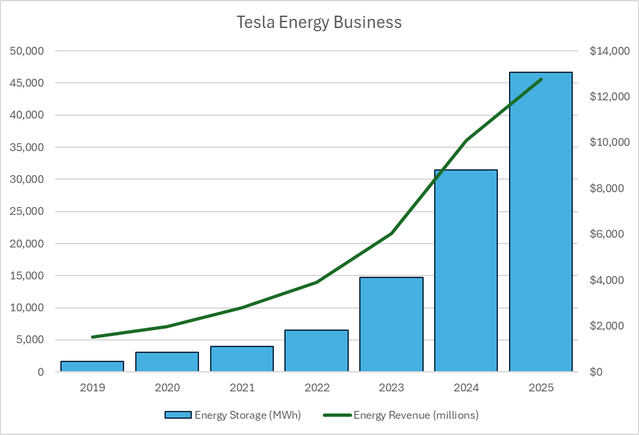
Elon Musk is listening to you and Tesla is making billions of dollars by delivering battery storage to utilities on a massive scale. They've delivered over 100 GWh of energy storage cumulatively which I believe can discharge at 50 GW peak (25x Hoover dam). Assuming each battery recharges and discharges 80% of its capacity daily then that's about 7 Hoover dams-worth created by Tesla.
 
This story misses the implication that this is % of demand and how coal is used.

Coal is largely for peaking units - I.e., they get turned on when demand spikes or supply drops. So when it's nice and sunny you use less coal because it isn't needing to cover for solar's weakness (clouds). You can look at the graph and see how coal spikes everywhere solar dips.

Picking the sunniest month where it's cool enough most places to not need AC is the best case for solar so let's compare again in a cloudy August and see how these bold conclusions hold.

It's also notable that many coal plants are old enough to retire (or have been retired) since they fell out of favor.

There obviously is a trend of increasing solar generation vs aging coal plants but at least understand the data you are citing so you can report accurately.
 
This is EXCELLENT news.
A couple things people need to be reminded of regarding coal.

Coal is radioactive - coal plant spew more radioactivity into the environment than nuclear power plants.
Coal is VERY dirty and spews mercury into the environment
Coal produces small soot particles that are dangerous for people with asthma. Many people should not live down wind from coal plants.
The above is just burning coal. Mining coal is just as bad. Coal mining black lung is still a real thing.
Coal mining does damage to the environment too.

Coal is LITERALLY THE WORST, so yeah solar and wind really is great. for multiple reasons.
Let alone the build it once and use it for 20-30 years with minimal upkeep as with solar.


Well DUH! Since the mid 2000's, the government has been "rolling coal" to shut down and eliminate coal fired power plants in the USA. Now, because solar & wind can't keep up, along with shutting down the nuclear plants, we are stuck with brown outs, black outs. PERFECT time to set up a bunch of AI data centers huh!
 
Biggest problem with solar (and generally with green energy) is that it doesn't work as the 'backbone'. Can't spin it up when you need - can't rely on it alone.
Either still needs some of the 'classic' power generation methods (gas/coal/nuclear) to back it up - or couple it with energy storage which afaik still isn't economically viable in most cases. High time they figure out a cheap way to store energy (and whoever wants to suggest hydrogen.. please no).
Don't be like Germany and start shutting down nuclear reactors to go green which by actual numbers are about as safe and green as solar panels and can be used as the backbone. (Nuclear has one big downside and that's startup costs, shutting down what you already have is very very silly to put it nicely)

Solar has some big upsides for small scale deployments (your fancy get away vacation house up in the mountains where there's no infrastructure) and really remote locations (don't wanna be infinitely be flying in fossil fuels by helicopter).
 
What is not often discussed in these graphs is that the coal plants are not disappearing - they are being converted into peaker plants that run on gas to smooth out the power generation of solar. Also you still have to make power at night. Gas has absorbed much of Coal's prior demand.

Nuclear should have taken that load but environmentalists are still scared of the green rock (it actually glows blue during a reaction but who's watching?).

Maybe in USA, not in Australia. Our renewables push is working wonders, slashing our emissions and large-scale battery uptake has taken enormous pressure off the grid at peak times.

The problem with nuclear is the humans running the plant and cost cutting and political interference. You want the waste in your backyard, you can are welcome it.
 
Nuclear power is essential. More investment in clean energy. The waste in theory could be sent into space and out of earth's orbit.
 
Wait until Yellowstone National Park erupts. Solar panels will fail because of the ash accumulation and weight on the panels and reduced sunlight, and every solar panel company will go out of business.
 
Maybe in USA, not in Australia. Our renewables push is working wonders, slashing our emissions and large-scale battery uptake has taken enormous pressure off the grid at peak times.
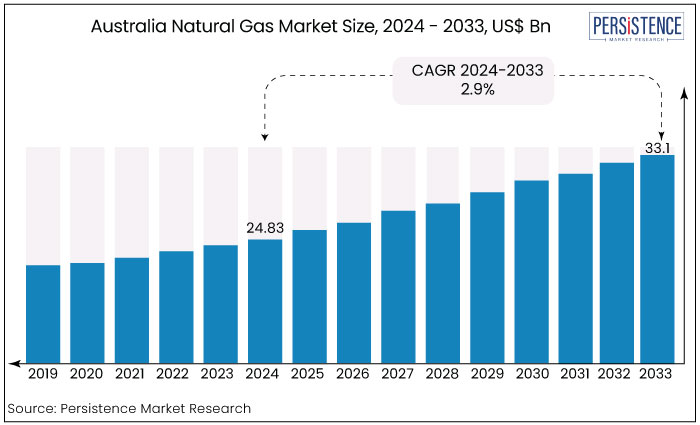
Oops! Every new wind and solar farm Australia builds has attached to it a large set of natural gas turbines, to produce electricity when the wind doesn't blow and the sun doesn't shine. That's why Australia's NG emissions continue to climb:
australia-natural-gas-market.jpg


You want [nuclear] waste in your backyard, you can are welcome it.
If you live in most areas of Australia, you already have enormous amounts of radioactive waste in your own backyard. The first few meters of topsoil alone contains thousands of kilograms of radioactive uranium, radium, thorium, radon, and K-40 -- radioactive waste left over from when Mother Nature created the planet.
 
Wait until Yellowstone National Park erupts. Solar panels will fail because of the ash accumulation and weight on the panels and reduced sunlight, and every solar panel company will go out of business.
So when a civilization ending volcanic eruption happens there won't be solar power either. Nice.
 
For every poo-pooing the idea of renewables, or suggesting that coal is being used as peaker plants. etc. note that batteries are being deployed. Batteries work better than gas fired plants. Coal plants being used as peaker plants is not true. Coal plants needed as peakers are being replaced by gas powered plants for the same role. I would highly recommend taking some time to really research what is going on. Green energy is the future. coal is done.
 
Back