Meta plans to lay down a $10 billion subsea fiber optic cable

nanoguy

Posts: 1,365   +27
Staff
In context: At a time when undersea cables are a prime target for sabotage by bad actors, tech companies are still interested in building more of them. As internet use continues to surge globally due to significant developments in artificial intelligence, Meta plans to install one of the world's longest subsea cables as a dedicated pipeline for its digital platforms.
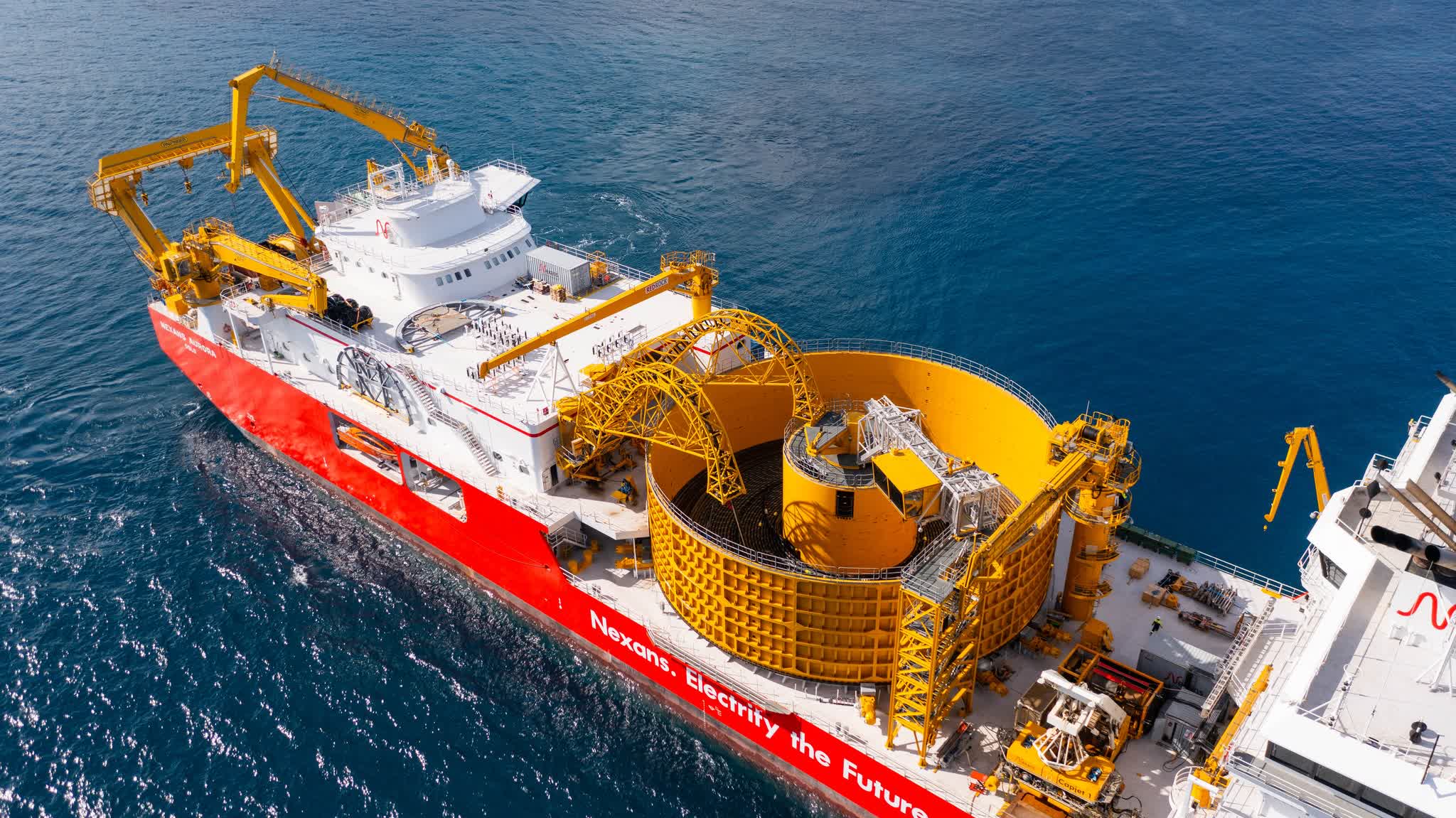
TechCrunch reports that Meta plans to pour an estimated $10 billion into an internet infrastructure project to improve global connectivity. The company is a massive driver of internet traffic worldwide, serving billions of users accessing platforms like Facebook, WhatsApp, Instagram, and Threads. This strategic development could take several years but will ultimately improve Meta's ability to serve digital content to a growing audience.

Subsea cable expert Sunil Tagare was the first to report on Meta's "mother of all submarine cables" back in October. While the company already shares ownership of several subsea cables such as Echo, Amite, Havhingsten, Bifrost, 2Africa, and Anjana, Tagare says Meta will wholly own this new internet backbone. The exact route is still subject to speculation, but this sounds like a clear departure from the usual consortium approach it's taken in the past.
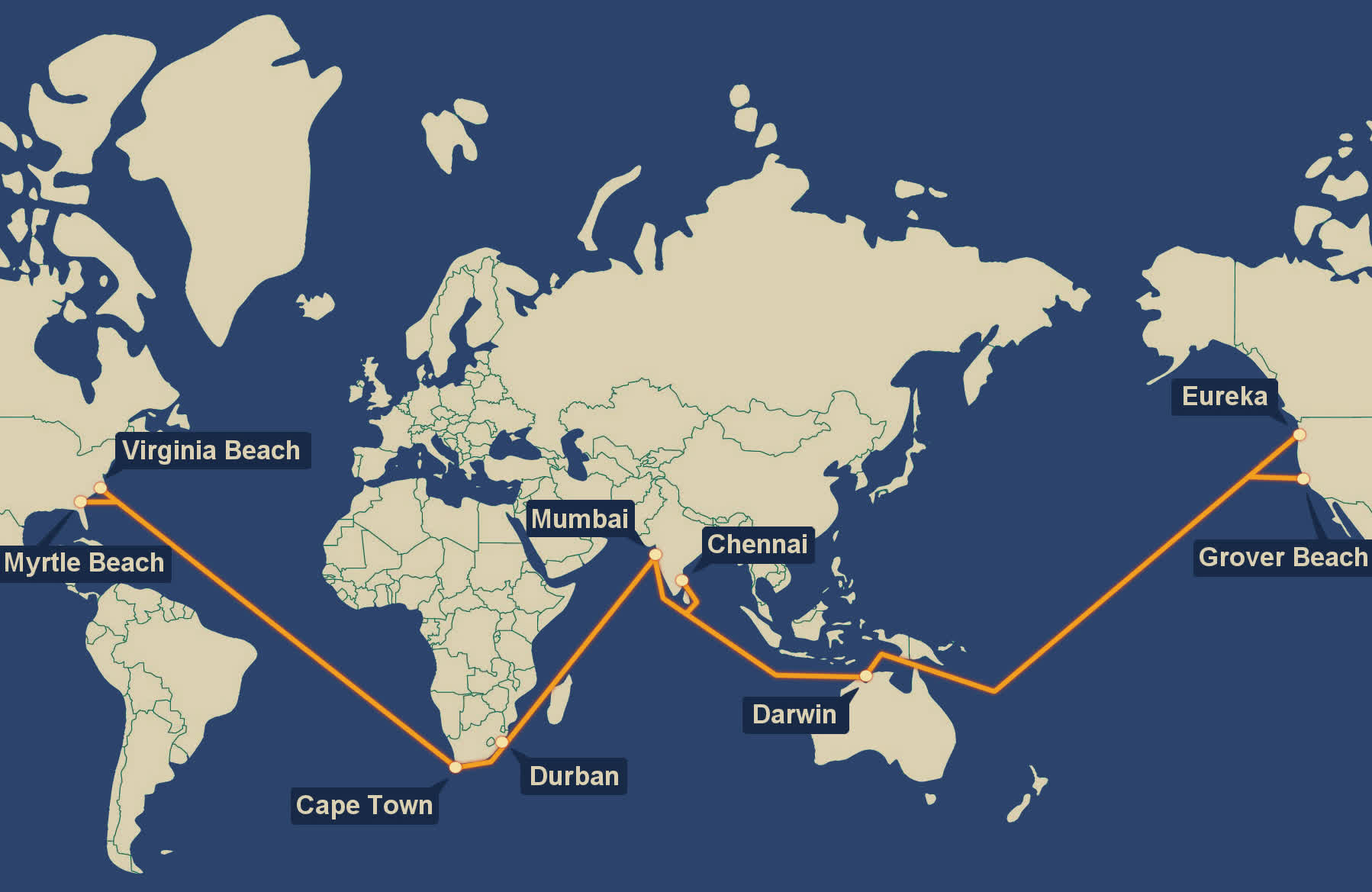
Apparently, Meta wants to improve its network resilience in light of incidents earlier this year that saw prolonged downtime for AAE-1 in the Red Sea and other subsea cables. To that end, the company is willing to sacrifice some latency by avoiding the Red Sea region and routing through the Atlantic, Indian Ocean, and Pacific to avoid areas where geopolitical tensions have marred in recent years.

In any case, Meta's undersea cable dubbed "W" will be one of the most ambitious digital infrastructure projects to date, and the routing underlines the growing importance of Africa and India as key growth markets for digital platforms. At an estimated 40,000 kilometers (~24,585 miles) in length when completed, it will be as gargantuan as the SEA-ME-WE 3 (South-East Asia-Middle East-Western Europe 3) cable which spans 39,000 kilometers (~24,235 miles).

Permalink to story:

 
In times like these, they should think of inexpensive sensors every 100 meters that can record and transfer information regarding what damaged the cables.
Russia seems to be getting more and more interested in finding new ways to s*it on the West's porch.
It would be wise to have "security cameras" at such crucial communication lines.
They could also launch "experimental" satellites that would explode "accidentally" into thousands of tiny metal pieces, damaging huge numbers of the space net devices such as starlink.

I have to admit, though, this was not my idea. It was in a book by a Russian writer describing exactly this in an alternative Russian history book. I remembered about it because I started to realize that some ideas and fictional events that book described, were not just writer's fantasies, they were the thoughts and aspirations of real people living in this country.
 
In times like these, they should think of inexpensive sensors every 100 meters that can record and transfer information regarding what damaged the cables.
Russia seems to be getting more and more interested in finding new ways to s*it on the West's porch.
It would be wise to have "security cameras" at such crucial communication lines.
They could also launch "experimental" satellites that would explode "accidentally" into thousands of tiny metal pieces, damaging huge numbers of the space net devices such as starlink.

I have to admit, though, this was not my idea. It was in a book by a Russian writer describing exactly this in an alternative Russian history book. I remembered about it because I started to realize that some ideas and fictional events that book described, were not just writer's fantasies, they were the thoughts and aspirations of real people living in this country.
Not only would installing cameras every 100 meters on undersea cables be insanely expensive to install, and even more expensive to maintain, they could easily be defeated by simply stirring up the silt at the bottom of the ocean which already happens without even trying. Also, even if the cameras could see anything, it's unlikely they could identify who is responsible based on that. Russia isn't necessarily going to use submersibles covered in the Russian flag. Even then, how is having video evidence that Russia did it going to stop them?
 
Hopefully, a useful project for consumers and businesses alike.
Besides, he had to find *something* to do with this week's profit. :)
 
Back