Meta's smart glasses raise privacy alarms as data labelers review intimate recordings

Skye Jacobs

Posts: 2,010   +58
Staff
A hot potato: Meta's artificial intelligence ambitions are again drawing scrutiny – this time over what its smart glasses actually see, record, and send around the world for human review. Contractors in Nairobi say they've been paid to study hours of raw footage captured through Meta's "live AI" feature, analyzing everything from simple interactions to moments of startling intimacy.
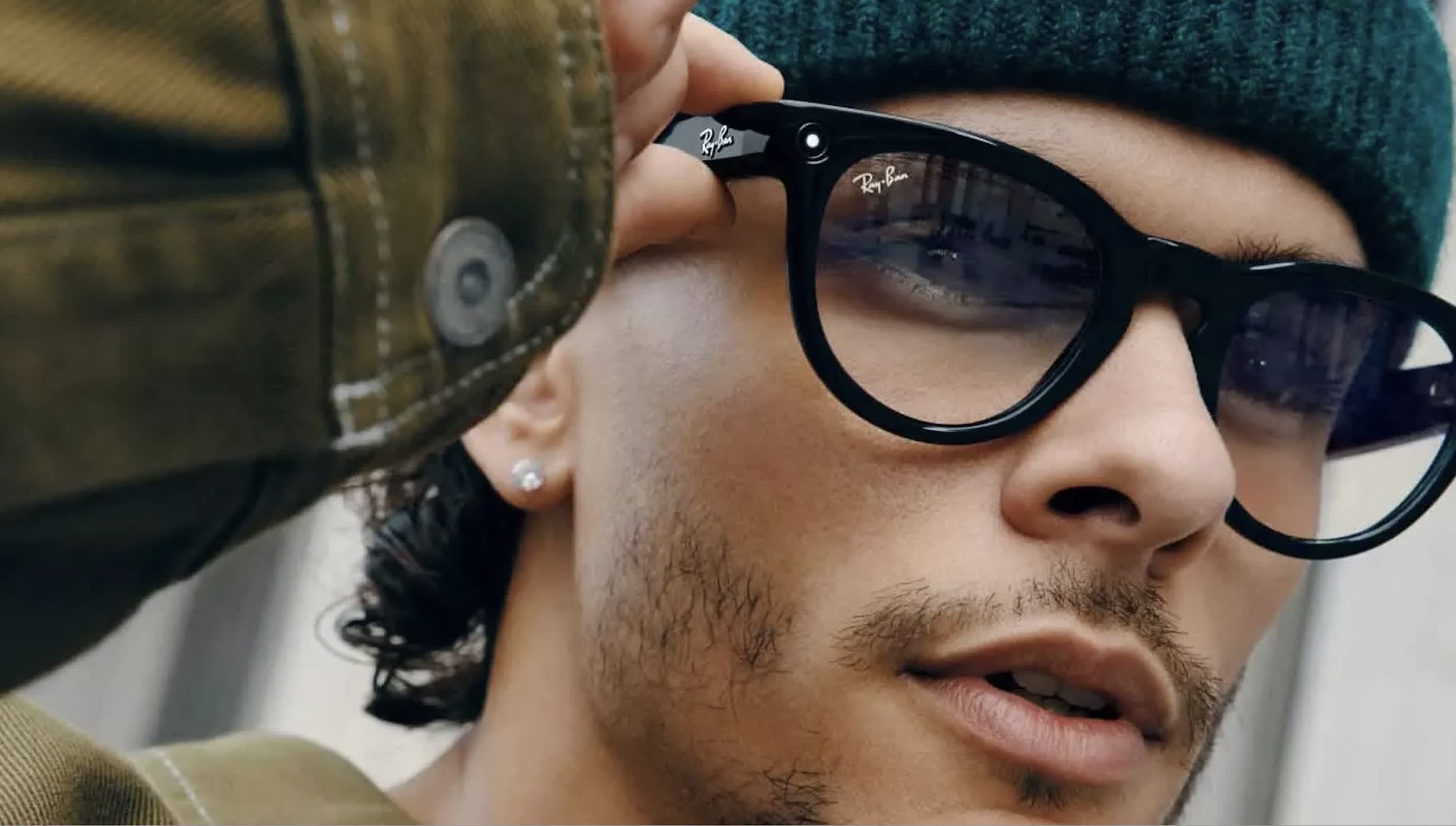
The work, known as data labeling, is how Meta trains its computer vision systems. Each frame reviewed helps improve the algorithms powering its augmented reality assistant. Behind that feedback loop, however, human labor fills in the gaps machines still can't bridge.

Meta's AI glasses, made in partnership with Ray-Ban, constantly record short clips whenever "live AI" is activated. During these sessions, the device's camera and microphone remain continuously online so that the AI can analyze scenes and answer questions in real time. The data is then uploaded to Meta's systems, where it becomes part of a vast dataset used to refine future versions of the assistant.

According to contractors employed by Sama, a Kenya-based firm specializing in annotation services, that data often includes far more personal material than users may realize. Workers said they've reviewed clips of people using bathrooms, getting dressed, and in some cases engaging in sexual activity – all recorded from the perspective of the glasses.

Even when the content isn't overtly graphic, it can reveal sensitive personal details, such as debit cards displayed in full view, household interiors, or private conversations. Audio from some clips reportedly includes discussions about protests, criminal activity, or deeply personal aspects of people's lives, all of which become data points for Meta's algorithms.

Meta's published terms make clear that interactions with the "live AI" assistant can be retained and reviewed by automated systems or by human reviewers. Users are also explicitly warned not to share sensitive information. In practice, though, contractors told Swedish newspapers Svenska Dagbladet and Göteborgs-Posten that many people wearing the glasses appeared unaware that their recordings could ever be seen by others.

Sources said complaints about the nature of the footage or the annotation process were dismissed immediately.

The Swedish reporters said Meta did not respond to their repeated questions for several weeks. When a spokesperson later replied, the company referred them only to its AI Terms of Service and privacy policy, emphasizing that "media is processed according to those documents whenever live AI is in use." Meta declined further comment when contacted by Straight Arrow News.
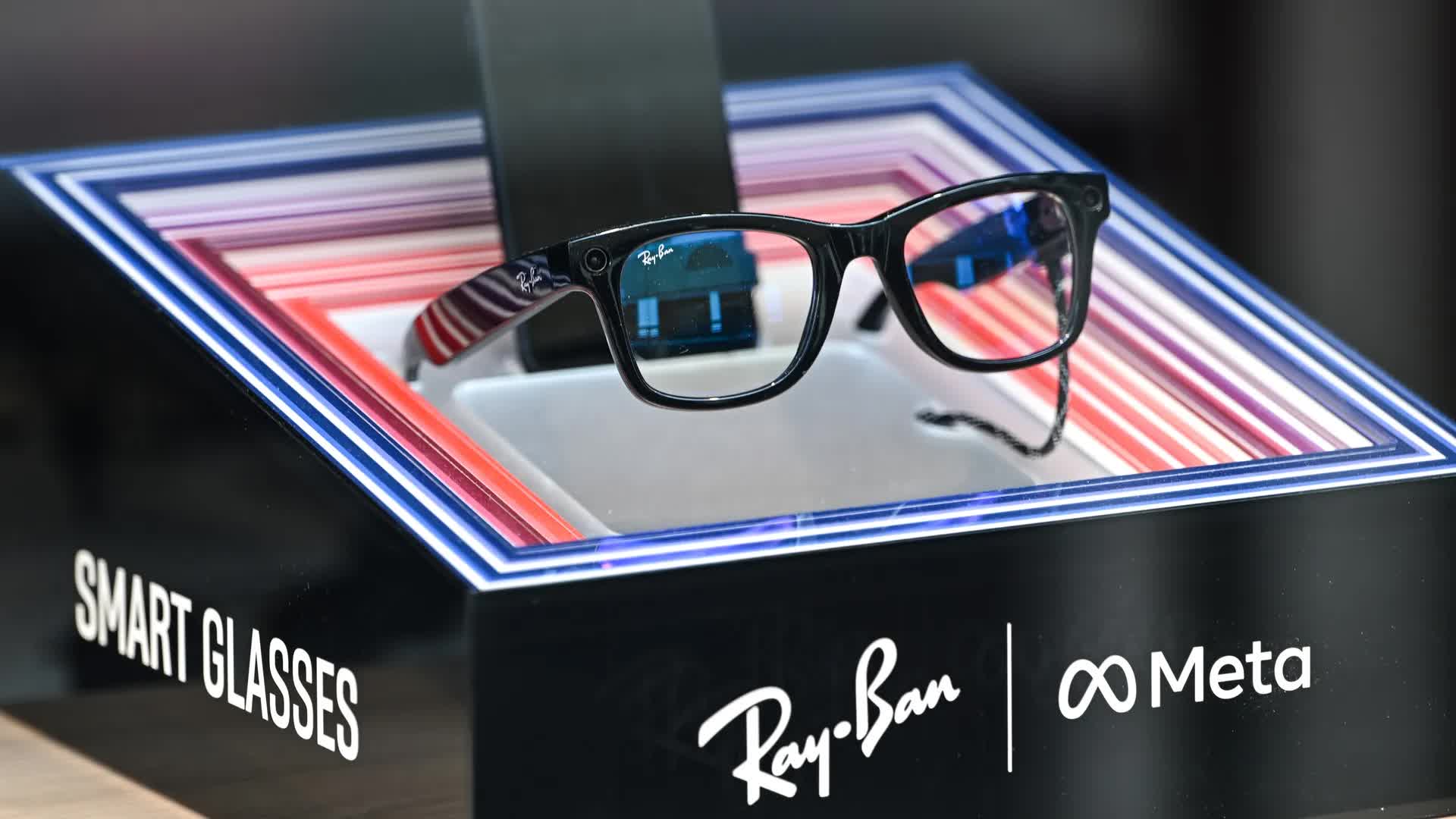
Public concern around Meta's wearable technology has deepened in recent months. The company faced criticism earlier this year after The New York Times cited an internal memo describing plans to add facial-recognition capabilities to its glasses. Civil liberties groups have since warned that pairing facial recognition with persistent video capture could create mobile surveillance networks with minimal oversight.

Developers outside Meta are already responding to the technology by building defensive tools. One recent example is a smartphone app designed to detect when someone nearby is wearing smart glasses. The app scans for visual or wireless cues associated with wearable recording devices and notifies users that they may be filmed.

Meta notes that its glasses include a small LED indicator that lights up during recording. Privacy experts counter that the feature offers limited real-world protection, particularly after researchers demonstrated how easily the light can be disabled.

Whether a warning buried on a terms-of-service page can constitute meaningful disclosure is now a central question for regulators and privacy advocates watching the smart glasses industry. For the people tasked with teaching Meta's AI what it sees, the answer already feels uncomfortably clear.

Permalink to story:

 
There’s basically zero real-world benefit to this tech that I can see. It’s a mass-market surveillance tool. I can only surmise at this point that Mark’s wet dream fantasy has always been to empower every slimy creep out there to maximum possible effect. Everything that guy builds is just toxic AF. Hope regulators finally wake up.
 
There’s basically zero real-world benefit to this tech that I can see. It’s a mass-market surveillance tool. I can only surmise at this point that Mark’s wet dream fantasy has always been to empower every slimy creep out there to maximum possible effect. Everything that guy builds is just toxic AF. Hope regulators finally wake up.
Someone should make glass or hats that emote tons of IR light to blind any these things
 
There’s basically zero real-world benefit to this tech that I can see. It’s a mass-market surveillance tool. I can only surmise at this point that Mark’s wet dream fantasy has always been to empower every slimy creep out there to maximum possible effect. Everything that guy builds is just toxic AF. Hope regulators finally wake up.

I've used it to record 1st person videos promoting my band while performing on stage. I wear "normal" glasses when off stage. The real world benefit is hardly "zero". Can it be abused? Yes. But let's not pretend it's useless.
 
I've used it to record 1st person videos promoting my band while performing on stage. I wear "normal" glasses when off stage. The real world benefit is hardly "zero". Can it be abused? Yes. But let's not pretend it's useless.
Yeah, hard disagree I think. In fact, I’d rebut by suggesting let’s not pretend that citing a single benign use case even remotely addresses the core issue and, in fact, attempts to side-step it altogether. The fact that you, personally, can use the glasses to record first-person band footage doesn’t mean the technology itself is justified as a mass-market product.

First, the use case you’re citing already has countless alternatives that don’t rely on covert, always-on wearable cameras tied to AI analysis and remote data review. If the goal is first-person performance footage, people have been doing that for years with things like action cameras, phones, and visible recording equipment. Those tools make it obvious that recording is happening and don’t blur the line between ordinary eyewear and a networked camera system that can quietly capture everyone nearby.

Second, the objection isn’t that no one can find a positive use. Almost any technology can produce at least one benign scenario. The issue is the design incentives and the default impact on everyone else. Glasses that look like normal eyewear but contain a camera, microphone, and AI system that uploads clips for analysis, shift the burden onto bystanders who never consented to being recorded, analyzed, or included in training datasets.

Third, pointing to a niche benefit doesn’t outweigh the systemic risks. A technology that normalizes ambient recording, AI scene analysis, and possible facial recognition in public and private spaces creates a very different social environment than someone mounting a visible camera to capture a performance. One is transparent; the other intentionally blends into everyday life.

My argument isn’t that “no one could ever use this for anything of legitimate value.” It’s that there is, at best, only a marginal convenience for a minority of users, and that doesn’t justify deploying infrastructure that quietly turns ordinary social spaces into data collection environments. If the goal is recording performances, that problem was already solved—without introducing a device designed to look indistinguishable from normal glasses while potentially capturing everyone around it.

So, no. I still don’t really see it as a legitimate need, just creepy. IMHO.
 
As I was reading in another article about the same subject and people labeling scenes for AI by watching them, the most interesting to me was that I saw the exact thing in a movie. The movie is called Possessor. It is a solid movie and I highly recommend it.
 
In my state (two party) it is technically illegal (felony) to record someone without their explicit consent. I don't think Meta or any of those other AR glass companies have thought about the local and state laws that they might be breaking or the lawsuits that might arise.
 
So, no. I still don’t really see it as a legitimate need, just creepy. IMHO.
I already spend too much time in front of a computer or phone screen, I don't need to buy a pair of glasses that will further increase my screen time.
 
Yeah, hard disagree I think. In fact, I’d rebut by suggesting let’s not pretend that citing a single benign use case even remotely addresses the core issue and, in fact, attempts to side-step it altogether. The fact that you, personally, can use the glasses to record first-person band footage doesn’t mean the technology itself is justified as a mass-market product.
I wasn't even addressing that topic. I was responding to this: "There’s basically zero real-world benefit to this tech that I can see"

Now you can see that the benefit is not zero. Don't infer anything beyond that from my comment.
 
There’s basically zero real-world benefit to this tech that I can see. It’s a mass-market surveillance tool. I can only surmise at this point that Mark’s wet dream fantasy has always been to empower every slimy creep out there to maximum possible effect. Everything that guy builds is just toxic AF. Hope regulators finally wake up.

Regulators wake up?
Regulators are giddy with joy about this! They would LOVE to have this! 100% "surveillance" is a dream of the deep state.
 
I wasn't even addressing that topic. I was responding to this: "There’s basically zero real-world benefit to this tech that I can see"

Now you can see that the benefit is not zero. Don't infer anything beyond that from my comment.
Yes, but one man's real-world benefit is another man's poison...............so to speak..
 
I’m not discounting anyone’s concerns. They’re legitimate.

At the same time, there are real potential benefits to this technology. The real question is whether those benefits outweigh the concerns.

For people with disabilities, smart glasses could act as a discreet set of “eyes,” describing the world in front of them. They could help someone navigate unfamiliar places, warn of hazards, or even describe simple things others take for granted, like noticing that the roses they’re smelling are blooming in a park across the street.

They could also provide real-time “closed captioning” for people who are deaf or hard of hearing, allowing conversations to appear instantly in their field of view.

Like most technologies, the issue isn’t whether there are benefits. It’s how we balance those benefits with legitimate concerns.
 
I think the big issue is not the glasses, but the small size of the recording devices themselves. Could be a button on one's clothes, lapel pin, or other innocuous object.

The future has its frightening aspects!

Recording the girls in the shower, 🫣 or other very naughty thing.

Using infrared to block it, can damage eyesight!
 
What ridiculous, "tech."

Using a picture of Suckerburk wearing them is not a very good advertising strategy either.
 
Yet another product with little to no real benefit that is generating so much hype primarily among investors, who dream with the already sprouting possibilities of data collection.
 
Smart Glasses are the final frontier in surreptitious recording. Being able to simply walk around taking photos and recording what is being seen at eye-level is remarkable. Holding a cameraphone sideways is too obvious.

Imagine these glasses being able to record criminal activity, sexual activity and other moments -while AI constantly scans for things to report. Criminal faces seen, geotagged instantly. Evidence gathered.

Imagine being able to look at a person and see their public record instantly. You can know women's bodycounts, the number of children she has, marital status, etc. You could even see their health records and know if they have diseases or genetic illnesses.

I'm sure that Orwell would be spinning in his grave right now.
 
Back