Microsoft finally admits File Explorer is slow, now it's testing a preload fix

Alfonso Maruccia

Posts: 2,602   +978
Staff
Windows XXX: First introduced as "Windows Explorer" back in the Windows 95 era, File Explorer has been an integral part of the PC operating system for decades. File Explorer now serves double duty as both the native file manager and a core part of the desktop environment in Windows 11, highlighting how things have gone wrong with the platform's restless development.
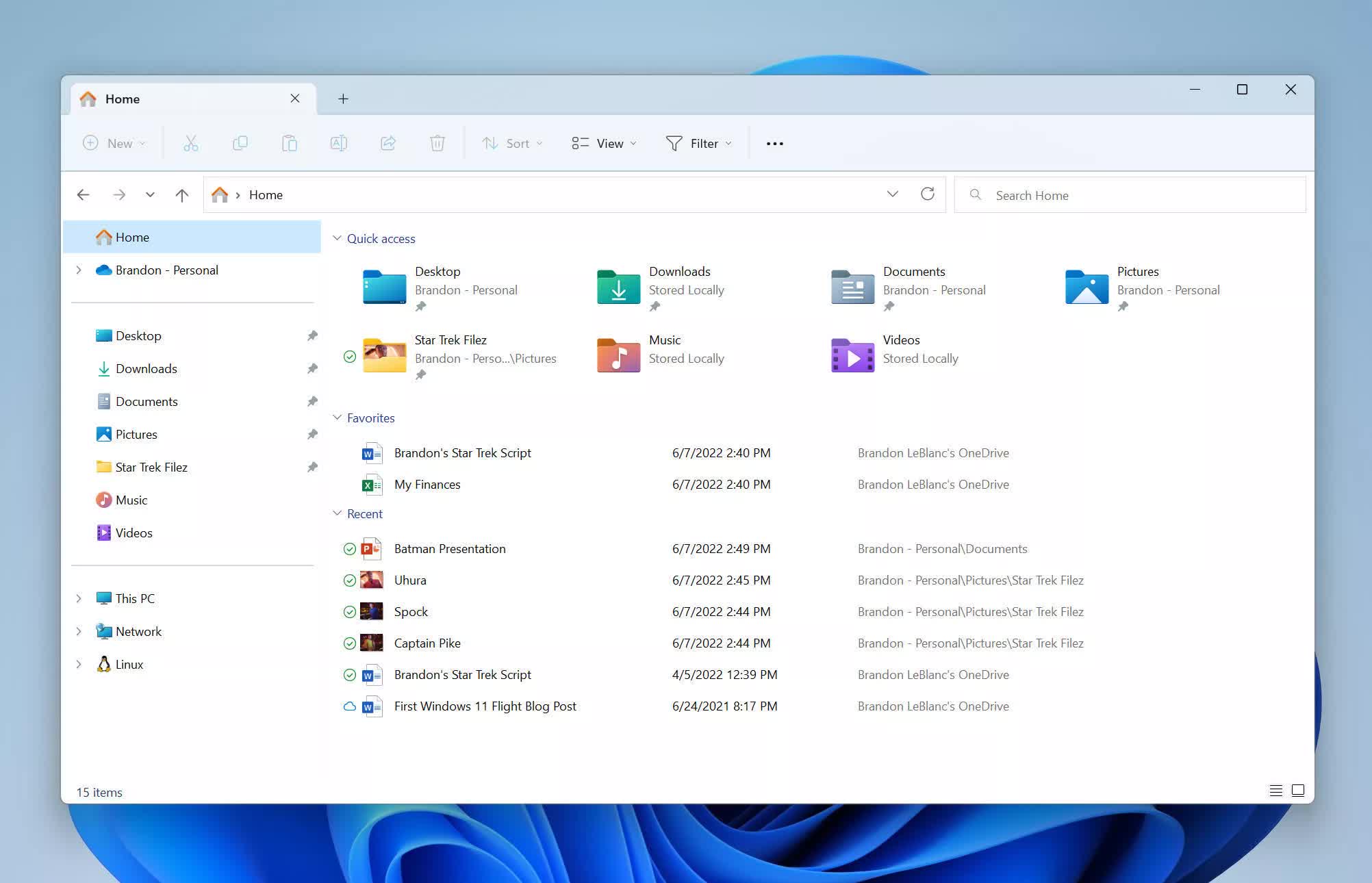
Microsoft has finally acknowledged it has a major performance problem with one of the core components of the Windows 11 GUI. File Explorer is now a shell of its former self, with users lamenting its poor performance, frequent bugs, and inconsistent interface decisions imposed by the AI-and-cloud-obsessed corporation over the past few years. However, things could soon improve in a meaningful way.

Redmond's developers recently shipped a new Windows 11 preview build (26220.7271 – KB5070307) to beta testers in the Windows Insider program. The update brings several notable tweaks, including UI adjustments and performance refinements aimed directly at File Explorer.

One of the biggest experiments is a new preload system. Microsoft is "exploring" the idea of loading File Explorer quietly in the background so it can launch and respond faster when users open it. The change is meant to be invisible to most people and – Microsoft hopes – will make File Explorer feel noticeably quicker when dealing with documents, files, and folders. The option is enabled by default in the preview build, though users can turn it off to restore the old behavior.
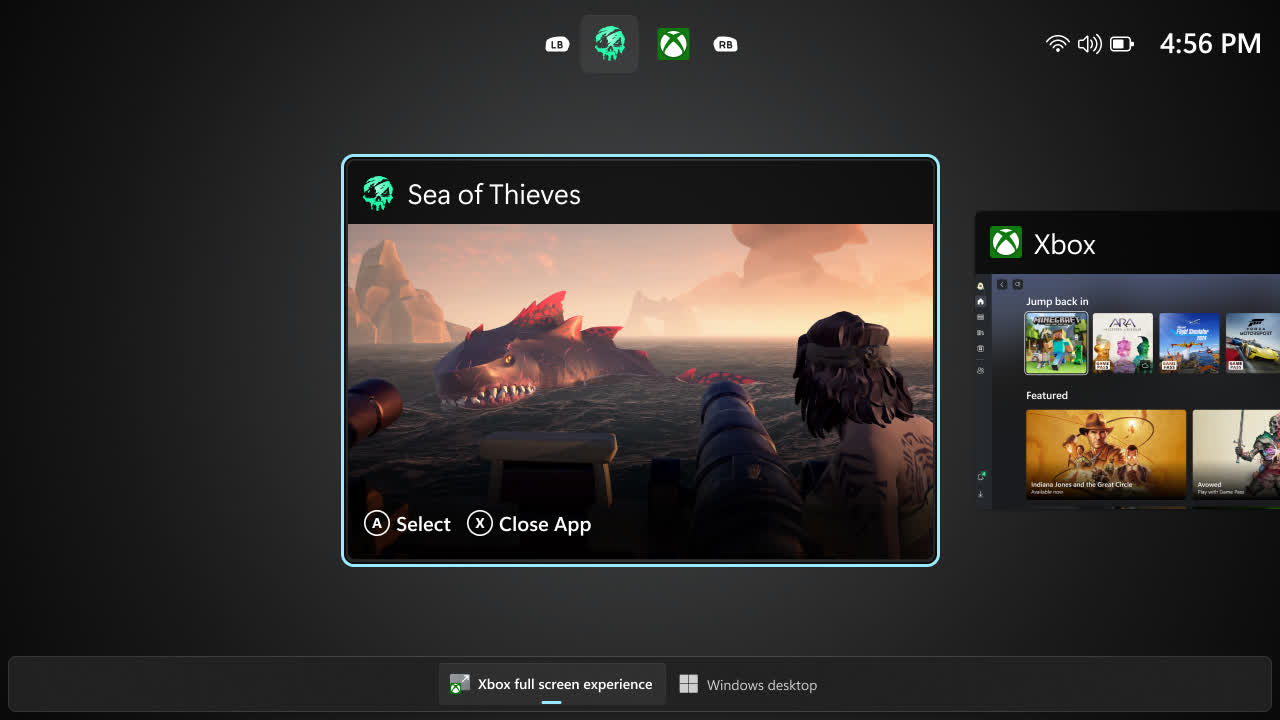
Microsoft is now asking testers for feedback on the preload feature, but users have been voicing dissatisfaction with File Explorer for years. The Windows 11 shell and file manager have consistently delivered subpar performance to a significant portion of the user base, while Microsoft's supposed "improvements" have largely taken the form of unwanted AI features, a horrible and forceful OneDrive integration, and ads in the Start menu.

The result is a Windows 11 GUI that many see as a low point in the OS's long history, usable but slow and inconsistent. On my Windows 10 gaming PC, File Explorer usually launches with a slight, sub-ms delay every time I press the Win+E key combination. When I'm forced to work with Windows 11, the shell feels like a completely different universe, no matter how fast the CPU, RAM, or storage is. That's one of the reasons there are popular alternative file managers that fill that gap depending on what you need.
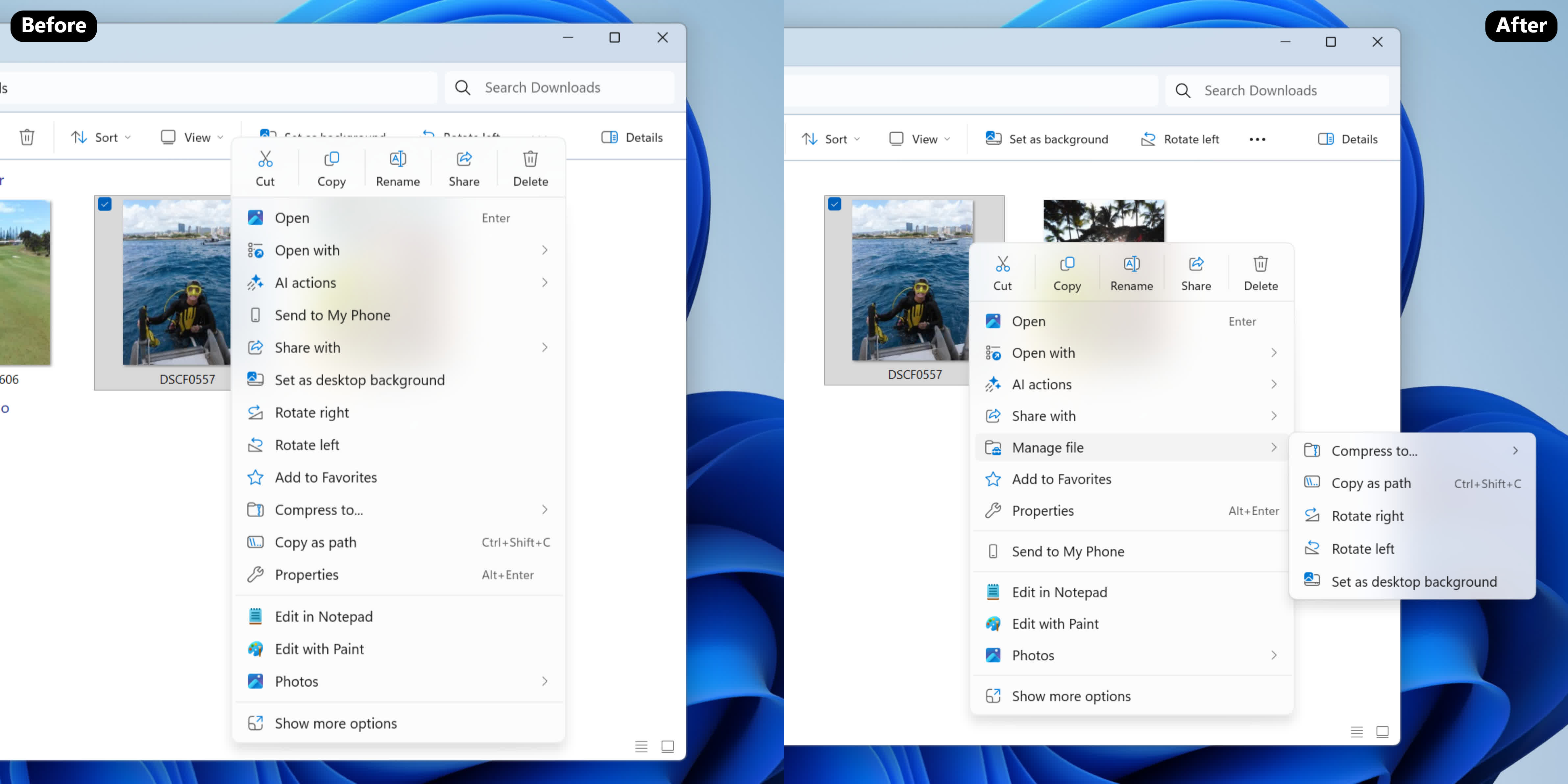
Preloading File Explorer could be a genuine quality-of-life improvement, but it doesn't change the broader perception that Windows has become a side project for a company chasing generative-AI dreams. And while Microsoft tinkers with performance, it's also continuing to reshape the Windows interface in other ways. The latest preview build includes yet another redesign of File Explorer's notoriously slow context menu, now with submenus for less commonly used actions.

Permalink to story:

 
So the solution to File Explorers inefficiency is not to fix the actual code, but just to "preload" it so you don't notice it as much. Wow, just wow.
Yeah, I was going to say something similar: at least they are looking at improving the experience, but preloading doesn't address the root cause.
Preloading - caching - likely means bugs, too. The two hard problems in computer science are naming things, cache invalidation, and off-by-one errors.
 
A while back I found all the right settings to shutdown all of its history & recommendation features (I.e., anything that isn't the folder I've navigated to or the specific pinned links I've selected), which is where all the slowdown was coming from. Never looked back.

Having all that on by default before they had the performance to do it well was ridiculous. Switching it to "preload" is not much less ridiculous, users will still notice their computer is not responsive, it will just be less obvious as to why.
 
If you need to preload something like a file explorer and not like Crysis that is now backed by SSDs it's probably just really poorly written. How about just fixing the cause of the perf issue.
 
If you need to preload something like a file explorer and not like Crysis that is now backed by SSDs it's probably just really poorly written. How about just fixing the cause of the perf issue.
My guess is that explorer is laden with decades of crud that cannot be easily sorted out without breaking compatibility with software or windows itself. Same reason we are still limited to 15 character names.
 
How many people here have started cursing when using Explorer's search function? Slow doesn't even begin to describe the experience.
 
How many people here have started cursing when using Explorer's search function? Slow doesn't even begin to describe the experience.
I discovered some software called 'Everything' a few years ago. Searching for anything now is just so fast and easy.
 
It’s interesting that Microsoft is trying to fix File Explorer by preloading it rather than addressing the underlying bloat that made it slow in the first place. Preload helps with launch time, but it doesn’t really solve the deeper issue that the Windows shell has become a patchwork of old code, cloud hooks, and half-finished UI experiments.
 
I use a combo of Everything and Agent Ransack in Win10, and Double Commander in Linux. Whilst Everything is mindbogglingly fast, it doesn't work on all drive formats and won't search within files - I'd love to know if there was an Everything for Linux too.
 
How many people here have started cursing when using Explorer's search function? Slow doesn't even begin to describe the experience.
It's been complete garbage for years. Their indexing attempts have always been awful. If I want to find files fast and reliably I use wildcard searches from commandline. The fact that results you are after sometimes don't appear is abysmal let alone how slow the indexer is anyway.
 
It’s interesting that Microsoft is trying to fix File Explorer by preloading it rather than addressing the underlying bloat that made it slow in the first place. Preload helps with launch time, but it doesn’t really solve the deeper issue that the Windows shell has become a patchwork of old code, cloud hooks, and half-finished UI experiments.
Exactly... they have added tonnes of rubbish that has slowed it down and tried to integrate it so poorly and heavily it drags the whole application perf down so users have a bad experience. Let's not sugar coat this. They aren't even trying to fix the actual problem.
 
It's been complete garbage for years. Their indexing attempts have always been awful. If I want to find files fast and reliably I use wildcard searches from commandline. The fact that results you are after sometimes don't appear is abysmal let alone how slow the indexer is anyway.
I'm glad to hear that you're resorting to the command line as well. I was starting to think that maybe I was the problem because Microsoft is almost as good as Apple when it comes to gaslighting it's customers.
 
Back