Forward-looking: Microsoft has taken a significant step toward addressing the thermal challenges of next-generation data processing hardware. The company has developed an in-chip microfluidic cooling system that routes liquid coolant directly through microscopic channels etched into the silicon itself.
This method differs from conventional cold plate technologies, which are separated from the chip by several thermal layers and are reaching their efficiency limits as processors grow more powerful and heat-intensive.
In practical terms, the new approach reduced GPU silicon temperatures by up to 65 percent, depending on chip type and workload. Its effectiveness hinges on the precise design of the microchannels – engineered with widths comparable to a human hair – to deliver coolant exactly where it is most needed.
With the aid of artificial intelligence, the team was able to analyze and map the unique heat signatures across a chip, directing liquid flow to hotspots with greater accuracy.
The prototypes were developed in collaboration with Swiss company Corintis, whose bio-inspired designs drew on natural structures such as leaf veins to optimize coolant distribution for heat removal.
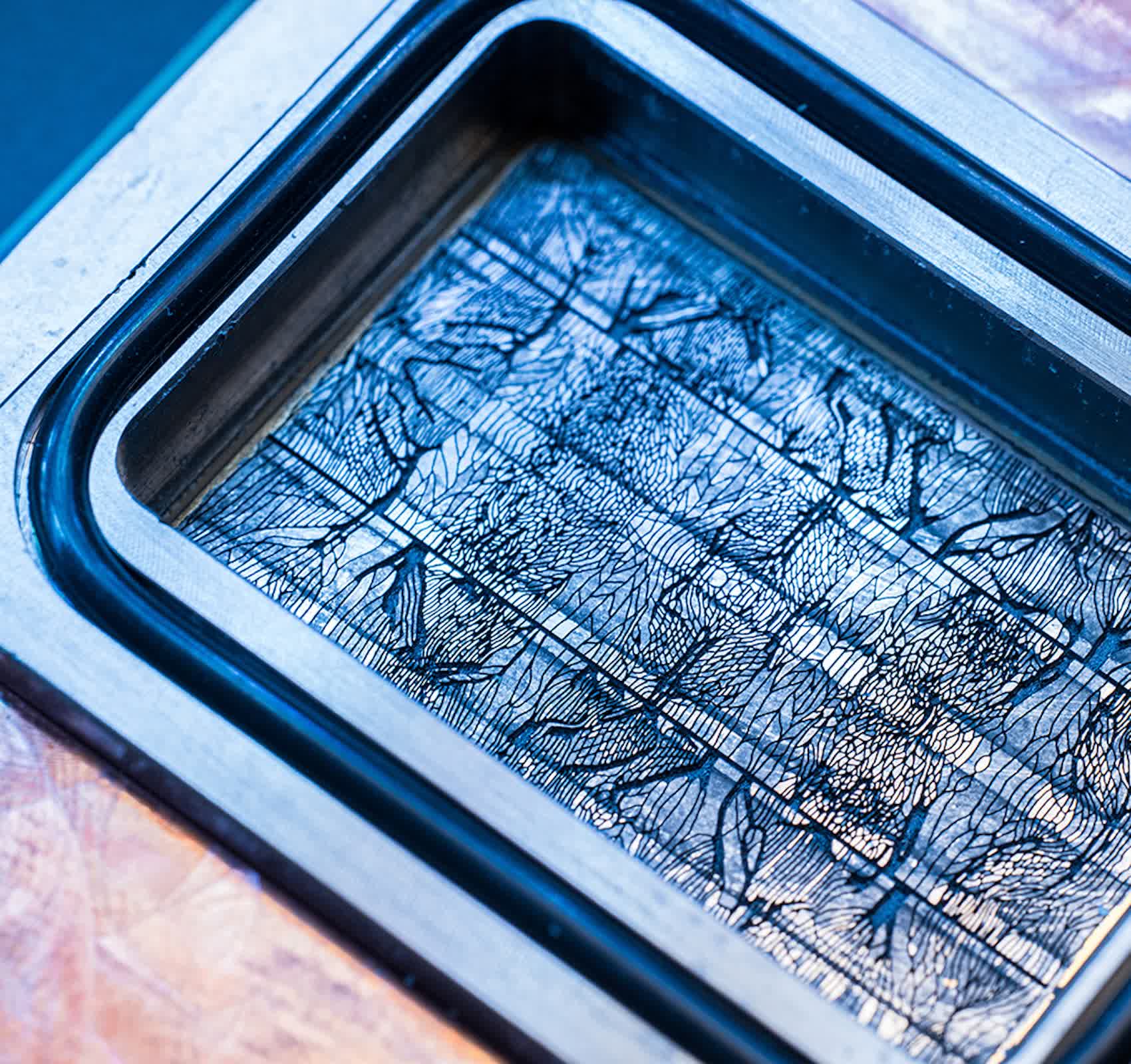
Channels are etched in the silicon that allow cooling liquid to flow directly onto the chip and more efficiently remove heat.
Manufacturing this breakthrough posed significant engineering challenges. The microchannels had to deliver sufficient cooling capacity without weakening the silicon or creating leak risks. Microsoft conducted multiple iterations to refine the channel depth, etching methods, and sealing of the coolant pathways. The research also explored packaging for leak prevention, coolant formulations, and stepwise integration of microfluidics into chip fabrication.
Early trials used existing silicon platforms, possibly including Intel Xeon processors, as test beds to validate both mechanical integrity and cooling performance.
By allowing coolant to come into direct contact with the silicon, microfluidics also reduces reliance on heavily chilled coolant, offering potential gains in energy efficiency and operational costs. Microsoft expects this to improve power usage effectiveness in data centers. These efficiencies could enable higher server density, reducing the physical footprint required to support surging AI workloads.
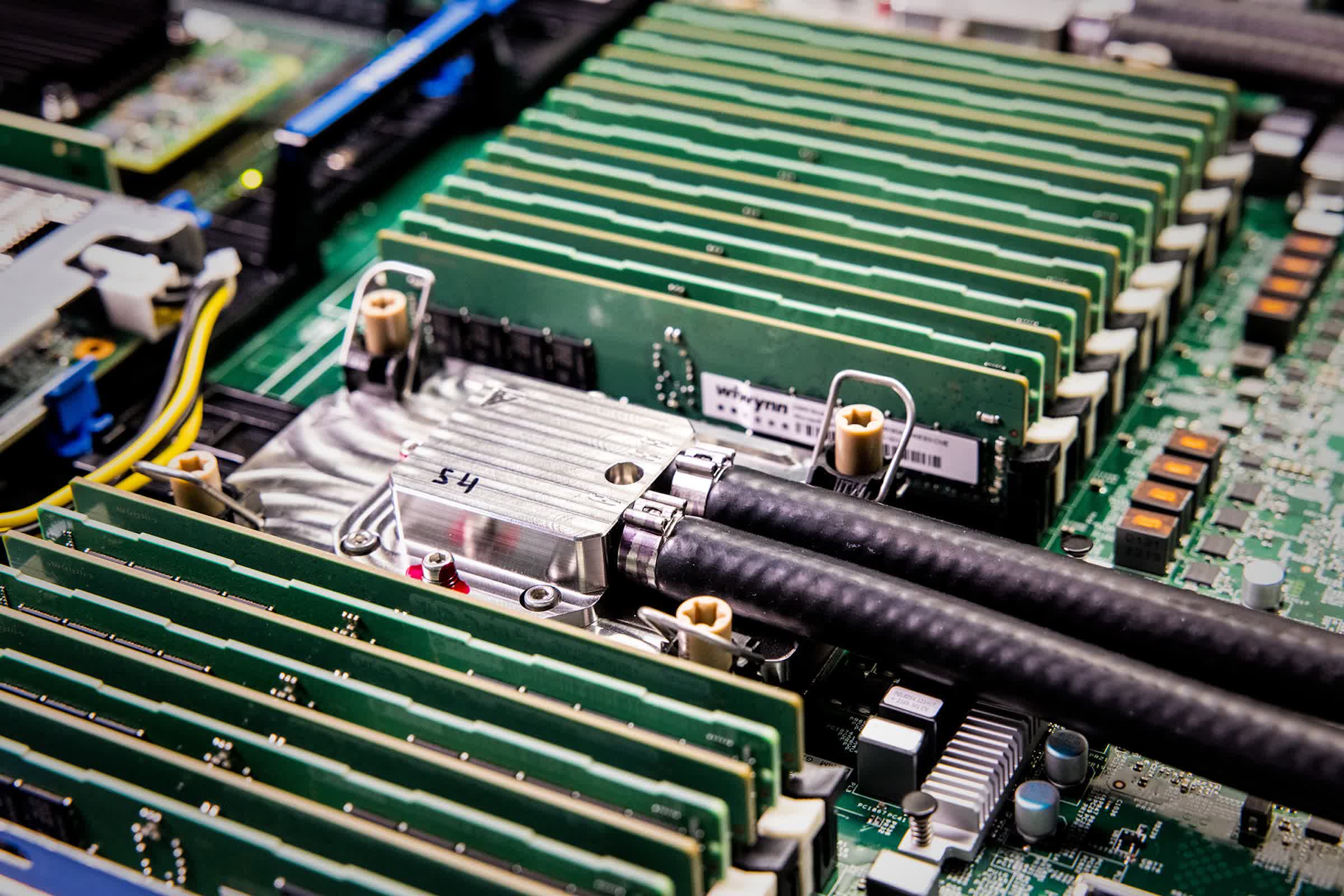
This microfluidics chip is covered and has tubing attached so the coolant can flow safely.
The innovation reflects Microsoft's broader push to invest in infrastructure designed for the next generation of computing. This effort spans not only cooling technologies but also the development of proprietary chips such as the Cobalt and Maia lines, and a shift toward sustainable data center designs. The company has earmarked more than $30 billion in capital expenditures to support these initiatives.
Looking ahead, Microsoft plans to explore how microfluidic cooling can be applied across future generations of its in-house chips as well as in collaboration with silicon manufacturers. The advancement could even influence new chip architectures, including stacked 3D configurations that would otherwise face insurmountable thermal barriers. In such designs, microfluidics could enable the vertical flow of coolant between layers, paving the way for higher compute density and more compact data center layouts.
Microsoft unveils microfluidic cooling tech to cut chip temperatures by 65%


