Microsoft Word circa 1990 can now run on modern Windows, thanks to a new native port

Alfonso Maruccia

Posts: 2,649   +1,000
Staff
Sounding off: Microsoft's push to bake AI into every product and service it sells is understandably facing some backlash. Even Office is turning into a vessel for Redmond's chatbots, which may be why one developer decided to go back in time instead, releasing a wild modern port of an early Word release.
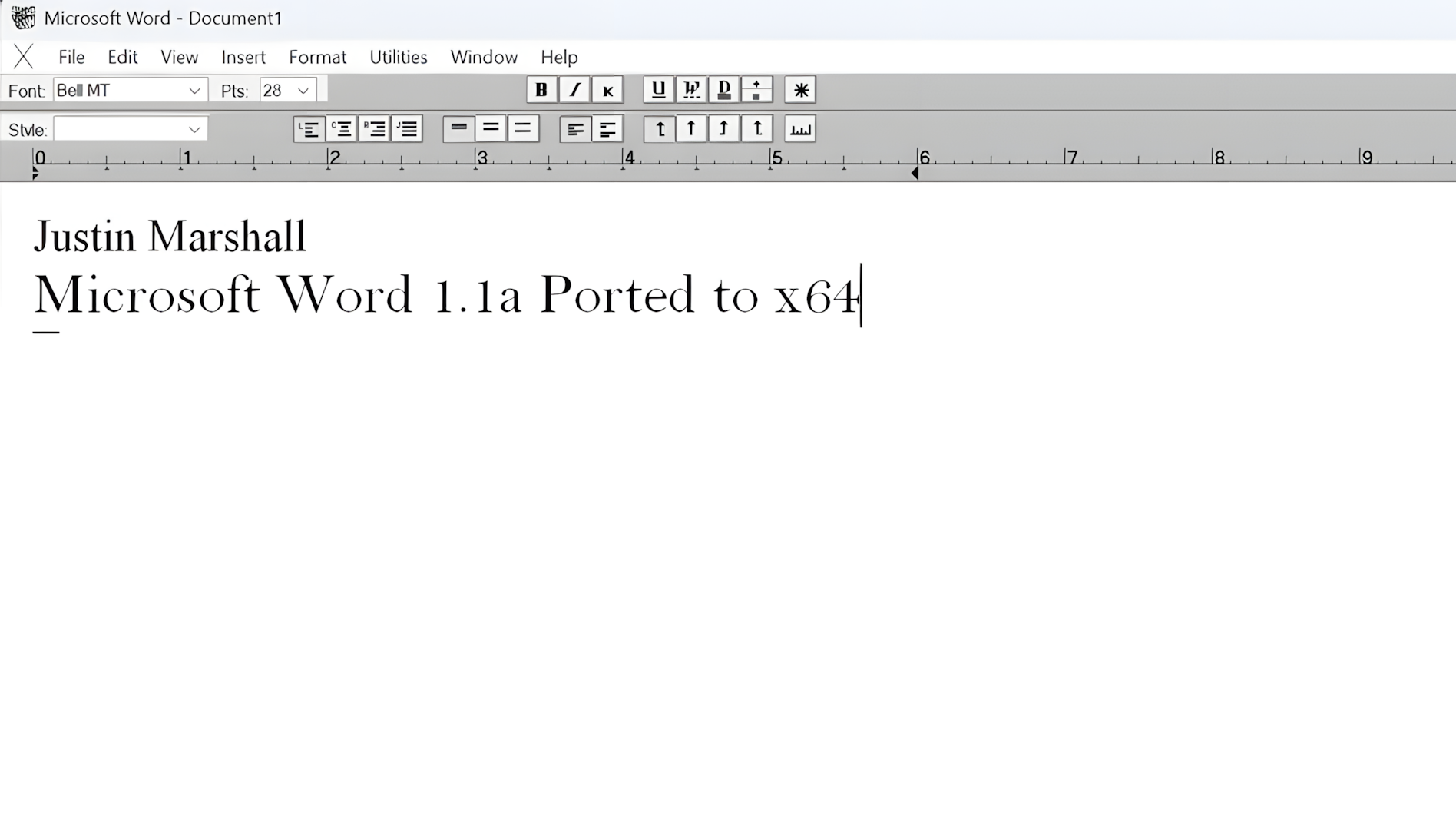
Developer Justin Marshall recently ported Word for Windows 1.1a to modern Windows systems. The open-source conversion draws on the source code of the original program, which Microsoft shared with the community in 2014.

Marshall's port brings the original WfW experience to Windows x64, replacing non-working 16-bit code with modern programming conventions. The coder explains there's no emulation, virtualization, or reimplementation trick involved: the original Word application runs with its original resources and UI elements intact.
Porting WfW to Windows x64 wasn't exactly a "plug-and-play" affair. Marshall said that while the original C code and resource files are still part of the port, he had to make the 16-bit code behave properly in a modern 64-bit Windows environment. Specific behaviors tied to the Win16 API had to be adapted to modern Win32 APIs, while dialogs, cursors, and bitmap elements had to be rebuilt with native host tools through the CMake build process.

"CMake inventories the legacy assembly tree but does not compile those modules into native targets. This keeps the historical implementation available as a reference while ensuring all shipped code is valid for AMD64," Marshall explained on the project's GitHub page.

Word, and Word for Windows 1.1a specifically, hold a special place in Microsoft's software history. The original Word for Windows debuted in 1989, bringing the DOS-based productivity tool to a new GUI paradigm; version 1.1a followed a year later as the release that added dedicated support for Windows 3.0. Over time, Word became the de facto standard for word processing in lieu of WordPerfect.
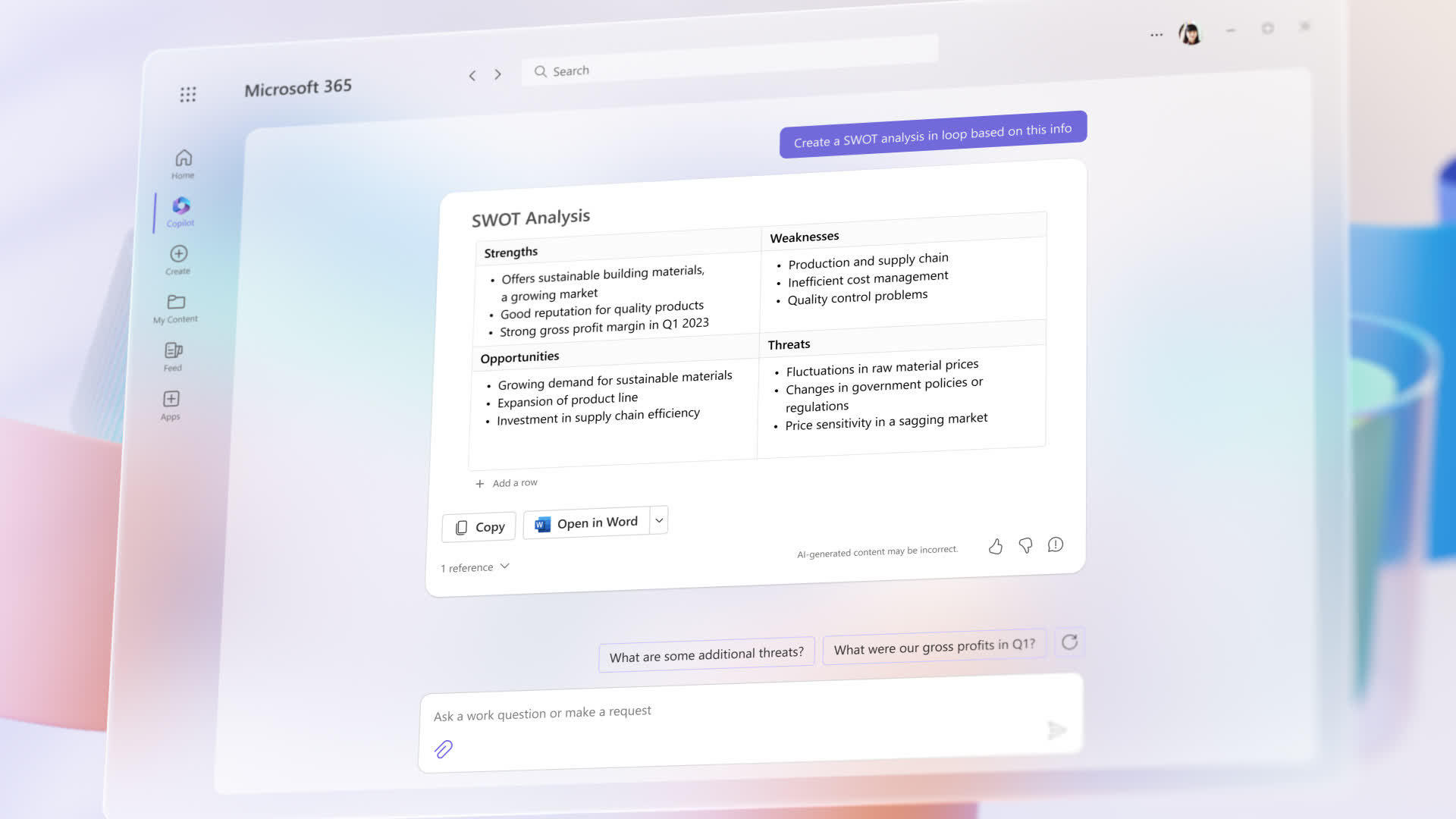
Compared to the barebones GUI of Word for Windows 1.1a, today's Word is a completely different beast. Microsoft now treats its productivity software largely as a means of promoting its AI services. Thanks to chatbots and LLMs, the latest Microsoft 365 version of Word can even write documents and expand drafts on its own. No pesky human intelligence required.

While Microsoft keeps cramming more AI into Office, some developers are trying to fight back by returning to the roots of its software tools. Before the WfW port, Marshall built other projects blending old software with modern tech, including a ray-tracing port of Quake 1 and a merge of the Quake 4 SDK with the Doom 3 graphics engine, among others.

Permalink to story:

 
Ya know I go to the page linked as "Marshall built other products" and this is listed there. Unless I see a download and install link he has done nothing useful for me and most. Tell me why I am wrong, please
 
Ya know I go to the page linked as "Marshall built other products" and this is listed there. Unless I see a download and install link he has done nothing useful for me and most. Tell me why I am wrong, please

Are you actually blind or just lazy?
https://github.com/jmarshall23/msword

Perhaps your comment seemingly denigrating his work just rubs me the wrong way. It doesn’t have to be useful. It arguably isn’t when Libreoffice exists and provides a much more modern and fully featured word processing experience. It’s also entirely irrelevant to compare it to modern Word or Libreoffice.

If following the listed steps is too difficult or just undesired, that’s fine. There just isn’t any need to put down the work of others. It contributes even less to society than whatever little or no contribution you think of this port provides.
 
Last edited:
Are you actually blind or just lazy?
https://github.com/jmarshall23/msword

Perhaps your comment seemingly denigrating his work just rubs me the wrong way. It doesn’t have to be useful. It arguably isn’t when Libreoffice exists and provides a much more modern and fully featured word processing experience. It’s also entirely irrelevant to compare it to modern Word or Libreoffice.

If following the listed steps is too difficult or just undesired, that’s fine. There just isn’t any need to put down the work of others. It contributes even less to society than whatever little or no contribution you think of this port provides.
I think RudyBob is suggesting that, without a binary release, it is a closed book for most. Many developers on Github don't upload builds, and for non-programmers, it is next to impossible to get the toolchains up and running and the projects built.
 
Ah! Word for Windows 1. I first had this as a free disk on my computer magazine. A limit of two pages, but, after using Word 6 for DOS, I could see that this was the future! Exciting times!
 
I think RudyBob is suggesting that, without a binary release, it is a closed book for most. Many developers on Github don't upload builds, and for non-programmers, it is next to impossible to get the toolchains up and running and the projects built.
I know what he meant. I just think he’s being rude and a not very nice person. Unnecessarily so. Will I go about compiling the project? Assuredly not, but that doesn’t really matter, does it?

If the comment had just said “I wish there was a binary/executable” or something along those lines, I wouldn’t have said anything. He chose to denigrate the work of others by pontificating on his opinion of how useful it is. That’s what I take issue with
 
I know what he meant. I just think he’s being rude and a not very nice person. Unnecessarily so. Will I go about compiling the project? Assuredly not, but that doesn’t really matter, does it?

If the comment had just said “I wish there was a binary/executable” or something along those lines, I wouldn’t have said anything. He chose to denigrate the work of others by pontificating on his opinion of how useful it is. That’s what I take issue with
Fair enough. For my part, I respect this sort vintage restoration, considering how flabby today's apps have become. I tried compiling the project earlier, but since I had VS2026 installed rather than 2022, ran into some configuration issues.
 
Back