NASA's new Athena supercomputer delivers 20 petaflops while cutting energy consumption

Alfonso Maruccia

Posts: 2,600   +978
Staff
HPC Beyond: Major space agencies rely on supercomputers to tackle the extreme computational demands of modern science, from simulating rocket launches to processing vast streams of space data. These machines are becoming as essential to exploration as the spacecraft themselves. NASA's newly announced super-system raises the bar once again, delivering a major leap in performance while consuming less power.
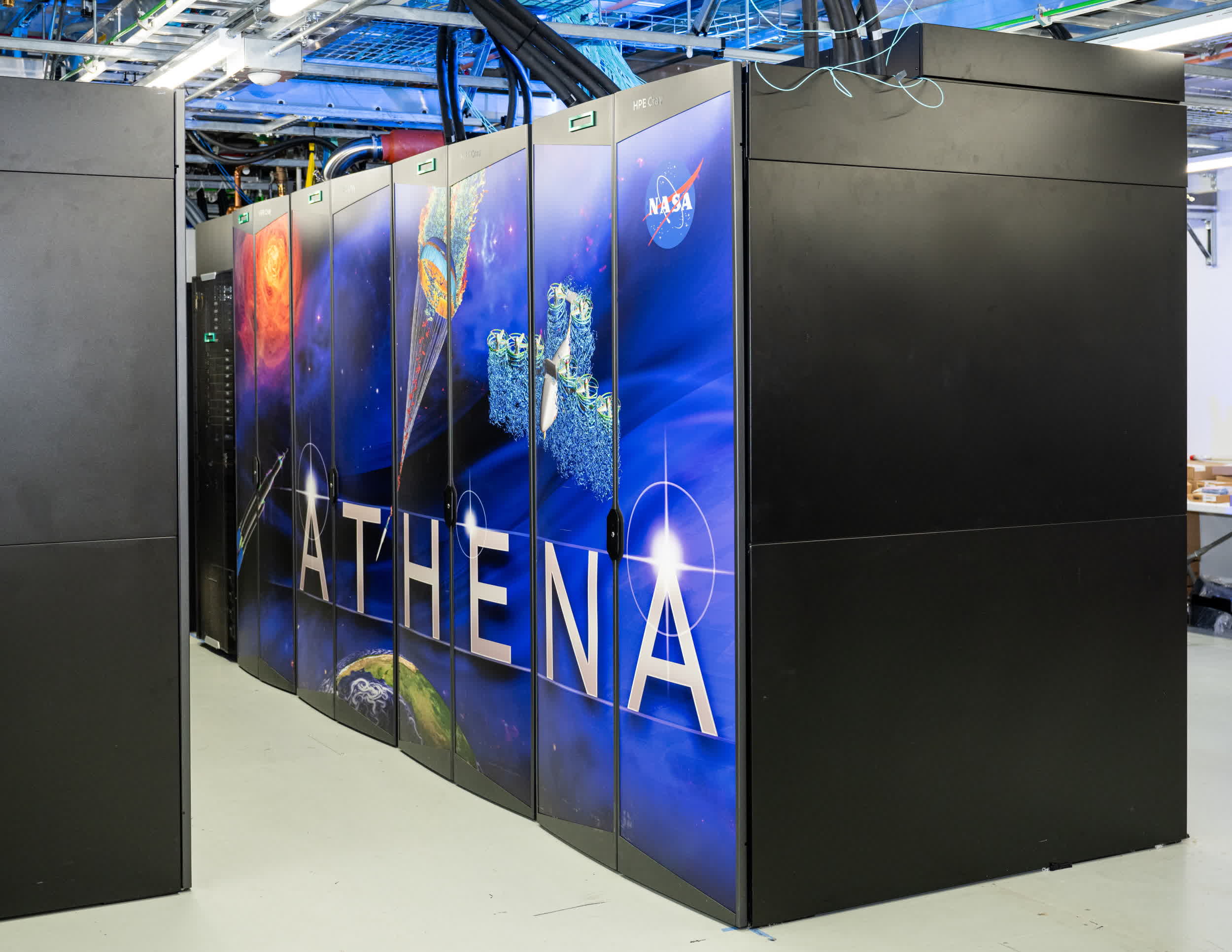
Athena, NASA's latest supercomputer, went online in January following a beta testing period. The US space agency says the new high-performance computing system can deliver more than 20 petaflops of peak performance while significantly reducing the energy required to run the extreme workloads needed to support its mission.

Athena is made up of 1,024 computing nodes, each equipped with two 128-core AMD Epyc CPUs. Built by Hewlett Packard, the system replaces NASA's earlier supercomputers, Aitken and Pleiades. NASA says Athena provides more computing power than any previous machine at the agency, along with improved performance and energy efficiency.

Part of NASA's High-End Computing Capability (HECC) program, Athena is hosted at the agency's Modular Supercomputing Facility at the Ames Research Center in Silicon Valley, California. The system is managed by the Office of the Chief Science Data Officer, which provides NASA with advanced computational resources.
NASA also said the HECC program adopts a flexible, hybrid computing approach. In layman terms, this allows the agency to use powerful in-house HPC systems such as Athena alongside additional resources, including commercial cloud platforms. This strategy helps NASA select the best tool for each specific research task.

Athena will run complex simulations to make rocket launches safer and more efficient. The system will also be used to design new generations of aircraft and spacecraft, train large-scale AI foundation models, and analyze massive datasets and image collections gathered by orbiting space telescopes.

In addition, NASA plans to grant external researchers limited access to Athena, provided their work supports the agency's programs and mission.

According to HECC chief science data officer Kevin Murphy, Athena will enable NASA to "expand its efforts to provide tailored computing resources that meet the evolving needs of its missions."

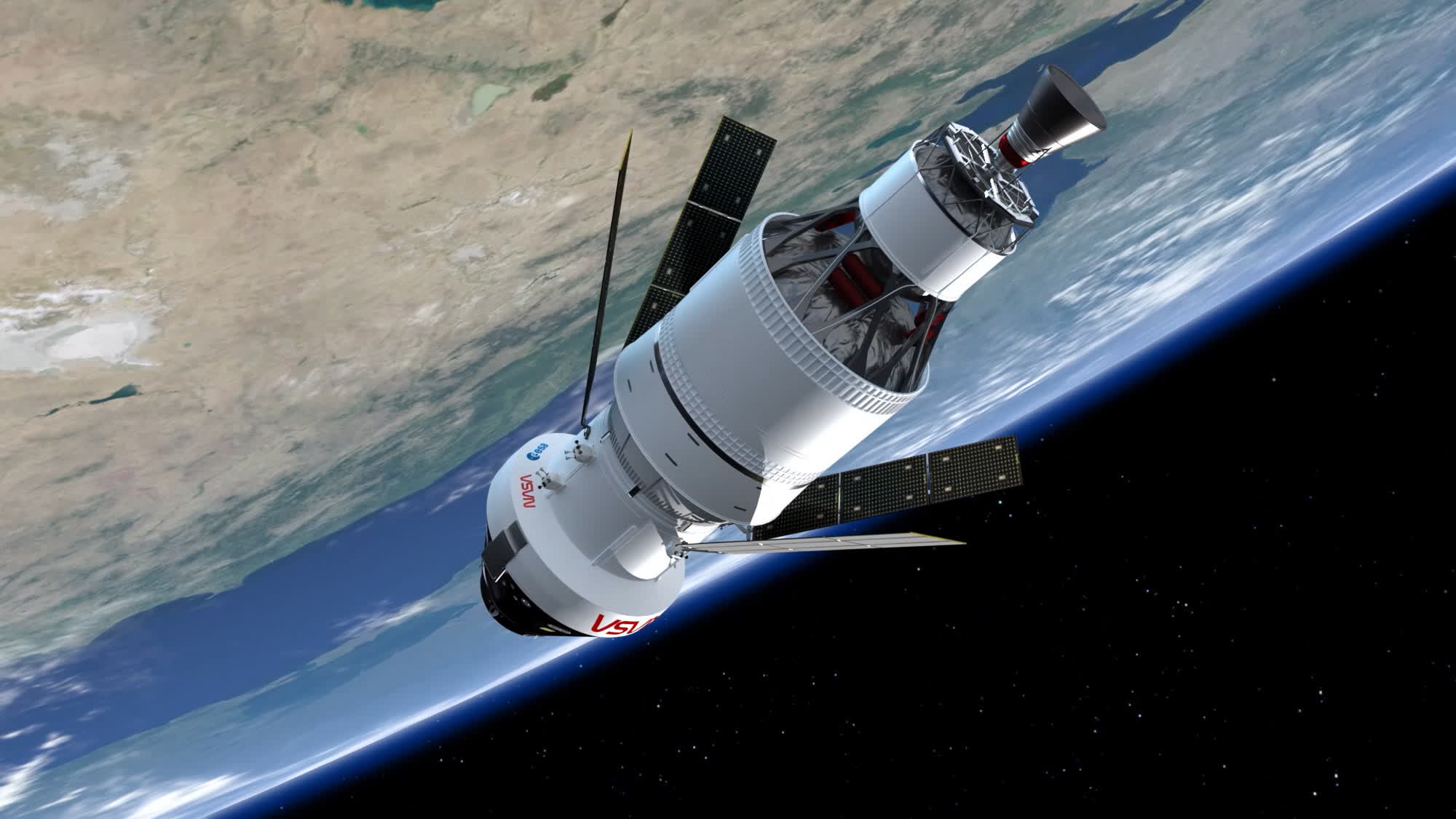
The name Athena was chosen through a contest held in March 2025 among HECC personnel. In Greek mythology, Athena is the goddess of wisdom, warfare, and handicraft, and the sister of Artemis, the goddess of hunting and nature. The connection is fitting: NASA is preparing to fly its Artemis II mission, which will carry a new generation of astronauts around the Moon and back.

Permalink to story:

 
It will produce nothing, create nothing, and do nothing - just like NASA has for the last forty years. It's thievery and fraud outright, just a huge NSF money pit.
 
NASA, fooling the global public since 1958, with their greatest heist of people’s imagination in 1969 with the filming of the Apollo 11 moon landing that actually took place at Cannon Air Force base in Arizona at the direction of Stanley Kubrick, and of course the CIA.

One can only guess what they’ll use this supercomputer for, but it won’t be to land humans on the moon, because “we lost the telemetry data and can’t recreate it” (the current ongoing argument for why people haven’t gone back to the moon LOL).
 
NASA, fooling the global public since 1958, with their greatest heist of people’s imagination in 1969 with the filming of the Apollo 11 moon landing that actually took place at Cannon Air Force base in Arizona at the direction of Stanley Kubrick, and of course the CIA.

One can only guess what they’ll use this supercomputer for, but it won’t be to land humans on the moon, because “we lost the telemetry data and can’t recreate it” (the current ongoing argument for why people haven’t gone back to the moon LOL).

You could still see the landmarks on the moon. Google it. What the hell are you talking about?

 
NASA, fooling the global public since 1958, with their greatest heist of people’s imagination in 1969 with the filming of the Apollo 11 moon landing that actually took place at Cannon Air Force base in Arizona at the direction of Stanley Kubrick, and of course the CIA.

One can only guess what they’ll use this supercomputer for, but it won’t be to land humans on the moon, because “we lost the telemetry data and can’t recreate it” (the current ongoing argument for why people haven’t gone back to the moon LOL).
You forgot the /s…

Hell, the invention of Velcro alone was worth every penny spent on NASA :)
 
Don't waste your time. Deniers live in their own fictional world so they can make up any new fiction they like to support their belief instead of taking a few minutes of time researching easily verifiable facts.

You can watch “A Funny Thing Happened on The Way to The Moon” or any of Bart Sibrel’s documentaries/books/interviews. Hell, even AI told Putin several years ago that the official NASA landing on the moon was fake and doctored, and that was before the AI-craze.

How about 21st century moon landings nowadays are silly cartoons -remember India, Japan, all silly animations, not the real thing.

Some critical thinking questions: who set up the camera before Armstrong exited the capsule for the first time. Or who was left behind to film them taking off from the moon. Nevermind how when the crew was driving on the moon while talking, you couldn’t hear any inflections in their speech whatsoever despite the terrain.

The of course, the fact that we haven’t been back, legitimately on the moon itself, for the past 60 years. It really doesn’t take much logical thinking…
 
NASA, fooling the global public since 1958, with their greatest heist of people’s imagination in 1969 with the filming of the Apollo 11 moon landing that actually took place at Cannon Air Force base in Arizona at the direction of Stanley Kubrick, and of course the CIA.
It’s funny that you mention Stanley Kubrick because knowing how much of a perfectionist he was, he’d say… Yeah, we need to go to the moon to get it right.
 
Some critical thinking questions: who set up the camera before Armstrong exited the capsule for the first time. Or who was left behind to film them taking off from the moon. Nevermind how when the crew was driving on the moon while talking, you couldn’t hear any inflections in their speech whatsoever despite the terrain.
Or you could just look up the obvious answers:

1. “Who set up the camera before Armstrong exited?”

Neil Armstrong did—indirectly.

  • The TV camera was already mounted inside the Lunar Module, in a compartment called the MESA (Modular Equipment Stowage Assembly).
  • When Armstrong pulled a lanyard as he opened the hatch, the panel folded down and the camera swung into position automatically.
  • No one was outside yet. No magic. No extra astronaut hiding off-screen.

So the famous first step was filmed by a camera that was:

  • Pre-installed
  • Mechanically deployed
  • Pointed at the ladder by design

Low-tech, very NASA.

2. “Who filmed them taking off from the Moon?”

A remotely controlled camera, moved from Earth.

During later missions (Apollo 15–17):

  • Astronauts placed a rover-mounted TV camera a short distance away.
  • The camera was remotely operated by NASA engineers on Earth.
  • Using telemetry, they panned the camera right on cue as the ascent stage lifted off.

This sounds wild, but remember:

  • It’s 1969–1972… NASA already had remote cameras, guided missiles, and unmanned probes
  • The movements weren’t “cinematic,” just rough tracking

If it were fake, honestly, it would’ve been easier to cut away than to pull off remote camera control with a 1.3-second signal delay.

3. “Why don’t their voices change with terrain or movement?”

This one’s a misunderstanding of how sound works in space.

Key points:

  • There’s no air on the Moon, so you don’t hear sound through the environment
  • Astronauts’ voices were picked up by microphones inside their helmets
  • Audio was sent by radio, not acoustics


_____

Got any other inane conspiracy theories that are easily debunked?
 
Or you could just look up the obvious answers:

1. “Who set up the camera before Armstrong exited?”

Neil Armstrong did—indirectly.

  • The TV camera was already mounted inside the Lunar Module, in a compartment called the MESA (Modular Equipment Stowage Assembly).
  • When Armstrong pulled a lanyard as he opened the hatch, the panel folded down and the camera swung into position automatically.
  • No one was outside yet. No magic. No extra astronaut hiding off-screen.

So the famous first step was filmed by a camera that was:

  • Pre-installed
  • Mechanically deployed
  • Pointed at the ladder by design

Low-tech, very NASA.

2. “Who filmed them taking off from the Moon?”

A remotely controlled camera, moved from Earth.

During later missions (Apollo 15–17):

  • Astronauts placed a rover-mounted TV camera a short distance away.
  • The camera was remotely operated by NASA engineers on Earth.
  • Using telemetry, they panned the camera right on cue as the ascent stage lifted off.

This sounds wild, but remember:

  • It’s 1969–1972… NASA already had remote cameras, guided missiles, and unmanned probes
  • The movements weren’t “cinematic,” just rough tracking

If it were fake, honestly, it would’ve been easier to cut away than to pull off remote camera control with a 1.3-second signal delay.

3. “Why don’t their voices change with terrain or movement?”

This one’s a misunderstanding of how sound works in space.

Key points:

  • There’s no air on the Moon, so you don’t hear sound through the environment
  • Astronauts’ voices were picked up by microphones inside their helmets
  • Audio was sent by radio, not acoustics


_____

Got any other inane conspiracy theories that are easily debunked?

This is how you pwn stupid trolls. Good work.
 
Back