
Why it matters: E-ink displays typically offer better visibility and lower energy consumption compared to other screen technologies, but they suffer from inferior image clarity and lower color resolution. A new fabrication method could address the resolution issue by shrinking pixels beyond the limits of human visibility, making them ideal for wearables.
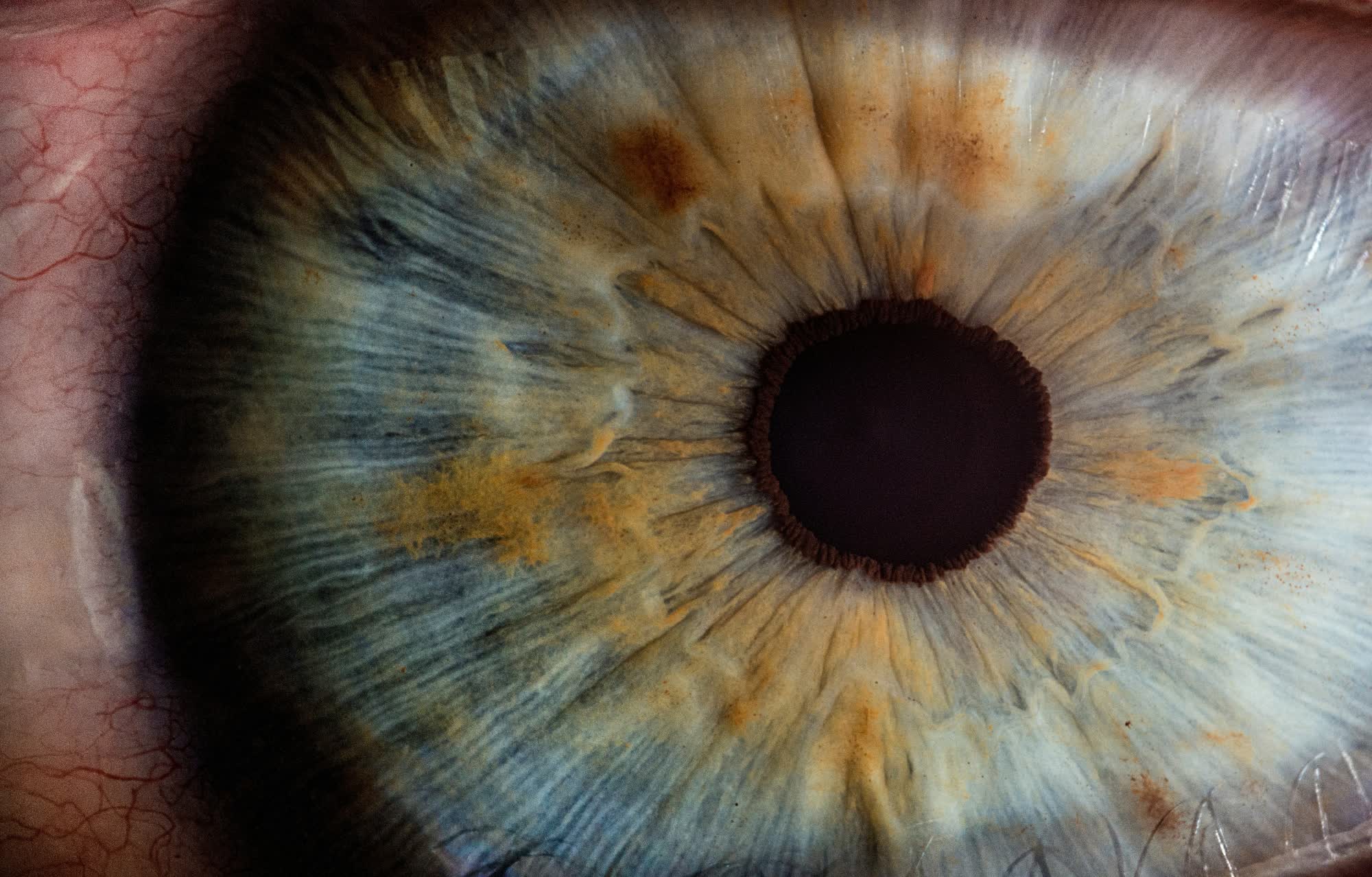
Researchers from Uppsala University and the University of Gothenburg recently proposed a new type of anti-glare screen that can achieve extreme pixel densities. Addressing one of the primary shortcomings of e-ink technology could enable the deployment of more high-resolution displays with minimal energy consumption.
The fabrication method, dubbed retina E-paper, involves putting tungsten trioxide nanodisks through a reversible insulator-to-metal transition on electrical reduction, enabling precise control over reflectiveness and contrast at an extremely small scale. The resulting e-paper pixels can be as small as 560 nanometers, or smaller than some bacteria, exceeding 25,000 pixels per inch.
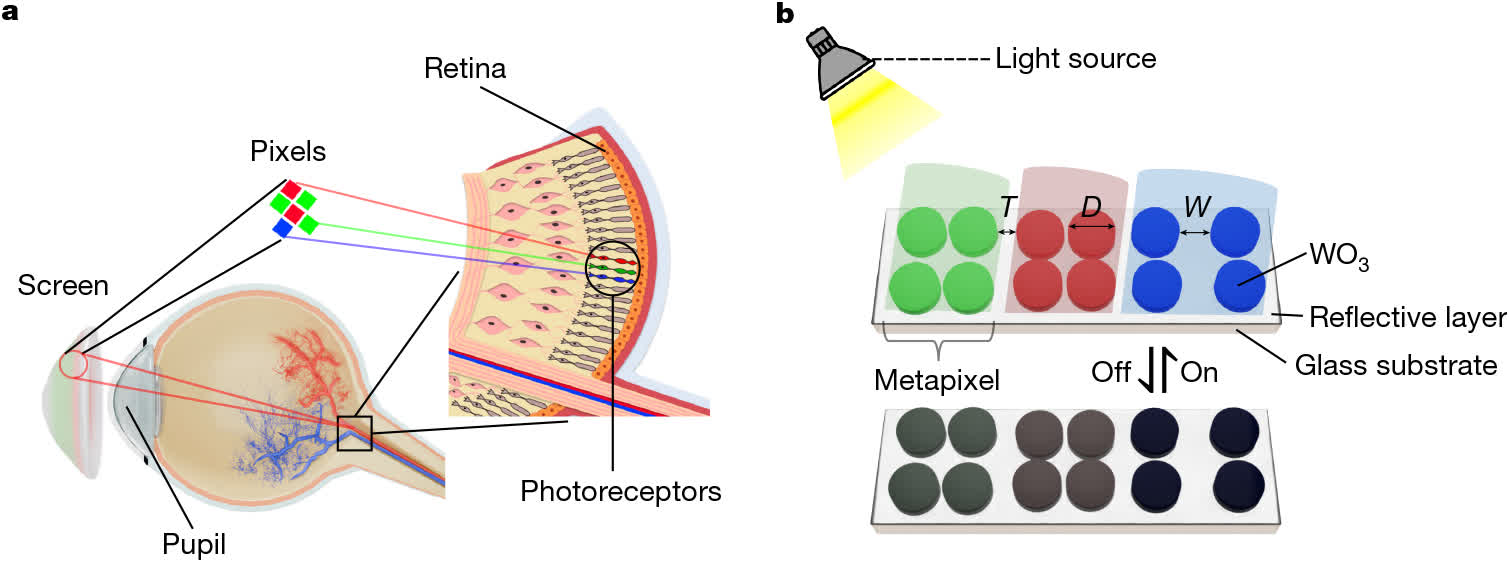
This could theoretically enable resolutions well over 4K on a screen the size of a contact lens. A similar effect would be possible with lower resolutions at more conventional viewing distances.
For comparison, the screens on most iPhone models reach approximately 460 PPI, and many high-resolution tablet or PC displays achieve slightly more than 200 PPI. Meanwhile, most recently released e-ink displays achieve 300 PPI in black and white but halve that resolution in color mode.
Like other e-ink screens, retina E-paper would offer superior contrast and visibility in sunlight compared to LCD or LED displays while consuming less energy. The researchers estimate that it would draw around 0.5 milliwatts per square centimeter while displaying static images and 1.7 milliwatts per square centimeter while displaying video, far less than typical e-ink panels.
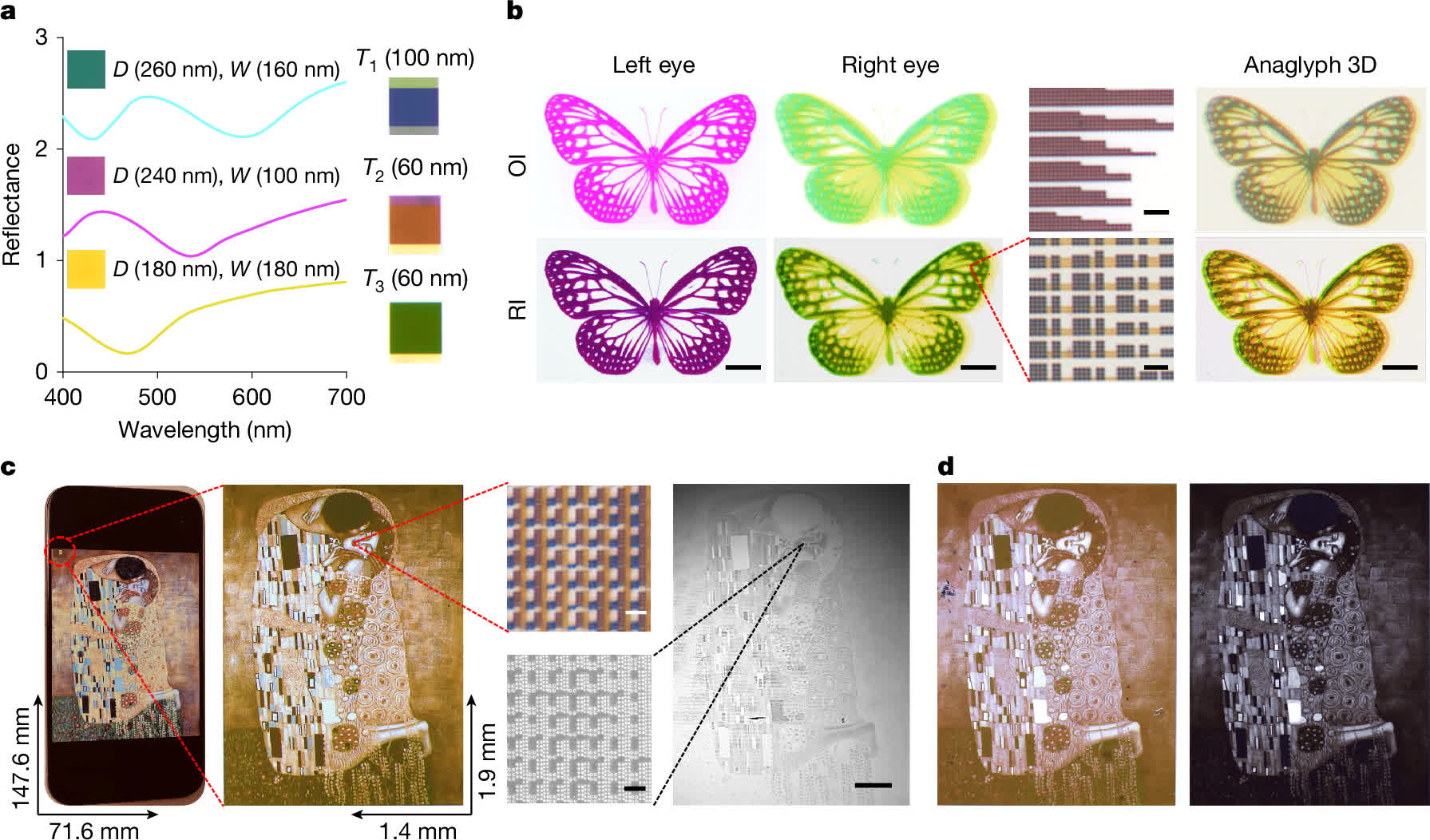
Although retina E-paper supports color and anaglyph 3D, it likely cannot match the high refresh rates of more conventional display technologies. The researchers claim that it can exceed 25Hz without specifying the maximum. Currently available e-ink monitors can reach 60Hz, while LEDs can display hundreds of frames per second.
Another recent study by physicists from Julius-Maximilians-Universität Würzburg in Germany proposes a method for shrinking OLED pixels down to just 300 square nanometers. A wearable device utilizing the technology could conceivably fit a 1080p panel into a space measuring a square millimeter, likely exceeding 55,000 PPI. However, the technology can currently only display orange, and the possibility of commercial availability remains undetermined.
New e-ink displays could reach "retina e-paper" status with pixel densities over 25,000 PPI


