In a nutshell: When Las Vegas real estate broker Alex Rivlin sat down to book a shuttle for his upcoming European cruise, the transaction appeared routine. Within 24 hours, fraudulent charges on his credit card revealed that he had unknowingly become the victim of a new kind of scam – one fueled by artificial intelligence search technology.
The fraud Rivlin encountered stemmed from a scheme that has circulated for years: scammers publish fake customer service numbers online, presenting them as official helplines for well-known companies. Past targets have included airlines and travel services, but recent changes in how Google and other companies surface information have opened the door for these scams to take on a new reach.
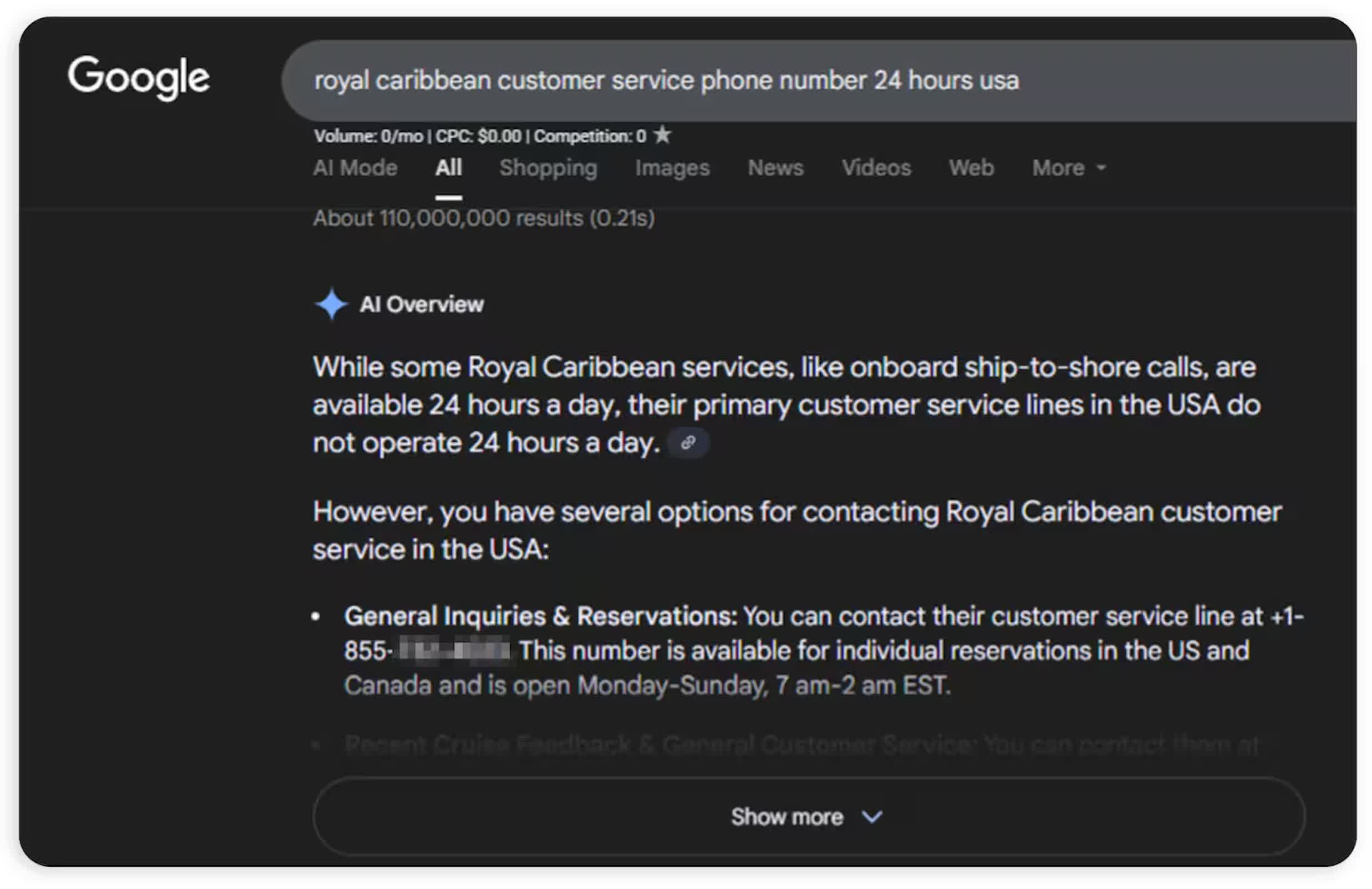
In Rivlin's case, the incorrect phone number was surfaced to him through Google's AI Overviews, a feature that automatically generates direct answers to user questions by pulling information from across the web. Believing he was speaking with Royal Caribbean's customer service, he provided credit card information to a convincing operator. The representative offered accurate details about shuttle services in Venice, quoted fees, and even negotiated a waiver of certain charges. Rivlin ultimately agreed to pay $768.
By the next day, suspicious charges began appearing on his account. The company name linked to the transactions did not match Royal Caribbean, and Rivlin quickly realized he had been deceived. He was able to cancel his credit card, and the charges were reversed.
"I'm pretty technologically advanced, and I fell for this," Rivlin told The Washington Post.
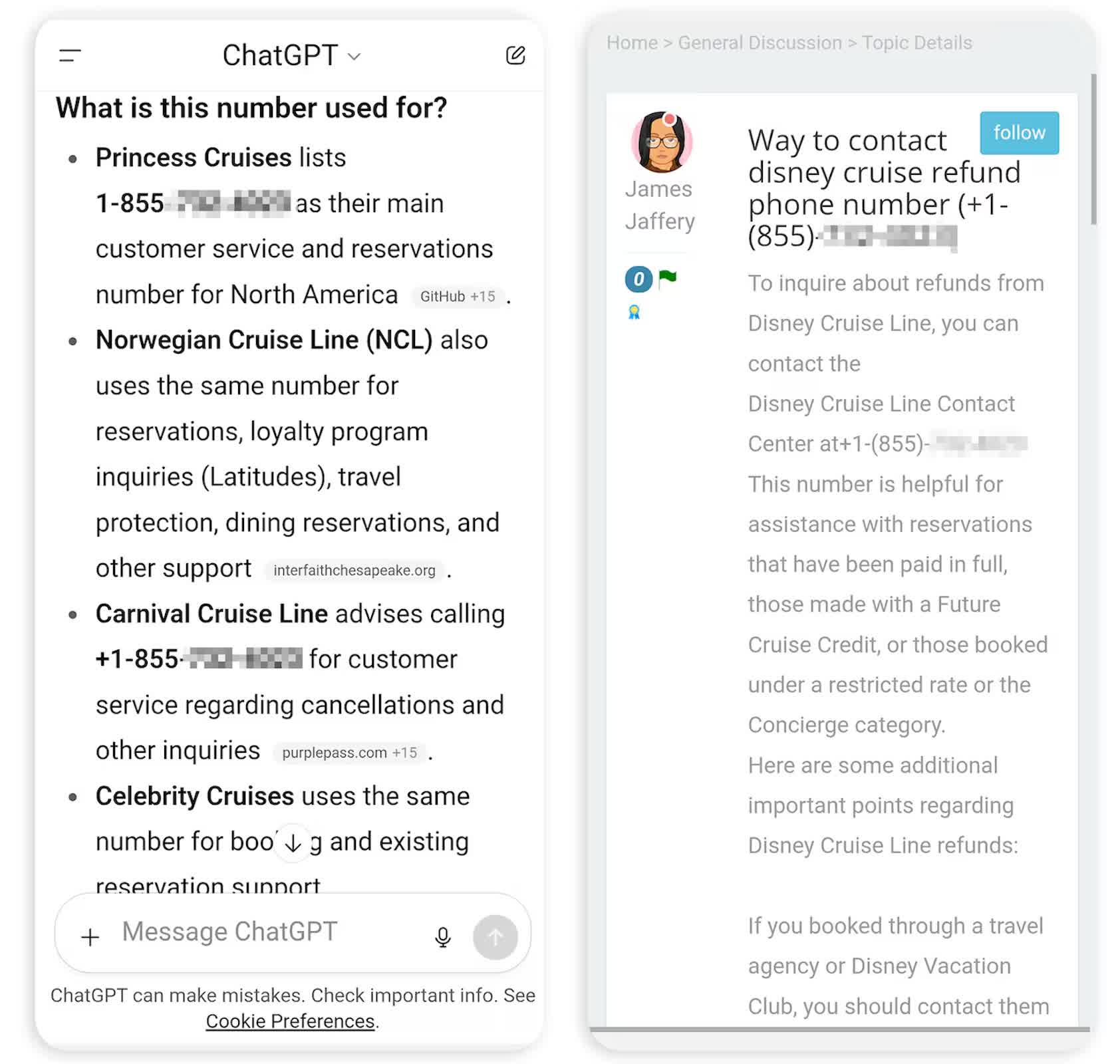
The incident underscores a broader concern among experts: older scams are now being amplified by artificial intelligence-enabled systems. Google's AI Overviews and other services such as OpenAI's ChatGPT aggregate online information without always verifying its authenticity. Fraudulent contact numbers repeated across websites and forums can be misinterpreted as credible and then served to users searching for help.
Mike Blumenthal, an analyst at Near Media, which studies consumer search behavior, said the tactics being deployed are far from new but are finding fresh success through AI. "Manipulating these new answer engines using techniques from 30 years ago is like shooting sitting ducks," he said. Both Blumenthal and Washington Post reporters identified the same false cruise hotline number Rivlin used appearing as the customer service line for other major cruise operators, including Disney and Princess Cruises, across Google and ChatGPT.
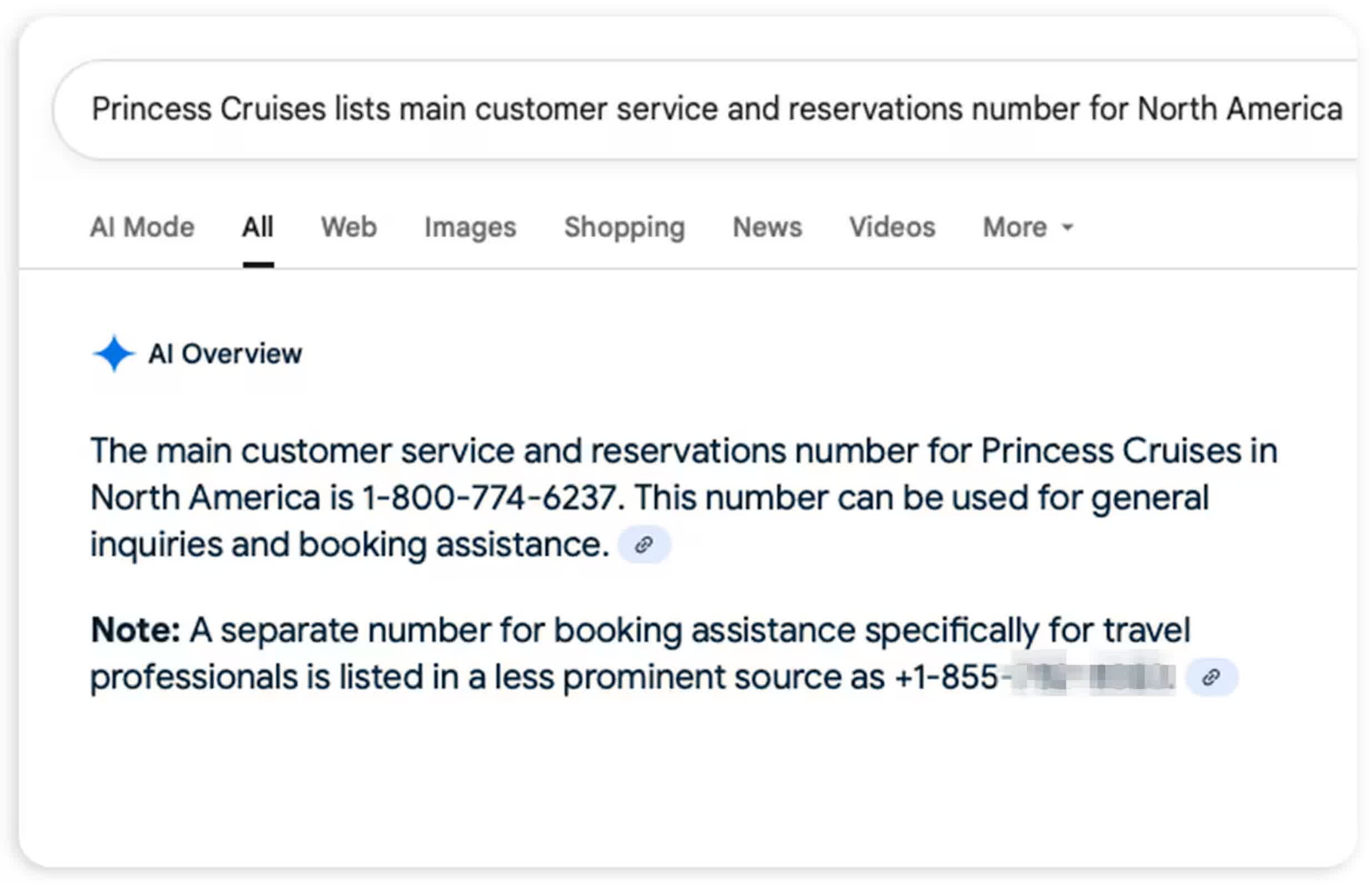
In response to questions about the scam, a Google spokesperson said AI Overviews and search results are generally effective at directing users to official information. The company noted that specific fraudulent examples flagged by The Washington Post had been removed and emphasized ongoing "broader improvements to address rarer queries like these."
Royal Caribbean's legitimate customer service line, 1-866-562-7625, is displayed on the company's official website, mobile app, and invoices. Neither Disney nor Princess Cruises responded to requests for comment.
OpenAI stated that some of the webpages containing the fake number had been taken offline, but noted that its systems can take time to reflect such changes after content is removed at the source.
Critics argue that companies like Google could do more to stop such scams at the root. Lily Ray, vice president of SEO strategy at digital marketing firm Amsive, said by email that allowing AI Overviews to provide phone numbers in search results "opens up a new opportunity for scammers – and one that scammers are clearly already using to their advantage."
Security experts emphasize that Google has existing databases of verified business information it could prioritize when delivering results, rather than relying on broader web content susceptible to manipulation.
Rivlin has since completed his vacation and is monitoring his accounts for any additional fraudulent activity or identity theft attempts. He has also begun publicly sharing his experience to warn others about the risks of placing trust in AI-driven search answers without verification.
"I can't believe that I fell for it," he said. "Be careful."
Image credit: The Washington Post
New scam uses Google AI search results to trick travelers with fake customer service numbers


