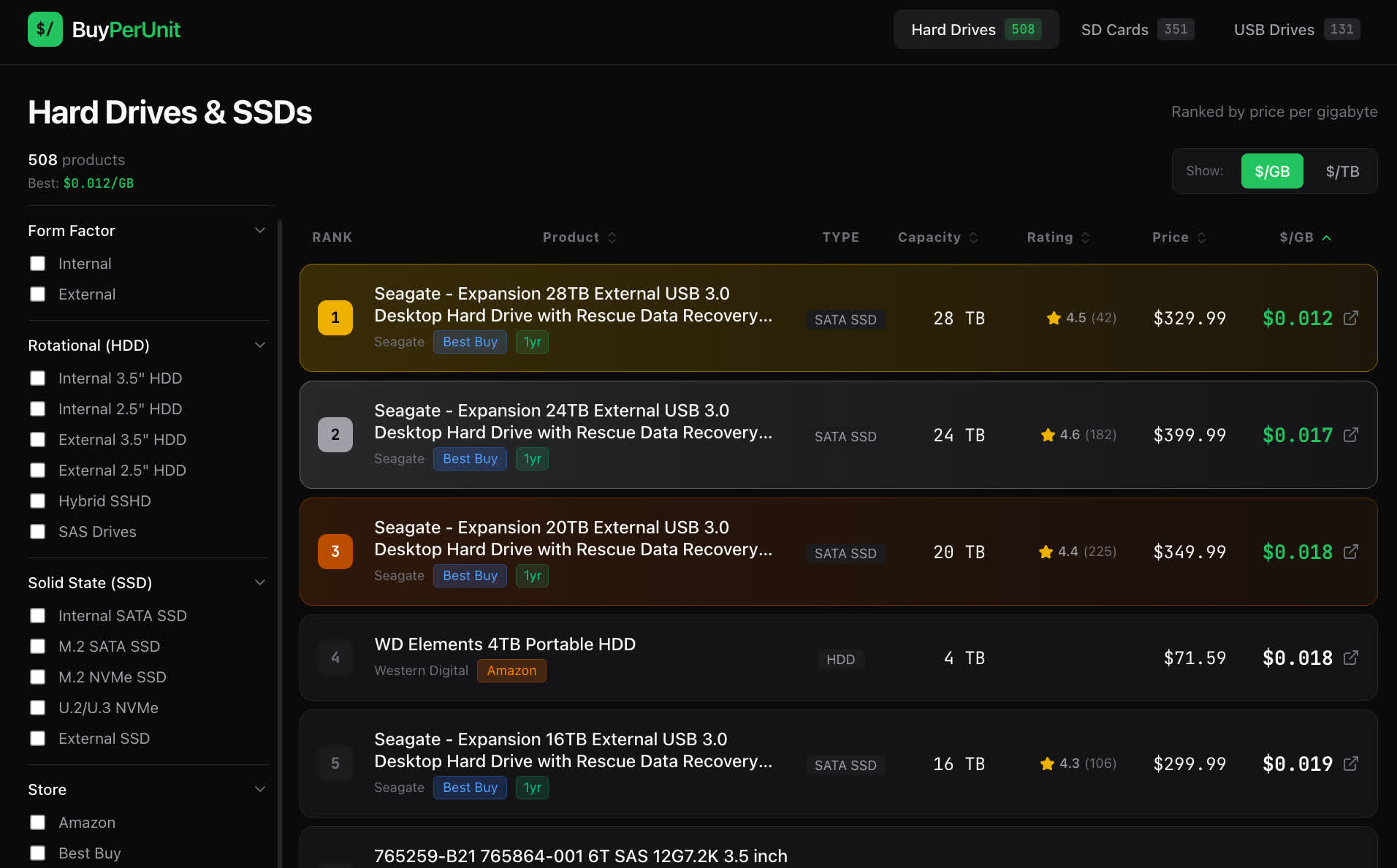
First look: Jon Levesque, a former executive at Microsoft and DocuSign, has launched a new project that takes a data-driven approach to storage shopping. His website, BuyPerUnit.com, organizes drives purely by how much capacity you get for your money. Rather than highlighting brand names or marketing claims, the platform lists storage products – SSDs, HDDs, SD cards, and USB drives – by their price per gigabyte or per terabyte.
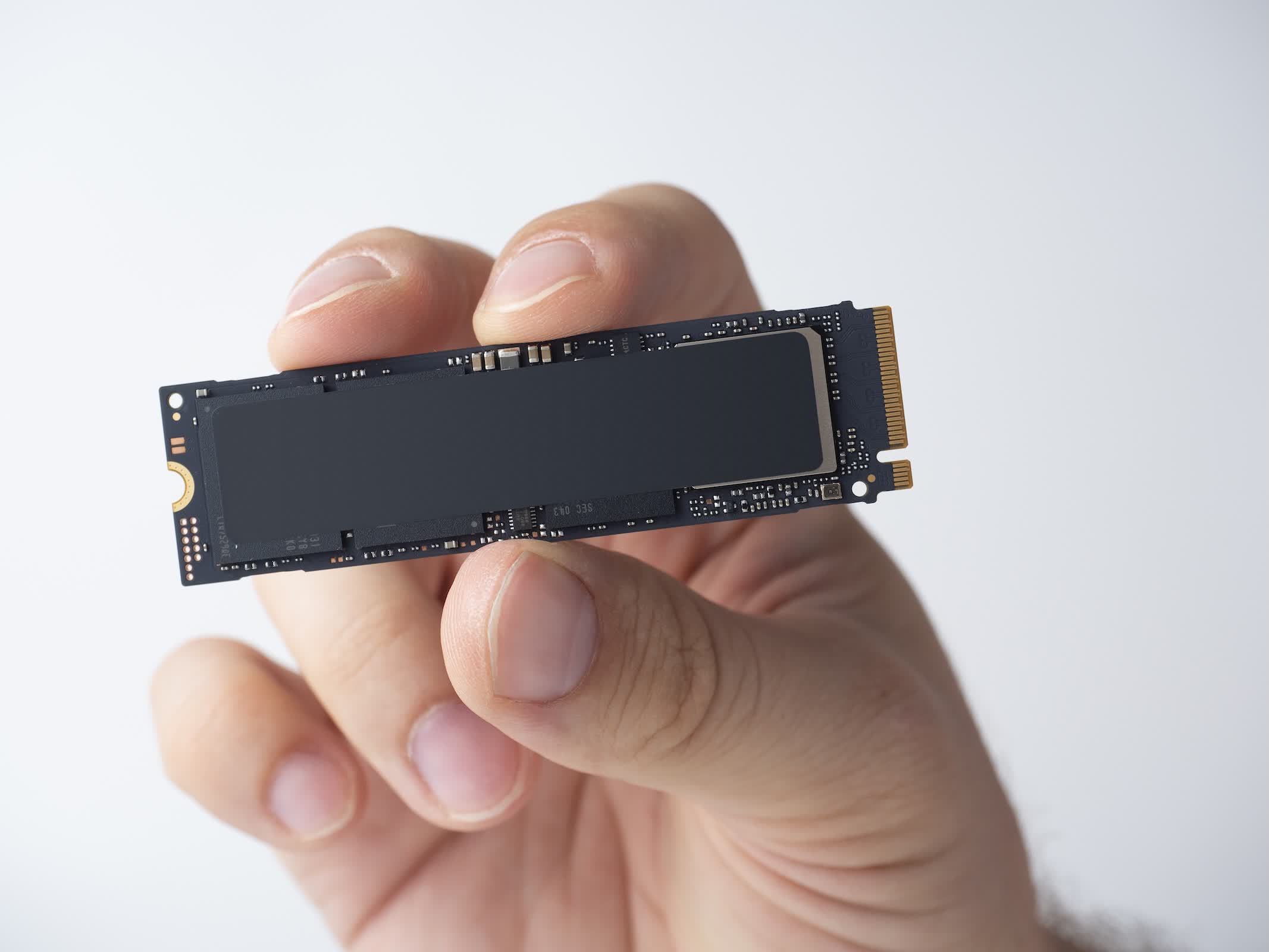
The idea emerged from Levesque's own frustration while sourcing hard drives in bulk. Traditional online retailers emphasize total price, but that metric can obscure how much actual storage value a user receives.
BuyPerUnit flips the logic: the lower the per-unit cost, the better the deal. The current catalog includes more than 300 hard drives and SSDs, along with dozens of SD and USB options. Users can filter by size, form factor, or price unit, then click through to the retailer to complete the purchase.
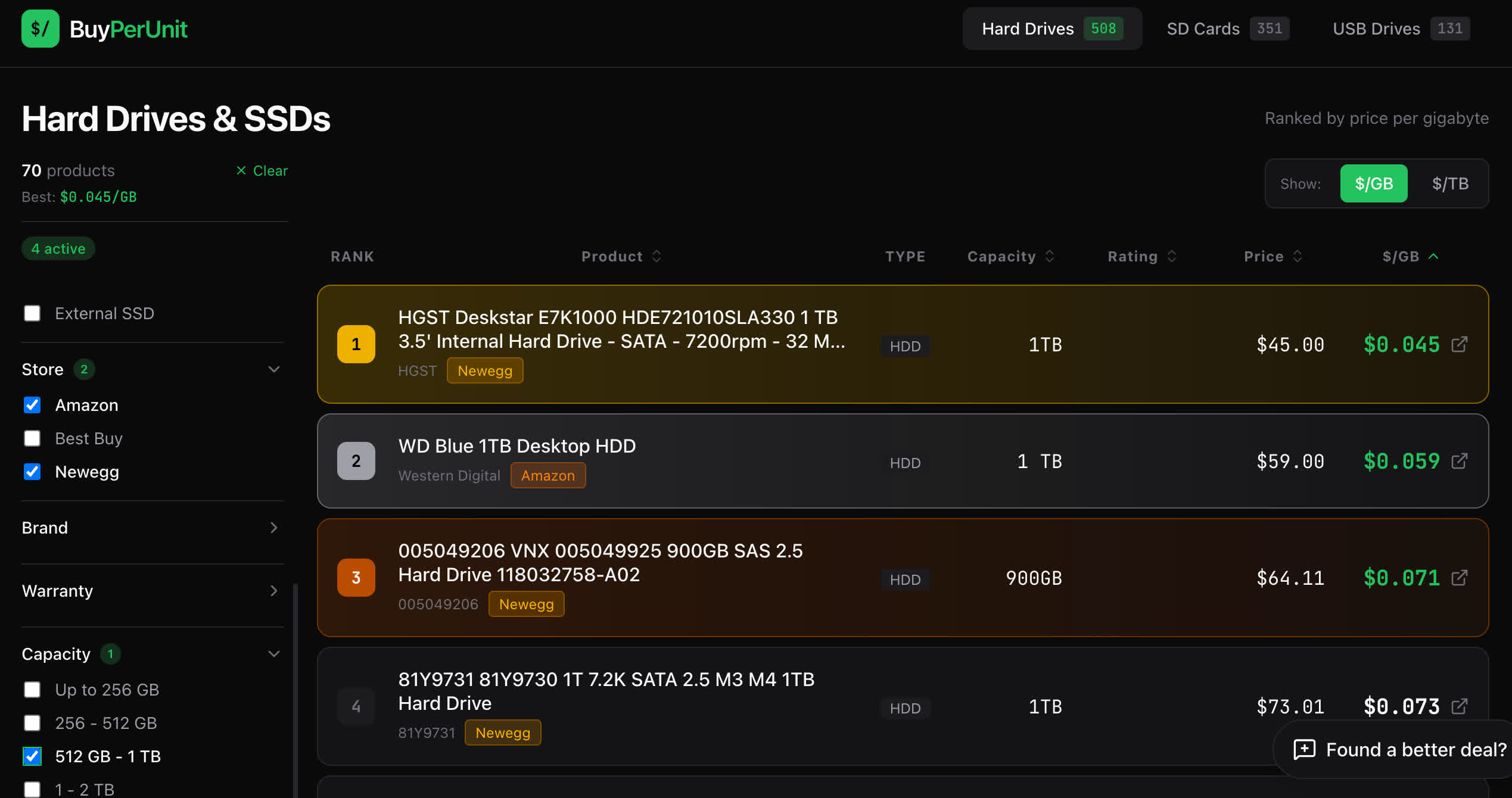
For now, the platform is labeled a "rough V1." Rather than paying for automated retail APIs, the site scrapes prices from major outlets, including Amazon and Best Buy – a method that reduces overhead but introduces inefficiencies. The interface is intentionally barebones, focused on transparent data display rather than design flourish.
From a technical standpoint, BuyPerUnit offers a clear view of value but does not evaluate performance metrics. Enthusiasts looking for details such as read/write throughput, NAND type, or interface protocols still need to manually compare manufacturer data. That absence leaves room for refinement, particularly as the PC storage market continues to shift amid fluctuating supply and pricing conditions.
Levesque notes that user feedback is shaping the product roadmap. Future updates could include better separation between solid-state and mechanical drives, more granular specification filters, and broader support for memory modules. Competing price aggregators, such as DiskPrices.com, already refresh listings frequently – every four hours in its case – but typically draw from a single retailer. BuyPerUnit aims to cast a wider net, even in its alpha state.
Despite the early build, the utility is apparent. The storage market remains fragmented, and for anyone comparing options across retailers, a per-unit view brings rare transparency. It does not reinvent storage shopping so much as simplify it, distilling a noisy marketplace into one empirical metric: cost per byte.
New website helps you find the cheapest storage by cost per gigabyte


