Nvidia's $4 trillion rise raises questions about financing its own customers

Skye Jacobs

Posts: 1,913   +58
Staff
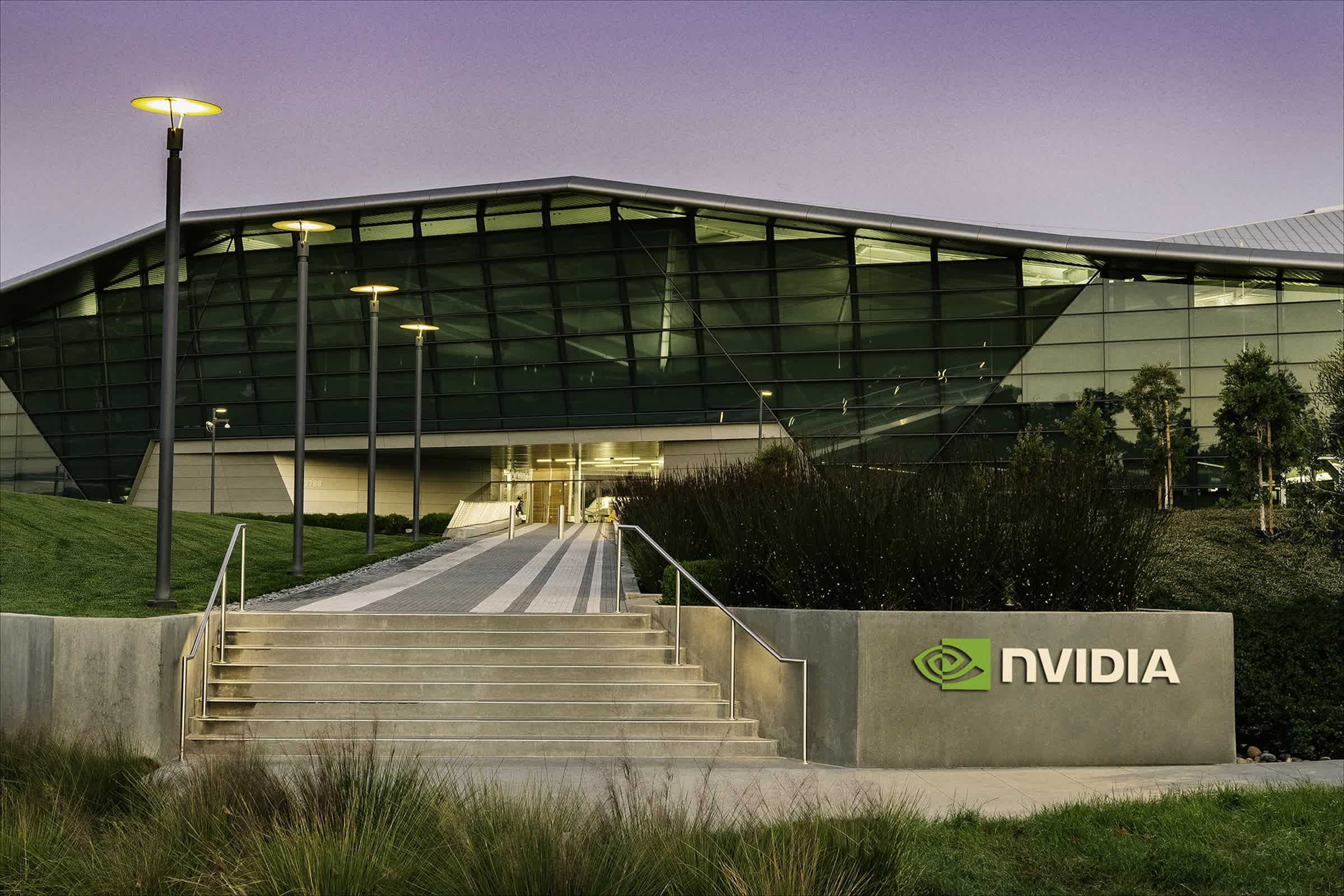
Bottom line: Nvidia's explosive rise to become the world's most valuable company has come with an uneasy question from investors: how much of its record-breaking growth depends on financing its own customers? Now worth more than $4 trillion, Nvidia designs the specialized silicon and software that power AI systems, from data centers hosting ChatGPT to national AI computing hubs. But behind that scale lies a complicated web of investments that critics say resembles vendor financing – a practice in which a company lends money to customers who use those funds to buy its products.
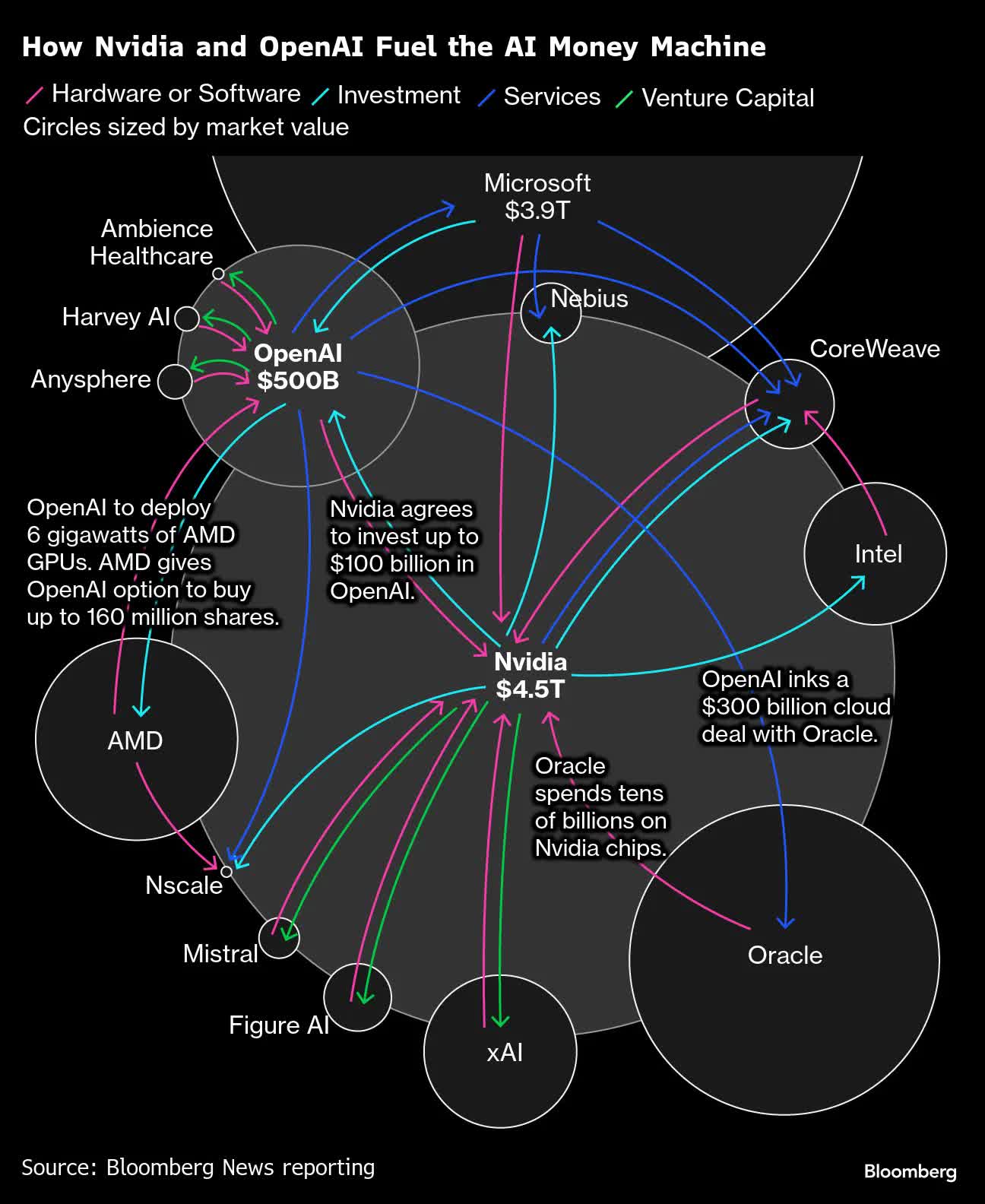
The concern centers on circular financial flows between Nvidia and companies that depend heavily on its chips. Nvidia has committed to invest $10 billion annually in OpenAI for the next decade, most of which will fund purchases of its own hardware. It has also arranged deals with CoreWeave, an AI cloud provider that essentially resells or leases access to Nvidia's chips, while receiving Nvidia's financial backing in parallel.

Comparisons have surfaced with Lucent Technologies, the former telecom supplier that collapsed after using similar arrangements to drive sales in the late 1990s. Nvidia has firmly rejected any equivalence. In a leaked memo, the company said it "does not rely on vendor financing arrangements to grow revenue."
Still, skepticism persists among long-term investors. James Anderson, a prominent technology investor, told The Guardian this year that the OpenAI deal presented "more reason to be concerned there than before." He added, "I have to say the words 'vendor financing' do not carry nice reflections to somebody of my age. It's not quite like what many of the telecom suppliers were up to in 1999 – 2000, but it has certain rhymes to it. I don't think it makes me feel entirely comfortable from that point of view."

The scale of the commitments underpinning the AI ecosystem is immense. OpenAI alone has staked around $1.4 trillion on computing power, much of it built on Nvidia infrastructure. It argues that Nvidia's and AMD's investment ties are meant to align incentives and accelerate deployment rather than create dependence. CoreWeave's chief executive, Michael Intrator, has described the structure as a pragmatic response to "a violent change in supply and demand."

Industry analysts caution that Nvidia's exposure may reflect the broader economics of artificial intelligence rather than accounting manipulation, as its financial future depends in large part on whether AI adoption continues fast enough for customers such as OpenAI, Anthropic, and CoreWeave to remain solvent...

Beyond these arrangements, Nvidia has deployed special-purpose vehicles, or SPVs, to structure investments – including a $2 billion fund tied to Elon Musk's xAI, whose proceeds are earmarked for chip purchases.

The mechanism has drawn comparisons with Enron, which used SPVs to obscure debt and inflate earnings before collapsing in 2001. Nvidia has rejected any similarity, asserting that its reporting is "complete and transparent" and that it "does not use special-purpose entities to hide debt and inflate revenue."

Industry analysts caution that Nvidia's exposure may reflect the broader economics of artificial intelligence rather than accounting manipulation, as its financial future depends in large part on whether AI adoption continues fast enough for customers such as OpenAI, Anthropic, and CoreWeave to remain solvent. If revenues falter, Nvidia could face write-downs on those equity stakes and unpaid receivables.
The chipmaker has also inked high-value but opaque agreements with governments, including South Korea and Saudi Arabia, committed to deploying hundreds of thousands of Nvidia's Blackwell chips.

The company disclosed some details, such as the estimated 260,000 chips going to South Korean buyers, but not deal values. Saudi Arabia's state-backed AI startup Humain has announced plans to buy up to 600,000 chips, without clear timing or pricing.

The company's CFO, Colette Kress, told investors in December that Nvidia does not see an AI bubble and predicted trillions of dollars of potential business over the next decade. For now, markets appear to be in agreement. But the underlying structures that helped propel Nvidia's trillion-dollar ascent may yet test whether its success rests on solid ground – or on the same circular financing patterns that haunted earlier eras of tech history.

Permalink to story:

 
In house financing only works when it's treated as a stand alone entity that actually turns a profit. When used to drive sales, it almost always comes back to bite you. And there is no "too big to fail," GE anyone?
 
There is a difference between financing their own customers and investing in their field of business.

AFAIK, Microsoft always worked with the chipmakers for designing their OS, so any of this is only normal for higher level of implementation.
 
In house financing only works when it's treated as a stand alone entity that actually turns a profit. When used to drive sales, it almost always comes back to bite you. And there is no "too big to fail," GE anyone?
GE was never controlling the technology that is driving the next industrial revolution. GE was a conglomerate similar to what Intel is. The company was so big that the inertia prevented them from executing. You are obviously making the wrong allusions leading you to the wrong conclusion.
 
Nvidia’s growth is being fueled as much by financial engineering as by real demand. Circular financial flows might inflate revenue in the short term but they also heavily concentrate risk.

Much of AI usage today is free or unprofitable; there’s no proven path for these expenditures to generate real ROI in the broader market yet. If AI monetization stalls or a key customer falters, Nvidia could face massive write-downs, stranded investments, and a sharp correction in valuation.

Short-term upside is huge, but the structure makes this a highly speculative, high-risk setup with a real potential for failure.

Fortunately I think, at least for the moment, that if the AI bubble we keep discussing bursts, the biggest risks are concentrated in AI-focused companies, GPU suppliers, and investors. Cloud providers and enterprises with heavy AI investments would feel the pain next, potentially slowing AI adoption. And the broader tech markets could see ripple effects, but the overall economy would likely remain intact—making it a sector-specific shock with high financial risk but limited systemic collapse.
 
GE was never controlling the technology that is driving the next industrial revolution. GE was a conglomerate similar to what Intel is. The company was so big that the inertia prevented them from executing. You are obviously making the wrong allusions leading you to the wrong conclusion.

GE may not have been doing anything as splashy as AI. (Who has?) But to dismiss them out of hand as an old, decrepit, company that was past it's prime is dead wrong. (Gen z, perhaps?). Jet engines, MRI, x-ray, digital radiography, power grid, wind turbines, lighting, and countless other things we take for granted. The company was hugely profitable and brilliantly run until Immelt took control of the company. Much like many failed successful companies, the desire to make the stock price boom (and probably his paycheck, much like most recent CEO contracts, he used GE Finance as a tool to move merchandise (Do you really think Nvicia'a "investing" is any different?). This worked for a long time,but the 2008 financial crisis marked the end of GE. Because of it's size and diversity, it took until 2024 to finally bury it for good. As with most, one horse tech stocks, their slip ups usually result in quicker deaths. The real question is, does Nvida have the cash to survive the collapse of one or more of these "deals", or will it take Nvida with them. Unlike an outright finance company, only Jensen really knows how leveraged they are.
 
This is kinda old news. The circular investment scam nVidia and others were getting into was covered well over a month ago and was hot news.

Also curious that the story talks of nvidia's $4 trillion value, but doesnt mention they briefly touched $5 trillion just 2 months ago. Them losing 20% of their value in 2 months I feel is a much bigger story. Perhaps the market is starting to wake up to how ridiculously overvalued these companies are, and how unsustainable the AI craze is? From hardware being stored in warehouses to governments resisting datacenter buildout to the total lack of profitability and the evidence of circular investing, there's a lot of doubt over AI's supposed value, and nothing has backed it up so far.
There is a difference between financing their own customers and investing in their field of business.

AFAIK, Microsoft always worked with the chipmakers for designing their OS, so any of this is only normal for higher level of implementation.
There IS a difference. Microsoft didnt buy up 10% of AMD chares for designing the xbox SoC. They didnt buy up ARM shares when designing their server CPUs. Ece Ece.

What they have been doing for AI is highly unusual.
 
I see all these AI related articles almost daily, but none of them ever attempt to explain how all these companies plan on making their money back after spending hundreds of billions in some cases. What's the long term plan here for profitability? I mean, this is all fine and dandy for nVidia, who will always insist there's no bubble in order to sell more hardware. They'll happily keep selling more chips and then use those profits to "finance" their own customers so they can buy even more chips until nVidia's valuation hits $500 trillion or whatever.

I just don't understand how any of these companies can believe their profits will magically appear one day if they just keep spending money on more AI chips. Are they planning on charging governments, researchers, other companies, etc. for AI access in the future? If they plan on making their money back by expecting the average user to start paying a monthly fee for AI then I can tell you with 100% certainty the whole thing will fail.

Personally, I will never ever and I mean EVER pay for AI, no matter what it can do, PERIOD. And I'm sure plenty of people feel the same way. So, can anyone even guess how these companies plan on recouping the trillions of dollars being poured into AI? The whole thing feels like the old meme that goes:

Step 1 - Buy nVidia's AI chips
Step 2 - Train AI models
Step 3 - ????????
Step 4 - Profit
 
I see all these AI related articles almost daily, but none of them ever attempt to explain how all these companies plan on making their money back after spending hundreds of billions in some cases. What's the long term plan here for profitability? I mean, this is all fine and dandy for nVidia, who will always insist there's no bubble in order to sell more hardware. They'll happily keep selling more chips and then use those profits to "finance" their own customers so they can buy even more chips until nVidia's valuation hits $500 trillion or whatever.

I just don't understand how any of these companies can believe their profits will magically appear one day if they just keep spending money on more AI chips. Are they planning on charging governments, researchers, other companies, etc. for AI access in the future? If they plan on making their money back by expecting the average user to start paying a monthly fee for AI then I can tell you with 100% certainty the whole thing will fail.

Personally, I will never ever and I mean EVER pay for AI, no matter what it can do, PERIOD. And I'm sure plenty of people feel the same way. So, can anyone even guess how these companies plan on recouping the trillions of dollars being poured into AI? The whole thing feels like the old meme that goes:

Step 1 - Buy nVidia's AI chips
Step 2 - Train AI models
Step 3 - ????????
Step 4 - Profit
A few guesses, none of which are especially magical or guaranteed:

1) It’s mostly an enterprise play, not you. The “average user paying $20/mo” thing is loud because it’s visible, but it’s probably not the core bet. The real money is companies paying for AI the same way they pay for cloud, databases, CRM, etc. If AI shaves 5–10% off payroll, support costs, or dev time at a Fortune 500, that’s worth seven figures a year to them. You not paying is… fine. You were never the target.

2) AI as a feature, not a product. A lot of this gets bundled. Microsoft doesn’t need Copilot to be wildly profitable on its own if it increases Office/Windows/Azure lock-in. Google uses AI to protect search and ads. Amazon uses it to sell more AWS. The “AI” line item may lose money while the ecosystem wins.

3) Governments and regulated industries will absolutely pay. Defense, intelligence, healthcare, finance, compliance, tax agencies, courts, etc. These orgs already spend obscene money on software and contractors. An AI system that reduces headcount or speeds decisions will get budgets approved fast. This is boring but very real.

4) Productivity capture > consumer subscriptions. If AI genuinely replaces parts of white-collar labor (or even just makes fewer people do the same work), the value capture comes from whoever owns that productivity. Historically, new general-purpose tech doesn’t charge consumers directly (electricity, internet protocols, GPS); it monetizes downstream.

5) There will be a shakeout. Most AI companies will fail. The spending spree looks less like a single bubble and more like railroads or dot-coms: massive overbuild, lots of bankruptcies, a few survivors owning critical infrastructure. This is where I place my biggest bet.

6) Nvidia is the arms dealer, not the empire.
They’re selling picks and shovels in a gold rush. That doesn’t mean the gold rush ends well for the miners. Historically, it doesn’t.
 
From an Nvidia standpoint, they will surely reject all these claims. But people are not dumb, especially when these big tech openly boasts about these massive investments. With ROI that cannot cover these investments and if financial institutions restrict lending for such AI investments, it is a matter of time before these rich people's money making machine slows down or come to a halt.
 
Don't worry, when this collapses, middle-class taxpayers will bail out the ultra-wealthy so they don't have to reap the downsides of high-risk investments. Gotta protect those political donors.
 
I see all these AI related articles almost daily, but none of them ever attempt to explain how all these companies plan on making their money back after spending hundreds of billions in some cases.

Let's admire the brilliant answer from AI. Let's not forget that right now, AI offers answers in a context so deeply thought, it would be equivalent to a human of iQ 200... And it happens in milliseconds, billions of answers.

"
You’re not missing something obvious — you’re noticing the core tension of the AI boom, and most popular articles absolutely dodge it.
Let’s strip the hype away and talk in concrete economic terms.
1. Why the spending looks irrational (but isn’t entirely)
What you’re seeing right now is infrastructure build-out, not a mature industry.
This phase looks similar to:
Railroads in the 1800s
Electricity grids
Telecom fiber in the 1990s
Cloud computing in the 2000s
In every one of those:
Capital spending massively preceded profitability
Many companies never made their money back
A few winners captured outsized returns
So the question isn’t “Will all these companies profit?”
It’s “Who is positioning themselves to be unavoidable?”
2. NVIDIA actually is the exception (and you’re right)
You’re spot-on here.
NVIDIA:
Sells picks and shovels
Gets paid up front
Doesn’t care whether AI products succeed long-term
Their risk is limited to:
Competition (AMD, custom ASICs)
Regulation / geopolitics
That’s why NVIDIA looks “bubble-proof” compared to everyone else. They already won this phase.
3. For everyone else, there are only four viable profit paths
There is no magic fifth option. Every AI company is betting on one (or more) of these.
1. Enterprise productivity capture (the most realistic)
Not consumers. Companies.
Examples:
Law firms cutting junior staff
Call centers replacing human agents
Software companies reducing dev teams
Finance automating research, compliance, reporting
This works because:
Businesses will pay $100–$1,000+ per seat per month
ROI can be measured
Costs are passed downstream
This is where most actual AI revenue is coming from today.
2. Platform lock-in (the cloud play)
AI isn’t the product — it’s the hook.
Think:
Azure + Copilot
AWS + Bedrock
Google Cloud + Gemini
AI increases:
Cloud usage
Data gravity
Switching costs
They don’t need AI itself to be profitable if it:
Keeps you inside their ecosystem
Expands high-margin cloud revenue
This is subtle but extremely important.
3. Industry-specific monopolies
This is where the real long-term money might be.
Examples:
Medical diagnostics AI
Drug discovery
Defense / intelligence analysis
Industrial design & simulation
Logistics optimization
These:
Are regulated
Have high barriers to entry
Can charge enormous fees
Have few customers, but deep pockets
Governments will pay, and already do — but quietly.
4. Data ownership (the sleeper bet)
Models themselves commoditize over time.
What doesn’t:
Proprietary data
User behavior loops
Integration depth
Whoever owns:
The best data
The tightest workflow integration
…can keep extracting value long after model innovation slows.
4. Why consumer subscriptions alone will never pay for this
You’re 100% correct here.
A world where:
“Everyone pays $20/month for AI”
does not cover:
Training costs
Inference costs at scale
Continuous model updates
Infrastructure depreciation
Consumer AI is:
Marketing
Data collection
Brand building
Not the main profit engine.
If AI depended solely on consumer subscriptions, it would collapse.
5. The uncomfortable truth most articles avoid
Here it is, bluntly:
Most AI investments will not pay off.
What’s happening is:
Venture capital + tech giants are overbuilding capacity
Everyone is afraid to be the one who didn’t invest
This creates a prisoner’s-dilemma arms race
Eventually:
Compute prices fall
Models commoditize
Margins compress
Many firms quietly write down losses
This is normal. It happened with:
Dot-coms
Mobile apps
Crypto infrastructure
3D printing
VR
6. So what’s the actual endgame?
Not “profits magically appear.”
The real endgame is:
AI becomes invisible infrastructure
Costs drop dramatically
A few dominant players remain
AI is bundled into everything, priced indirectly
Just like:
Electricity
Internet bandwidth
Cloud storage
You don’t pay for “AI” — you pay for:
Faster work
Fewer employees
Better decisions
Locked-in platforms
7. Your skepticism is rational, not contrarian
You’re rejecting a narrative, not the technology.
The technology is real.
The valuations assume perfect execution.
History says:
A few companies will justify it
Most won’t
NVIDIA already did"
 
Back