Nvidia's plan to open-source 6G might be bad news for the companies that built 5G

zohaibahd

Posts: 978   +19
Staff
The big picture: 6G is still years away from showing up in anyone's phone, but the fight over how it gets built is already underway. One big factor behind it is that it's expected to be far more reliant on AI than 5G ever was. Nvidia, for its part, has a pretty clear answer – it wants those networks running on its chips. And to get there, the company is leaning hard into something the telecom industry has historically wanted nothing to do with: open source.
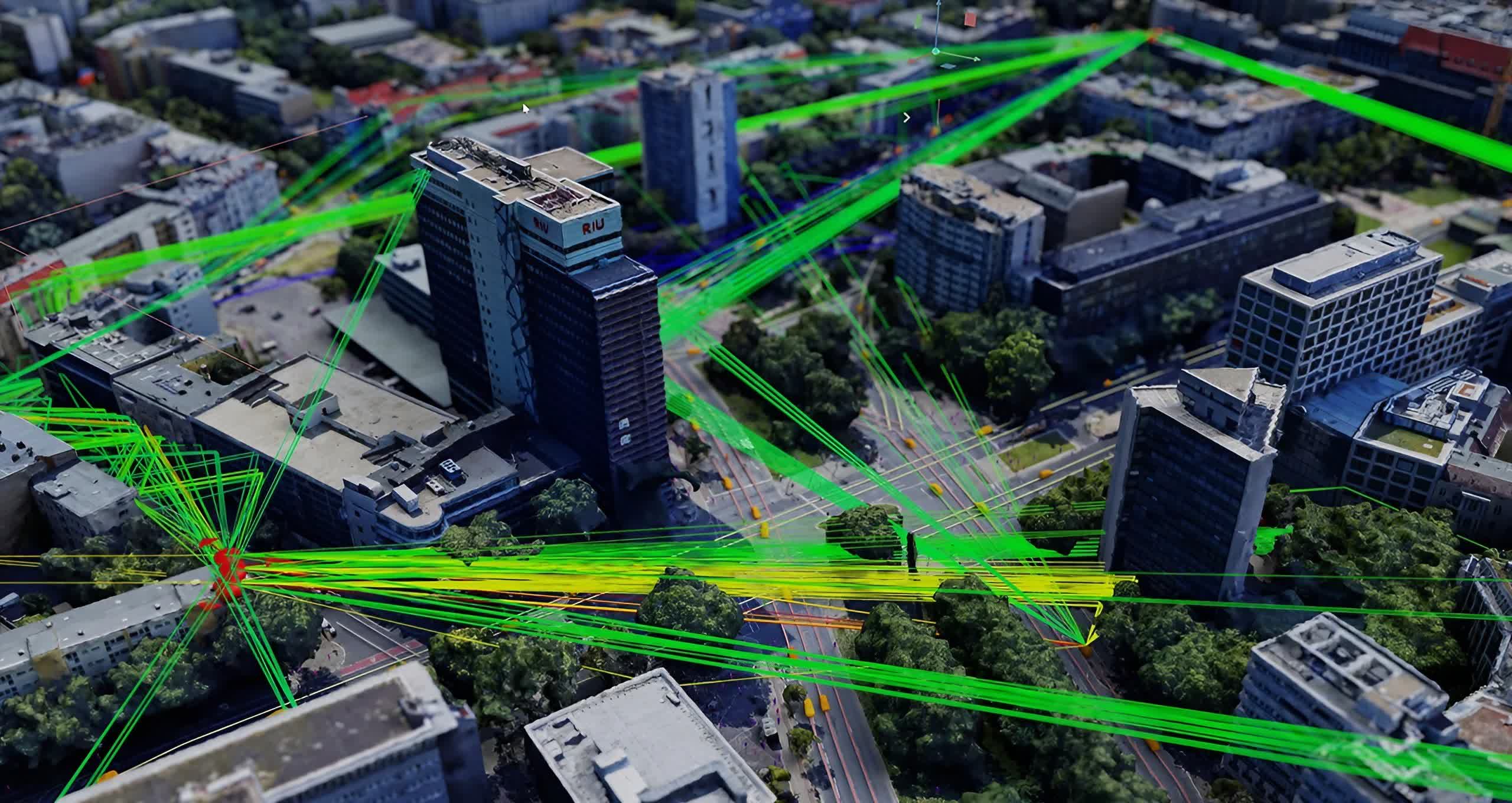
At this year's Mobile World Congress in Barcelona, Nvidia announced a "commitment" to make 6G both AI-native and open from the ground up. The list of companies backing this includes major telcos like Deutsche Telekom, T-Mobile, and SoftBank. But the names that really jump out are Ericsson and Nokia, the two Nordic giants that currently dominate mobile network infrastructure outside of China.

The involvement of that duo comes as a bit of a surprise. As for why, you'd have to look at where 5G ended up first. For all the excitement it generated years ago, it never really delivered a dramatic leap over 4G beyond adding more capacity. It also wasn't designed with AI in mind, which has become a real problem now. And throughout all of this, Ericsson and Nokia have kept a tight grip on the proprietary systems powering those networks. That's made it difficult for smaller companies to break in and innovate on top of them.

So the conversation has now shifted toward actual open-source code. And the US government is now backing that idea through a partnership with the Linux Foundation called OCUDU, which wants to embed open-source software directly into the foundation of 6G networks.

The government's interest isn't purely altruistic here. Washington actually sees open-source as a way to reduce dependency on a handful of foreign vendors for critical communications infrastructure, especially for military use.
As reported by Light Reading, Ronnie Vasishta, who leads Nvidia's telecom work, frames the problem pretty directly. He told the publication that the closed nature of 5G has kept developers and smaller companies from having the flexibility to build on those network platforms.

If 6G were open-sourced, someone with a better algorithm for something like beamforming – a technique used to direct wireless signals more efficiently – could just plug it into the broader stack without needing to be part of some exclusive ecosystem first.

Nvidia already has a proof of concept for this. Its open-source RAN reference platform, called Aerial, has let a company called DeepSig insert an AI-native waveform directly into the stack.

And as pointed out by the publication, this doesn't mean well for Ericsson and Nokia in the long run. That's because both companies make a significant share of their profits by licensing proprietary technology to network operators. So, when that same technology becomes freely available, their core revenue stream starts to erode.

That said, Ranny Haiby, the Linux Foundation's networking CTO, said in the report that he doesn't expect either company to tear up their existing code overnight. He sees something more gradual, like a slow drift toward compatibility as the benefits become harder to ignore.

Permalink to story:

 
Um, does that mean the AI for the system will be open source too? Or will we have the first ever "open" telecom platform that is built on a closed source Nvidia AI platform? After all, Nvidia is famous for open source software and tools that can be ported or run on any hardware, and they've always supported open source in their graphics products and AI hardware.

That's why you HAVE to buy their cpus and racks for their AI cards from them.

I bet it will also route all the traffic across the "open source" NVlink.

More likely, Nvidia will co-opt this project and we'll have Nvidia only communications, at 10 times the price.

Out of the frying pan and into.........
 
Calling everything AI and saying tech needs to be built around it is getting ridiculous....
NVidia wants to use advanced machine-learning algorithms to improve spectral efficiency and dynamic traffic management. How is this "ridiculous"?

... stuff has been in the works way before nvidia...

https://www.artemis.com/pcell
Interesting you mention Artemis, as all the way back in 2014, they were claiming their pCell technology would replace 4G. Instead, and despite them demoing it to hundreds of companies, the industry went with 5G instead. If you take their claims at face value, their technology is quite impressive ... one can only conclude the actual prototype demos revealed some hidden gotchas.

In any case, even pCell-type cell-less technology would benefit from the concepts being touted for AI-RAN.
 
NVidia wants to use advanced machine-learning algorithms to improve spectral efficiency and dynamic traffic management. How is this "ridiculous"?
Because you're not doing anything new. Adaptive algorithms have existed for well over a decade. Throwing a bunch of AI tech jargon in there doesnt make it sound impressive, everyone knows its just gaslighting to try to make products sound more impressive then they actually are.
I don't see how this will NOT lead to the Chinese dominating the market (even more). But NV never cared. They just wanna sell their "Murrican tech stack" to whoever.
Good. The Chinese keep building things and expanding their reach while the West rest on their laurels and sap every penny they can from consumers. Competition keeps things going and the West needs some serious competition.
 
Because you're not doing anything new. Adaptive algorithms have existed for well over a decade. Throwing a bunch of AI tech jargon in there doesnt make it sound impressive, everyone knows its just gaslighting to try to make products sound more impressive then they actually are.
Except that isn't correct in this case. There are three different transformative areas to this initiative, which NVidia calls "AI *on* RAN", "AI *for* RAN", and "AI *and* RAN", two of which are entirely new, and one of which you might -- might -- call evolutionary, rather than revolutionary.

You're an intelligent poster; why not read their white paper and see exactly what's being proposed?

 
Nvidia makes 6G open source, except Nvidia’s own stuff. They have a history of delivering driver blobs on foss platforms…
 
Except that isn't correct in this case. There are three different transformative areas to this initiative, which NVidia calls "AI *on* RAN", "AI *for* RAN", and "AI *and* RAN", two of which are entirely new, and one of which you might -- might -- call evolutionary, rather than revolutionary.

You're an intelligent poster; why not read their white paper and see exactly what's being proposed?

Again with all the AI jargon. Saying "AI will make things more efficient because AI" is the exact type of gaslighting I was talking about. "Enabling AI services on RAN at the network edge to increase operational efficiency and offer new services to mobile users. This turns the RAN from a cost center to a revenue source." tells us absolutely nothing, other then they are now apparently trying to further monetize radio access.

"Using a common shared infrastructure to run both AI and RAN workloads, with the goal of maximizing utilization, lowering total cost of ownership (TCO), and generating new AI-driven revenue opportunities." Again, marketing speak, nebulous claims, nothing on HOW they are going to achieve any of these goals.

You're an intelligent poster, how about you describe what, exactly, this AI is supposed to do that algorithms were not already doing, and how that is supposed to benefit the end user, without resorting to copying nvidia marketing presentations?
 
Back