NYC hospital chief says AI could replace many radiologists if regulations change

Skye Jacobs

Posts: 1,913   +58
Staff
Big quote: Artificial intelligence is edging closer to a formal role in medical imaging, and one of the country's most prominent hospital executives says he's ready to take that step – once regulators do. During a health care leadership panel hosted by Crain's New York Business, Dr. Mitchell H. Katz, president and CEO of NYC Health + Hospitals, said his organization could substitute AI for human radiologists in many cases if policy barriers were eased.
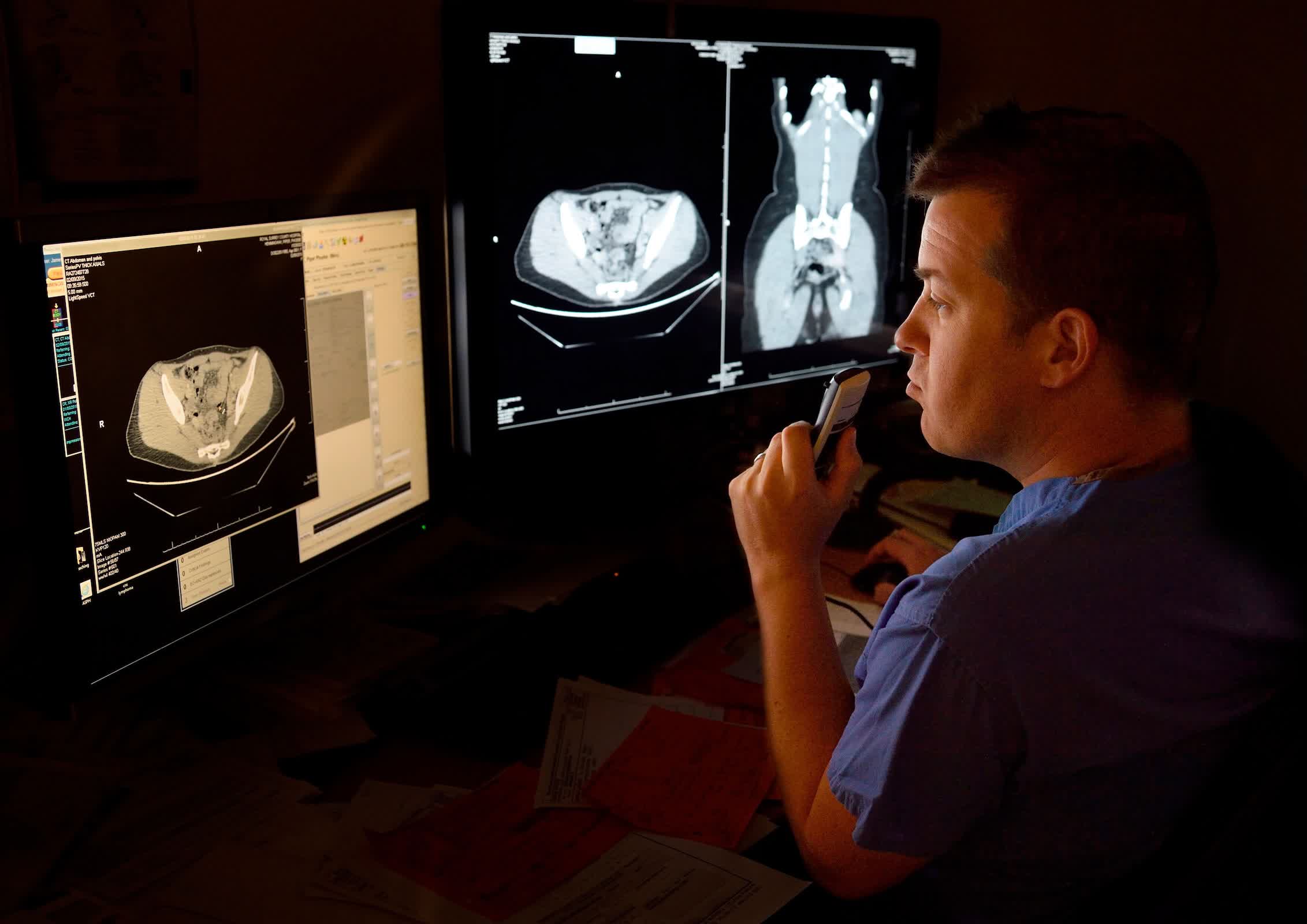
"We could replace a great deal of radiologists with AI at this moment, if we are ready to do the regulatory challenge," Katz told participants.

The nation's largest public hospital system already uses AI to help interpret some images, and Katz sees the technology as a practical way to expand access to screenings and reduce costs.

Katz, an internal medicine specialist who has led the 11-hospital network since 2018, said automated imaging systems are already being used for mammograms and X-rays. He argued that allowing the technology to handle initial reads – particularly for breast cancer screening – could deliver "major savings" while ensuring that radiologists focus on confirming abnormal results or handling complex cases.

The remarks reflect a growing debate in medical imaging, where AI's capability to interpret scans more quickly than humans collides with unresolved questions about safety, liability, and oversight. Health systems across the country are testing AI tools in radiology, but most operate under strict supervision by licensed professionals.

Dr. David Lubarsky, CEO of the Westchester Medical Center Health Network and a fellow panelist, said his system has already seen encouraging outcomes with similar tools. "The AI Westchester uses misses very few breast cancers and is actually better than human beings," Lubarsky said. For lower-risk patients, he noted, "if the test comes back negative, it's wrong only about 3 times out of 10,000."
Katz pressed his peers on whether New York's regulatory framework should evolve to permit AI-led reads "without a radiologist," with clinicians stepping in primarily to review any unusual findings. Dr. Sandra Scott, CEO of One Brooklyn Health, agreed. Running a small safety-net hospital, Scott told the panel the change could help financially strained facilities stay afloat. "I mean, I'm in charge of a safety-net institution. It would be a game-changer," she said.

The discussion showed how economic pressures are pushing the conversation forward. Radiologists have become increasingly expensive amid rising imaging demand and physician shortages, leaving many health systems searching for ways to be more efficient.

Not everyone in the field shares Katz's optimism. Some radiologists have pushed back strongly against the notion that AI can independently perform core diagnostic functions. Among the critics is Dr. Mohammed Suhail, a San Diego-based radiologist with North Coast Imaging. In an interview with Radiology Business, he sharply criticized Katz's remarks, arguing that hospital leaders risk patient safety by putting too much faith in unproven AI systems.

He said that allowing machines to handle image reads without human oversight could lead to serious harm. "Any attempt to implement AI-only reads would immediately result in patient harm and death, and only someone with zero understanding of radiology would say something so naive," he said, adding that hospitals are often willing to prioritize cost savings over safety as long as regulations allow it.

As hospitals and vendors tout AI's promise, the divide over its readiness remains stark. While Katz and others see a path toward scalable automation, critics argue that the risks – both medical and ethical – still outweigh those potential savings. For now, any step toward AI-led radiology will depend not just on technology but also on whether lawmakers and regulators decide the machines are ready to take the first read.

Permalink to story:

 
Every time a radiologist fails to spot a potential tumor or fracture the case for bringing AI in becomes stronger. In order to stay relevant we will need to come up with better arguments than just preservation of existing jobs. AI will win when it comes to productivity, and though it currently still needs a fair amount of coaxing to arrive at a good end result, it won't be long before it will consistently deliver fewer errors than your typical human. Errare humanum est, after all. We're not far off from where people will start talking about 'human slop', and they won't accept it in the long run.

We'd better start thinking about carving out domains that are to be considered reserved for humans only, not because we're necessarily better at them but because preserving autonomy is a worthy idea. I don't know what those domains should be, but anything involving setting goals, ethics, laws, rules and regulations seems natural. And IMHO that should include drawing a clear line at autonomous killing machines. Anthropic is correct there, and Palantir is not.
 
Dermatology is next on the chopping block. Most diagnoses can currently be made by entering a picture on the internet. AI will be the final nail in the coffin for this sub specialty.
 
If they want to replace radiologists with artificial intelligence, first they're going to need to invent artificial intelligence. They should wire all this stuff up in one nice clean pipeline so that the patient goes in, gets care, gets denied coverage, then is sent to collections before they ever leave the building.
 
Can't wait to hear about the first cases of deceased patients because the "smart" AI missed something a qualified human would have seen....

As a support tool, sure systems have been used before to assist people in pointing them where to look at, same way machine learning helps people spot patterns in data, but relying wholly on AI to do it bar having someone spot check it (if you're reducing the workforce from say 10 to 1, you are not going to check everything) is stupid, and knowing pharma companies, soon you'll be paying even more for that AI check than the Radiographers were costing (well, in a normal country at least, not sure about the US and extremely hiked up bills because its made for medical insurance companies to negotiate it down or pay the huge price if they are fools)
 
Can't wait to hear about the first cases of deceased patients because the "smart" AI missed something a qualified human would have seen....

It will depend on who is paying the expert, AI replaced, unemployed radiologist to testify.
 
Every time a radiologist fails to spot a potential tumor or fracture the case for bringing AI in becomes stronger. In order to stay relevant we will need to come up with better arguments than just preservation of existing jobs. AI will win when it comes to productivity, and though it currently still needs a fair amount of coaxing to arrive at a good end result, it won't be long before it will consistently deliver fewer errors than your typical human. Errare humanum est, after all. We're not far off from where people will start talking about 'human slop', and they won't accept it in the long run.

We'd better start thinking about carving out domains that are to be considered reserved for humans only, not because we're necessarily better at them but because preserving autonomy is a worthy idea. I don't know what those domains should be, but anything involving setting goals, ethics, laws, rules and regulations seems natural. And IMHO that should include drawing a clear line at autonomous killing machines. Anthropic is correct there, and Palantir is not.

This then raises the obvious question of medical malpractice. Lets say the AI gets it wrong, and a patient gets worse or dies. Who do you assign blame to? If the AI is truly autonomous, do you blame the maker of the AI? The hospital? The administrator of the hospital? What if the AI makes the final diagnosis behind a human doctor? Who then? What if the roles are reversed?

We've just now begun to scratch the surface in terms of assigning liability when it comes to speech on social media, so to think that having AI be anywhere near autonomous in making potentially life-and-death diagnoses is coming anytime soon is off-base. Nor should we want it. One of the main comforts when it comes to medical risk is having distinct legal recourse it case things go bad. You lose much of that in the legal wilderness of AI, and I don't think many patients will feel comfortable with a diagnosis or prognosis given to them via AI, regardless of the lower error-rate compared to humans.
 
Ai is a great tool but not a replacement. Once people start dying because AI hallucinated and decided something wasnt a problem, and the lawsuits fly, they'll come to the obvious decision of having both trained humans and IA tools analyze information.
 
It could be a great assistant for a radiologist. But it would be insane to replace a human with this. The worst of AI, at least right now, it does not know when it makes a mistake, a mistake that more or less human would probably notice.
 
Ai is a great tool but not a replacement.
It's a replacement. A year ago, a human radiologist missed an issue on one of my scans, despite being told precisely what to look for and where. I paid him $5K and waited three days for those false results, whereas an AI scanner found it in a few seconds, at a net cost in electricity of pennies. Your fears of model hallucination are overblown; these predictive AI systems use GANs or CNNs (or both, self-checking each other), rather than the text-processing transformer networks your free local chatbot employs.

Today, the average person can't afford most diagnostic imaging until they actually begin exhibiting symptoms -- by which time it's often too late -- because insurance coverage doesn't apply until then. AI based imaging can allow people to receive highly-detailed routine full-body scans on a regular basis, at a tiny fraction of the cost of today.
 
Every time a radiologist fails to spot a potential tumor or fracture the case for bringing AI in becomes stronger. In order to stay relevant we will need to come up with better arguments than just preservation of existing jobs. AI will win when it comes to productivity, and though it currently still needs a fair amount of coaxing to arrive at a good end result, it won't be long before it will consistently deliver fewer errors than your typical human. Errare humanum est, after all. We're not far off from where people will start talking about 'human slop', and they won't accept it in the long run.

We'd better start thinking about carving out domains that are to be considered reserved for humans only, not because we're necessarily better at them but because preserving autonomy is a worthy idea. I don't know what those domains should be, but anything involving setting goals, ethics, laws, rules and regulations seems natural. And IMHO that should include drawing a clear line at autonomous killing machines. Anthropic is correct there, and Palantir is not.

Go into the funeral business. Not going away anytime soon, and unless you want robots handling it, it's safe from AI overtake.
 
This then raises the obvious question of medical malpractice. Lets say the AI gets it wrong, and a patient gets worse or dies. Who do you assign blame to? If the AI is truly autonomous, do you blame the maker of the AI? The hospital? The administrator of the hospital? What if the AI makes the final diagnosis behind a human doctor? Who then? What if the roles are reversed?

We've just now begun to scratch the surface in terms of assigning liability when it comes to speech on social media, so to think that having AI be anywhere near autonomous in making potentially life-and-death diagnoses is coming anytime soon is off-base. Nor should we want it. One of the main comforts when it comes to medical risk is having distinct legal recourse it case things go bad. You lose much of that in the legal wilderness of AI, and I don't think many patients will feel comfortable with a diagnosis or prognosis given to them via AI, regardless of the lower error-rate compared to humans.
The blame goes to the the doctor who is signing off the differential diagnosies that the ai presents. If the Ai presents diagnosies via Inferencing the provided needs to rule out any false positive and negatives via testing. Unfortunately the patient will probably get the short end of the stick via lower quality healthcare, multiple unnecessary testing to rule out hallucinations the ai has inferenced. Ai improvements to Healthcare will likely have a plautau effect where the hallucinations and false positive and negatives phase out over time while the initial phase is being beta tested with people's lives. 🤦‍♂️
Based on the article it seems not everyone is on board professionally. In order to pass these via regulations the delta benefit has to outweigh the net risk significantly. While Healthcare can potentially improve exponentially better on paper with ai as a tool via adjunct (not replacement human intervention) the oversight and regulations will probably anchor any changes without significant data supporting that change at the rate that some want to be made. Luckily NY has multiple competing Healthcare agencies like Northwell Health, NewYork-Presbyterian, NYU Langone Health, and Mount Sina. Some of these consist of unions that make it even more difficult to make change quickly as well. While change via ai to Healthcare is inevitable and is already happening imo the rate at which that change occurs will likely be slower than some are hoping for!
 
The blame goes to the the doctor who is signing off the differential diagnosies that the ai presents. If the Ai presents diagnosies via Inferencing the provided needs to rule out any false positive and negatives via testing. Unfortunately the patient will probably get the short end of the stick via lower quality healthcare, multiple unnecessary testing to rule out hallucinations the ai has inferenced. Ai improvements to Healthcare will likely have a plautau effect where the hallucinations and false positive and negatives phase out over time while the initial phase is being beta tested with people's lives. 🤦‍♂️
Based on the article it seems not everyone is on board professionally. In order to pass these via regulations the delta benefit has to outweigh the net risk significantly. While Healthcare can potentially improve exponentially better on paper with ai as a tool via adjunct (not replacement human intervention) the oversight and regulations will probably anchor any changes without significant data supporting that change at the rate that some want to be made. Luckily NY has multiple competing Healthcare agencies like Northwell Health, NewYork-Presbyterian, NYU Langone Health, and Mount Sina. Some of these consist of unions that make it even more difficult to make change quickly as well. While change via ai to Healthcare is inevitable and is already happening imo the rate at which that change occurs will likely be slower than some are hoping for!
I think people are getting confused about the capabilities of "AI". In the context of reading scans the system is trained on 100s of thousands of images (which it can read down to the pixel level given that most scans are going digital) and is graded based on positive or negative mammograms and on the scans where it is "uncertain" these are flagged for review by a radiologist. Lost in this discussion is the fact that radiologists also have a certain "failure" rate - I.e. reading a mammogram as having cancer (and it's not) or reading a scan as cancer free (and actually there is cancer there). So, in order for an AI to "replace" a qualified radiologist the AI would need to be at least (if not more) accurate than a qualified radiologist.

Little side note here: I hurt my knee and had an MRI performed that confirmed the existence of a partially torn meniscus. After the operation, my surgeon told me that there were much more extensive damage to the knee than was reflected on the radiologist's report of the MRI. I had a torn MCL, ACL and meniscus and he told me he repaired what he could given my age (57) as further repairs would have been detrimental to my comfort. I have had no further issues with that knee but the "magic" of the MRI telling all was exposed in this particular instance.
 
Some are confused but doesn't change the facts stated above about what the ai does to those pixels in terms of Inferencing them to those previous scans and finding a match. Some are concerned about hallucinations, false positives and negatives which is warranted. Also some are have inherent biases from previous experiences and current ai shortfalls. You had a positive experience which no one is denying there is. Some are concerned about the future of their of finances from ai affecting their job security. If you take the summation of all that on macro level then we can start to understand. 🙃
 
Last edited:
Can't wait to hear about the first cases of deceased patients because the "smart" AI missed something a qualified human would have seen....
It’s a known fact that hospitals would rather payout a malpractice claim than be proactive and fix the problem. Any problem. It’s much much cheaper. Remember, hospitals make decisions looking at Excel spreadsheets, NOT patient charts.
 
Back