
Those were the days: The Pioneer LaserActive, a quirky '90s console that fused Sega, PC Engine, and LaserDisc tech, has finally been emulated after 16 years of painstaking effort. This breakthrough preserves rare games, rescues fragile discs before they degrade, and shows how obsession and ingenuity can revive lost gaming history.
For most gamers, the Pioneer LaserActive is the ultimate "wait, that existed?" console. Released in 1993, it was part LaserDisc player, part Sega Genesis, part NEC PC Engine (video above) – an ambitious hybrid that sold so poorly it disappeared almost as fast as it hit stores. However, thanks to one dedicated fan known as Nemesis, the LaserActive has finally been emulated, 16 years after he first dreamed of it.
Nemesis's journey reads like a combination of tech detective work, obsessive collecting, and sheer stubbornness. Early on, the challenge was obvious: the LaserActive relied on Mega LD games, which mixed full-motion video with traditional gameplay. Capturing those discs wasn't as simple as ripping a movie; the console played multiple video streams at once, skipped frames, and even ran sequences backward. Standard capture cards either distorted the video or ignored essential hidden data, so what seemed like a simple task was far from it.
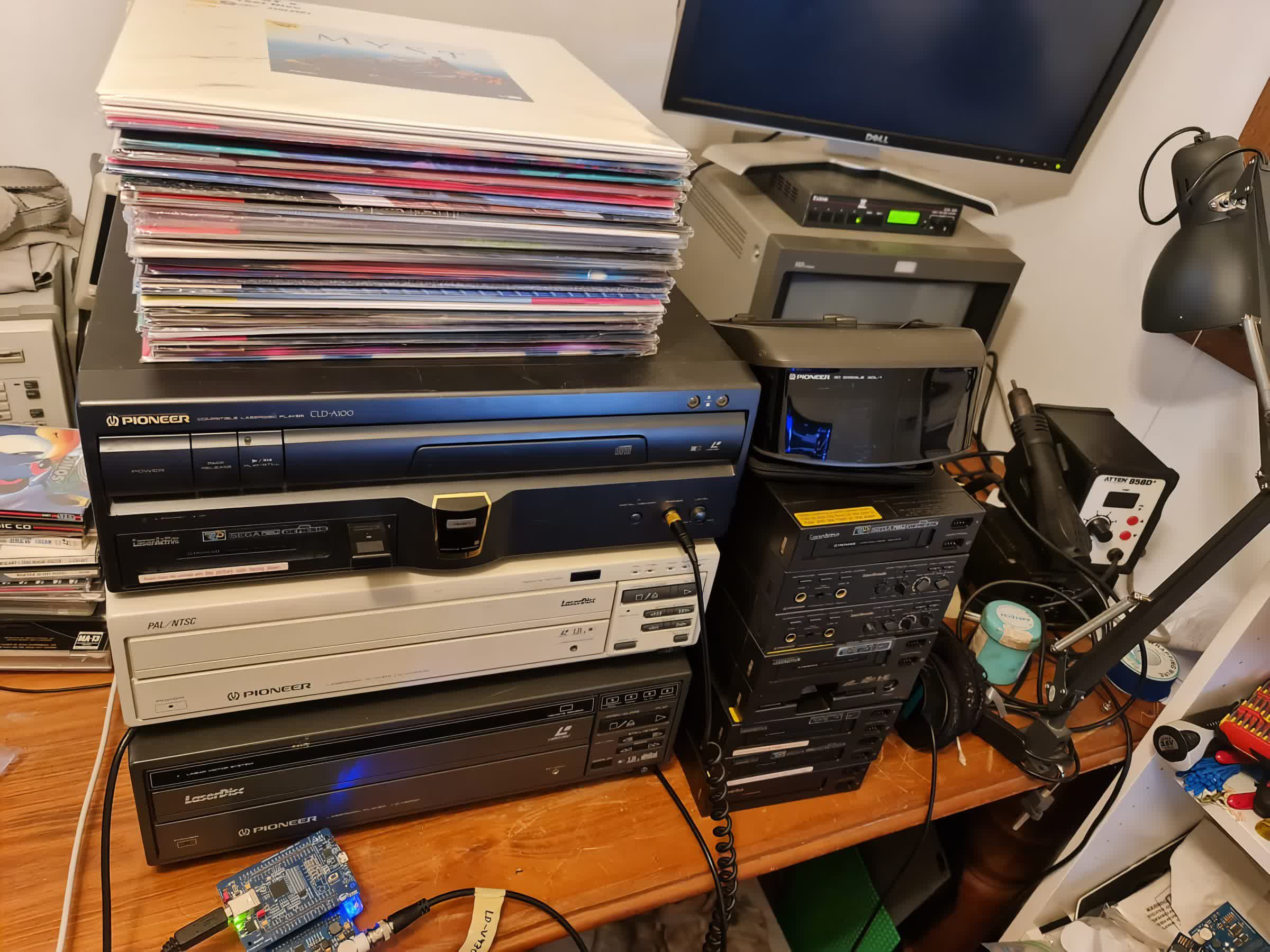
This is what Nemesis's workbench has looked like for the last 16 years.
"The digital side of the system was actually pretty straightforward. When you break it down, the LaserActive is really more like a big oversized add-on to the console hardware. That add-on provides a different drive control interface, another audio source, and another video source, with mixing features to combine that video/audio with the console video/audio. That's really about it. On paper, it's simple. In reality though, the LaserActive hardware did present a lot of challenges, mostly due to its inherent unreliability."
Years of trial and error followed. Nemesis soldered wires into the console to tap signals, used logic analyzers to parse data, and wrote custom programs to rip discs without losing a single frame of video or byte of audio. Family life, work, and even a global pandemic slowed him down, but he kept the project alive, waiting for both hardware and software solutions to mature.
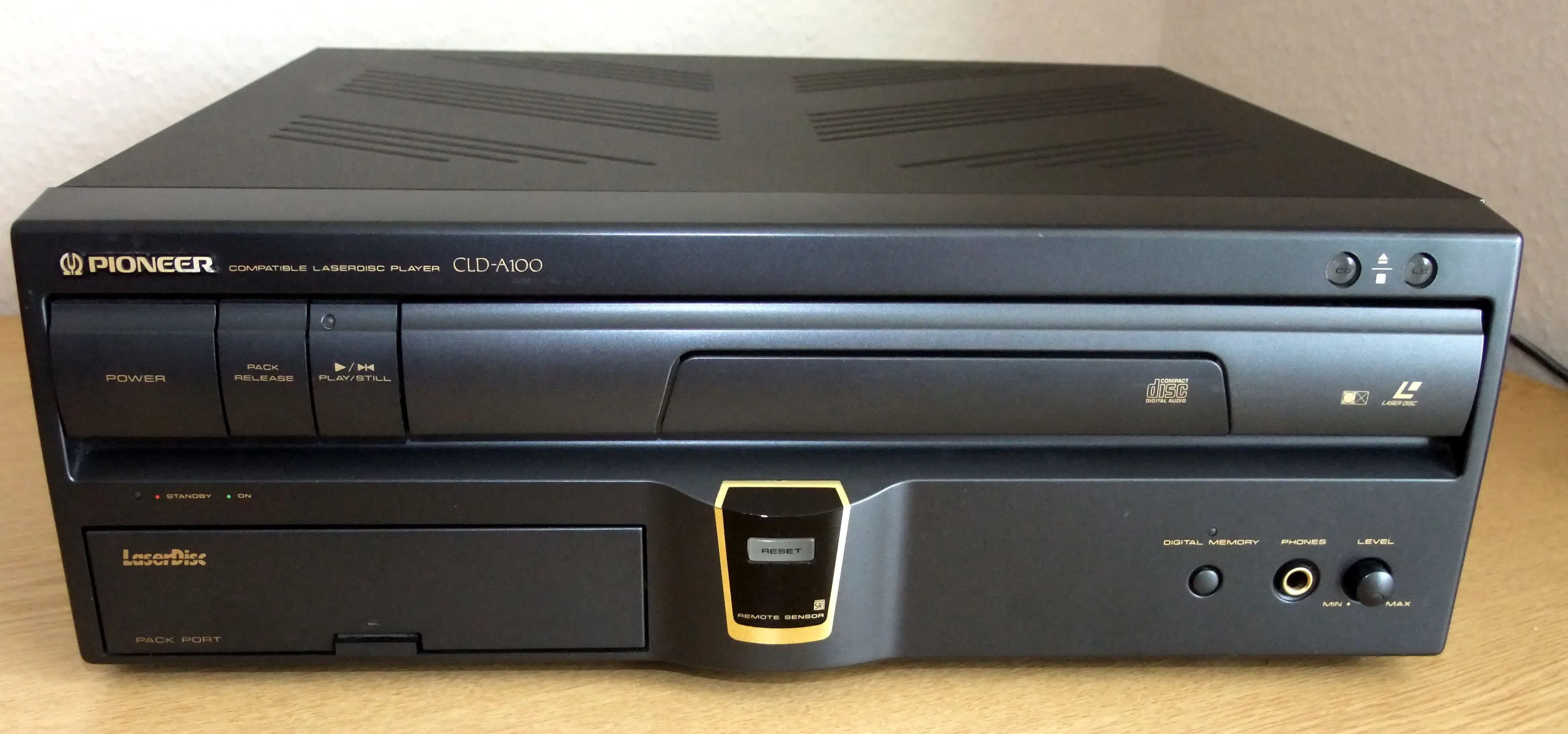
By 2024, Nemesis returned with renewed focus, using a combination of test-mode tricks, custom firmware, and updated decoding tools to preserve the games in a form suitable for emulation at last. The final hurdle was emulating the LaserActive's massive, lossless disc images without overloading modern CPUs – a problem solved by careful coding and patience.
The result is now playable through the multi-system emulator Ares v146. Titles like Space Berserker run on a PC exactly as they did on the original hardware, quirks and all. For Nemesis, it was about preservation as much as technical accomplishment. Many of these LaserDiscs are deteriorating, and without someone taking on this painstaking work, the games would vanish forever.
This milestone achievement is a reminder of how far gaming emulation has come – and how far some enthusiasts will go for preservation. The market may have forgotten the LaserActive, but thanks to one fan's obsession and ingenuity, it finally has a second life.
Image credits: Read Only Memo, Retro Consoles Wiki
Obscure Pioneer LaserDisc console, once impossible to emulate, now runs on PC


