Open source AI is the new Linux, only faster

Skye Jacobs

Posts: 1,967   +58
Staff
Big quote: MongoDB Developer Relations head and open-source advocate Matt Asay argues that DeepSeek represents more than just Chinese innovation – it shows how open source reshapes ownership, collaboration, and the pace of technological progress. "It stopped being Chinese the minute it was released on Hugging Face and no one can put the open source genie back in the bottle – not even the U.S. government," Asay wrote in InfoWorld, where he moonlights as a contributing writer.
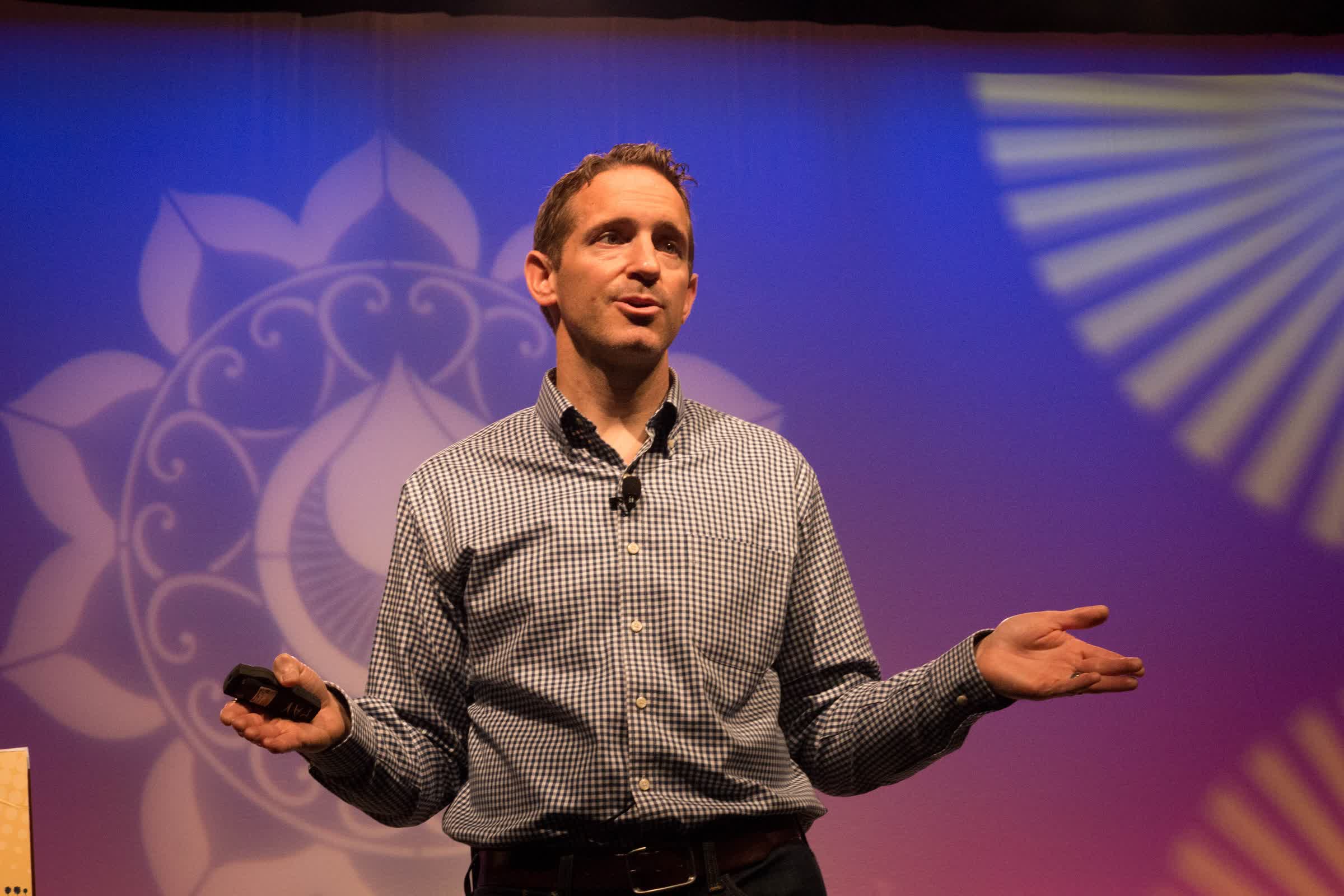
When DeepSeek launched its advanced model on Hugging Face, it marked a turning point for AI and the global open-source movement, says Asay. DeepSeek's release sparked a wave of global developer activity, including a high-profile effort from the Beijing Academy of Artificial Intelligence (BAAI), which launched a rival project called OpenSeek.

The initiative aims to outperform DeepSeek while bringing together the global open-source community to advance algorithms, data, and infrastructure progress.

Policymakers, particularly in the United States, responded swiftly and harshly – adding the BAAI to a government blacklist. To Asay, attempts to rein in open-source artificial intelligence are futile and reflect a profound misunderstanding of the movement.

"DeepSeek didn't just have a moment. It's now very much a movement," he observes. "The open source AI ecosystem surrounding it has rapidly evolved from a brief snapshot of technological brilliance into something much bigger – and much harder to stop."

The scale of the movement is staggering. Thousands of developers – from academic researchers to hobbyists – are working to refine and expand open-source artificial intelligence models like DeepSeek. Platforms like Hugging Face now serve as global collaboration hubs, driving innovation faster than even the most nimble corporate labs. While Hugging Face may be a single company, the communities it fosters are far more durable – and beyond the reach of centralized control.

This democratization of artificial intelligence is already reshaping the real world. Companies like Perplexity are incorporating open-source models into consumer products, proving that advanced AI is no longer the sole domain of tech giants or state-funded labs. Asay envisions a future where powerful AI tools are within reach of everyone – designed to be modified, improved, and expanded by a global network of developers. To him, the parallels to the early rise of Linux are unmistakable.

"It's Linux all over again. One passionate start becomes a movement, then infrastructure, then a global standard," he explains. "The key difference is that this time it's happening in months, not decades,"

Linux thrived not due to government or corporate backing but because it sparked a wave of developer contributions and innovation. This same dynamic is now driving the rapid advancement of open-source AI.

In contrast, organizations clinging to proprietary models, like OpenAI, are fighting a losing battle. As Asay puts it, "They're attempting to dam an ocean," underscoring the futility of trying to contain a movement defined by decentralization and collaboration. While some companies nod to open-source ideals, few have matched the transparency and openness shown by efforts like DeepSeek and OpenSeek.

Asay is clear-eyed about the challenges facing policymakers.

"Open source isn't subject to export controls or trade embargoes. It's a pull request away, all day every day," he notes.

Attempts to slow or block the spread of open-source AI will only backfire, harming domestic innovation and pushing leadership elsewhere. The lesson from recent technology history is that open ecosystems, driven by global collaboration, adapt and evolve far faster than closed, centralized projects.

The rise of DeepSeek and its open-source successors marks a fundamental shift in how technology is developed and distributed. Governments, corporations, and developers now face a choice: engage with the open-source AI movement or watch others pull ahead. Open-source artificial intelligence is not a distant trend – it is already transforming the landscape.

"No one can own this wave, no one can stop it, and no one can contain it," Asay concludes.

Permalink to story:

 
I wish Grok was made opensource and available for download from Hugginface. DS is fun but it's not as good as Grok. I've experimented with DS (I've downloaded models from 7B Q6 to 32B Q6), GPT, Llama and Grok and the latter gives the most accurate answers for my needs.

I don't consider these models anything more than toys and can be extremely frustrating to deal with as their answers can be entirely nonsensical. But they are an interesting experiment.
 
This movement is critical for the best outcome. I've been an incredibly vocal advocate for machine learning tech in the hands of everyone with a decent system.

Not only running on local recources, but trained with zero financial incentives. No structured entitiy can outpace voluntary global collaboration.

Everyone should have the option of owning a talking encyclopedia which can formulate critical responses in real time with no need for network resources.
 
There's quite a lot of hype and exaggeration here.

Open source in AI existed long before DeepSeek.
There wasn't any "turning point for AI and the global open-source movement", global wave of something blah blah ...
In fact, if DeepSeek were a US company, it would have remained unnoticed. All the noise about it came from the fact they lied about the training costs (by orders of magnitude)

Open source is cool, generally speaking, but it's not suitable for everything. There are tremendously successful projects, like Linux and many others, and there are plenty of failures. The majority of the software used worldwide is closed source, and pretty much everyone (both people and businesses) uses an open/closed source mix. Guys like this Matt should cool down their enthusiasm a bit.
 
There's quite a lot of hype and exaggeration here.

Open source in AI existed long before DeepSeek.
There wasn't any "turning point for AI and the global open-source movement", global wave of something blah blah ...
In fact, if DeepSeek were a US company, it would have remained unnoticed. All the noise about it came from the fact they lied about the training costs (by orders of magnitude)

Open source is cool, generally speaking, but it's not suitable for everything. There are tremendously successful projects, like Linux and many others, and there are plenty of failures. The majority of the software used worldwide is closed source, and pretty much everyone (both people and businesses) uses an open/closed source mix. Guys like this Matt should cool down their enthusiasm a bit.
I agree with you , furthermore I'd say the whole purpose of it is to transfer the whole market from US corporations to Chinese ones. Nevertheless, open source promotion is always welcome. Let's hope people focus on this aspect only.
 
I wish Grok was made opensource and available for download from Hugginface. DS is fun but it's not as good as Grok. I've experimented with DS (I've downloaded models from 7B Q6 to 32B Q6), GPT, Llama and Grok and the latter gives the most accurate answers for my needs.

I don't consider these models anything more than toys and can be extremely frustrating to deal with as their answers can be entirely nonsensical. But they are an interesting experiment.
The issue with open source models, at least the basic ones, is not using them as published, but rather refining them in your own data, your own context of use, providing them with new knowledge and relationships within that knowledge, making them work for your specific needs.

edit: not an "issue", may bad and mistake while mental translating from the manners of my native language. should be a "good thing" or something like that
 
Last edited:
The issue with open source models, at least the basic ones, is not using them as published, but rather refining them in your own data, your own context of use, providing them with new knowledge and relationships within that knowledge, making them work for your specific needs.
How is that an "issue"?

That sounds like an incredible benefit to me...
 
So much money in the US has been thrown at AI they are throwing their toys out the pram when they find it was all for no good.
 
How is that an "issue"?

That sounds like an incredible benefit to me...
Sorry, I should have said "the thing," "the topic," "the business" , in a good way. My mistake, lost in the mental translation from the manners of my native language
 
Last edited:
Back