Looking ahead: Pulse isn't just another AI feature – it signals a shift in how we'll interact with digital assistants. From curating your news to planning your day, it shows how AI could soon anticipate your needs, changing productivity, media habits, and even daily routines.

OpenAI is launching Pulse, a personalized reporting feature within its ChatGPT platform. Designed to greet users each morning with curated briefs, Pulse moves ChatGPT into a more proactive role, delivering five to ten summaries generated overnight while users sleep.
The launch of Pulse marks a significant evolution in OpenAI's consumer strategy, signaling a shift away from strictly prompt-based chatbot interactions. Recent products like ChatGPT Agent and Codex have already highlighted this trend, emphasizing assistant-like functionality. With Pulse, OpenAI advances its effort to democratize AI-driven productivity tools once reserved for high-budget enterprise users.
OpenAI CEO of Applications Fidji Simo characterized the product as just the "first step" in its agentic evolution. Although initially available to subscribers on the $200-per-month Pro plan, OpenAI plans to make the premium AI assistant universally accessible.
"This is the first step toward a more useful ChatGPT that proactively brings you what you need, helping you make more progress so you can get back to your life," Simo wrote. "We'll learn and improve from early use before rolling it out to Plus, with the goal of making it available to everyone."
Ongoing infrastructure challenges are likely one reason for the tiered rollout. OpenAI CEO Sam Altman has noted that some of the company's compute-intensive products, including Pulse, remain exclusive to premium subscribers due to current server limitations. To support wider deployment, OpenAI is investing in new AI data centers through partnerships with Oracle and SoftBank.
Subscribers access the feature through a dedicated tab in the ChatGPT app, where they can browse a daily selection of reports tailored to their interests. These reports aggregate news on topics – such as updates on favorite sports teams or tech news – and generate custom recommendations based on user activity, calendar events, and prior conversations. Pulse's integration with ChatGPT Connectors enables cross-app functionality, parsing emails overnight and scanning calendars to draft morning agendas automatically.
During a demonstration for TechCrunch, Adam Fry, OpenAI's lead product manager, showcased Pulse's versatility. Pulse generated several reports for his personal use, ranging from a daily roundup of news about British soccer club Arsenal to festive Halloween costume ideas for his family and a travel plan for a trip to Sedona tailored to his toddler's needs.
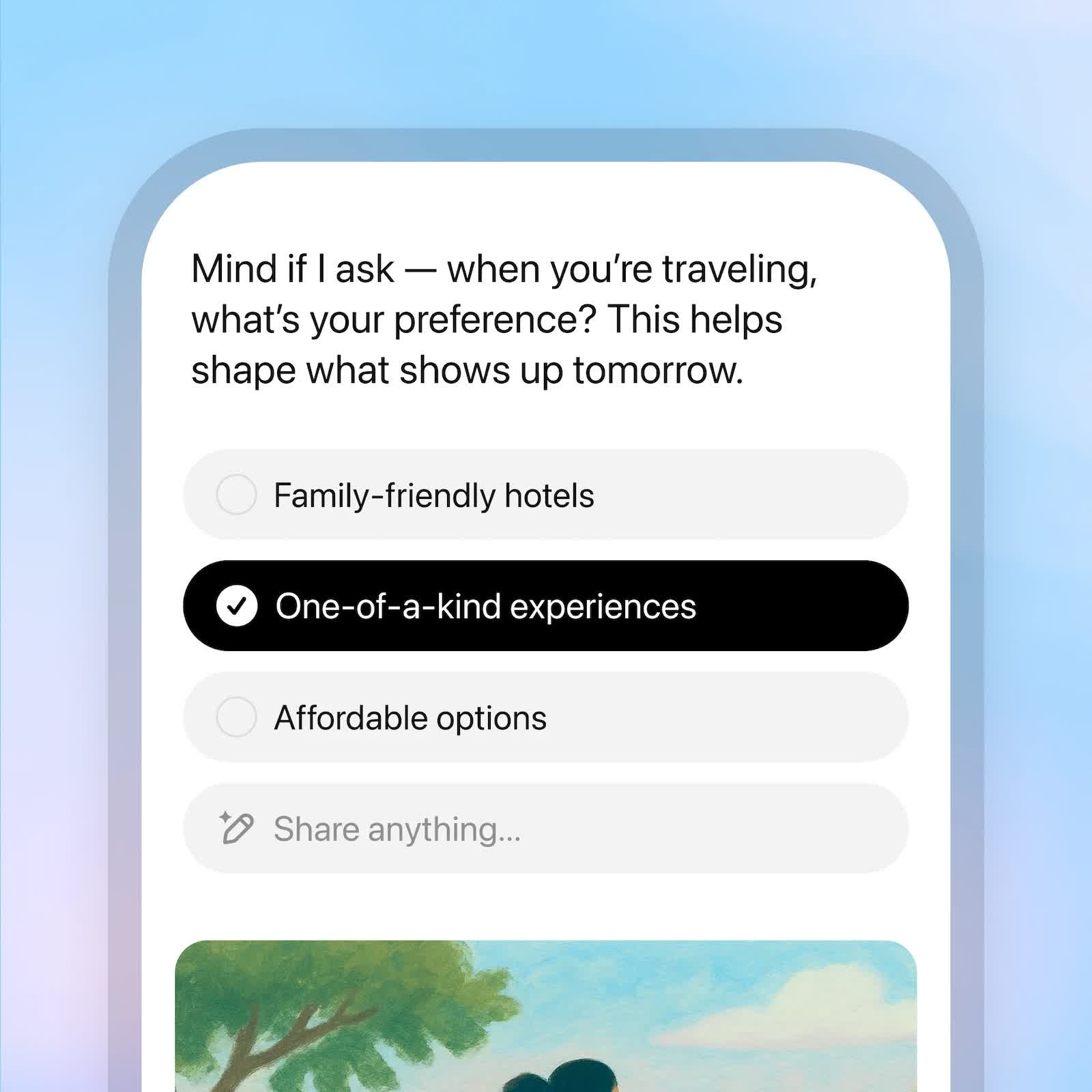
Each report appears as a "card" combining AI-generated images and text. Clicking a card expands the report, and users can interact with ChatGPT to explore its content. Pulse encourages users to request new report types or provide feedback to refine future outputs. Notably, the system stops after a set number of reports each day, displaying a message that reads, "Great, that's it for today," a feature Fry says is designed to counter the endless scrolling typical of most social platforms.
Pulse also accounts for dietary preferences and lifestyle habits. Christina Wadsworth Kaplan, OpenAI's head of personalization, explained that the platform could recognize her pescatarian diet and adapt dinner reservations in her itinerary to suggest menu items aligned with her nutritional choices. On another occasion, Pulse noted her affinity for running and included routes in a travel schedule for London.
Pulse's aggregated reports draw on various online sources, with each card linking to the original content, similar to ChatGPT's search mode. This approach could position Pulse alongside – and potentially in competition with – established news services, paid newsletters, and traditional journalistic outlets. Fry does not expect Pulse to replace these services outright, but rather to complement them with personalized curation and summaries.


