
You are using an out of date browser. It may not display this or other websites correctly.
You should upgrade or use an alternative browser.
You should upgrade or use an alternative browser.
Palmer Luckey says AI should be allowed to decide who lives and dies in war
- Thread starter midian182
- Start date

pnntmp
Posts: 972 +1,616
The discussion isn't “use it or don’t.”, true. It's something totally different - “use it or don’t in a war.”The discussion isn’t “use it or don’t.” It’s about safeguards, limits, oversight, and the degree of autonomy we’re willing to give machines in life and death decisions.
Reducing casualties is important...but it doesn’t automatically override every ethical, legal, and strategic concern. That’s why people debate it.
Safeguards, limits, oversight etc. are all very important under normal circumstances. During a war, reducing *our* casualties is the ultimate ethical concern.

BuckarooBonzaii
Posts: 1,021 +674




ZedRM
Posts: 3,401 +2,340
I didn't elect that lunatic.But instead you/we elect them to rule over us.
Just to be devil's advocate...
If the killing area is tightly defined then what's really the difference between sending in armed drones or say the Russians firing thermobaric missiles to cover a wide area or America dropping a MOAB on a Taliban village? The last 2 options simply kill every living thing in a wide area, combatant or not, while the drone could at least try and decide on targets.
If I had the choice between fighting for my country or letting a drone take the risk then I'd be happy to let the drone do the work. Manually operated drones are fine but they are subject to electronic warfare and the operators become a priority target for the opposition.
If the killing area is tightly defined then what's really the difference between sending in armed drones or say the Russians firing thermobaric missiles to cover a wide area or America dropping a MOAB on a Taliban village? The last 2 options simply kill every living thing in a wide area, combatant or not, while the drone could at least try and decide on targets.
If I had the choice between fighting for my country or letting a drone take the risk then I'd be happy to let the drone do the work. Manually operated drones are fine but they are subject to electronic warfare and the operators become a priority target for the opposition.


When the hell are people going to stop paying attention to thesebillionairenarcissistic,geniusesdolts?
None of them, IMO, have anything better than an 8-Ball for the future. Much more likely, IMO, is that these people are trying to line their pockets.
Bingo, it's all about making money from selling their technology.

War has always been devoid of ethics.The discussion isn't “use it or don’t.”, true. It's something totally different - “use it or don’t in a war.”
Safeguards, limits, oversight etc. are all very important under normal circumstances. During a war, reducing *our* casualties is the ultimate ethical concern.
And who owns the military industrial complex? It's definitely not the politicans who are bought and paid for by a certain group, who own an island, with a certain building that as a statue dedicated to Moloch on it.Both political groups’ politicians have been pro war for at least 50 years.
The sooner you realize this, the sooner the military industrial complex might lose some of its power and wealth potential.
pnntmp
Posts: 972 +1,616
That's a generalization, you can make a slogan of it.War has always been devoid of ethics.
Having to choose between reducing our casualties through technology, and abstract theorizing about technology while people are dying .. one of these choices is a lot more devoid of ethics than the other.
You’re right that “war has always been devoid of ethics” is a generalization, however, it’s a short way of expressing that when the shooting starts, the moral lines people claim to stand on tend to collapse fast. Every side says they’re acting ethically until the realities of war prove otherwise.That's a generalization, you can make a slogan of it.
Having to choose between reducing our casualties through technology, and abstract theorizing about technology while people are dying .. one of these choices is a lot more devoid of ethics than the other.
And absolutely, reducing casualties through technology is the practical choice in the moment. But pretending that the ethics of how that technology is used don't matter just because people are dying is exactly how abuses get justified. War doesn’t erase ethics...it just makes ignoring them easier.
So no, it’s not “abstract theorizing.” It’s recognizing that once you throw the rulebook out because it's inconvenient, you’re proving the point ... ethics rarely survive the battlefield.
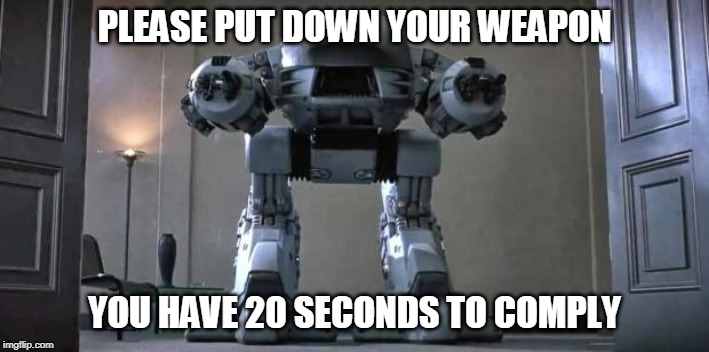
Let's not forget: SkyNet DOES care who lives and Dies!So, is this SkyNet in developing?
and
"responsibly deploy" is an oxymoron.
IMHO the problem with not having human decision makers in the loop is twofold.
Historically humans have a tendency to hesitate and weigh all the options before making such massive decisions as who/what to target and why. This has saved us from nuclear war on a number of occasions.
https://en.wikipedia.org/wiki/Nuclear_close_calls
The problem with AI is it always assumes its right and never hesitates due to that assertion. So while AI is improving in this area, it's still not 100% perfect and likely never will be. And that leads to the second problem. AI gets confused and "hallucinates".
This is fine when using it to help code, or answer what you can make for supper with all your leftovers. If it screws the pooch you have code that fails, or the worst tasting casserole you've ever had. So is it safe to trust a system that could at anytime go off the rails?
More importantly no matter how hard AI developers work to minimize/eliminate this behaviour there's no way to know if it is because it only takes one failure which can happen at any time, to often catastrophic results. Look at self driving cars. Yes they are statistically safer than human drivers. But this is as much due to how few currently operate, and we have numerous examples of failures that just wouldn't happen if the cars were driven by humans.
We have to have human decision makers in the targeting loop, that's a given IMHO. The majority have a proven tendency to be always seeking de-escalation, and we have no way of knowing if AI only targeting systems would follow this tendency. So is the potential "efficiency" worth the very real risk?
Historically humans have a tendency to hesitate and weigh all the options before making such massive decisions as who/what to target and why. This has saved us from nuclear war on a number of occasions.
https://en.wikipedia.org/wiki/Nuclear_close_calls
The problem with AI is it always assumes its right and never hesitates due to that assertion. So while AI is improving in this area, it's still not 100% perfect and likely never will be. And that leads to the second problem. AI gets confused and "hallucinates".
This is fine when using it to help code, or answer what you can make for supper with all your leftovers. If it screws the pooch you have code that fails, or the worst tasting casserole you've ever had. So is it safe to trust a system that could at anytime go off the rails?
More importantly no matter how hard AI developers work to minimize/eliminate this behaviour there's no way to know if it is because it only takes one failure which can happen at any time, to often catastrophic results. Look at self driving cars. Yes they are statistically safer than human drivers. But this is as much due to how few currently operate, and we have numerous examples of failures that just wouldn't happen if the cars were driven by humans.
We have to have human decision makers in the targeting loop, that's a given IMHO. The majority have a proven tendency to be always seeking de-escalation, and we have no way of knowing if AI only targeting systems would follow this tendency. So is the potential "efficiency" worth the very real risk?

GrayDragon
Posts: 194 +42
Something like that I guess. I'm sure Trump will want to add this to his arsenal at sea so he can easily and anonymously shoot down more fishermen in boats.So, is this SkyNet in developing?
True. Nothing screams “covert operation” like a U.S. naval vessel powered by experimental AI casually vaporizing fishing boats. Flawless logic.Something like that I guess. I'm sure Trump will want to add this to his arsenal at sea so he can easily and anonymously shoot down more fishermen in boats.
Similar threads

- Replies
- 6
- Views
- 31

- Replies
- 2
- Views
- 15

Latest posts
-
-
How To Reformat External Drive Which Has Windows IOS On It
- Hikermann replied
-
Cost Per Frame: Nvidia Stops Offering Good Value GPUs to Gamers
- daffy duck replied


-
TechSpot is dedicated to computer enthusiasts and power users.
Ask a question and give support.
Join the community here, it only takes a minute.