PepsiCo deploys fleet of driverless trucks to deliver Doritos and drinks in three states

midian182

Posts: 11,726   +177
Staff member
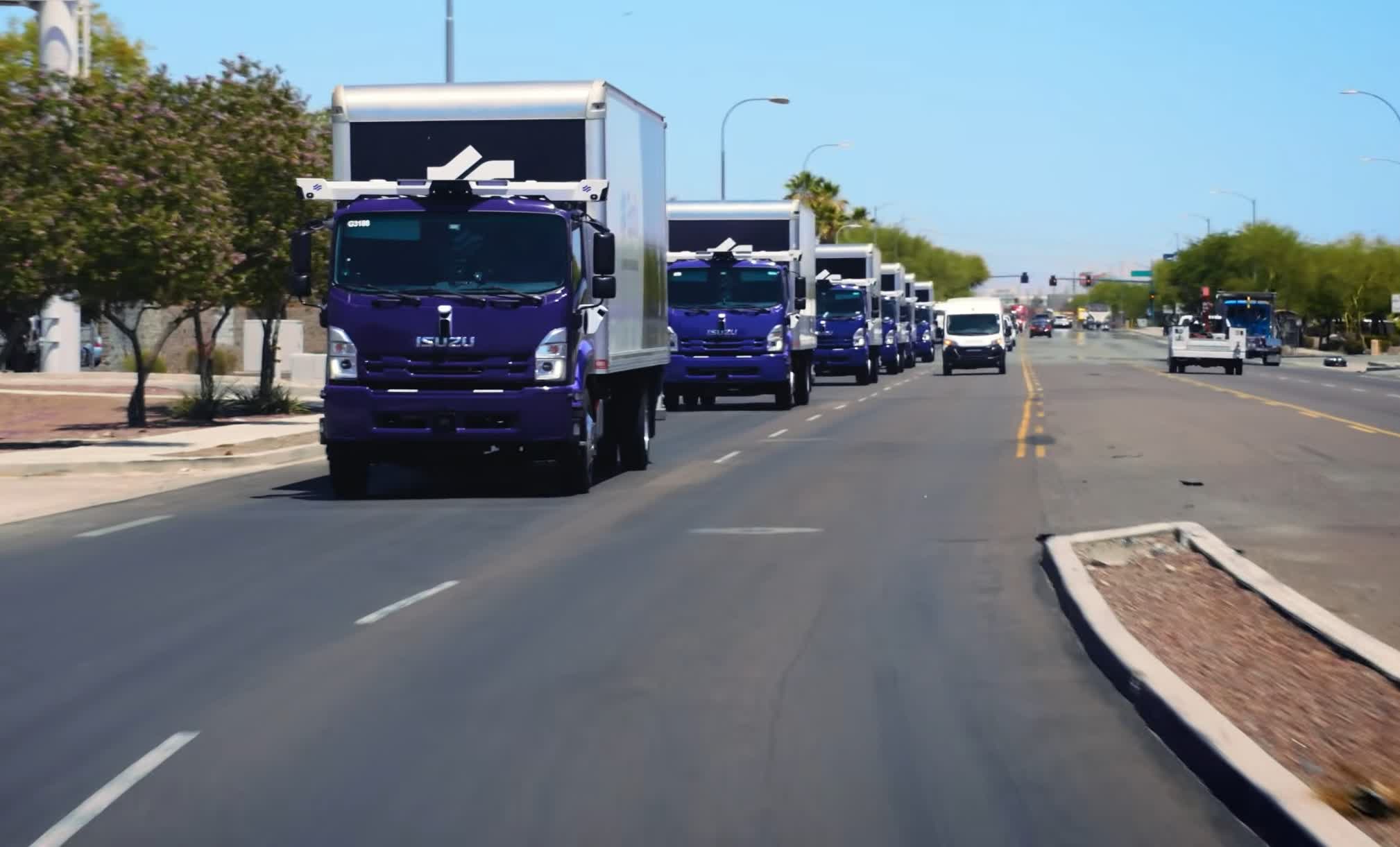
In brief: Another milestone has been reached in our rapid and often worrying shift toward a Futurama-like world. PepsiCo has become the first major US consumer-goods company to boast a full-scale deployment of autonomous trucks on public roads, with 35 self-driving vehicles delivering goods in Arizona, five in Texas, and one in Arkansas.
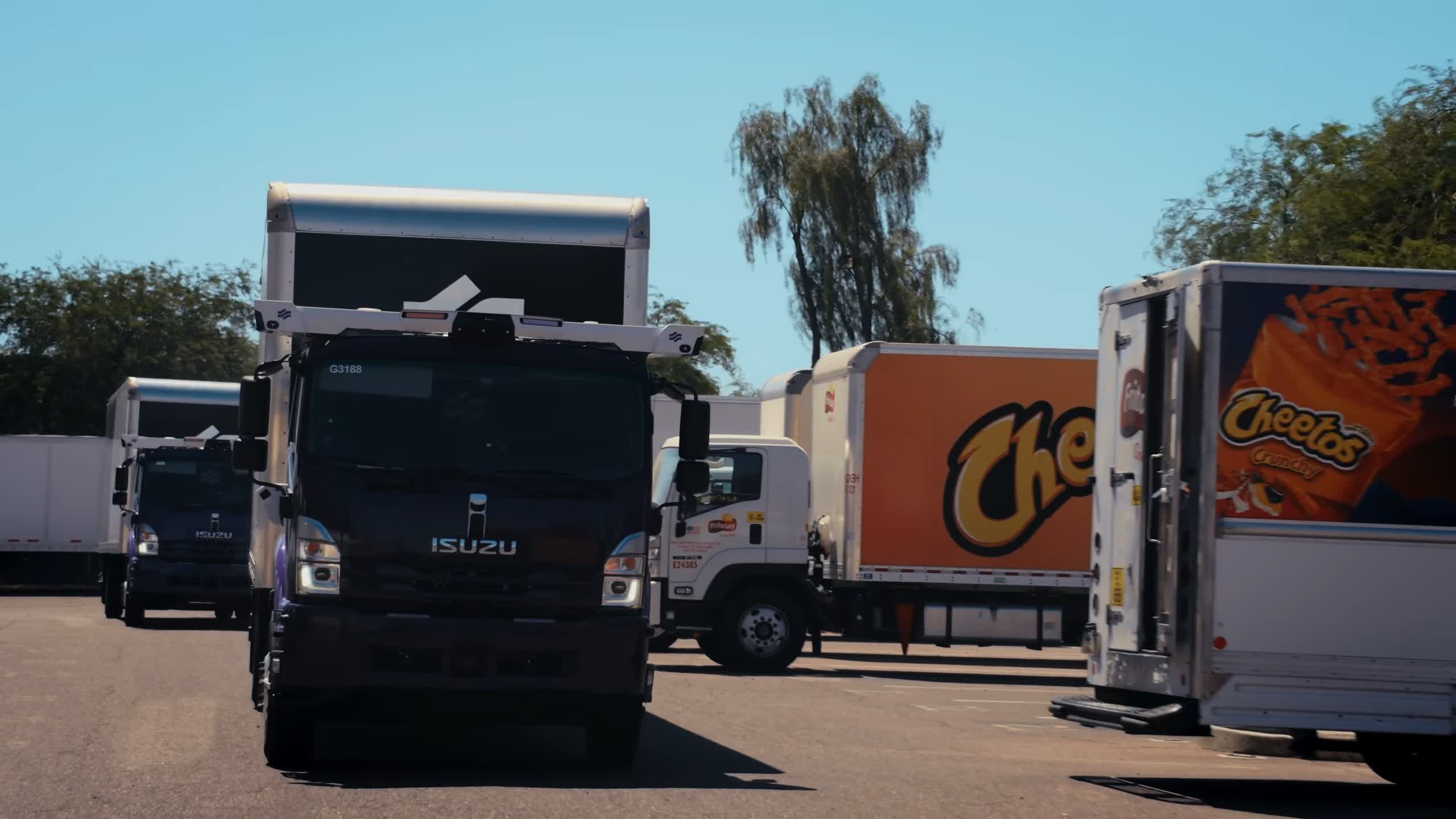
The trucks are moving PepsiCo products including Doritos, Cheetos, other Frito-Lay snacks, and drinks such as Gatorade. The routes run between bottling plants, storage facilities, and stores, including Walmart and Dollar General.

It's not a small pilot with someone in the driver's seat ready to grab the wheel, either: these are driverless runs in live commercial networks.

"These operations that we're running today are real," said Jim Farrell, senior vice president of supply chain at PepsiCo's North American beverages division, told The Wall Street Journal. "They are running in multiple markets in a live network, not like some experimental test environment."

The vehicles themselves are medium- and heavy-duty box trucks built by Isuzu Motors and fitted with autonomous-driving systems from Gatik. They use cameras, radar, and lidar to monitor the road, and while the current trucks still have a steering wheel and cab, Gatik has said future generations would not technically need either.

PepsiCo began working with Gatik in 2022, initially running the trucks with safety drivers. Fully driverless deliveries started in June 2025, and the company says the vehicles have had no accidents on public roads so far. It also claims a 99% on-time arrival rate once uncontrollable factors such as weather and traffic are excluded.
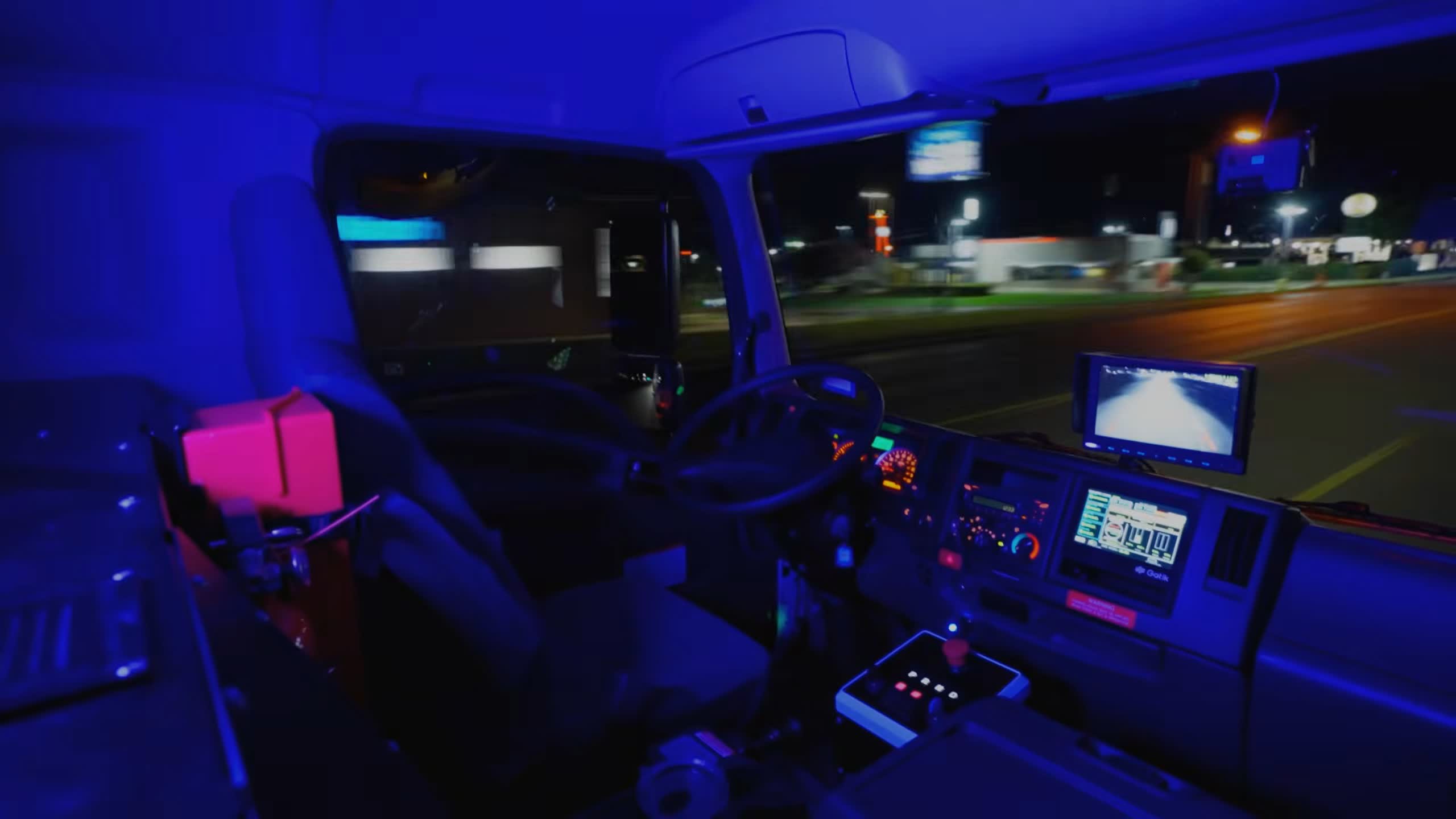
The trucks are best suited to short, repetitive routes where the software can learn the same roads over and over. One example is a 14-mile route between a Gatorade bottling plant and a storage facility.

Store deliveries are more complicated, especially when docks are blocked or traffic is heavy, but PepsiCo employees are still present to unload the vehicles when they arrive.

"Many of our routes that we're operating are very repeatable and so, as the truck gets more history going through, it can become more sophisticated and it learns as it goes," Farrell said.
As with all examples of automation being pushed to new levels, there are concerns about the trucks' impact on human jobs. PepsiCo employs thousands of US drivers, and the Teamsters have been lobbying several states to require a trained human operator inside any autonomous vehicle used for commercial deliveries.

PepsiCo says some drivers could be retrained for roles managing the equipment, coordinating store-side workers, or unloading goods. But the company also acknowledges that driverless trucks could let it grow without hiring as many people in the future, particularly during busy holiday periods, which certainly sounds ominous.

There are still no federal laws specifically governing autonomous trucks, leaving much of the rollout to state-level rules.

Arizona has been one of the most welcoming states for autonomous vehicles, allowing operators to self-certify driverless deployments. It's a system that's helped accelerate the rollout of autonomous delivery trucks, including those now putting bags of Doritos on store shelves without anyone behind the wheel.

Permalink to story:

 
That's great news, considering the serious (and rapidly growing) shortage of truck drivers.
Without self-driving kicking in, we're guaranteed to have a pretty bad transportation crisis soon.
(we're also guaranteed to have this piece of news used to spread AI hysteria)
 
Driverless, but an employee is still available to unload and deliver the products once they get to the destination.....

That's probably one of the dumbest things I've heard. You don't need a driver, but you still need an employee to go with to handle the delivery and unloading? Then what the hell do you need a driverless truck for?
 
Driverless, but an employee is still available to unload and deliver the products once they get to the destination.....

That's probably one of the dumbest things I've heard. You don't need a driver, but you still need an employee to go with to handle the delivery and unloading? Then what the hell do you need a driverless truck for?
Consider the following - drivers for these sorts of vehicle need a CDL, and are in short supply right now. No special license is required to merely unload a truck, so its a lot easier and cheaper to find people who can do that. Plus the employee could easily be someone who works at the store picking up an extra job. When I worked at Walmart back in college I did that sort thing myself; after my shift I also occassionally worked as a Frito-Lay vendor, helping unload their truck and stock the chips and such. (Certain items in a store are stocked by the vendor selling the item, not the store employees).
 
Yep, more carnage coming to a family near you...
Eh? Human-controlled vehicles kill more than one million people per year ... autonomous vehicles are already much safer per mile driven, and improving every year.

That's probably one of the dumbest things I've heard. You don't need a driver, but you still need an employee to go with to handle the delivery and unloading? Then what the hell do you need a driverless truck for?
Was this some weird joke? Employees at the warehouses themselves perform freight handling, saving them all the hours per day sitting in a truck cab doing nothing. It's far more efficient labor-wise. And even if a person came with the vehicle, the lower accident rate, higher on-time rate, and the fact that person doesn't need to be a CDL-licensed and bonded driver results in a large cost savings.
 
I feel torn right now. On one side, it makes me sad that our richest most profitable corporations lay off people who do not have a lot of choices where to work.
On the other hand, I think of those tens of thousands of drivers who did not earn their licenses or even learned the language who cause horrible deadly accidents, and it sounds like driverless trucks are not the worst idea.

The irony though, the first steal from ordinary Americans, and the latter does the same...
 
Consider the following - drivers for these sorts of vehicle need a CDL, and are in short supply right now. No special license is required to merely unload a truck, so its a lot easier and cheaper to find people who can do that. Plus the employee could easily be someone who works at the store picking up an extra job. When I worked at Walmart back in college I did that sort thing myself; after my shift I also occassionally worked as a Frito-Lay vendor, helping unload their truck and stock the chips and such. (Certain items in a store are stocked by the vendor selling the item, not the store employees).
Unless the vehicle is over 26k gross weight, no CDL is required. Many of the trucks in question right now don't require one. Any Jim or Jane can get behind the wheel of these trucks to drive it.

You have to have someone employed always be with the trucks because you cannot count on the destination employees that don't work for Pepsi to unload the trucks for various reasons ranging from safety to theft.

It's just stupid to have a truck system that's automated, yet still require an employee to ride in the truck to handle delivery aspects.
 
You have to have someone employed always be with the trucks because you cannot count on the destination employees that don't work for Pepsi to unload the trucks
You didn't read the article. These trucks are being used between PepsiCo warehouses and distribution hubs only. There are no employees in the trucks themselves. And even if there were, it would still save money to have the truck being driven autonomously, for the reasons I outlined above.
 
You didn't read the article. These trucks are being used between PepsiCo warehouses and distribution hubs only. There are no employees in the trucks themselves.
They are also going to stores. From the article: "The routes run between bottling plants, storage facilities, and stores, including Walmart and Dollar General."
 
They are also going to stores. From the article: "The routes run between bottling plants, storage facilities, and stores, including Walmart and Dollar General."
I stand corrected: I'm the one who didn't read carefully enough. However, the trucks are still devoid of humans. From WSJ:

"Worker Reallocation: Because the trucks drive themselves, PepsiCo sales representatives no longer ride along, giving them more time inside the [retail] store to manage inventory and pitch new promotions....."
 
Back