Privacy apps Signal, Brave, and AdGuard push back against Windows Recall

DragonSlayer101

Posts: 978   +14
Staff
The big picture: Since its announcement last year, Windows Recall has faced mounting criticism from privacy experts who have labeled it a potential surveillance tool – despite Microsoft's assurances of airtight security. Now, some developers are taking matters into their own hands, leveraging built-in Windows features to shield users from what many advocates view as a serious intrusion into personal privacy.
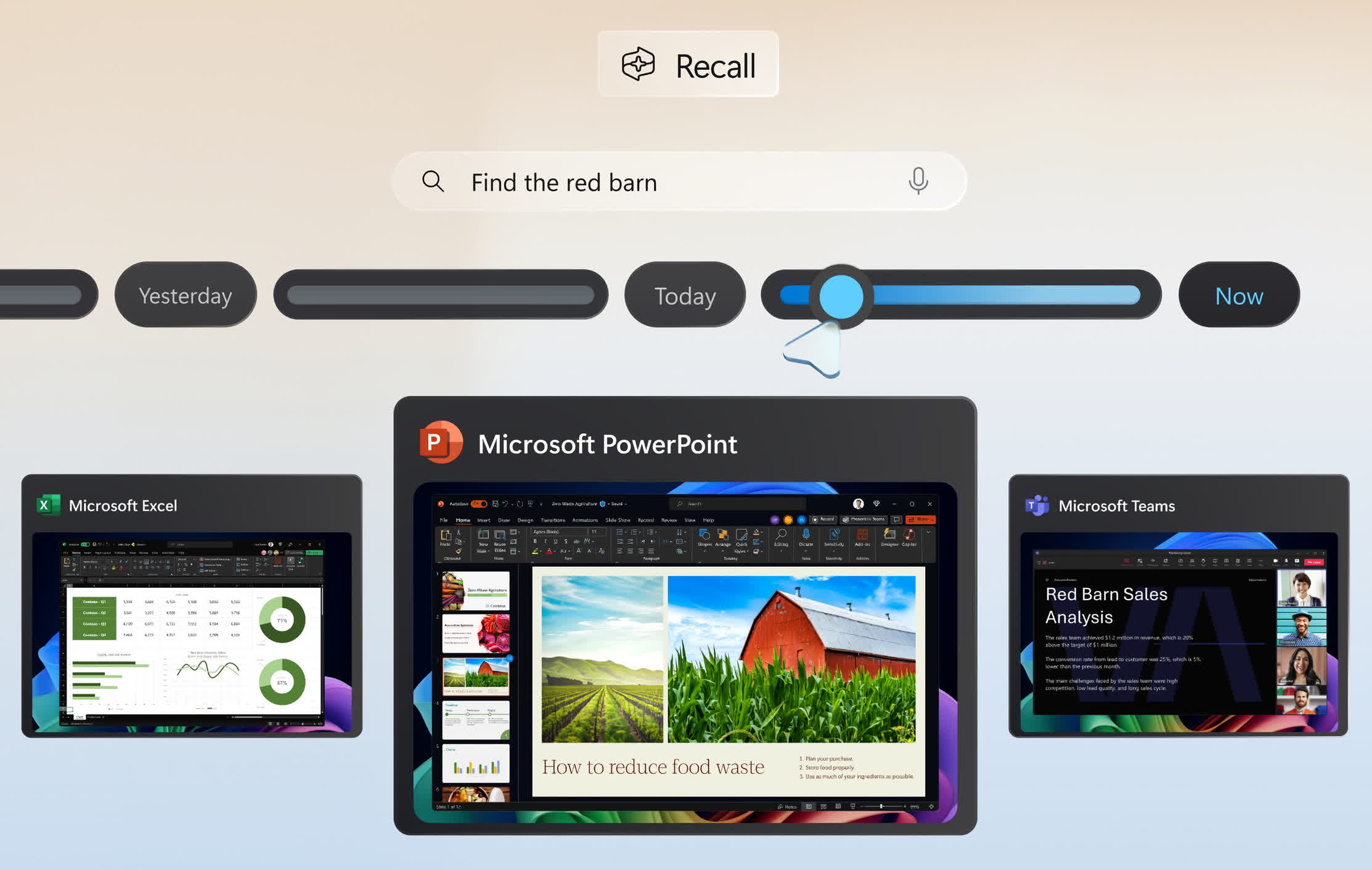
Signal was one of the first apps to block Windows Recall from capturing screenshots of its interface, and more developers have since followed suit. This week, both Brave and AdGuard announced similar measures to shield users from what they describe as unwanted surveillance by Microsoft.

AdGuard warned that Microsoft's portrayal of Recall as a "privacy-friendly" feature is misleading, citing the limitations of traditional safeguards like PINs and content filters. PINs, they argue, are easily compromised, while filters can fail to catch certain types of sensitive data.

Calling the feature "unsettling," the developers noted that screenshots of private chat windows could inadvertently expose personal information, raising concerns about both user privacy and the risk of financial fraud. In their view, the only reliable way to protect against these risks is to disable Windows Recall entirely.

Earlier this week, the makers of the privacy-focused Brave browser announced that Windows Recall will be blocked from capturing screenshots of Brave windows by default, marking a new step to protect user privacy. According to a post on the company's GitHub page, Brave developers are leveraging Microsoft's SetInputScope API to disable the controversial feature.

While Recall already refrains from screenshotting private browsing sessions, Brave is going further by designating all browser windows as private. This approach prevents Windows from recording any browsing activity, regardless of whether it's in incognito mode or not.

For those unfamiliar, Windows Recall automatically captures screenshots of active windows every few seconds on supported Windows 11 PCs. Microsoft pitches it as a productivity tool designed to help users retrace their digital steps, but critics say it's a privacy nightmare in disguise. The feature has drawn sharp backlash for potentially exposing sensitive information, including passwords, health records, private chats, and financial details.

Following public outcry, Microsoft delayed the rollout and promised stronger safeguards. The company also enabled third-party developers to block Recall using either the SetInputScope API or a Digital Rights Management flag – loopholes that developers like Brave and AdGuard are now using to insulate their users.

Permalink to story:

 
I was just reading that the default Recall reserved space for screenshots on a 256 GB device is 25 GB. On a 512 GB device it is 75 GB! That's a serious loss on low end systems where the storage was already too limited.

I'm also still, at 45+ years of computer use, yet to have encountered the situation where I wished there was a random screenshot of my desktop from moments in the past. That's just not how I store or would look for information.
 
I was just reading that the default Recall reserved space for screenshots on a 256 GB device is 25 GB. On a 512 GB device it is 75 GB! That's a serious loss on low end systems where the storage was already too limited.

I'm also still, at 45+ years of computer use, yet to have encountered the situation where I wished there was a random screenshot of my desktop from moments in the past. That's just not how I store or would look for information.
I guess the idea is you can ask a multimodal model to find the information for you. Like asking it about a message and it could determine if it was an email, a Slack, etc. and tell you what you were looking for automatically.

Either way, that's info that can be compromised and subject to warrants, I too have not found a need for this feature.
 
Last edited:
Currently it is opt in because "it isn't done yet.". Once it's completed it will be on by default and they'll probably keep turning it back on after updates once it is in release form.
Correction: It was mandatory, then that was dropped for the totally optional opt in after severe backlash. Now, we all know MicroSoft, over the next 5 years it will become opt out, then the opt out control will reset after updates, then it will require a registry entry to turn off, then it will be mandatory.
Their track record would suggest they will make it mandatory, but I'm not so sure that they will get the chance. They've lost a lot of trust over the past couple of years from one of their most important clients - the U.S. government. And while they've paid lip service to making security their number 1 priority, I haven't seen anything that suggests they've really succeeded in that. Case in point, their recent Sharepoint fiasco, and there's some evidence that their own security tracking of the bug was leaked before they could put the patches in place.

Point is, I think white hats (and black hats) will poke holes into Recall and erode even more trust in the feature, to the point that Microsoft won't be able to make it mandatory or opt-out without risking another huge backlash. Five years might be a long enough time for people to "forget" about Recall, but it's also a long enough time to give the hackers plenty of opportunities to poke those holes. Not to mention the 64GB storage requirement for screenshots isn't exactly easy to go unnoticed. Linux hit 5% market share this year on the desktop, so they know their traditionally safe base - gamers - are starting to revolt, and enterprises will be disabling Recall left, right, and center.

I admit I'm speculating, but the writing is on the wall here: Microsoft is going to have to find another way to sell their so-called AI PCs.
 
I begin to admire Microsoft. It is very much thanks to them that I discovered whole world of open source software.
 
Would go to Linux if I could - but still severe limitations in Software as my gaming devices need them. And Linux sadly doesn’t work on a range of Multiplayer games.
And even KDE Linux isn’t as straight forward if you need anything outside the base package.
I wish Linux became «officially supported» by hardware and software creators - that would make the choice quite easy
 
Good old Brave!
Why this browser isn't taking over the world is beyond me.
I can tell you why I don't use it, Chromium based.

I don't care how much modification is done to it, I just don't want to use Chromium based browsers, Google has too much control of the project for me to trust it and Microsoft chose to use it.
 
I can tell you why I don't use it, Chromium based.

I don't care how much modification is done to it, I just don't want to use Chromium based browsers, Google has too much control of the project for me to trust it and Microsoft chose to use it.
I agree that Google are a cancer but....
Given that they (Brave) have circumvented Manifest V3, YouTube AdBlocking and all the other cancer Google keep trying to poison the web with, I'd say they have very little control over an organisation that only uses Chromium as a rendering engine (which it is very good at).

If the situation changes you can always pick something different in 10 minutes, but each to their own! In a way I'm glad Brave remains slightly under the radar and the sinister lidless eye of Alphabet atop the black tower of Barad-Dûr peering out from the gloom of Gorgaroth doesn't turn it's evil gaze upon them.
 
Lol brave is not a “privacy app”, it’s quite the opposite. Just look up their controversies…
 
Back