The big picture: AI infrastructure demand is no longer just affecting enterprise hardware. The surge in HBM and server DRAM demand is now reshaping the broader memory market, pushing up pricing for consumer SSDs and RAM while forcing downstream companies to aggressively secure inventory before costs rise even further.
Correction (May 19): This article has been updated for clarity and accuracy regarding memory pricing trends and certain reported revenue growth figures and framing cited from translated industry reports.
AI-fueled memory shortages are becoming so severe that several Taiwanese memory module makers are now borrowing hundreds of millions of dollars just to secure enough DRAM and NAND inventory to keep up with demand.
According to Taiwan's Commercial Times, companies including Adata, TeamGroup, Apacer, Innodisk, Transcend Information, and Silicon Power are collectively raising more than NT$28 billion, or roughly $880 million, through convertible bonds, syndicated loans, and private share placements to fund memory chip purchases.
The largest fundraising effort comes from Adata, which reportedly completed a NT$2 billion convertible bond issuance, secured NT$12 billion in bank loans, and is preparing a 30 million-share private placement. GoldKey Technology raised NT$4.5 billion through a mix of bonds and loans, while TeamGroup and Apacer completed NT$2 billion and NT$1 billion convertible bond issuances, respectively. Innodisk and Transcend are each planning NT$3 billion offerings, while Silicon Power is preparing a smaller NT$500 million issuance.
The situation highlights just how distorted the memory market has become during the current AI boom. These companies are not struggling financially. In fact, several are reporting record revenue growth.
Adata's March revenue exceeded NT$10 billion for the first time, while its Q1 revenue more than doubled year over year to NT$26.11 billion. TeamGroup also reported a sharp revenue increase in March, though some translated reports describing triple-digit sequential growth figures may require additional clarification.
Despite those gains, maintaining sufficient inventory has become increasingly expensive as DRAM and NAND contract pricing continues to surge.
Market research firm TrendForce estimates that conventional DRAM contract prices rose between 90% and 95% quarter over quarter during Q1 2026, with another 58% to 63% increase expected in Q2. NAND flash pricing has also climbed sharply, rising roughly 60% in Q1, while additional increases are expected throughout the second quarter.
More recent TrendForce projections from early May suggest mobile DRAM pricing could rise even further as suppliers including Samsung Electronics, Micron Technology, and SK hynix continue prioritizing high-margin server DRAM and HBM production tied to AI accelerators and cloud infrastructure deployments.
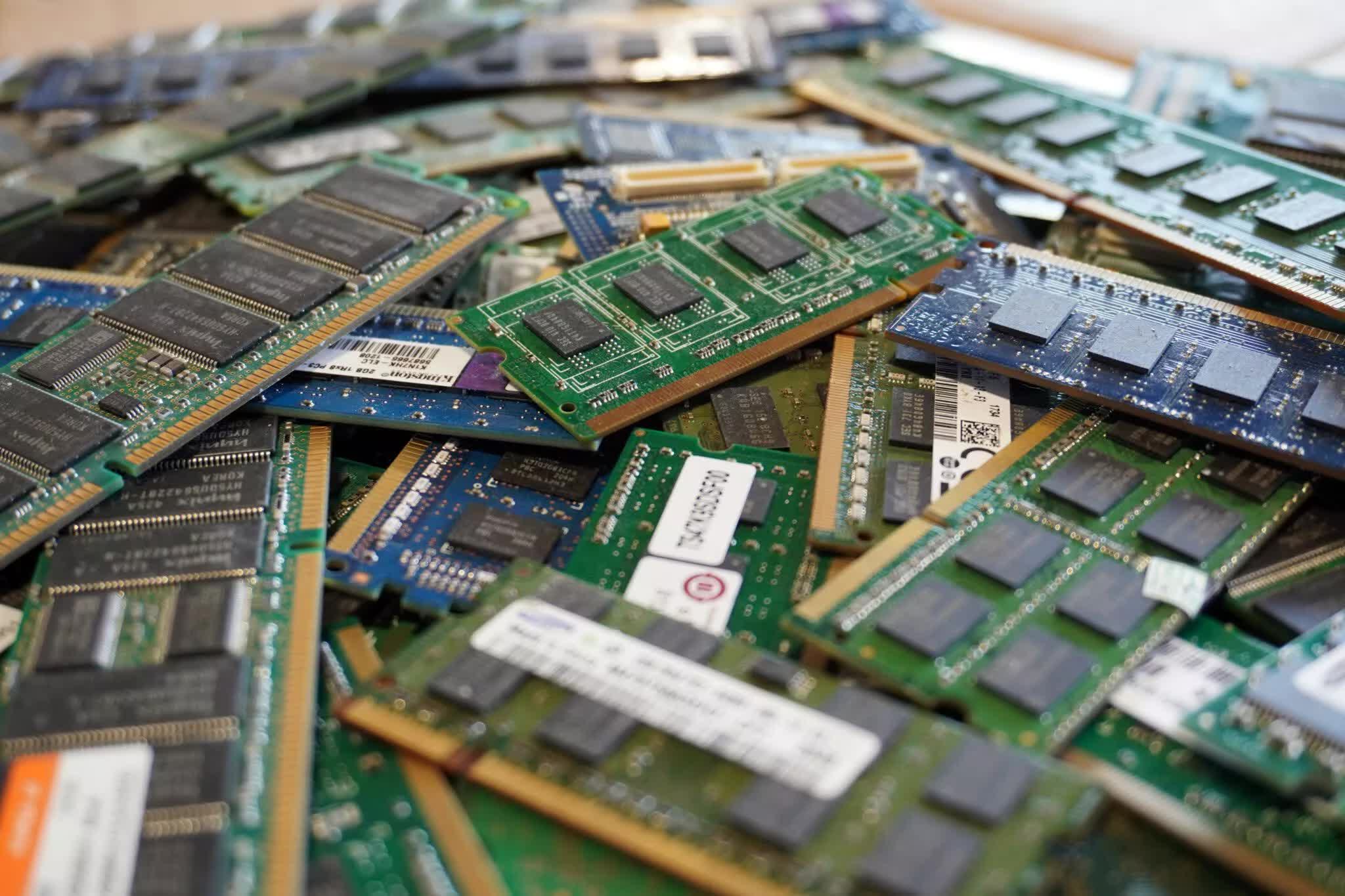
That shift has left module makers with limited influence over supply allocation. Unlike Samsung, Micron, or SK hynix, companies such as Adata and TeamGroup do not manufacture DRAM or NAND chips themselves. Instead, they purchase finished memory components and assemble them into consumer products including DDR5 memory kits, SSDs, USB drives, and industrial storage solutions.
As a result, securing inventory early has become one of the few tools available to protect margins and maintain product availability during the ongoing supply crunch. The strategy also reflects growing concern that meaningful new fab capacity may not arrive until 2027 or later, potentially extending elevated pricing across the consumer memory market well into the future.
RAM makers are taking on massive debt to keep up with AI's chip appetite


