DRAM coolers make a comeback: G.Skill and Cooler Master unveil DDR5 kits with built-in fans

DragonSlayer101

Posts: 984   +14
Staff
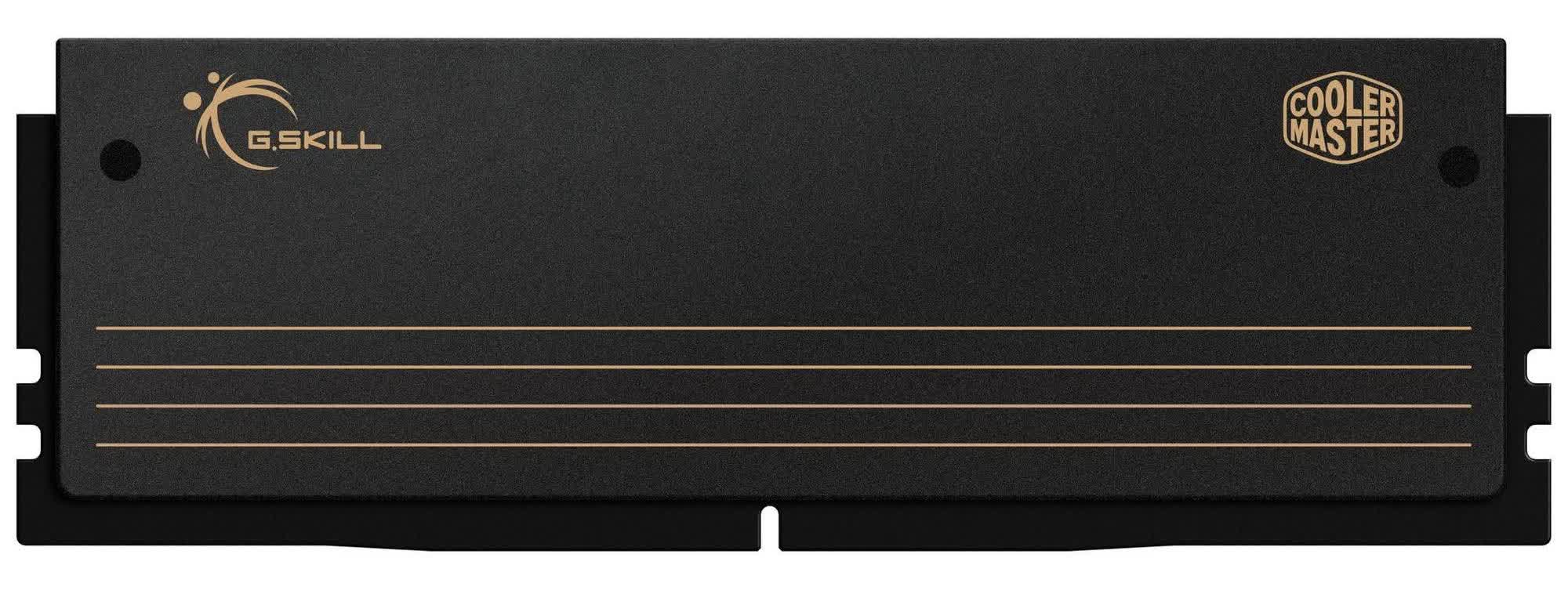
What just happened? G.Skill and Cooler Master have announced a strategic partnership to develop DDR5 memory modules with active cooling. The first product jointly developed by the two companies is MasterDimm AC, a new range of high-capacity, high-performance DRAM modules featuring a fan-assisted cooling design. The goal is to deliver improved thermal performance for premium workstations, gaming rigs, and AI infrastructure.
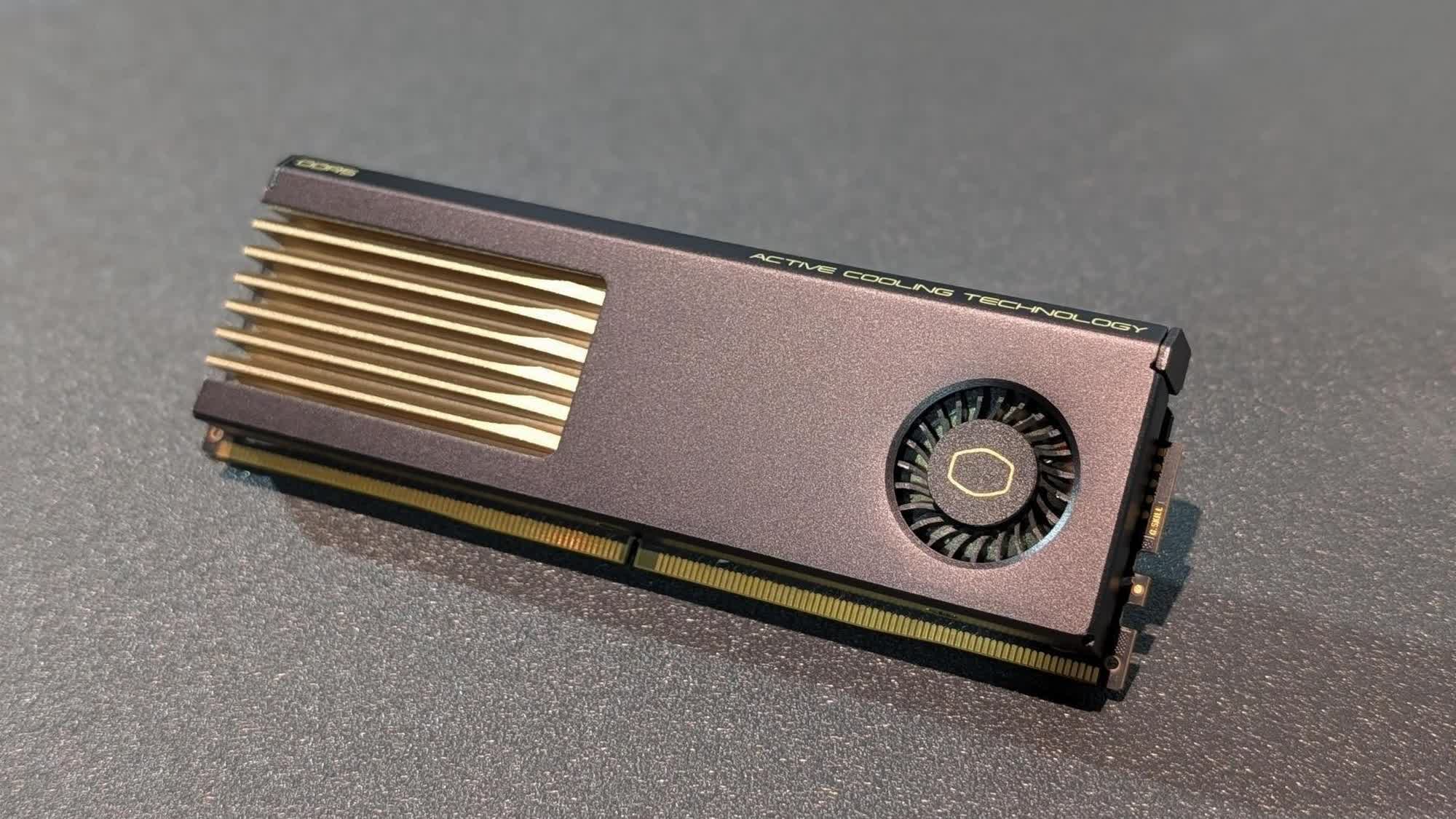
MasterDimm AC features what Cooler Master describes as "noise-optimized" blower fans that operate relatively quietly, with a maximum noise level of 35 dB at full speed. The companies claim that the patent-pending design can reduce operating memory temperatures by up to 15°C, helping ensure sustained performance, improved signal integrity, and reliable operation under demanding workloads.
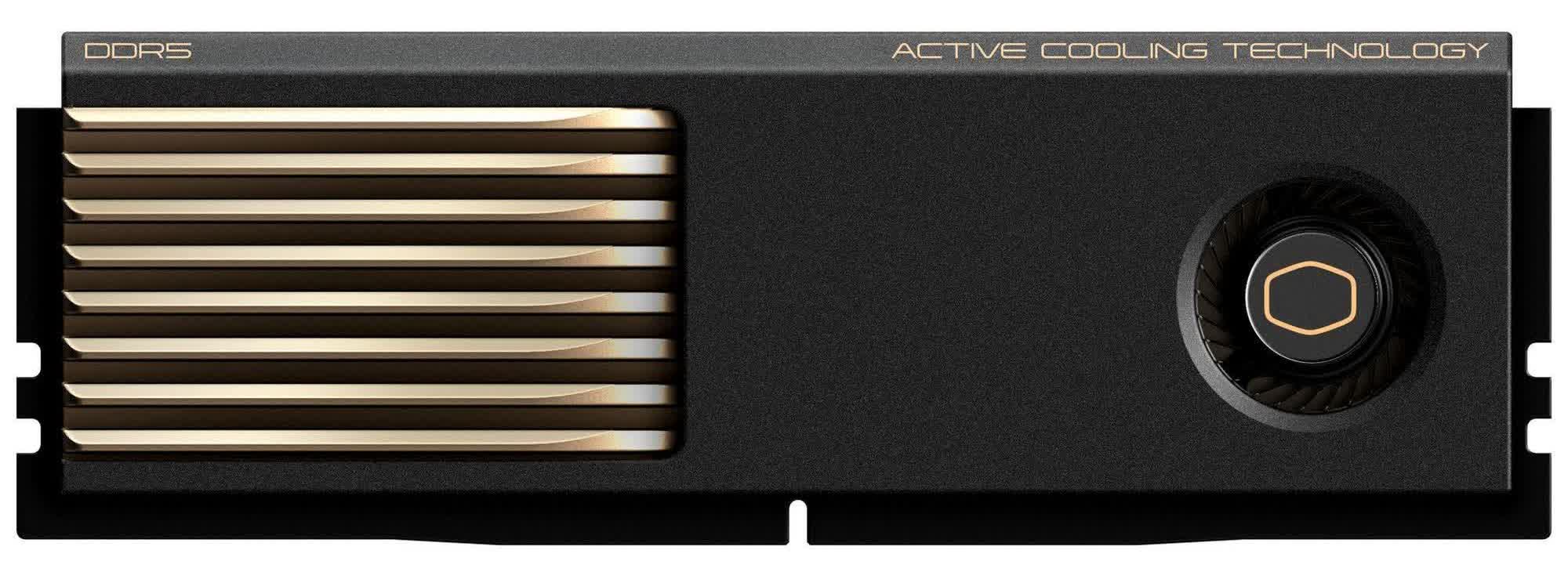
MasterDimm AC memory modules support AMD Expo overclocking profiles up to DDR5-6000 CL26, as well as "extreme frequency" CU-DIMM configurations reaching up to DDR5-8400 with Intel XMP 3.0. They will be available in multiple capacities, topping out at 128GB in a 2 × 64GB configuration. The new kits will be showcased at Computex 2026 in Taiwan next week.

It is worth noting that this is not the first time DDR5 modules with active cooling have been introduced. At CES 2026 in January, Origin Code showcased its Vortex DDR5 memory kits, which feature a detachable cooling unit with a triple-fan design. The modules are specifically tuned for AMD platforms via Expo profiles, with memory speeds ranging from 6000 MT/s to 8000 MT/s.
Over the years, other companies have also experimented with innovative cooling solutions to reduce memory operating temperatures. In 2024, Adata launched its XPG 8000 MT/s DDR5 kits featuring a new thermal coating technology that it claimed could reduce operating temperatures by up to 8.5°C. Earlier this year, SK Hynix introduced a high-bandwidth memory packaging solution called iHBM, which incorporates embedded cooling to prevent AI chips from overheating.

While memory modules with active cooling may be relatively new in DDR5 systems, enthusiasts will remember that premium DDR3 kits often shipped with bundled coolers aimed at overclockers. These coolers typically included fan attachments that could be clipped onto the memory modules to improve thermal performance. Some specialized models, such as the Kingston HyperX H2O, even featured liquid-cooling-ready heat spreaders that could be integrated into custom water-cooling loops.

Permalink to story:

 
We're globally in a slow-rolling Roman Empire style collapse, not only electronics. Titanic is sinking, the orchestra is playing. This cooler is... amusing. Completely useless, as AM5 platform doesn't need more GHZ for optimal work. Both companies are going down, if memory price will not curve down within a year, and signs are It will not. All of Them are going down. You'll own an overpriced $1K tablet and buy AI cloud access for $1K/month next decade. Sad times, but I was born 1980 in Eastern Europe, and I remember life without PCs - I promise You'll manage. ;-)
 
A tiny loud fan in the RAM heatsink makes no sense at all, it feels like a lot of wasted effort when Gskill could've went with a regular RAM cooling fan.
I've noticed a lot of new products are on the very high end, or are gimmicky yet useful enough for the more money than sense crowd to buy.
Although all of these PC companies seem desperate to launch anything different that might attract buyers, because all of these companies are at risk of losing significant amounts of money or might cease to exist unless the AI bubble pops to end the RAMpocalypse, since the average gamer isn't buying anything when RAM is 400X more than it was last year.
 
To anyone alive during the PC building of the early and mid 2000s, stuff like this was wild. People think Wifu builds with RGB is wild, you should see people using propane to make phase change coolers and water-cooling DDR2
 
I'm as excited for this as I was for motherboards having tiny fans.
A component that shouldn't be needed that adds an additional point of failure and perhaps worse - creates unwanted noise.

All you need is a little bit of airflow from a much bigger, quieter and more reliable case fan.
 
Does it mean that it will have more wires hanging around the motherboard? I hate when my expensive and beautiful motherboards have wires everywhere.

For devices like this, it would make a lot of sense to power the fan wirelessly from the motherboard.
We should work on removing/hiding wires rather than adding them.
CPU fan wire
RGB devices wires
SSD fan wire
RAM fan wire

There are too many. No wires please. I propose a new motherboard format. 100% of connectors are on the other side of the board. USB, rgb, fans, front panel, EVERYTHING. Everything goes to the other side.
And all that is left is pure aesthetic pleasure. As for CPU cooler wire, a hole in the motherboard to hide cooler's fan wire.
 
I'm as excited for this as I was for motherboards having tiny fans.
A component that shouldn't be needed that adds an additional point of failure and perhaps worse - creates unwanted noise.

All you need is a little bit of airflow from a much bigger, quieter and more reliable case fan.
I would be more excited if those tiny fans had rgb lights
 
Does it mean that it will have more wires hanging around the motherboard? I hate when my expensive and beautiful motherboards have wires everywhere.

For devices like this, it would make a lot of sense to power the fan wirelessly from the motherboard.
We should work on removing/hiding wires rather than adding them.
CPU fan wire
RGB devices wires
SSD fan wire
RAM fan wire

There are too many. No wires please. I propose a new motherboard format. 100% of connectors are on the other side of the board. USB, rgb, fans, front panel, EVERYTHING. Everything goes to the other side.
And all that is left is pure aesthetic pleasure. As for CPU cooler wire, a hole in the motherboard to hide cooler's fan wire.

There are no wires. Look.
 
Does it mean that it will have more wires hanging around the motherboard? I hate when my expensive and beautiful motherboards have wires everywhere.

For devices like this, it would make a lot of sense to power the fan wirelessly from the motherboard.
We should work on removing/hiding wires rather than adding them.
CPU fan wire
RGB devices wires
SSD fan wire
RAM fan wire

There are too many. No wires please. I propose a new motherboard format. 100% of connectors are on the other side of the board. USB, rgb, fans, front panel, EVERYTHING. Everything goes to the other side.
And all that is left is pure aesthetic pleasure. As for CPU cooler wire, a hole in the motherboard to hide cooler's fan wire.
Already possible:

You do however need an ASUS graphics card and motherboard to have the additional power supplied through the board rather than using cables.
If you use a graphics card that doesn't need additional power (or APU/iGPU) MSI/Gigabyte do back connect motherboards as well.
 
Back