Records show police justified Flock license plate searches with answers like "LMAO" and "idk"

Daniel Sims

Posts: 2,563   +77
Staff
A hot potato: Warrantless database searches are a central part of the growing controversy around Flock's AI-powered camera surveillance network. As police officers keep getting caught abusing the company's license plate readers, a new analysis of its search records suggests the problem runs deeper than isolated incidents and hint at the true scale of the issue.
Search logs from Flock's Automatic License Plate Reader (ALPR) database show that, over the past few years, officers across the US have routinely searched the system without offering any legitimate justification. And the company's own fix for the problem may have made it worse.

The records, obtained by the EFF through a public records request, show officers repeatedly typing flippant or nonsensical answers into the mandatory "reason for search" field. Common entries included "LMAO," "lol," "idk," and outright strings of random keyboard mashing.

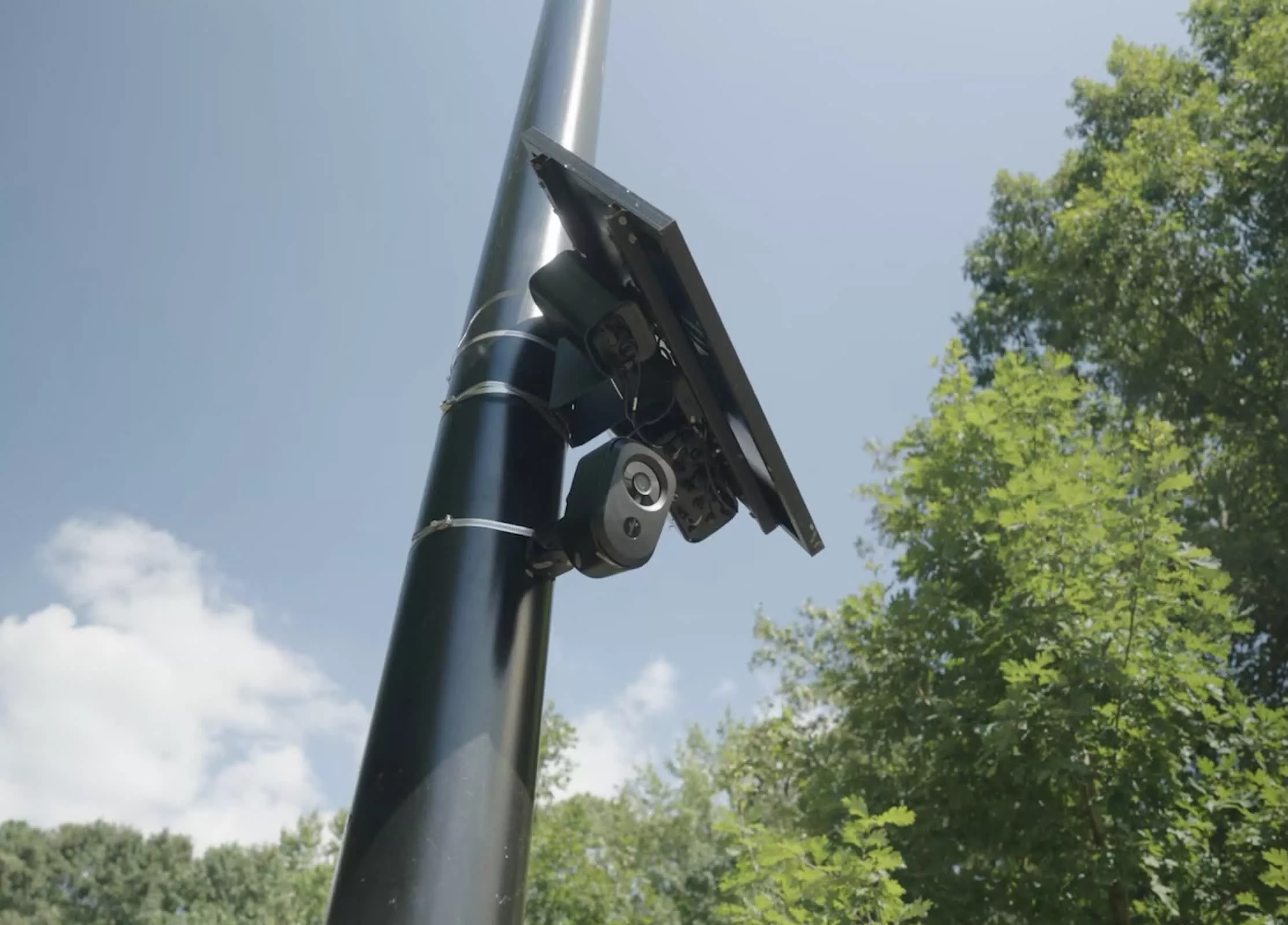
Flock's ALPRs, now deployed across thousands of US communities, use AI to log passing vehicles' plates into a searchable cloud database that officers can use to reconstruct people's movements. Unlike a search of someone's cell phone location history, pulling data from Flock's database does not require a warrant.
Officers are supposed to document a reason for every search, but plenty have simply ignored that requirement. It's one of the core complaints about Flock's system, alongside the dozens of officers who've been caught using it to stalk women.

The throwaway search justifications span roughly 2023 into 2026, even after Flock began pushing officers toward a drop-down menu of pre-set reasons in late 2025 instead of a free-text field. However, instead of fixing the issue, the change might have pushed officers to obscure random searches behind seemingly legitimate causes. Many simply select "other."

Concerns about mass surveillance and false positives have pushed numerous towns to cancel their Flock contracts. People are also regularly caught destroying the company's cameras outright, and rival ALPR vendors are trying to distance themselves from Flock's reputation while marketing hardware that does essentially the same thing.

Flock, for its part, says new contracts far outnumber cancellations – and in at least one case, the company reinstalled its cameras without permission after a city had already removed them. Flock and its competitors are also expanding beyond stationary plate readers: the company's fastest-growing business is now drones that read license plates from the sky, and police departments nationwide are increasingly using them for live surveillance, often for calls that aren't emergencies at all.

Permalink to story:

 
Since when has most surveillance needed any justification? CCTVs are used everywhere by everyone. Law enforcement typically only needs to report their reasons for looking up records if it pertains to an open case, warrant or other legal process, as the article points out: "Unlike a search of someone's cell phone location history, pulling data from Flock's database does not require a warrant." What Flock SHOULD have had the brains to do is make a list of the most common reasons for lookups, which would require a single click, and with a freeform field for "other".
 
Since when has most surveillance needed any justification? CCTVs are used everywhere by everyone. Law enforcement typically only needs to report their reasons for looking up records if it pertains to an open case, warrant or other legal process, as the article points out: "Unlike a search of someone's cell phone location history, pulling data from Flock's database does not require a warrant." What Flock SHOULD have had the brains to do is make a list of the most common reasons for lookups, which would require a single click, and with a freeform field for "other".

The difference is that cctv cameras are usually not easily accessible to the cops and not routinely abused by cops whereas Flock apparently is.
 
Since when has most surveillance needed any justification? CCTVs are used everywhere by everyone. Law enforcement typically only needs to report their reasons for looking up records if it pertains to an open case, warrant or other legal process, as the article points out: "Unlike a search of someone's cell phone location history, pulling data from Flock's database does not require a warrant." What Flock SHOULD have had the brains to do is make a list of the most common reasons for lookups, which would require a single click, and with a freeform field for "other".
This is one of those ridiculous comments that implies you have no privacy at all when you're out in public so why worry about it? Then you try to justify your stupid comment by comparing Flock to CCTVs, which is like comparing apples to elephants. I'm all for tracking criminal activity, but there has to be oversight. The cops had free reign to use Flock as they chose with no repercussions for years. Not for criminal activity, but to spy on ex-girlfriends, stalk rivals, etc. Law abiding citizens shouldn't have to worry about this sort of thing.
 
Since when has most surveillance needed any justification? CCTVs are used everywhere by everyone. Law enforcement typically only needs to report their reasons for looking up records if it pertains to an open case, warrant or other legal process, as the article points out: "Unlike a search of someone's cell phone location history, pulling data from Flock's database does not require a warrant." What Flock SHOULD have had the brains to do is make a list of the most common reasons for lookups, which would require a single click, and with a freeform field for "other".

Quite simple. Make something easily accessible and it will get abused, period. Just like no videos in social media feeds have shock value anymore...because of AI.
 
Is there even a reasonable expectation of privacy when in public?
Historically, there has not been. Of course at the time of our constitution, bill of rights, and first few centuries of legal rulings, observation was limited to those present, finding those observers after the fact required effort, and storage was subject to the limits of human memory. Thus historical precedent feels more like a practical recognition of reality than any sort of actual policy choice. It's just what it naturally was.

So what is new for our law makers and judges to consider is the entirely different ramifications of enduring storage and blanket searches.

In prior times it would not be easy to get a list of everyone who has ever visited say the gay bar or the mosque. You could detail a police car to watch and take notes for a time, but that required resource allocation which hopefully would lead to reasonable discussions.

Or less dramatically, say an algorithm for social worth score. More time at the bar than the factory? Now you can be tagged with a score.

These technologies offer the promise of both solving serious crimes and also of creating a micro-managed totalitarian state that few would enjoy. It's up to policy makers to try to maximize the former while minimizing the latter.
 
Back