
Forward-looking: Researchers from the National Institute of Standards and Technology have created an AI system that could serve as an early warning system for lithium-ion battery fires, potentially providing valuable time to mitigate the catastrophic effects of a compromised battery before it catches fire.
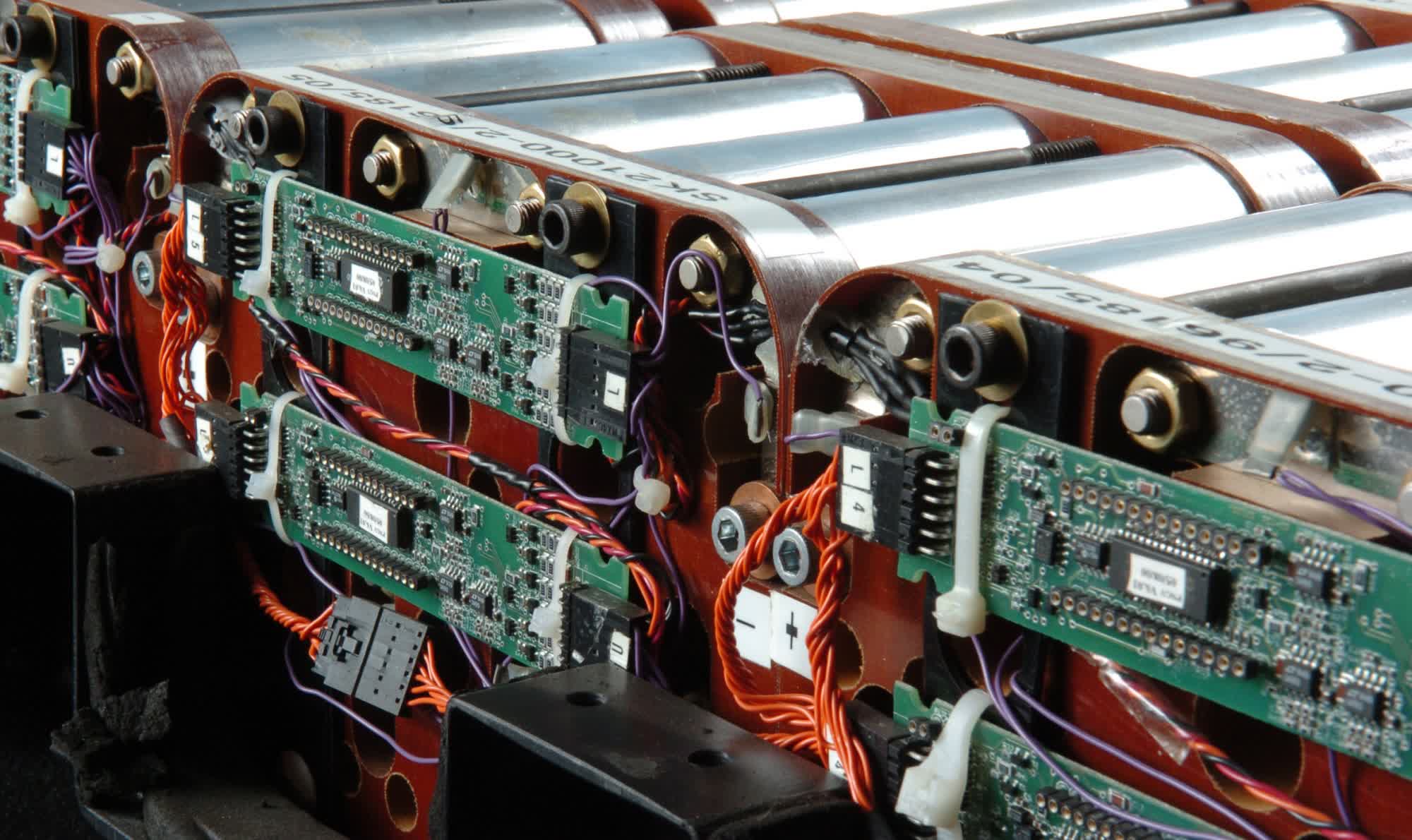
Wai Cheong "Andy" Tam, one of the researchers on the NIST team, was watching videos of exploding batteries and noticed that right before they caught fire, a distinct "click-hiss" sound could be heard.
The sound Tam was hearing originated from a safety valve designed to let batteries in hard casings release pressure when a chemical reaction takes place. Tam wasn't the first to make note of the sound, and others have even studied whether or not it could be used as part of an early warning system.
The problem came down to reliably recognizing the noise. The world is full of all sorts of sounds, and many – like cracking open a bottle of soda, using a stapler, or even dropping a paperclip – sound a lot like the safety valve doing its thing. How do you craft a detection system that doesn't constantly give off false alarms? With AI, of course.
Tam and the team worked with a laboratory at Xi'an University of Science and Technology to explode 38 batteries, recording audio from each. They then tweaked aspects like speed and pitch to come up with more than a thousand different combinations, and used the results to train an AI on what a safety valve popping sounds like.
In testing, the algorithm was able to correctly detect the sound of the safety valve 94 percent of the time. Try as they might, the team had little success when trying to trigger a false alarm. "Only a few of them confused the detector," Tam said. On average, the safety valve broke about two minutes before the battery reached the point of no return.
The researchers have applied for a patent and in the meantime, plan to continue experimenting with different types of batteries and microphones.
Researchers show off AI-powered warning system for lithium-ion battery fires


