Ryzen keeps winning: AMD reaches 33.6% desktop share as Intel slips again

Daniel Sims

Posts: 2,460   +74
Staff
The takeaway: Although Intel technically continues to dominate CPU shipments, AMD has been steadily chipping away at that lead for years. As Team Red continues to release more compelling socketed CPUs and game consoles powered by its chips keep shipping, Intel has yet to break free from its ongoing troubles.

According to data from Mercury Research obtained by Tom's Hardware, AMD's desktop CPU market share for the third quarter of 2025 reached a new milestone at 33.6%. The figure represents a 1.4% increase from the previous quarter, a 5.2% year over year gain, and an impressive 10.6% jump compared to the second quarter of 2024. Although Intel maintains a significant lead with 66.4% of the market, that lead has been shrinking steadily over the past decade.

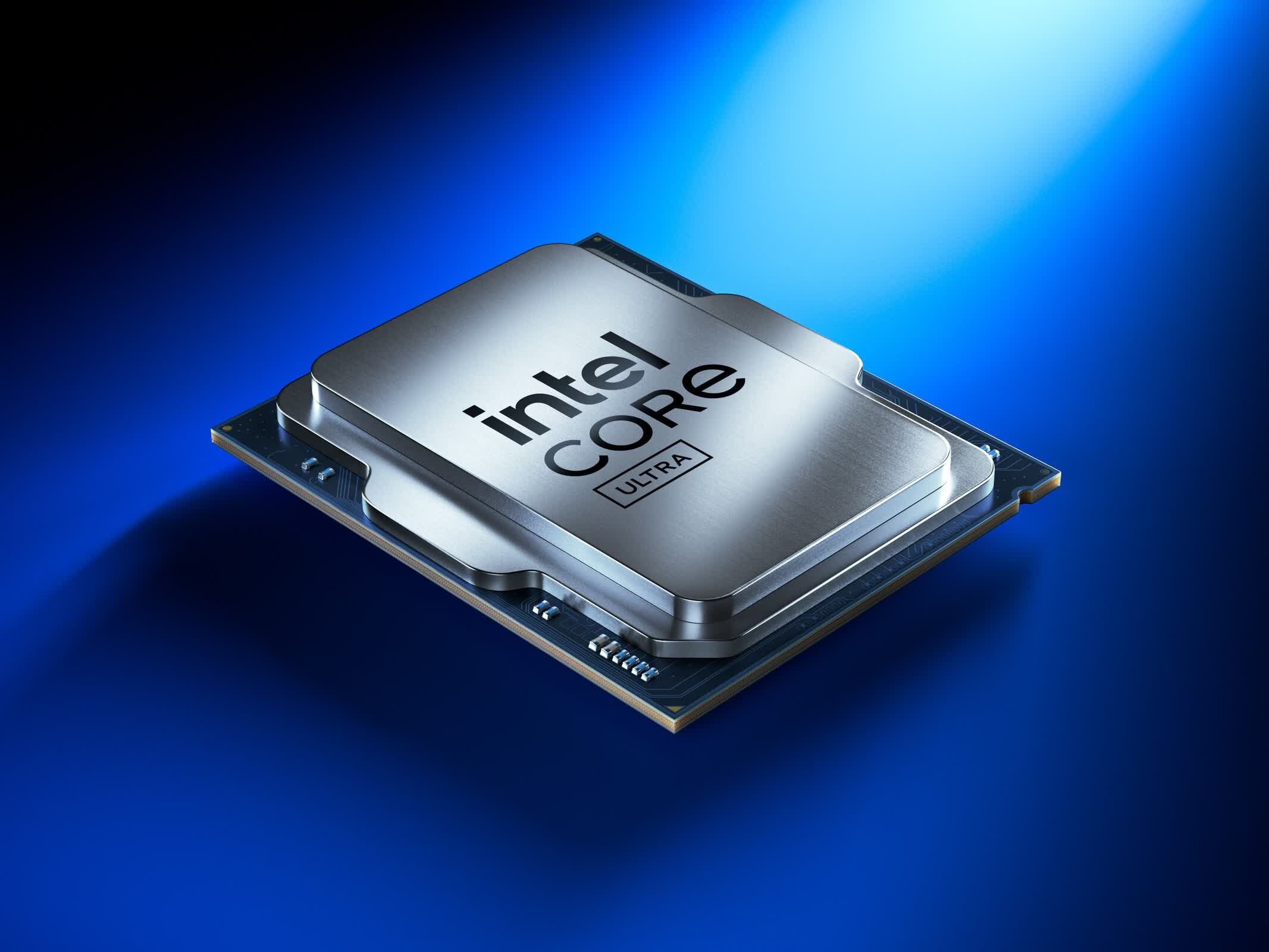
While Intel still sells the most desktop CPUs overall, AMD's Ryzen 9000 series chips have nearly pushed Intel's latest competitor, the Core Ultra 200 lineup, out of sales charts throughout 2025. The Ryzen 9800X3D, TechSpot's current gaming CPU champion, has repeatedly ranked at the top of Amazon US sales charts.

The chip has singlehandedly driven the adoption of 8-core CPUs over 6-core models, and it likely contributed to AMD's recent Steam Survey CPU share growth, which has now surpassed 40%. Intel's three-year-old Raptor Lake processors remain its most popular, likely because the company has yet to respond to AMD's 3D V-cache technology. That could change with upcoming releases.

The client x86 market also observed a milestone from AMD in Q3 2025, as the company's share grew to 25.4%, up 1.5% from the previous quarter and 1.4% compared to the same period last year. Tom's Hardware attributes Intel's decline to 74.6% to supply constraints. Including embedded, IoT, and game console SoCs raises Team Red's client x86 market share to 30.9%, up by roughly 5% over the past year.
AMD even regained some ground in the mobile CPU sector, a rare area where Intel gained market share during the last quarter. Team Blue's below-seasonal shipment levels allowed its rival to rise to 20.6%, up by 1.4% from the second quarter. However, Chipzilla still grew its mobile CPU market share slightly year-over-year.

Team Red also sliced away another 0.5% of Intel's server CPU market share during the latest quarter. Both companies shipped more server chips than last year, but AMD benefited more from an accelerating Epyc Turin ramp.

Notably, overall unit shipments of x86 CPUs in Q3 2025 were flat compared to Q2. This is unusual because back-to-school shopping traditionally drives a seasonal increase, followed by early holiday shopping in September.

Permalink to story:

 
I believe Intel will be affected more with the ram shortages and price hikes because their processors are more sensitive to ram speeds vs the the x3d AMD's cpus imo. Exotic ram kits will be even harder to come by with probably even higher premium now.
 
Reminds me of when I was a kid watching my Toronto Maple Leafs attempt to come back from a 3-0 deficit… “it’s 3-2 Oilers! We’re winning!”

Yes, AMD clearly has the superior offerings, yes sales are definitely increasing… but “winning” would mean more chips sold than Intel…
 
Aren't these figures only for Windows PCs? Macs don't use x86 and now have close to 15% of all desktop/laptop sales.

Laptops wouldn't be included in "desktop share". So what is Apples share if we only include desktops? Google says about 10%.
 
The only place ARM CPUs are superior is power use. I personally don't find them compelling at all.
I say this as a Linux guy. If ARM is the architectural equivalent of Linux. It does some things really well and really efficiently but it ducks at everything else. We can debate all day why that is, but ARM still sucks in real world scenarios
 
Intel need a new drawing board and a win...

AMD is becoming greedy like Intel was when they were on top.

Then again Intel has not stopped being greedy, they should be humble.
 
Aren't these figures only for Windows PCs? Macs don't use x86 and now have close to 15% of all desktop/laptop sales.

From the Article:
While Intel still sells the most desktop CPUs overall, AMD's Ryzen 9000 series chips have nearly pushed Intel's latest competitor
That would be a no for that, you can't buy Apple CPUs, heck they don't even make separate CPUs just entire SOCs (system on a chip).
likely contributed to AMD's recent Steam Survey CPU share growth, which has now surpassed 40%
That's another no or trivial for Apple as no one in the right mind buys Apple products with the intention of running steam on it.

AMD even regained some ground in the mobile CPU sector, a rare area where Intel gained market share during the last quarter. Team Blue's below-seasonal shipment levels allowed its rival to rise to 20.6%, up by 1.4% from the second quarter. However, Chipzilla still grew its mobile CPU market share slightly year-over-year.
The only sector where you can make good comparisons between Intel/AMD/Apple imo because Laptops have the chips soldered to the board (aside from some VERY rare exceptions).

Team Red also sliced away another 0.5% of Intel's server CPU market share during the latest quarter.
Another market Apple does absolutely nothing in.

Notably, overall unit shipments of x86 CPUs in Q3 2025 were flat compared to Q2.
And ignored on basis of not being x86.

--

Also wonder how many of Apple 'desktops' are actually used as a desktop. Their architecture letting the GPU address massive amounts of memory relatively cheap has made them a 'cheap' option for the AI bros. I don't know many but I'm getting the impression most Apple users don't particularly care for a desktop either. The laptops are powerful enough and a lot more flexible, those that want a 'home setup' afaik typically just get a dock for the laptop not a Mac Mini.
 
This is all very well and good -however, should AMD approach anything like a monopoly-level of sales,then anyone who still mistakenly believes that AMD is their 'friend', and that they won't start charging monopoly-style pricings come the day, needs a brain-reset.

You will get gouged -no doubt about it.
 
Didn't see you complaining when Intel was the juggernaut all these decades. That shiny exquisite blue Intel Inside logo really mesmerises us eh?
His account joined in 2023, so yeah, you probably didn't see him complaining in 2010.

Meanwhile, the Internet was chock full of complaints when Intel stagnated, about how boring things were becoming.

Credit to Intel, unlike AMD, they didn't jack up the price of their CPUs the moment they got a solid lead like AMD did.
 
I don't even understand how can anyone buy an intel CPU nowadays.

The only way Intel can really sell CPUs is with OEMs implementations.

Which covers 99.9% of all corporate or non-gamer offerings.

But yeah, I've been an Intel guy since basically forever, and even I went AMD my last build. From a gaming perspective there's no justification.
 
The only place ARM CPUs are superior is power use. I personally don't find them compelling at all.
Maybe one day, If I can build a PC from scratch and can buy MB, dGPU, RAM etc thatt support ARM, have an OS that can run everything natively on ARM (apps and games) and offers say performance benefits like Linux, full driver support, then sure it might be tempting assuming ARM chips continue to improve rapidly and can offer x86/64 performance at lower power
 
Credit to Intel, unlike AMD, they didn't jack up the price of their CPUs the moment they got a solid lead like AMD did.
Has it occurred to you that maybe that's because prices were already jacked up? And also that stagnation is the equivalent of jacking prices up, without actually jacking prices up?

And Intel had no such lead. They were effectively a monopoly, having the power to sway retailers into illegal backroom deals.
 
Maybe one day, If I can build a PC from scratch and can buy MB, dGPU, RAM etc thatt support ARM, have an OS that can run everything natively on ARM (apps and games) and offers say performance benefits like Linux, full driver support, then sure it might be tempting assuming ARM chips continue to improve rapidly and can offer x86/64 performance at lower power
Too bad, ARM is not more energy efficient architecture. ARM chips may be more energy efficient because they are built to be energy efficient. But if ARM really wants to challenge x86-64 on performance, ARM will need to focus less on efficiency and those chips are not so energy efficient any more.

It's common misconception that because ARM chips are efficient ARM is generally more efficient and therefore ARM chips with more performance are also more efficient (vs x86-64). Things just won't work that way.
 
Too bad, ARM is not more energy efficient architecture. ARM chips may be more energy efficient because they are built to be energy efficient. But if ARM really wants to challenge x86-64 on performance, ARM will need to focus less on efficiency and those chips are not so energy efficient any more.

It's common misconception that because ARM chips are efficient ARM is generally more efficient and therefore ARM chips with more performance are also more efficient (vs x86-64). Things just won't work that way.
There is some truth to the energy efficiency claim.

Some of it is indeed from ARM generally being one node ahead or x86, but that alone can't explain what we are seeing in normal day to day usage. Not being reliant on uber high clock speeds does help too (they top out at around 4.6GHz right now with M5 and SD Elite gen 5) which means they focused on IPC and aggressive power draw management.
 
There is some truth to the energy efficiency claim.

Some of it is indeed from ARM generally being one node ahead or x86, but that alone can't explain what we are seeing in normal day to day usage. Not being reliant on uber high clock speeds does help too (they top out at around 4.6GHz right now with M5 and SD Elite gen 5) which means they focused on IPC and aggressive power draw management.
4.6 GHz is pretty far from "high performance". AMD is close 6 GHz and Intel even does it. Just looking at Zen4 vs Zen4c, die area reduction of Zen4C is huge, but still only difference between those two is clock speed.

As for "everyday life" ARM abandoned long time ago idea about memory expansions. Integrating DRAM on SOC gives easy power consumption and performance advantage. However that can be done only once and again, it makes memory expansion impossible. When x86-64 CPUs decided do same thing, suddenly ARM "power advantage" is mostly gone on so called "normal day usage".
 
4.6 GHz is pretty far from "high performance". AMD is close 6 GHz and Intel even does it. Just looking at Zen4 vs Zen4c, die area reduction of Zen4C is huge, but still only difference between those two is clock speed.

As for "everyday life" ARM abandoned long time ago idea about memory expansions. Integrating DRAM on SOC gives easy power consumption and performance advantage. However that can be done only once and again, it makes memory expansion impossible. When x86-64 CPUs decided do same thing, suddenly ARM "power advantage" is mostly gone on so called "normal day usage".
Hz doesn't matter, it's the final performance that does. And so far it seems they managed to get decent performance at much lower frequencies which probably helps in power usage a lot.

Achieving 200 points in Cinebench R24 is incredible for the M5 when my 9800x3d gets about 137 with a +150Mhz OC in PBO and -20UV. and the future M5 Max should beat any current x86 desktop CPU in MT too.

Are there pros and cons? obviously (there is a reason I'm sticking to x86), but let's not downplay what they've managed to achieve. AMD and Intel need to do better and I'm hoping Zen 6 and Zen 7 live up to the hype. (I don't have much hope for intel in the short term, maybe on the low powered laptop CPUs)
 
Hz doesn't matter, it's the final performance that does. And so far it seems they managed to get decent performance at much lower frequencies which probably helps in power usage a lot.
Decent performance yes but high performance? Previously CPU design was pretty much about tradeoff between IPC and clock speed. Now when all "easy" tricks are already used, high performance basically means high clock speed. That is why ARM designs start to raise clock speed, there is nothing else available.
Achieving 200 points in Cinebench R24 is incredible for the M5 when my 9800x3d gets about 137 with a +150Mhz OC in PBO and -20UV. and the future M5 Max should beat any current x86 desktop CPU in MT too.
Again, you are comparing SOC vs CPU. M5 seems to support only 32GB memory. 9800X3D supports 192GB. That is 6x difference. No direct comparison at all.

Another thing is that Cinebench R24 is just crap piece of software. It just sucks as you can see here https://chipsandcheese.com/p/cinebench-2024-reviewing-the-benchmark

Hint, not using AVX-512 with Zen5 makes that comparison invalid. Apple may rule crappy benchmarks on low memory usage situations but otherwise x86-64 is miles ahead. Just cherry picking something does not change big picture.
Are there pros and cons? obviously (there is a reason I'm sticking to x86), but let's not downplay what they've managed to achieve. AMD and Intel need to do better and I'm hoping Zen 6 and Zen 7 live up to the hype. (I don't have much hope for intel in the short term, maybe on the low powered laptop CPUs)
Again, ARM SOCs do not allow memory expansion like x86-64 CPUs do and that thing alone make most comparisons invalid. How about ARM CPU with expandable memory and comparing that against x86-64? Oh well, there are hardly any ARM CPU solutions. Almost every is SOC. ARM has only achieved something AMD and Intel didn't even bother previously. What should be compared are AMD and Intel SOCs vs ARM SOCs. And surprise, x86-64 suddenly seem very energy efficient.
 
Decent performance yes but high performance? Previously CPU design was pretty much about tradeoff between IPC and clock speed. Now when all "easy" tricks are already used, high performance basically means high clock speed. That is why ARM designs start to raise clock speed, there is nothing else available.

Again, you are comparing SOC vs CPU. M5 seems to support only 32GB memory. 9800X3D supports 192GB. That is 6x difference. No direct comparison at all.

Another thing is that Cinebench R24 is just crap piece of software. It just sucks as you can see here https://chipsandcheese.com/p/cinebench-2024-reviewing-the-benchmark

Hint, not using AVX-512 with Zen5 makes that comparison invalid. Apple may rule crappy benchmarks on low memory usage situations but otherwise x86-64 is miles ahead. Just cherry picking something does not change big picture.

Again, ARM SOCs do not allow memory expansion like x86-64 CPUs do and that thing alone make most comparisons invalid. How about ARM CPU with expandable memory and comparing that against x86-64? Oh well, there are hardly any ARM CPU solutions. Almost every is SOC. ARM has only achieved something AMD and Intel didn't even bother previously. What should be compared are AMD and Intel SOCs vs ARM SOCs. And surprise, x86-64 suddenly seem very energy efficient.
"Decent performance yes but high performance?" - why the question? you have the benchmarks, and these confirm what I said.

"Again, you are comparing SOC vs CPU" - and? why would I make a distinction when I'm looking at just the CPU performance? FYI just the base m5 is limited to 32GB, the Pro and Max versions can support more. The M5 Max is expected to support 256GB.

"Hint, not using AVX-512 with Zen5 makes that comparison invalid." - that would make Intel vs AMD a moot point too which makes zero sense.

I gave you R24 as just a single example, do you want more? I use Handbreak a lot and the M5 beats the 370 HX by about 20% while using almost half the power draw (and power draw is up a lot this generation compared to the M4). This is around what the 9800x3D can do.

"Again, ARM SOCs do not allow memory expansion like x86-64 CPUs do" - again, we are not comparing platforms. it makes zero difference when comparing raw CPU performance. and forgoing upgradability is a choice made by the OEMs, not a limitation of ARM.

I understand being against Apple or another company (for example I don't buy any laptops that I can't upgrade with more RAM and storage), but why are you so up in arms (pun intended) against ARM as an architecture?
 
Back