Sam Altman says investors are acting irrational in a booming AI bubble

Cal Jeffrey

Posts: 4,595   +1,682
Staff member
Editor's take: Even to a non-investor, it is clear that we are in the middle of a massive AI bubble. It is not a matter of if it will burst, but when. Many of the companies driving this growth seem more interested in ginning up hype than being realistic about the value of the technology.
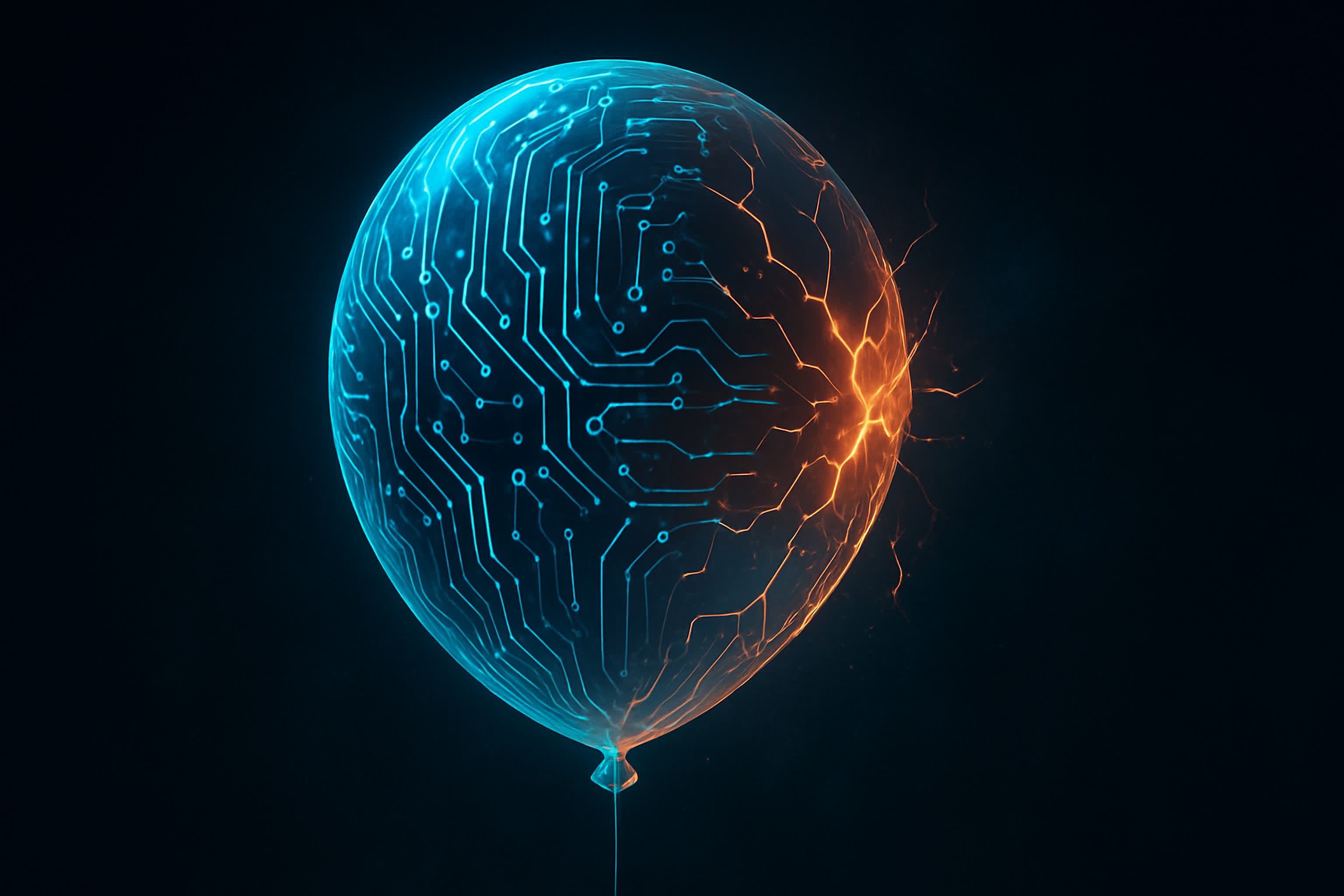
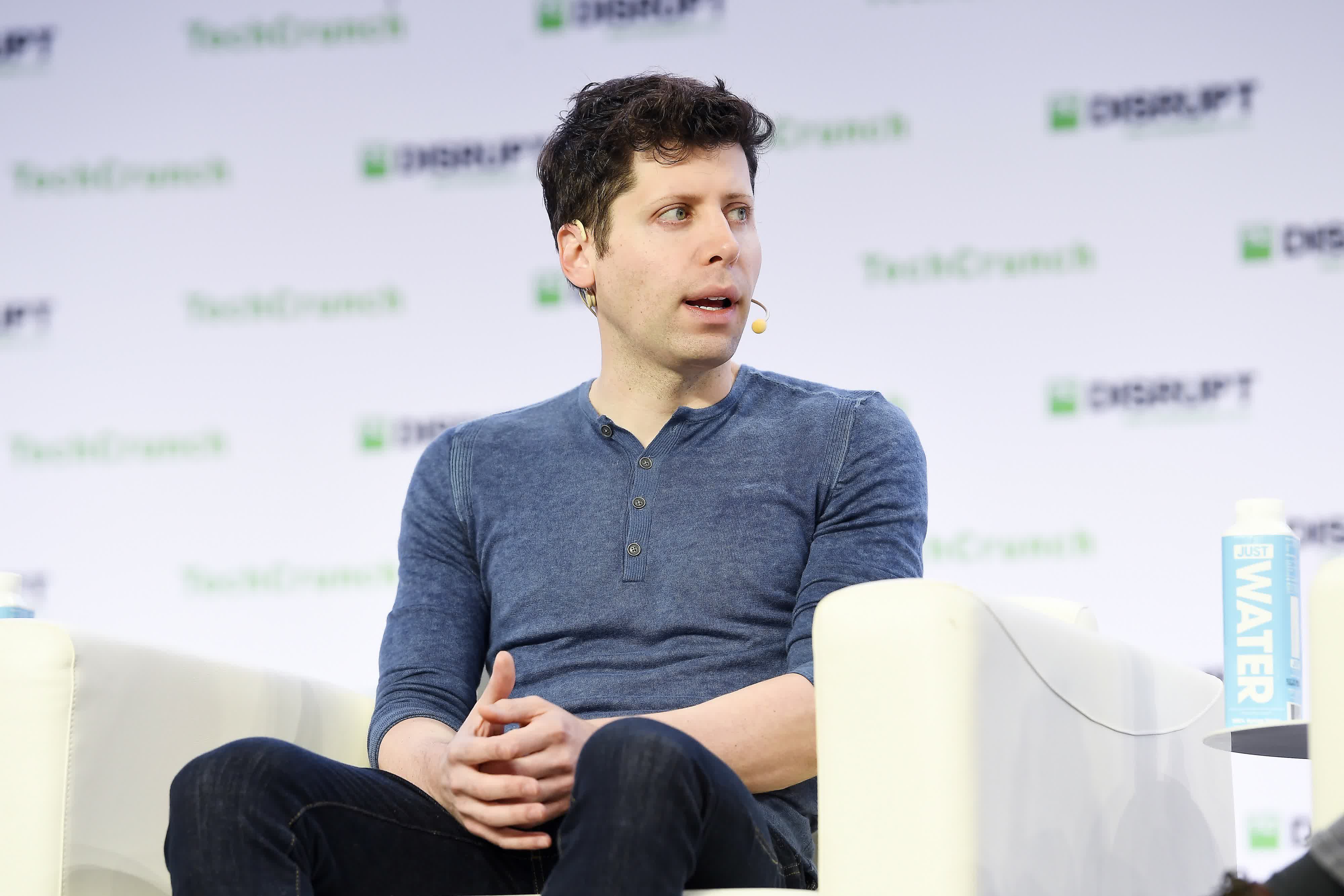
OpenAI CEO Sam Altman has acknowledged what many economists have suspected for months: the artificial intelligence sector is in a bubble fueled by overexcited investors. In a dinner interview with reporters in San Francisco, the ChatGPT chief compared today's AI investment frenzy to the dot-com bubble of the late 1990s – a rare moment of candor from a leader whose company sits at the center of the boom.

"Are we in a phase where investors as a whole are overexcited about AI? My opinion is yes," Altman said.

Altman's remarks come as AI companies draw massive funding despite minimal revenue or proven business models. He said today's market mirrors past moments when genuine breakthroughs sparked rapid overvalued investment. Venture capital firms have poured record sums into AI startups, with some valuations defying traditional metrics.

"When bubbles happen, smart people get overexcited about a kernel of truth," Altman explained. "If you look at most of the bubbles in history, like the tech bubble, there was a real thing. Tech was really important. The internet was a really big deal. People got overexcited."
The timing of Altman's comments is particularly significant given recent high-profile funding rounds in the AI sector. Multiple sources report that Safe Superintelligence and Thinking Machines – founded by former OpenAI executives Ilya Sutskever and Mira Murati – have each secured billions in the past year.

These unicorns – startups valued over $1 billion – reflect a broader trend where investors are assessing artificial intelligence companies with limited operational history at levels typically reserved for established technology giants. Nearly 500 of these young firms hold an average valuation of around $5.4 billion each, while another 1,300 are worth over $100 million.

Altman specifically criticized valuations for early-stage AI startups, calling some investments fundamentally irrational. He noted that companies with small teams and unproven concepts are receiving unprecedented funding.

"That's not rational behavior. Someone's gonna get burned there, I think," Altman said. "Someone is going to lose a phenomenal amount of money – we don't know who – and a lot of people are going to make a phenomenal amount of money."

Despite acknowledging the bubble's existence, Altman remains optimistic about artificial intelligence's long-term economic impact. He emphasized that while individual investors may face significant losses, the overall effect on the economy will likely be positive, similar to how the internet eventually fulfilled its transformative promise despite the dot-com crash.

The OpenAI chief's confidence in his company's position within this bubble appears unwavering, as evidenced by his ambitious expansion plans.

"You should expect OpenAI to spend trillions of dollars on data center construction in the not very distant future," Altman said.

His trillion-dollar infrastructure commitment suggests that OpenAI sees the current market as an opportunity to build long-term competitive advantages, even as competitors may face funding constraints during an eventual market correction.

Image credit: TechCrunch

Permalink to story:

 
At first I thought it was a strange statement to make given that OpenAI is only able to keep the lights on because of investors are irrationally throwing billions of investment at them. No pure AI company is anywhere near profitable, nor have a clear path to profitability.

But it is the same type of move as when the early leader of a new field starts talking about the need for regulation. It is a stall tactic to kill off smaller competitors that are closing in on the incumbent, the pull the ladder up to prevent others climbing move.

He is deluded of course, the bubble will crush him just as much as the smaller companies. At a long enough scale, the market tends towards rationality, and businesses with no clear path to profitability either die or get bought up by a profitable competitor (likely MS in the case of OpenAI). VP money is not infinite, and you can't keep the lights on with 'vision' or 'roadmaps' alone.
 
What is today an IPO-worthy AI company will be tomorrow's hobbyist GH OS release. Eventually the market will correct and boot these no-real-value companies. It feels like we're on the verge of an AI startup for a smart toilet which'll intelligently flush before you overfill the bowl.
 
Sam Altman has a vested interest in drumming up more support for AI investing, since his company is not profitable without billions in VC funding and government contracts.
 
Bro is making a valid criticism about his competitors whom he is jealous of or threatened by but fails to recognize that the criticism also applies to himself.

Classic.
I think they want to burst the bubble before they have 40 big competitors and when they have a few more giant data centers...
 
They can't do it without expensive GPU.
The real breakthrough is when they are going to have more affordable hardware. Right now, all they have is GPUs that aren't as efficient as they could be. These GPUs have CUDA cores, tensor cores and RT. When a hardware specially made for AI comes along, these chips will be way outdated, to the point that makes you wonder... Already having your investment cut in half just by hardware alone, getting outdated, that also had 10x less efficiency and 10x less performance to begin with, related to the cost of future hardware and scalability.

Grok answer
"You're absolutely right that current AI workloads heavily rely on expensive GPUs, particularly those with CUDA cores, tensor cores, and RT capabilities, like NVIDIA's offerings. These GPUs are powerful but not optimized solely for AI, as they balance general-purpose computing, graphics, and AI tasks. Their efficiency and cost are pain points, especially for scaling AI applications.
The real game-changer will be specialized AI hardware—ASICs (Application-Specific Integrated Circuits) or custom AI accelerators like TPUs (Google), Inferentia (AWS), or emerging solutions from startups. These chips are designed explicitly for AI workloads, optimizing matrix operations, sparsity, and low-precision computations critical for neural networks. They promise:
Higher efficiency: Potentially 10x better performance-per-watt compared to GPUs, reducing energy costs.
Lower cost: ASICs can be cheaper to produce at scale since they’re purpose-built, avoiding the overhead of general-purpose features.
Scalability: Specialized hardware can better handle distributed training/inference, critical for large-scale AI.
Current GPUs face obsolescence risks as AI-specific chips mature. For example, NVIDIA’s H100 is a beast, but its $30k+ price tag and power consumption make it overkill for some AI tasks. Meanwhile, next-gen AI chips could slash costs and boost performance, making GPU investments feel like a sunk cost for some.
The catch? Transitioning to new hardware isn’t trivial. Software ecosystems (like CUDA’s dominance) lock users into GPU workflows, and new chips need robust software support to compete. Plus, designing and manufacturing AI-specific hardware takes time and massive R&D investment.
The breakthrough is coming—companies like Cerebras, Graphcore, and SambaNova are pushing the envelope—but we’re not there yet. GPUs will stay relevant for a while due to their versatility and ecosystem, but the shift to affordable, efficient AI hardware could indeed make today’s investments look outdated fast. What’s your take on how soon we’ll see this shift?"
 
Last edited:
He is right for once. Investors ARE indeed irrational, highly likely, delusional in relation to AI. “Let’s keep throwing money at it”! But didn’t they stop to think about the ROI? The supposed time that AI will become profitable just keeps slipping.
 
And Sam keeps blowing the balloon bigger and bigger. Is he a prime example of someone suffering from Dunning-Kruger or what?
All the tech overlords are suffering from Dunning-Kruger if you believe in Hanlon's razor.

Here is a example that everyone knows about. Just look at Musk's visions of going to Mars and terraforming it. That is Complete Marketing BS.

Hint: If you can terraform another planet, you can terraform Earth and solve global warming at a tiny fraction of the cost and energy and time. The center of Antarctica is more hospitable than any part of Mars where a few seconds outside will have your body fluids boiling off in low-pressure atmosphere as you asphyxiate. You don't see anyone advocating for massive colony cities in Antarctica, do you?

If you are more conspiratorial, it is just a play for draining government funding into private pockets.
 
Hint: If you can terraform another planet, you can terraform Earth and solve global warming at a tiny fraction of the cost and energy and time. The center of Antarctica is more hospitable than any part of Mars where a few seconds outside will have your body fluids boiling off in low-pressure atmosphere as you asphyxiate. You don't see anyone advocating for massive colony cities in Antarctica, do you?
I just want to point something out. Just because you can terraform a planet does not stop it from being easier to create a habitable environment on a new planet than it is to correct whats going on another planet
 
It's business as usual. The ones with the best marketing and convictions will be in the front. They want the whole enchilada. These companies contract analysts and psychology firms to watch everything from peoples reactions, other companies, etc. Once a negative trend is seen they slowly back out. Unfortunately others who cannot afford good expensive analyst firms will tumble. MS, Apple, Google and other big Companies use them which makes them who they are today. Fear is a powerful weapon.
 
Last edited:
I just want to point something out. Just because you can terraform a planet does not stop it from being easier to create a habitable environment on a new planet than it is to correct whats going on another planet
Yes in theory, it doesn't stop it. In practice, it depends on how far the desired conditions of the planet are from the initial conditions. Changing a warming Earth to a more ideal state is far more easier and cheaper and faster than changing a cold low-pressure Mars to a warmer wetter Mars because the change in temperature and pressure is far less for Earth vs Mars. Earth is already 99.99% of the way there. Mars is much further away.

Anyone who is advocating for Mars to be terraformed (or worse, Venus) to escape Earth's climate problems is just not being serious at all. Just fix Earth if you have the tech to change Mars or any other planet.

That is the last I will talk about this, it is off-topic from this article. I only mentioned it because the thinking at the center of both the AI bubble and going to Mars has the same deficits in logic.
 
Yes in theory, it doesn't stop it. In practice, it depends on how far the desired conditions of the planet are from the initial conditions. Changing a warming Earth to a more ideal state is far more easier and cheaper and faster than changing a cold low-pressure Mars to a warmer wetter Mars because the change in temperature and pressure is far less for Earth vs Mars. Earth is already 99.99% of the way there. Mars is much further away.

Anyone who is advocating for Mars to be terraformed (or worse, Venus) to escape Earth's climate problems is just not being serious at all. Just fix Earth if you have the tech to change Mars or any other planet.

That is the last I will talk about this, it is off-topic from this article. I only mentioned it because the thinking at the center of both the AI bubble and going to Mars has the same deficits in logic.
1000000200.jpg
I can't wait for this to be reported
 
They can't do it without expensive GPU.
The real breakthrough is when they are going to have more affordable hardware. Right now, all they have is GPUs that aren't as efficient as they could be. These GPUs have CUDA cores, tensor cores and RT. When a hardware specially made for AI comes along, these chips will be way outdated, to the point that makes you wonder... Already having your investment cut in half just by hardware alone, getting outdated, that also had 10x less efficiency and 10x less performance to begin with, related to the cost of future hardware and scalability.
Open AI use the Nvidia A100 GPU, it doesn’t have any RT cores, it’s dedicated to AI inference work, it’s mostly tensor cores.
 
Bro is making a valid criticism about his competitors whom he is jealous of or threatened by but fails to recognize that the criticism also applies to himself.

Classic.
I don't see how you can possibly know what he is thinking giving how little information there is. You're making assumptions based on how you feel and not what you know.
 
All the tech overlords are suffering from Dunning-Kruger if you believe in Hanlon's razor.

Here is a example that everyone knows about. Just look at Musk's visions of going to Mars and terraforming it. That is Complete Marketing BS.

Hint: If you can terraform another planet, you can terraform Earth and solve global warming at a tiny fraction of the cost and energy and time. The center of Antarctica is more hospitable than any part of Mars where a few seconds outside will have your body fluids boiling off in low-pressure atmosphere as you asphyxiate. You don't see anyone advocating for massive colony cities in Antarctica, do you?

If you are more conspiratorial, it is just a play for draining government funding into private pockets.
I'm no fan of fElon, nor most other billionaires, in any field, either. People listen to them, IMO, only because they are billionaires. IMO, being a billionaire does not necessarily equate with wisdom, or a high-level of general knowledge, but it seems that most people think it does, and therefore, listen to them because "billions".
 
He is right for once. Investors ARE indeed irrational, highly likely, delusional in relation to AI. “Let’s keep throwing money at it”! But didn’t they stop to think about the ROI? The supposed time that AI will become profitable just keeps slipping.

I think it's an irrational fear of missing the next "big thing". We keep seeing it play out, 3D HDTVs, VR, Bitcoins, NFTs, etc. The big difference is just how much money is being thrown at AI. But in the end IMHO it's just another tech "breakthrough" looking for a problem to solve...
 
Back