What just happened? Samsung's smart TV software is undergoing a quiet but significant overhaul following a high-profile legal challenge in Texas that accused the company of using Automated Content Recognition technology to collect viewing data without consumers' express, informed consent. The update, announced as part of an agreement with the state attorney general's office, requires Samsung to make its privacy disclosures and opt-in screens "clear and conspicuous" – a change intended to help consumers better understand what data is being collected and for what purpose.

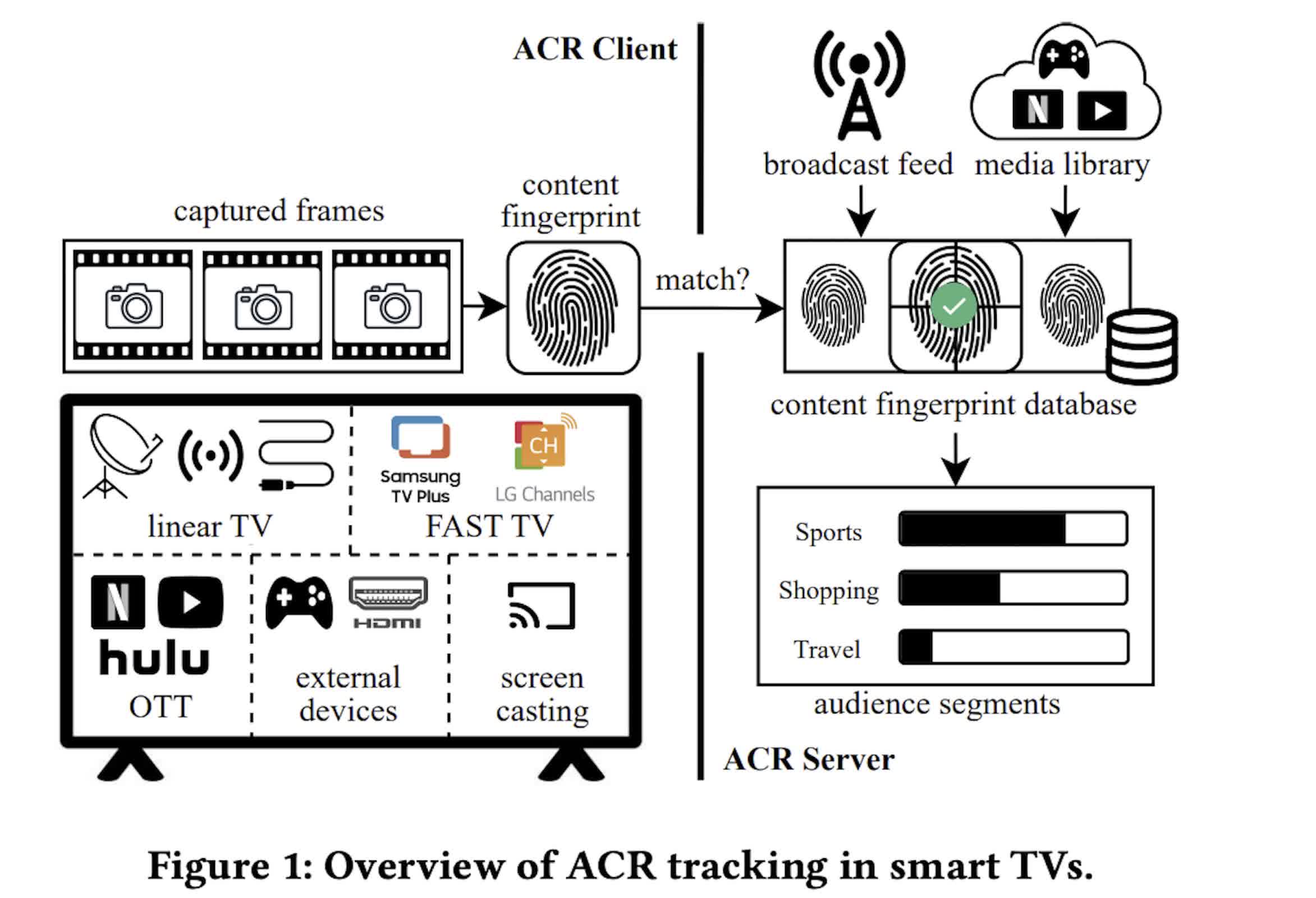
Automated Content Recognition (ACR) operates within the smart TV software stack, scanning brief snippets of video and audio from whatever appears on the screen – whether streaming services, broadcast television, or external inputs. Those snippets are then compared against a large online database to identify content in real time. By linking that information to advertising networks, Samsung and other manufacturers can tailor marketing based on users' viewing habits.
Researchers who study ACR describe it as a form of digital fingerprinting. The software captures short bursts of imagery or audio – sometimes just a few frames – and converts them into mathematical signatures. These signatures are matched against centralized reference libraries maintained by service providers. Although the system does not record full-length footage, it can still generate a detailed log of what is being watched and when, based on the accumulated fingerprint matches over time.
While television makers present the technology as an opt-in feature for personalized ads or content recommendations, Texas Attorney General Ken Paxton argued that the practice amounts to hidden surveillance. His lawsuit against Samsung alleged that the company failed to clearly disclose how the technology functioned during the initial setup process.
According to court filings, Samsung referred to its data collection system as "Viewing Information Services," a label that Paxton argued obscured its purpose. He further contended that many consumers simply click through installation screens to begin using their new TVs, unaware that they may be consenting to ongoing ACR-based data collection.
Samsung has maintained that it did not violate privacy laws and that the settlement supports its position. "Samsung TVs do not spy on consumers," the company said in a statement. "Customers have always had the ability to control their privacy and change their settings at any time." Nevertheless, Samsung agreed to redesign its permission interface to make data collection disclosures clearer and easier to understand.
The company said it will deploy the changes through software updates for its smart TV products, though the revised disclosures have not yet been publicly detailed. A Samsung spokesperson told PCMag that the updated language is intended to "provide additional reassurance to customers and serve as a new standard for others in the television industry."
The reference to a "new standard" carries broader regulatory implications. Paxton has filed similar lawsuits against Hisense, LG, Sony, and TCL, each accused of deploying ACR systems without sufficient transparency. Because these brands collectively hold a substantial share of the smart TV market, the Samsung settlement could encourage the industry to adopt more explicit consent mechanisms.
ACR has been used for years but has attracted relatively little public attention outside academic and policy discussions. As connected television advertising has expanded, ACR has become an important background technology for cross-platform audience measurement, especially in environments where traditional viewership metrics are less effective. Advertisers view the resulting behavioral data as valuable for targeting, while regulators increasingly view it as a potential privacy risk.
Manufacturers typically emphasize that ACR systems are designed to recognize content rather than identify individuals, avoid recording full conversations, and do not directly analyze biometric features. Instead, the software converts short video or audio segments into cryptographic-like hashes that represent content signatures.
However, even anonymized datasets can sometimes be linked indirectly to device identifiers, network metadata, or long-term behavioral patterns. Privacy advocates warn that as machine learning systems become more capable of aggregating contextual signals, the distinction between personalized marketing and surveillance-style profiling may become increasingly difficult to define.
Samsung updates TV software to clarify how it tracks what you watch


