Samsung will earn more profit in 2026 than it did over the previous 40 years combined thanks to the AI boom

Shawn Knight

Posts: 15,829   +202
Staff member
In a nutshell: Anyone looking for proof of AI's impact on the semiconductor industry need look no further than Samsung. The company is one of several benefiting from surging demand for AI hardware, but the sheer amount of profit it is expected to generate this year is nothing short of staggering.
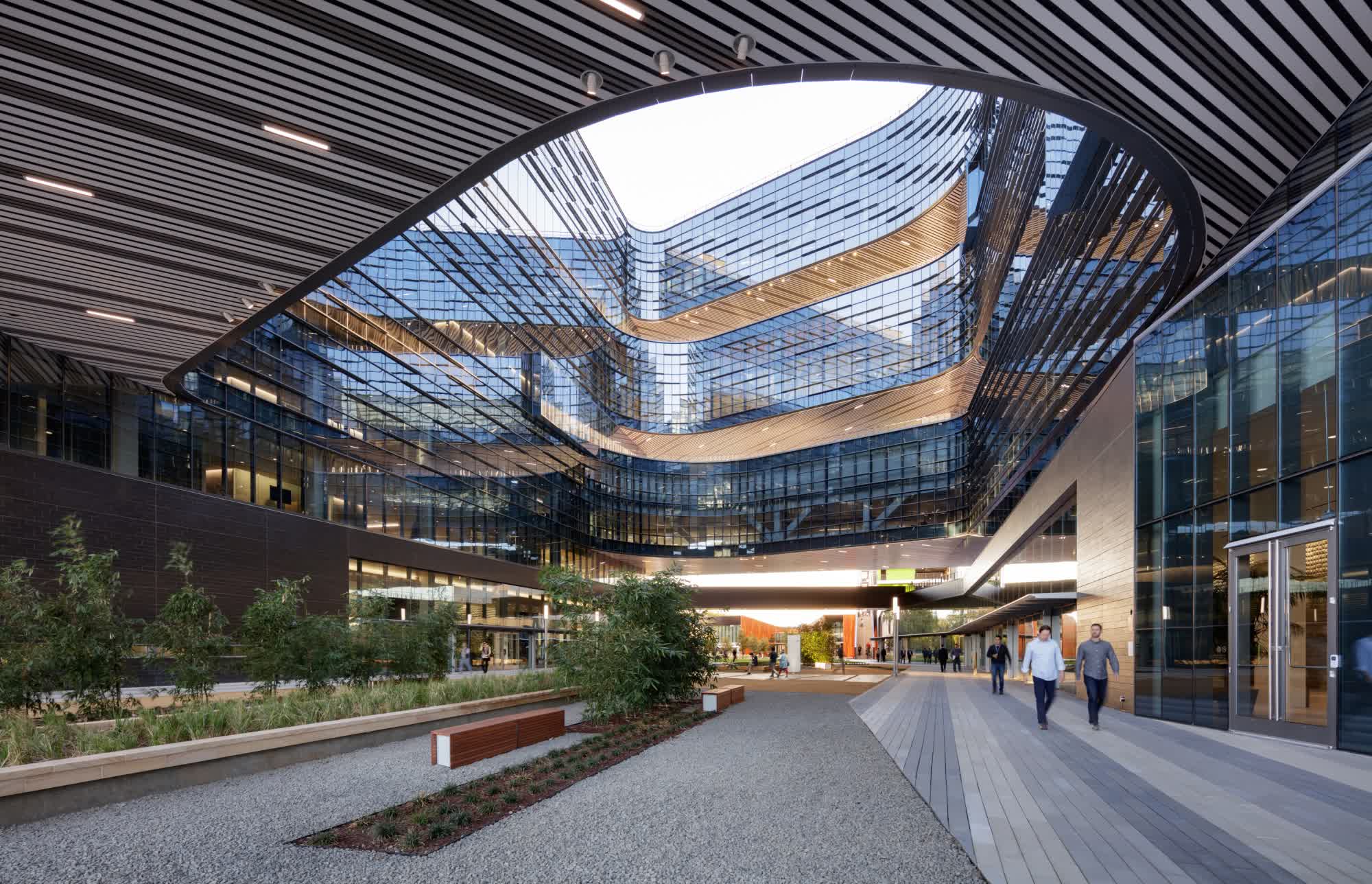
During a recent town hall meeting, Kim Yong-Kwan, President of Corporate Management, Strategy, and Operations for Samsung's Device Solutions division, said the company's profit in 2026 would surpass its cumulative profit over the last 40 years since they entered the semiconductor business.

Yeah, let that sink in for a moment.

It is worth noting that Samsung is expecting to report an annual profit in the neighborhood of around 300 trillion won, or roughly $200 billion.
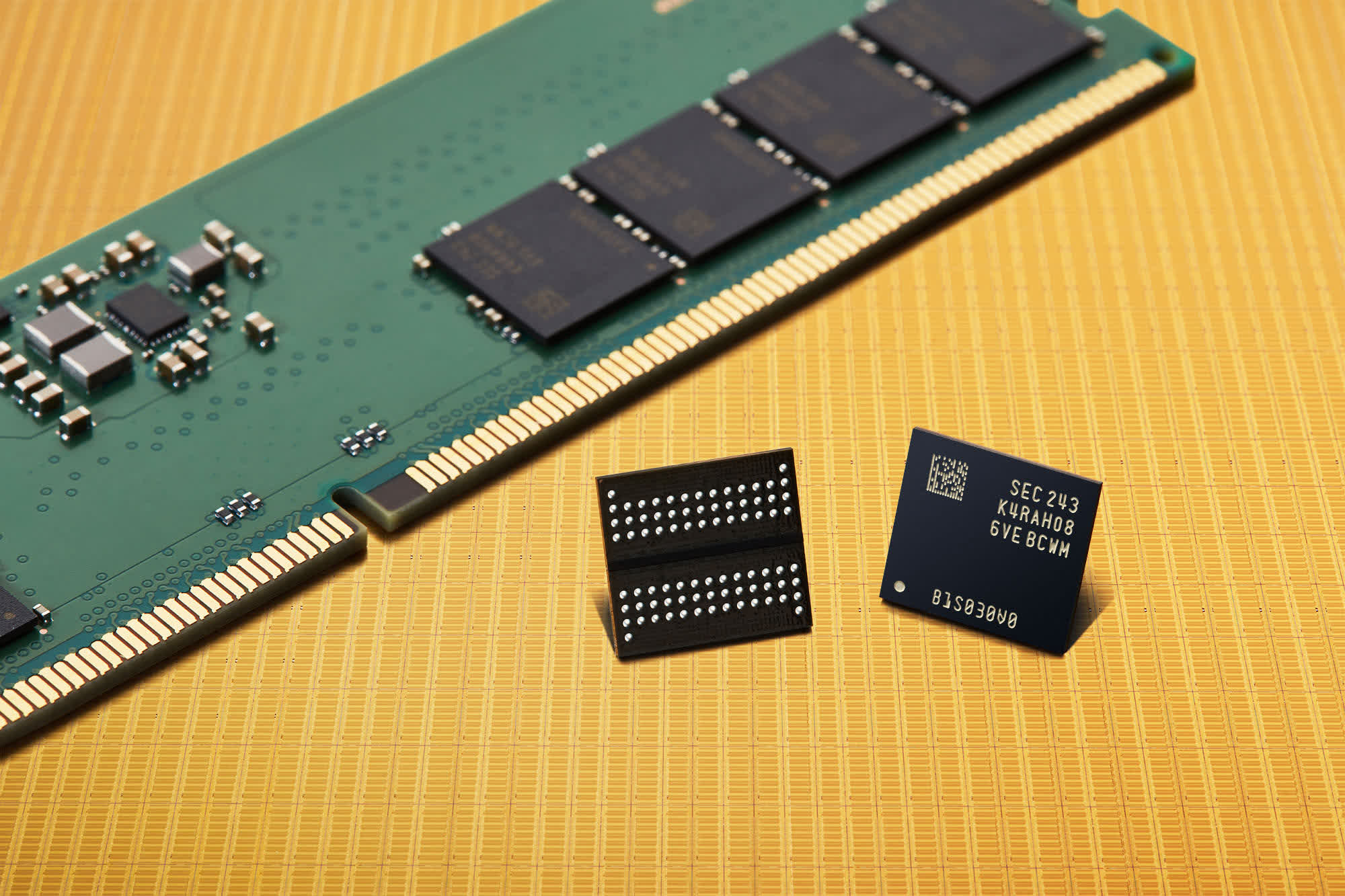
Companies like Samsung, Nvidia, SK Hynix and others are stacking record revenue on the sale of AI-related hardware as interest in artificial intelligence continues to sweep the globe. As you've no doubt heard by now, the situation is creating a major bottleneck for core electronic components like memory – driving up prices on goods and services as device manufacturers fight for what little inventory remains.

As with any supply and demand equation, there are winners and losers. The winners in this cases are those building the hardware to power AI workloads, and their investors. The losers? Well, mostly everyone else dealing with inventory shortages and soaring prices.

Microsoft, for example, recently announced its third Xbox price hike in 15 months. Can you ever recall a period where prices on aging consoles went up instead of down over their active lifespan? We're closing in on six years since Microsoft launched the Xbox Series (and Sony, the PlayStation 5). At this rate, the next wave of game consoles are going to price a lot of players out of the market entirely, either by circumstance or sheer disgust.

Samsung is set to announce its preliminary second-quarter earnings on July 7. The finalized earnings report is due out by the end of the month.

Permalink to story:

 
More like maximizing fraud. Micron recently was caught price fixing and they were all caught in the early 2000s. Half of all data center projects in the US have come grinding to a halt so I wonder where all this demand for RAM is coming from. Or perhaps Micron saw the writing on the wall and started price fixing. Memory resellers and OEMs have said that they will say something along the lines of "this is how much we have to sell and this is how much you're going to pay for it" and if you don't accept their price or buy from them then, they will never do business with that company again. Not just one, all 3 are doing it.
 
Last edited:
Memory resellers and OEMs have said that they will say something along the lines of "this is how much we have to sell and this is how much you're going to pay for it" and if you don't accept their price or buy from them then, they will never do business with that company again. Not just one, all 3 are doing it.
Valve said something to that effect recently in an interview on the Steam Machine. It is sad times for RAM indeed.
 
Half of all data center projects in the US have come grinding to a halt so I wonder where all this demand for RAM is coming from.

Probably from contracts for future supplies... Datacenters and supercomputers are planned years in advance, but stop orders and public protests can happen overnight. That might explain why these projects are getting held up.

Or, maybe there truly isn't enough RAM to go around. Didn't Meta just show off a special adapter that allows them to deploy DDR4 in DDR5 servers? That can't be a good sign of supply.
 
More like maximizing fraud. Micron recently was caught price fixing and they were all caught in the early 2000s. Half of all data center projects in the US have come grinding to a halt so I wonder where all this demand for RAM is coming from. Or perhaps Micron saw the writing on the wall and started price fixing. Memory resellers and OEMs have said that they will say something along the lines of "this is how much we have to sell and this is how much you're going to pay for it" and if you don't accept their price or buy from them then, they will never do business with that company again. Not just one, all 3 are doing it.
There is no need for fraud of price fixing. AI companies just wanted cheap memory forever and were "surprised" that capacity became limited. AI companies had years to prepare for this but what they did? Nothing. AI companies just expected that someone else builds excess memory manufacturing capacity and carries risk about AI bubble. I cannot see anything wrong with Micron/Samsung/Hynix this time.
 
There is no need for fraud of price fixing. AI companies just wanted cheap memory forever and were "surprised" that capacity became limited. AI companies had years to prepare for this but what they did? Nothing. AI companies just expected that someone else builds excess memory manufacturing capacity and carries risk about AI bubble. I cannot see anything wrong with Micron/Samsung/Hynix this time.
AI was marketed to investors as a money printing train and it worked for awhile. With the way it was marketed, it doesn't matter how much the RAM costs, AI would provide returns. However, M$ came forward and said they have been warehousing AI hardware. Anyone who works in construction also saw this coming. Also, bankers and loan officers from Private Equity get bonuses based on revenue, not profit, so they're heavily incentivized to give out as many loans as possible.

I also think it's important that pushback against data centers started happening long before the protests. This was entirely predictable. Infact JP Morgan predicted this last year and said they would not be issuing loans to AI companies anymore where the stock and AI hardware are used as collateral

The signs were all there, the signs are still there and there will continue to be more signs. I'm just a random guy on the internet, but people in the financial industry who know more than me have been ringing the alarm bells for awhile now
 
AI was marketed to investors as a money printing train and it worked for awhile. With the way it was marketed, it doesn't matter how much the RAM costs, AI would provide returns. However, M$ came forward and said they have been warehousing AI hardware. Anyone who works in construction also saw this coming. Also, bankers and loan officers from Private Equity get bonuses based on revenue, not profit, so they're heavily incentivized to give out as many loans as possible.

I also think it's important that pushback against data centers started happening long before the protests. This was entirely predictable. Infact JP Morgan predicted this last year and said they would not be issuing loans to AI companies anymore where the stock and AI hardware are used as collateral

The signs were all there, the signs are still there and there will continue to be more signs. I'm just a random guy on the internet, but people in the financial industry who know more than me have been ringing the alarm bells for awhile now
Agreed. However that has nothing to do with memory manufacturers' price fixing. There has been more than enough time to build more capacity but AI companies didn't want to take oversupply risk. And now you blame memory firms because they didn't want to take risk either.
 
Agreed. However that has nothing to do with memory manufacturers' price fixing. There has been more than enough time to build more capacity but AI companies didn't want to take oversupply risk. And now you blame memory firms because they didn't want to take risk either.
I place the blame on several areas. Skhynx said im 2024 they weren't going to expand memory capacity because they didn't believe in the long term sustainability of AI. Is that true? Is part of its true, maybe every part of that statement has some truth to it. Where I actually place most of the blame is the limitless investor capital that allowed memory companies charge whatever they want. The amount of fraud caused by circular investing to artificially inflate revenues and stock prices has allowed near limitless capital to flow into the industry. It's the sub prime loan market but with extra steps
 
I place the blame on several areas. Skhynx said im 2024 they weren't going to expand memory capacity because they didn't believe in the long term sustainability of AI.
Why do you continually spread ludicrous disinformation like this?

"In 2024, SK Hynix initiated massive capacity expansions to meet the exploding demand for artificial intelligence infrastructure and High-Bandwidth Memory (HBM). Their major strategic moves included:

  • U.S. Manufacturing Expansion: In April 2024, SK Hynix announced a $3.87 billion investment to build an advanced chip packaging and R&D facility in West Lafayette, Indiana, to focus on next-generation HBM production. [1, 2, 3, 4, 5]
  • Cheongju Plant Investment: In April 2024, the company committed approximately $14.6 billion (KRW 20 trillion) to construct a new M15X fab in Cheongju, South Korea, to serve as a primary production hub for next-generation HBM. [1]
  • Technological Milestones: Throughout 2024, SK Hynix accelerated its HBM production, achieved mass production of the industry's first 321-layer NAND flash, and entered into critical collaboration agreements with TSMC and NVIDIA
 
Why do you continually spread ludicrous disinformation like this?

"In 2024, SK Hynix initiated massive capacity expansions to meet the exploding demand for artificial intelligence infrastructure and High-Bandwidth Memory (HBM). Their major strategic moves included:

  • U.S. Manufacturing Expansion: In April 2024, SK Hynix announced a $3.87 billion investment to build an advanced chip packaging and R&D facility in West Lafayette, Indiana, to focus on next-generation HBM production. [1, 2, 3, 4, 5]
  • Cheongju Plant Investment: In April 2024, the company committed approximately $14.6 billion (KRW 20 trillion) to construct a new M15X fab in Cheongju, South Korea, to serve as a primary production hub for next-generation HBM. [1]
  • Technological Milestones: Throughout 2024, SK Hynix accelerated its HBM production, achieved mass production of the industry's first 321-layer NAND flash, and entered into critical collaboration agreements with TSMC and NVIDIA
US expansion was done with tax payer money under the chips at and it was a hedge against tariffs if trump got elected. The packaging plant is in various states of being functional.

The cheogju plant is for next Gen HBM and is not currently being used on any commercially available products.

And they didn't accelerate their HBM production, they converted DDR5, GDDR and LPDDR production into HBM production
 
US expansion was done with tax payer money under the chips at and it was a hedge against tariffs if trump got elected. The packaging plant is in various states of being functional.
None of which changes the fact your statement was wildly incorrect. And you managed to include yet another error: only $450M of their $3.9B US plant was funded with grants from the CHIPS Act.

The cheogju plant is for next Gen HBM
LOL, so? HBM is the entire reason DDR5 DRAM has skyrocketed in price -- with sufficient HBM capacity, **all** memory prices drop. And did you forget that you yourself claimed SK Hynix "didn't believe in the long term sustainability of AI"? You understand that HBM memory is for AI, right?

And they didn't accelerate their HBM production, they converted DDR5, GDDR and LPDDR production into HBM production
Sigh, wrong again. They did both: SK Hynix (and Samsung and Micron as well) had significantly more wafer starts in mid-2024 and 2025 than they did in 2023.
 
Last edited:
I could really do with the AI bubble popping soon, I’m actually in the market for 2x 16GB DDR5 sticks but the prices at the moment are absolutely absurd.
 
Back