Science has finally figured out why I play games with inverted camera controls

Cal Jeffrey

Posts: 4,595   +1,682
Staff member
Hmmm: Why do some players invert the Y-axis in video games? To many, it seems strange to make down mean up and up mean down. For inverters like me, it feels natural – the default setting is as awkward as writing with the wrong hand. I always assumed my inclination came from my formative years playing Flight Simulator. However, a new study shows that the explanations players give for inverting have nothing to do with it.

During the Covid lockdowns, researchers specializing in cognitive neuroscience at the Visual Perception and Attention Lab at Brunel University London stumbled into a fascinating phenomenon ideal for a quarantined study. Widespread public debates about controller inversion provided a timely opportunity to test participants remotely. The study included not only gamers but also pilots, surgeons, and machinery operators, offering a diverse set of perspectives.

"The responses were so diverse that we had to review a large amount of scientific literature to design the best possible study," co-researcher Dr Jennifer Corbett told The Guardian. "Personal experiences, favourite games, different genres, age, consoles, which way you scroll with a mouse … all of these things could potentially be involved."
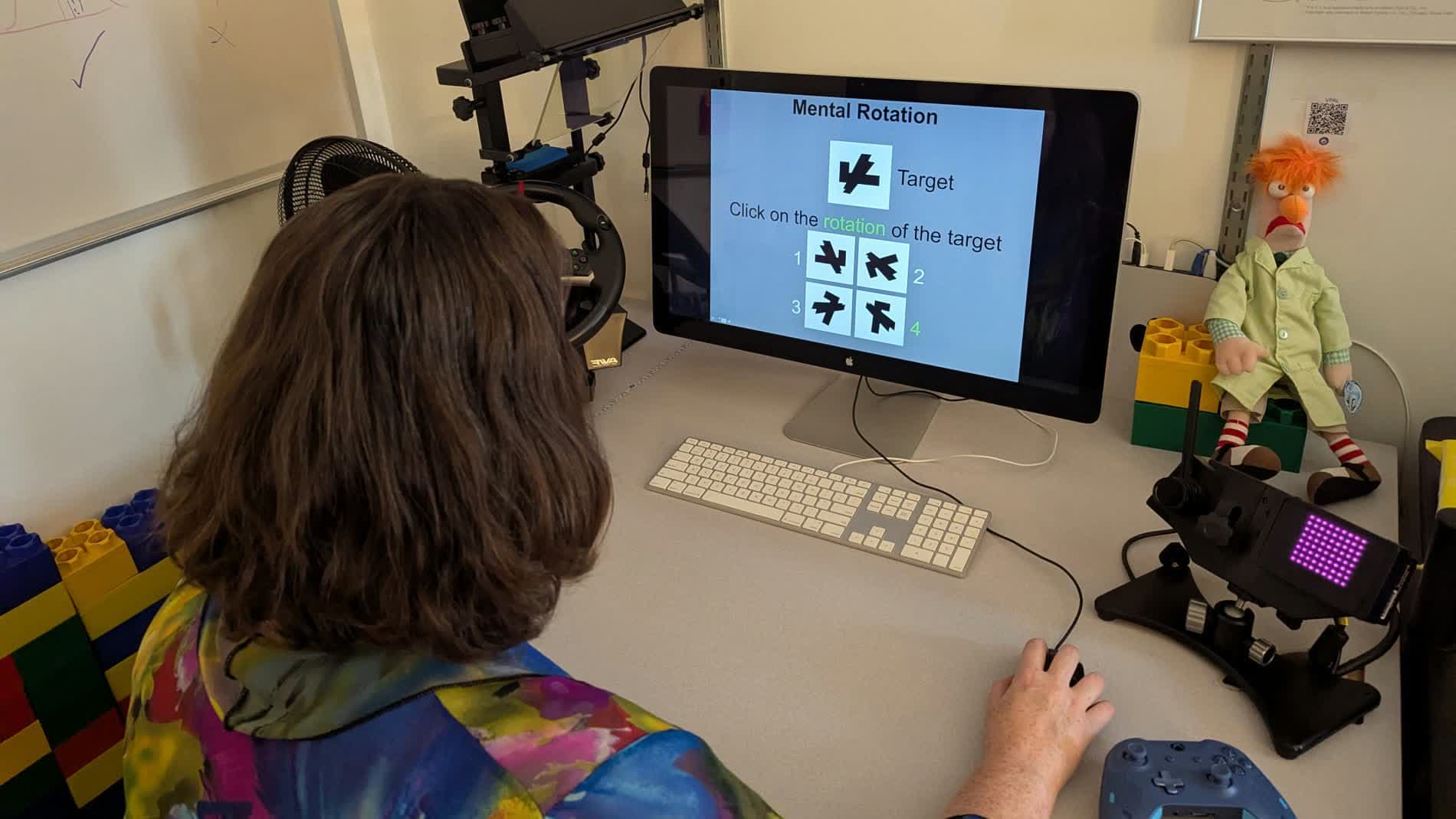
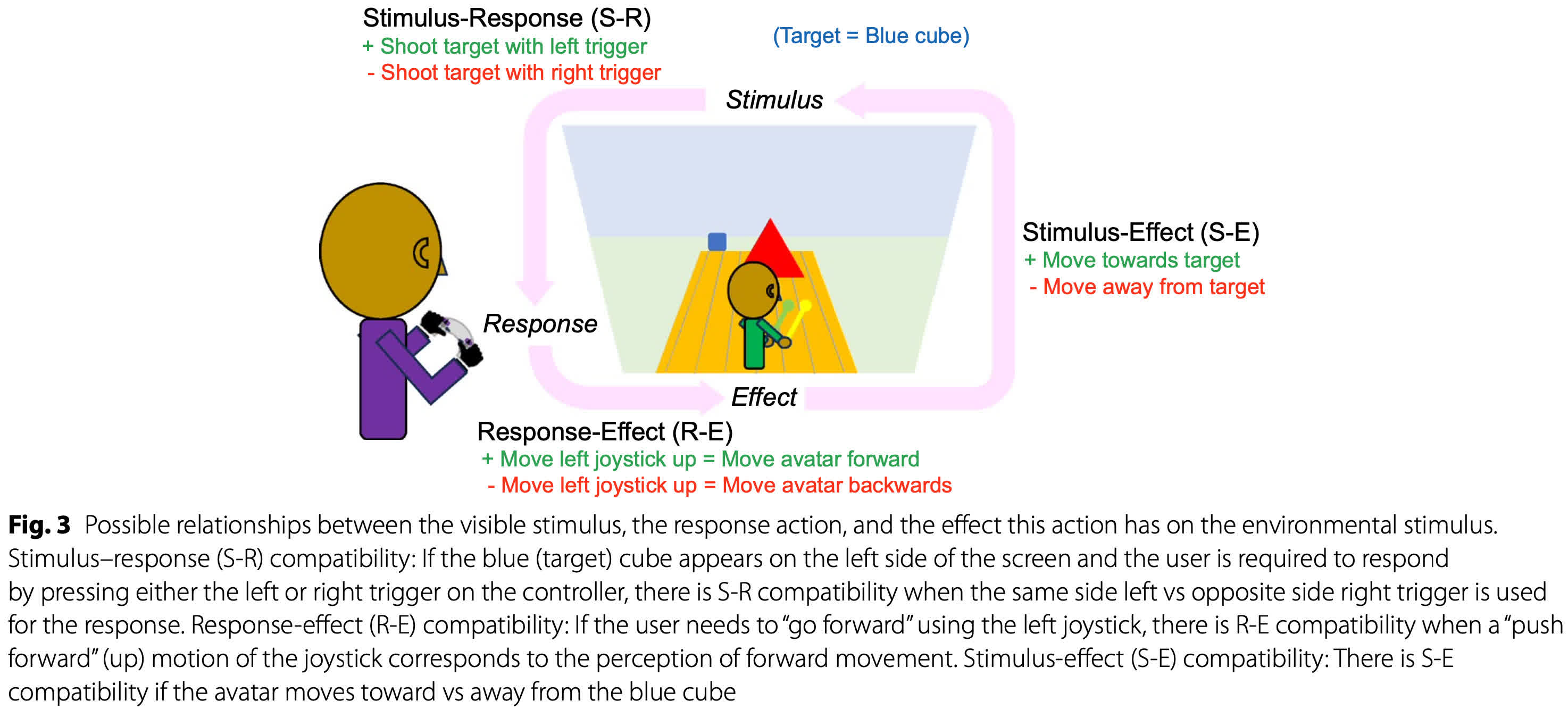
Along with research partner Dr Jaap Munneke, Corbett surveyed participants about their gaming history and preferences and then guided them through a series of cognitive tasks over Zoom. These included mentally rotating shapes, adopting an avatar's perspective, judging object orientation in tilted backgrounds, and overcoming the Simon effect, which occurs when responses are slower or less accurate because the stimulus appears on the opposite side from the response button. The researchers used machine learning to analyze which combination of factors best predicted inversion.

Surprisingly, Corbett notes that the inclination to invert has nothing to do with the rationale that gamers give.

"None of the reasons people gave us [for inverting controls] had anything to do with whether they actually inverted. The most predictive factors were cognitive – how quickly gamers could mentally rotate objects and handle conflicting spatial information. Faster participants were less likely to invert, while those who sometimes inverted were the slowest."

Despite their somewhat slower responses, inverters were actually slightly more accurate than non-inverters, indicating that speed alone does not determine performance.
So, early experience with games like flight simulators does not determine the inversion preference. Such exposure may influence a player's perception of that preference, but cognitive processing is what drives the necessity to have it one way or the other. Corbett encourages gamers to experiment with both control schemes.

She compares it to the way schools used to force left-handed children to use their right hand. Many players who use the standard axis configuration might only prefer it because it is the default. Some players may find that after playing inverted for a while, it actually works better for them. It could make the determining difference in competitive play.

However, the findings have broader implications for human-computer interaction beyond gaming. Optimizing control configurations for individual cognitive styles could improve performance in contexts ranging from remote controlled robotics to precision tasks in medicine.

"Understanding how a given individual best performs with a certain setup ... can allow for much smoother interactions between humans and machines in lots of scenarios from partnering with an AI player to defeat a boss, to preventing damage to delicate internal tissue while performing a complicated laparoscopic surgery," Corbett concluded.

You can read the full study at OSF Preprints.

Image credit: Jennifer Corbett

Permalink to story:

 
Years ago when Halo 2 came out and it was really popular online, my brother brought his Xbox over and wanted to show me multiplayer with it - he said he was having lots of fun with it and wanted me to try it out.

We get it hooked up and online and start playing. He has a couple of buddies in college he plays with and he invited them to play. My brother hands me the controller and I just get absolutely smoked....every time I wanted to look up I pushed the thumb stick up, but ended up staring at my feet and vise versa. I was missing jumps, constantly staring at the sky or my feet. My brother laughed at my inability to play. He played a round, he performed leaps and bounds better than I did.

He handed me the controller again and I said I didn't want to play because the controls aren't working for me. He said he thinks we can flip it in the options..... Sure enough, he flips the controls to inverted for the Y axis. He hands me the controller and says to try again.

This time the controls felt correct and I'm traversing the map like a pro, dropping his college buddies left and right. I was unstoppable!

Now my brother gets on the headset and starts talking to one of his buddies and my brother is laughing his as$ off at his buddies for getting handled by a guy that's never played Halo 2 before and plays inverted! We took turns playing back and forth; my brother would play inverted (my way) and I would play non-inverted (his way). We sucked. It was funny as hell to watch each other struggle.

The strange thing is, I have to play FPS/TPS inverted with a controller. However, if I'm playing a flying game I don't play inverted.
 
This makes me wonder if pro esports teams will eventually have cognitive tests before signing players. Imagine getting benched not for bad aim but because your brain rotates objects too slowly.

The fact that this study also applies to surgeons is wild.
 
Head moves back, view tilts up. The end.

The worst part of playing Red Dead Redemption was that even with the Y axis set the RIGHT way, when forced to use the stationary machine gun it was locked to the WRONG way.
 
It is a bit weird. I play with joysticks, flight controls, and the scroll wheel normally. When I first started using touchpads, looked at it like I was grabbing the text and moving it, so I have all of my two finger scrolling inverted on all my laptops.
 
I only reverse the Y axis in a game with flying. My Dad was a pilot, so I learned a good bit from him. Any other game, I have the Y axis normal.
 
I only reverse the Y axis in a game with flying. My Dad was a pilot, so I learned a good bit from him. Any other game, I have the Y axis normal.
This. I literally cannot do flying games without inverted controls, but for FPS I use non-inverted. Or even better, for flight games I use a joystick, and for FPS M+KB. These days I tend to use a controller only for racing games or for games without joystick/M+KB support.
 
It all depends on how you started using the controls growing up. It's what you're used to.

Because of Halo:CE, I initially played with inverted controls (was "intuitive" to me). But over the years of having to always go into settings and apply inversion, one day I switched over and got used to un-inverted.
Now it's just as "intuitive" to me, and more convenient to boot.

I do think I would do inverted for flying though. It would feel better (as it "makes sense"), but I don't really play with a controller much these days, letalone play many flying games...
 
The clutch is similar: pick up rather than press down to make the car move from stationary, which might not make sense when someone is first learning manual.
 
Having had a joystick with every computer I've had since my Speccy, I've naturally always found controllers to be the wrong way 'up'.
 
It would be interesting to hear from the game developers as to why they switched. What was once normal has changed to become inverted. As an older gamer, this is my reasoning, I got used to using a joystick one way and then the developers changed it so I now have to seek out the invert option. Probably too old now to re-wire my brain.
I think people who have only ever experienced a thumb-stick don't see it as an equivalent to a joystick; if they even know what a joystick is.
 
As a user wrote, "inverted" just feels natural, as far as I remember I've used it that way, it's just how the head moves, to look up, you have to move your head backwards. But this makes me wonder, when did games start to give you the option to invert Y axis?
 
For Y axis(vertical camera movement) when playing a fps, shooter, platformer, etc(usually a full 3D game) and have a controller with a analog stick, I always use inverted camera movement because It acts like a lever supported in the middle by a support/pole/axis, and so when I pull one/my end down, the other end rises, just like on planes, tanks, telescopes, etc. That's the clear mechanical logic behind it.
If somehow I play those type of games with D-pad it make more sense to play with "normal" non-inverted axis since there no "lever" involved, thus no mechanical aspect.
 
There's nothing to figure about. Some people are just wired ...... differently.

Same like why some men think they are women deep inside, and some women feel like they are men trapped in women's body. And why some guys love and marry guys and some girls love and marry girls. It is out of the norm, but for those who are wired differently, it is normal for them.

I knew a student in my school those days, who writes in his notebook or paper while placing the notebook or paper at 90 degree angle - for example imagine an A4 paper, while writing (in portrait orientation), he will place it in landscape mode - his trajectory of writing a sentence is vertical.
 
Simply stated: regular controls (up=up) are for people whose mindview works by moving objects relative to thei fixed position selves, and inverted (up=down) is for those whose mindview functions in a way that they move themselves relative to the objects. Thus, upups view their positions as fixed and objects mobile, whereas updowns view their positions as mobile and the objects fixed.

No judgment; but as an updown, I've noticed that updowns are generally more flexible in: viewing multiple sides of an argument, critical thinking, problem solving, mental creativity and empathy. Upups tend to have their minds freeze on a given point of information and unable to view much, or anything, else from a different perspective than their own, are more physically creative, and sociopathic in nature.

Perhaps it would be fair to say that upups are more doers, while updowns are more thinkers.
 
Back