
Hmmm: Why do some players invert the Y-axis in video games? To many, it seems strange to make down mean up and up mean down. For inverters like me, it feels natural – the default setting is as awkward as writing with the wrong hand. I always assumed my inclination came from my formative years playing Flight Simulator. However, a new study shows that the explanations players give for inverting have nothing to do with it.
During the Covid lockdowns, researchers specializing in cognitive neuroscience at the Visual Perception and Attention Lab at Brunel University London stumbled into a fascinating phenomenon ideal for a quarantined study. Widespread public debates about controller inversion provided a timely opportunity to test participants remotely. The study included not only gamers but also pilots, surgeons, and machinery operators, offering a diverse set of perspectives.
"The responses were so diverse that we had to review a large amount of scientific literature to design the best possible study," co-researcher Dr Jennifer Corbett told The Guardian. "Personal experiences, favourite games, different genres, age, consoles, which way you scroll with a mouse … all of these things could potentially be involved."

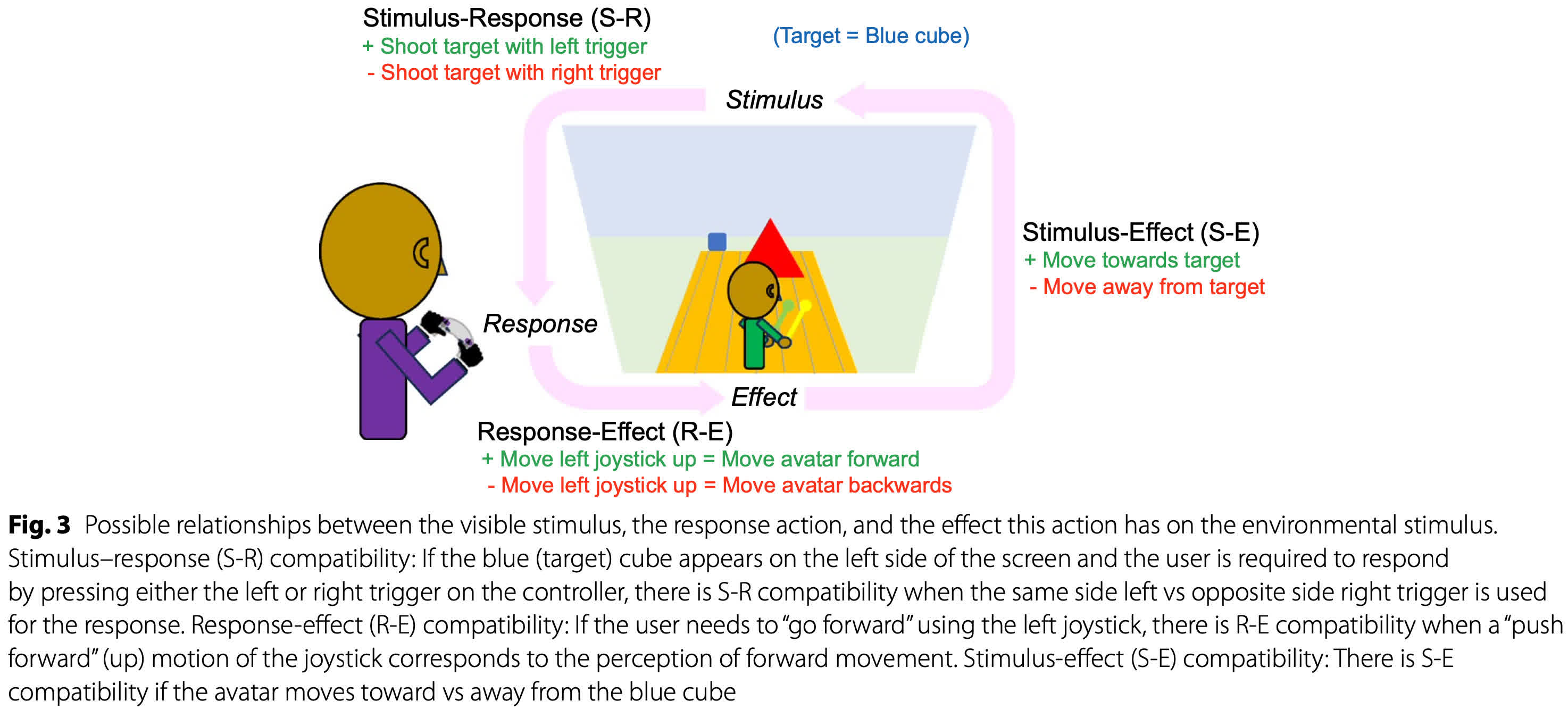
Along with research partner Dr Jaap Munneke, Corbett surveyed participants about their gaming history and preferences and then guided them through a series of cognitive tasks over Zoom. These included mentally rotating shapes, adopting an avatar's perspective, judging object orientation in tilted backgrounds, and overcoming the Simon effect, which occurs when responses are slower or less accurate because the stimulus appears on the opposite side from the response button. The researchers used machine learning to analyze which combination of factors best predicted inversion.
Surprisingly, Corbett notes that the inclination to invert has nothing to do with the rationale that gamers give.
"None of the reasons people gave us [for inverting controls] had anything to do with whether they actually inverted. The most predictive factors were cognitive – how quickly gamers could mentally rotate objects and handle conflicting spatial information. Faster participants were less likely to invert, while those who sometimes inverted were the slowest."
Despite their somewhat slower responses, inverters were actually slightly more accurate than non-inverters, indicating that speed alone does not determine performance.
So, early experience with games like flight simulators does not determine the inversion preference. Such exposure may influence a player's perception of that preference, but cognitive processing is what drives the necessity to have it one way or the other. Corbett encourages gamers to experiment with both control schemes.
She compares it to the way schools used to force left-handed children to use their right hand. Many players who use the standard axis configuration might only prefer it because it is the default. Some players may find that after playing inverted for a while, it actually works better for them. It could make the determining difference in competitive play.
However, the findings have broader implications for human-computer interaction beyond gaming. Optimizing control configurations for individual cognitive styles could improve performance in contexts ranging from remote controlled robotics to precision tasks in medicine.
"Understanding how a given individual best performs with a certain setup ... can allow for much smoother interactions between humans and machines in lots of scenarios from partnering with an AI player to defeat a boss, to preventing damage to delicate internal tissue while performing a complicated laparoscopic surgery," Corbett concluded.
You can read the full study at OSF Preprints.
Image credit: Jennifer Corbett