Seagate is bringing back the hybrid drive, but you have to supply the SSD

Alfonso Maruccia

Posts: 2,831   +1,101
Staff
Editor's take: Hybrid drives were all the rage among storage makers a little over a decade ago. Seagate thinks today's chaotic hardware landscape is ripe for further exploitation, which is why the company is now offering an extra-pricey new device designed to resurrect the whole hybrid drive concept.
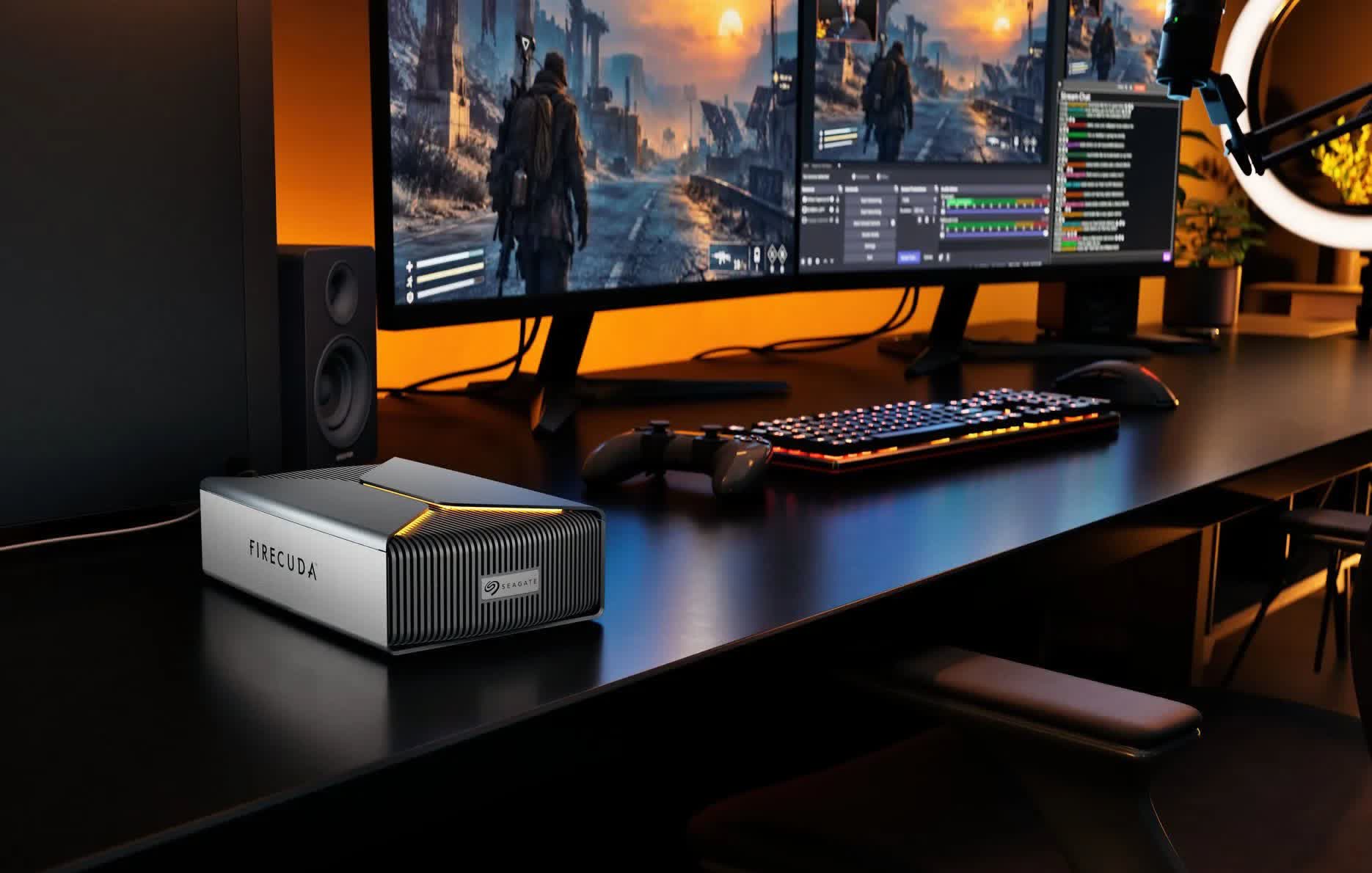
Seagate has introduced the FireCuda Forge, an external "desktop" HDD designed to approach NVMe-class data rates by embedding a smaller SSD in the same enclosure. Just like classic hybrid drives, FireCuda Forge can store frequently used data on a much faster solid-state cache. Unlike those older designs, however, the SSD isn't included: the user has to supply it.

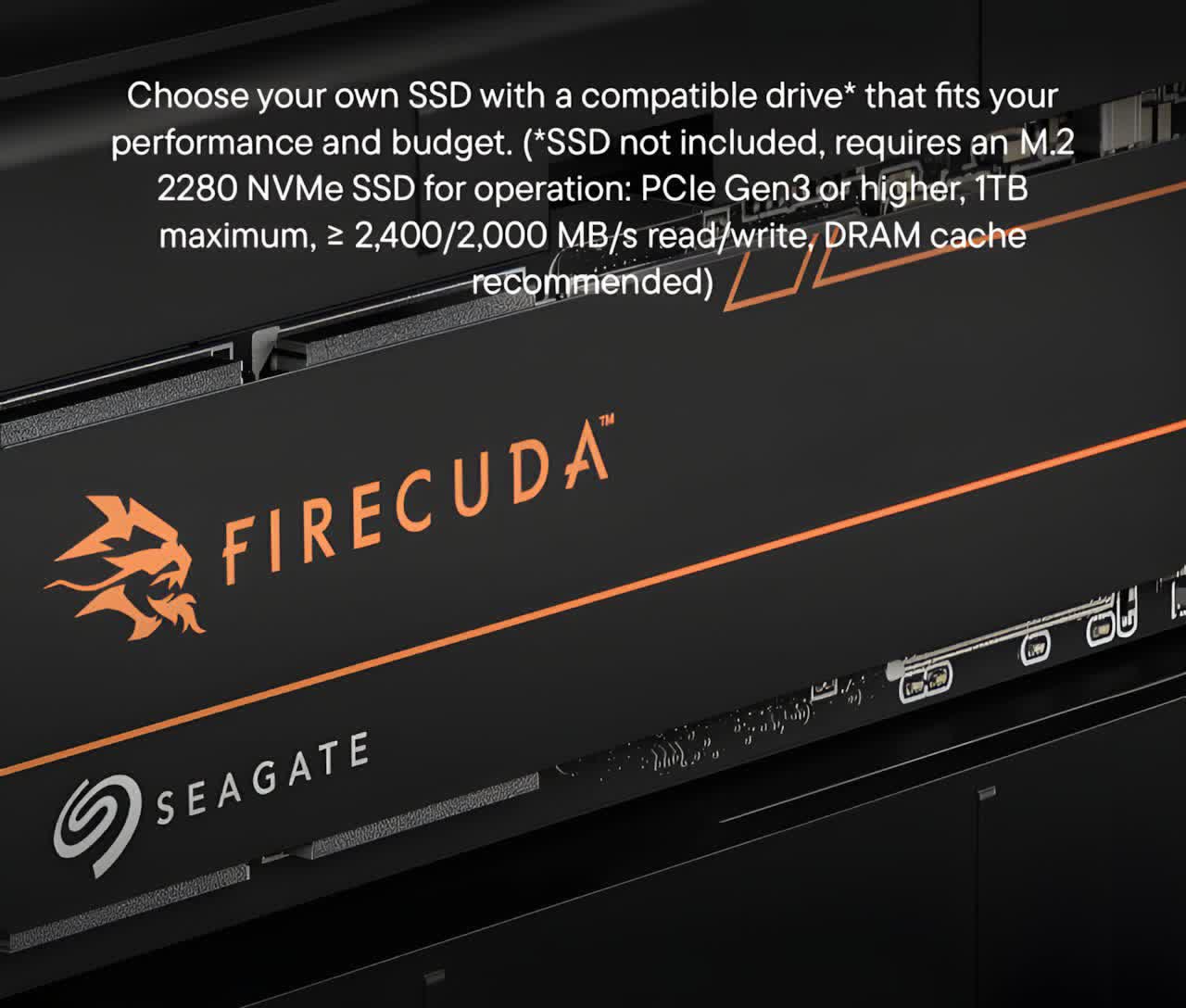
FireCuda Forge is currently available in 8TB and 20TB capacities, priced at $699 and $899 respectively. The external HDD hosts a "non-populated" slot for a user-provided M.2 SSD, with Seagate capping the usable cache at 1TB, which further increases the expense required to enjoy the improved data rates the device is allegedly designed to achieve.

FireCuda Forge includes Alkemi, a whole new I/O management technology Seagate developed to bring this hybrid drive concept to fruition. The storage giant explained that Alkemi uses an FPGA chip and an embedded Linux OS to manage the solid-state cache. The system constantly monitors file access workloads so that it can decide which data to prioritize and copy onto the faster SSD.
Alkemi is allegedly capable of adapting to each user's needs, employing optimized caching policies to achieve higher cache hit rates. FireCuda Forge is primarily pitched as a gaming storage drive, with Seagate testing several gaming sessions representing 4.3 million I/O requests. Overall, Alkemi reached a cache hit rate of 90%.

The new hybrid drive behaves like a single storage unit, which means the host operating system just "sees" one drive. That makes data management simpler, but it also introduces a potential reliability risk if something goes wrong in either the SSD cache or the HDD portion of the drive.

On paper, a fully populated FireCuda Forge should deliver high-bandwidth throughput for gaming and recording workloads, with speeds up to 2,500MB/s read and 2,000MB/s write over USB4. The external drive is compatible with M.2 2280, PCIe Gen3 or newer SSDs, while official OS support includes Windows 11 and macOS 26.

FireCuda Forge's high price tag will likely hurt the device's popularity, and prices aren't likely to improve anytime soon. Just like the other few surviving HDD manufacturers, Seagate is now enjoying a massive revenue increase thanks to growing demand from AI data centers.

Permalink to story:

 
Basically, this is a way to charge more for a HDD.. kind of sickening… anyone who needs this could just as easily build a NAS with cache drive - separately!
 
Basically, this is a way to charge more for a HDD.. kind of sickening… anyone who needs this could just as easily build a NAS with cache drive - separately!
So hear me out, I think this was a project already in the pipeline and was just released at the wrong time. Now it's kind of like "well we were going to release this with an off the shelf m.2 drive, but maybe it is still appealing to someone who has a bunch of m.2 drives laying around?"

I'm certainly not against it and it might be a great idea for people want a faster storage drive experience. I do do large backups to my NAS, but 90% of what's on them is just TV shows, movies and games. I will image system drives before a reinstall, but I try to keep those under 100GB.

I actually think that if times were different there could be a lot of demand for this kind of thing. I do get annoyed when people thing HDD's are dead and have no use but I still believe they are great for a NAS and adding in an m.2 drive for cache can eliminate whatever bottleneck people think they might have. I see people running 1gig and complaining that HDDs are too slow. most 7200RPM drives run between 220-250MB/s, their network isn't coming close to saturating a single HDD.
Yep - I run a NAS with 17 HDDs... and 3 SSDs for caching purposes... I'm running 10gb, but I rarely come close to saturating it -> via the NAS anyways.

I suspect the original idea was to include an SSD - but those are already being gobbled up, so no need to include one... a 1tb SSD USED to cost $50 or so... now they can go for $200...
I don't go that hard, I have 5 drives in Raid6. I have 3 devices on my network that use 2.5. my PC, my wife's Mac(technically the doco) and my NAS. I ran CAT6e in my house almost 10 years ago and I still only have 3 devices using 2.5g. I have my xeons connected in a ring using 10 gig but I don't really count that because they still have 1g management ports.
 
This overpriced piece of garbage was requested by exactly no one, and those will be the same people who will go out and buy it. Dead on arrival.
 
Back