Starlink to lower SpaceX satellites as near-misses pile up in low Earth orbit

midian182

Posts: 11,902   +182
Staff member
What just happened? There have been plenty of reports in recent times about near-misses of low Earth orbit satellites – most of them belonging to Starlink. In 2026, Elon Musk's company hopes to reduce the number of these incidents by lowering the orbit of its satellite constellation by around 44 miles.
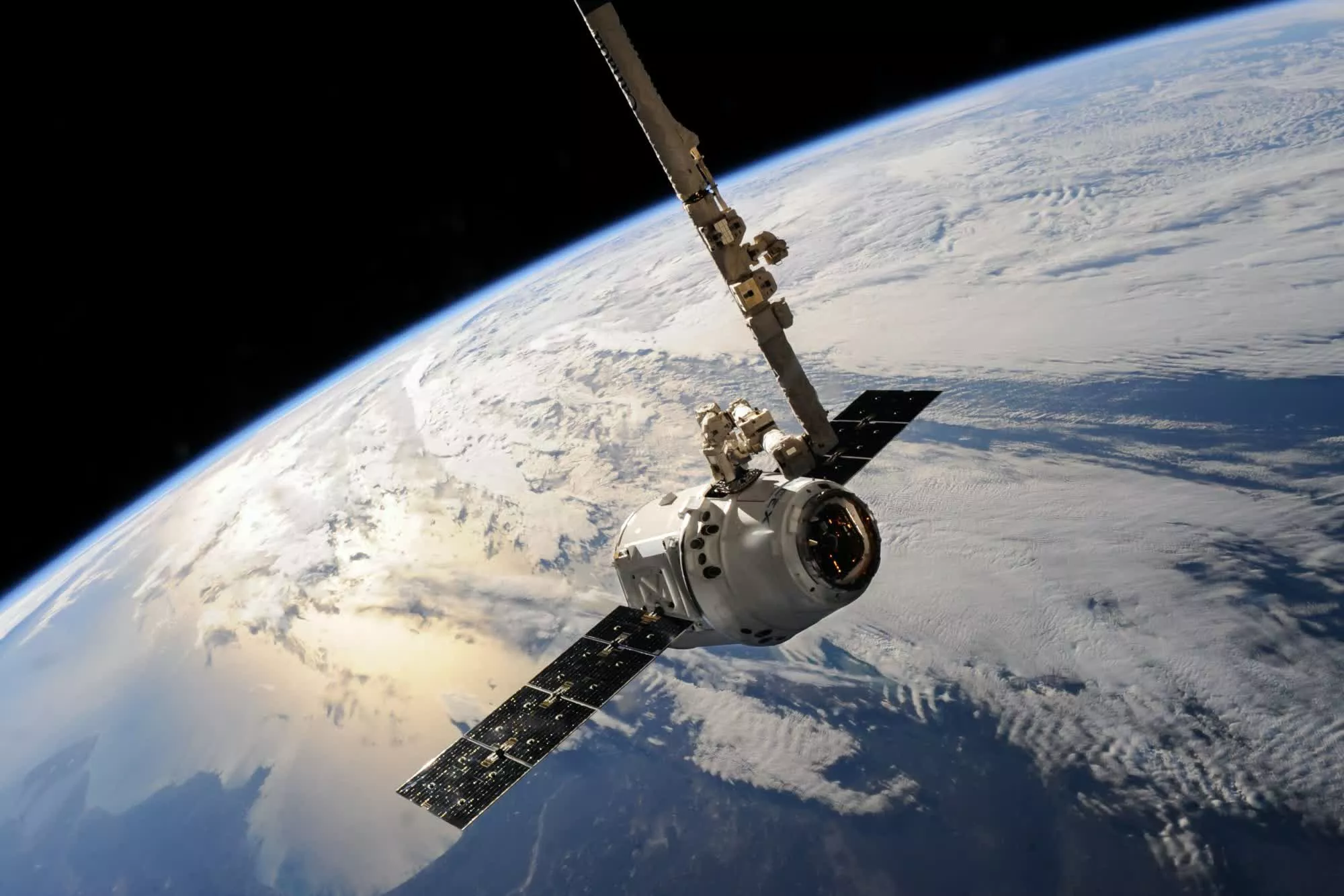
Michael Nicolls, SpaceX's vice president of Starlink engineering, said on Thursday that all SpaceX satellites operating at around 550 kilometers (342 miles) will be reconfigured to a new 480 kilometers (298 mile) orbit across the course of the year.

The announcement comes amid concern over how congested low Earth orbit has become. There are around 13,000 satellites in this zone, almost four times more than the 3,400 spacecraft that were there in 2020. Around 10,000 of these satellites belong to SpaceX, used for its broadband internet network.

The congestion issue was highlighted last month when one of the nine satellites deployed from a Chinese rocket missed a SpaceX satellite by just 656 feet. The incident led to Nicholls calling for increased coordination between satellite operators.

Just a few days later, Starlink revealed that one of its satellites had experienced a sudden loss of communications, a drop in altitude, venting of the propulsion tank, and the release of a small number of trackable low relative velocity objects.

The satellite fell four kilometers (2.4 miles) from its 418 km (260 miles) altitude, suggesting the anomaly was a result of an internal explosion rather than a collision.

"Lowering the satellites results in condensing Starlink orbits, and will increase space safety in several ways," Nicolls said in a post on X. "The number of debris objects and planned satellite constellations is significantly lower below 500 km, reducing the aggregate likelihood of collision," he added.

Another benefit of lowering the satellites' altitude is that they will deorbit more quickly at the end of their service life due to increased atmospheric drag, reducing the risk of defunct spacecraft lingering in orbit for decades.

In July, the Office of Space Commerce warned that the plan to slash its FY 2026 budget from $65 million to just $10 million could effectively dismantle the Traffic Coordination System for Space, a critical program designed to prevent satellite collisions in Earth's crowded orbit.

Permalink to story:

 
The biggest benefits aren’t listed in this article: lower latency and lower costs.
This is from a company that claims to fight pollution.
This will lower any pollution of SpaceX’s launches and allow them to be more efficient with their money. They’ll be able to deploy more satellites per launch, and this means fewer launches. The effect is lower emissions.
 
The biggest benefits aren’t listed in this article: lower latency and lower costs.
Yeah, and more light pollution, because f astronomy, f weather forecasting, that's some useless stuff.
This will lower any pollution of SpaceX’s launches and allow them to be more efficient with their money. They’ll be able to deploy more satellites per launch, and this means fewer launches. The effect is lower emissions.
You're wrong on so many levels.

1) No, realigning the existing satellites (which the article is about) to a different altitude does not reduce pollution in any shape or form. It actually results in more fuel burn, because moving objects in space isn't free.
2) Launching new satellites to a 13% lower altitude does not result in 13% lower launch fuel burn, it's much less than that, because gravity and atmospheric drag are not constant and/or linear.
3) Keeping the satellites in orbit will actually consume more fuel now thanks to increased atmospheric drag and gravity.
4) I wasn't even talking about fuel economy to begin with, I was talking about all the trash that's colliding in space and polluting our outer thermosphere (which the article is about) and falling on our lands and oceans because of this egomaniac ketamine addict.
 
You're wrong on so many levels.

1) No, realigning the existing satellites (which the article is about) to a different altitude does not reduce pollution in any shape or form. It actually results in more fuel burn, because moving objects in space isn't free.
2) Launching new satellites to a 13% lower altitude does not result in 13% lower launch fuel burn, it's much less than that, because gravity and atmospheric drag are not constant and/or linear.
3) Keeping the satellites in orbit will actually consume more fuel now thanks to increased atmospheric drag and gravity.
4) I wasn't even talking about fuel economy to begin with, I was talking about all the trash that's colliding in space and polluting our outer thermosphere (which the article is about) and falling on our lands and oceans because of this egomaniac ketamine addict.
1. Lowering the altitude of Starlink satellites DOES use less fuel because they are in LEO and would fall to Earth if thrusters were turned off. This is temporary of course, and completely negligible.
2. I never claimed it was a linear decrease of fuel to altitude. I said it used less fuel.
3. The change of gravity is negligible at that altitude change. At 1000 km altitude, gravitational force is still 98% of what it is at sea level. 70 km decrease then represents 0.1-0.2% increase in gravity lol. Besides, the speed at which the satellites orbit around earth is what causes gravity to be nearly meaningless.
4. There haven’t been any collisions with Starlink satellites. This lowering of altitude directly helps with that so-far nonexistent issue too. And any Starlink satellites that reach EOL would burn up in the atmosphere, not pollute the ocean lol. The primary pollution is going to be from deploying satellites (less now), and for very few people light pollution.
 
Back