What just happened? When FuriosaAI introduced its new chip, RNGD, at Stanford University's Hot Chips conference in 2024, founder and CEO June Paik positioned it as a device designed for the industry's next pivot point – efficient inference computing. On stage before hundreds of chip specialists, Paik called the hardware "a solution for sustainable AI computing," claiming it could run Meta's latest Llama model at twice the power efficiency of Nvidia's top-tier processors.
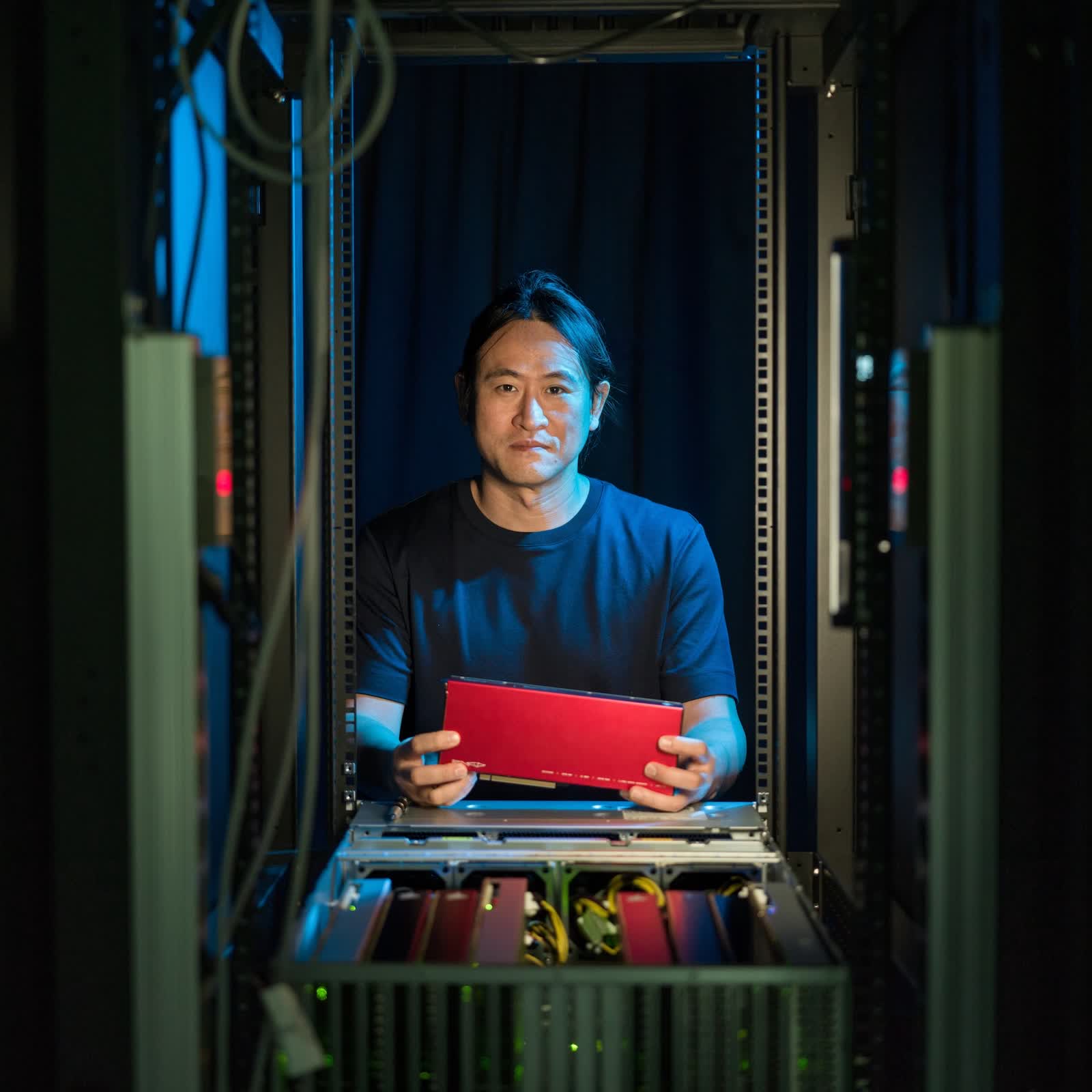
Crowds formed around the company's booth at the event, where engineers from Google, Meta, and Amazon came to see RNGD's live demo. For Paik, it was the first public acknowledgment that his young startup could compete with the most dominant force in AI hardware. "It was a moment where we felt we could really move forward with our chip with confidence," he told The Wall Street Journal.
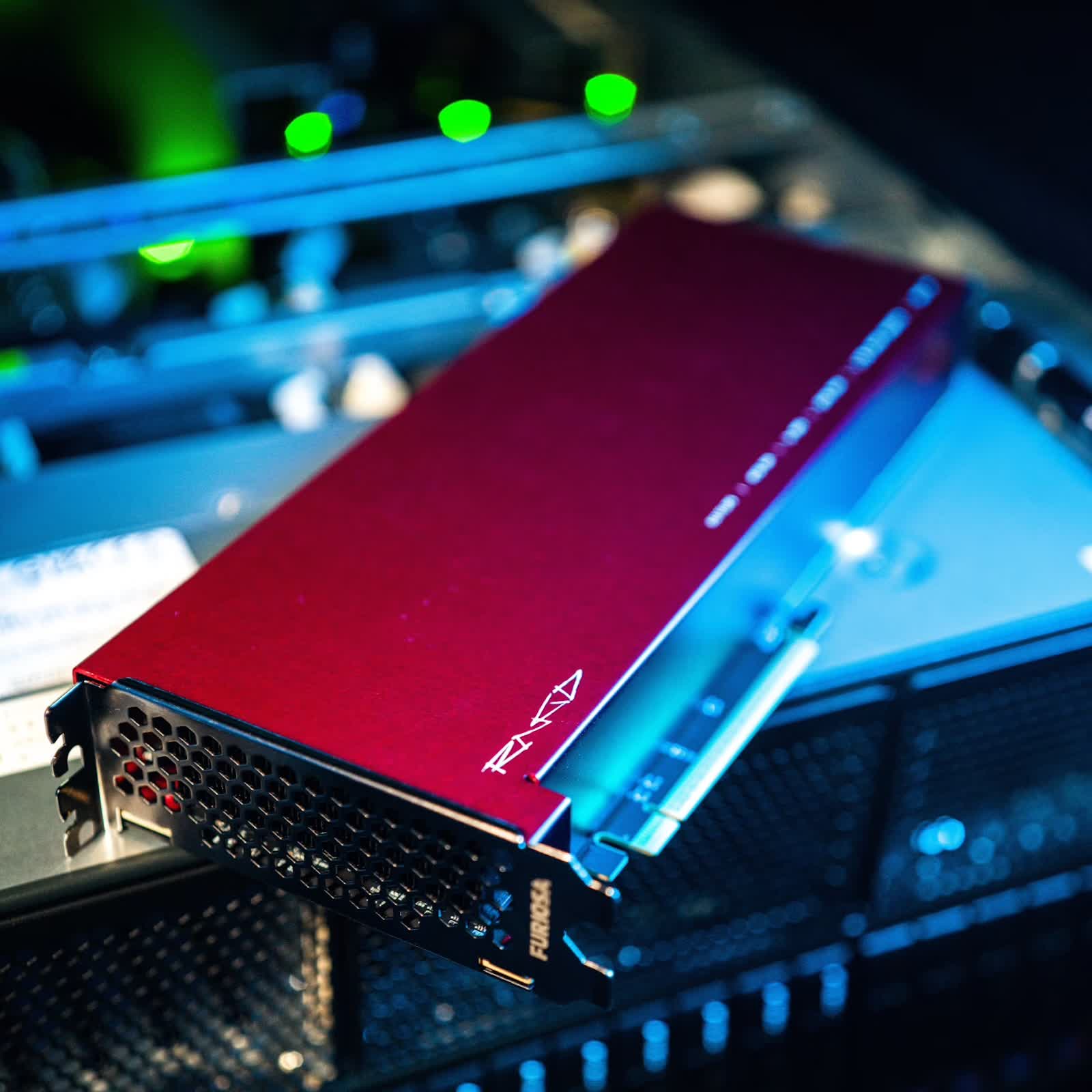
The chip, called RNGD, is scheduled to move into mass production this month, marking FuriosaAI's first large-scale rollout of its neural processing unit for AI inference workloads.
This milestone had been hard-earned. FuriosaAI was founded in Seoul in 2017 after Paik, a former Samsung Electronics engineer, left his role in memory-chip design to pursue machine learning hardware. He said the decision started in an unlikely place: a hospital room.
Recovering from a torn Achilles tendon sustained at a company soccer game, Paik spent months bedridden, watching online courses from Stanford University about the emerging field of artificial intelligence. That period left him convinced that the technology would reshape computing and industry alike. "I left with absolute certainty that I had to get into the AI space," he said.
Paik recruited former colleagues from Samsung, including engineer Hanjoon Kim, who would later become Furiosa's chief technology officer. "I found his approach quite striking," Kim recalled. The pair focused on designing chips optimized for AI tasks rather than general-purpose processors.
Unlike GPUs, which are initially built for graphics rendering, NPUs are specialized for matrix computations and parallel operations central to deep learning; they consume less power during inference. Furiosa's goal has been to deliver inference performance comparable to Nvidia's A100 and H100 GPUs while reducing electricity consumption, thereby lowering operational costs for customers.
Paik has argued that relying so heavily on a single supplier – Nvidia – creates risk for an industry that needs greater hardware choice. "A market dominated by a single player – that's not a healthy ecosystem, is it?" he said.
But the road to production was not smooth. Furiosa's initial round of seed funding in 2017, just under $1 million, was quickly depleted. Paik took out loans to keep the project alive, and in 2019, the company delayed executive salaries for months to avoid lowering its valuation while securing a new round of financing. His recruiting efforts stretched globally. Paik even flew from Seoul to Princeton, New Jersey, to personally convince an engineer to join.
"He had incredible energy. I just knew he was going to make waves one day," said Jae W. Lee, director of Seoul National University's AI Institute, who met Paik at a conference in 2015.
Paik named his company after the title character of Mad Max: Fury Road, seeing a reflection of both resilience and determination in the film's protagonist. The firm's chip name – RNGD, short for "renegade" – extends that metaphor to its technology.
FuriosaAI is now valued at roughly $700 million following multiple fundraising rounds and has drawn attention from global tech leaders. Meta sought to acquire the company last year, though Furiosa declined. OpenAI used its chip during a demonstration event in Seoul, and LG's AI research division reported that the processor offered "excellent real-world performance."
South Korea's growing emphasis on AI sovereignty helped reinforce demand for homegrown semiconductor firms. The government has promoted local AI computing capacity, securing a major GPU supply deal with Nvidia and supporting domestic chip R&D. As part of this ecosystem, Furiosa now employs about 200 people.
At 48, Paik still carries a keyboard-sized demo board equipped with the RNGD chip everywhere he goes. A competitive swimmer and runner, he treats each hardware rollout like another endurance event. He has said he sees his old injury as part of the preparation. "I think it could have been a blessing in disguise," he said.
Image credit: The Wall Street Journal
Startup FuriosaAI moves toward mass production with an AI chip aimed at Nvidia


