Startup's Universal Processor combines CPU, GPU, DSP, and FPGA into a single chip

zohaibahd

Posts: 976   +19
Staff
Why it matters: Devices like smartphones rely on a fragmented array of CPUs, GPUs, NPUs, DSPs, and other accelerators to handle various tasks. However, these specialized cores often remain idle, leading to wasted power and silicon area. A startup aims to tackle this inefficiency with a unified design it aptly calls the "Universal Processor."
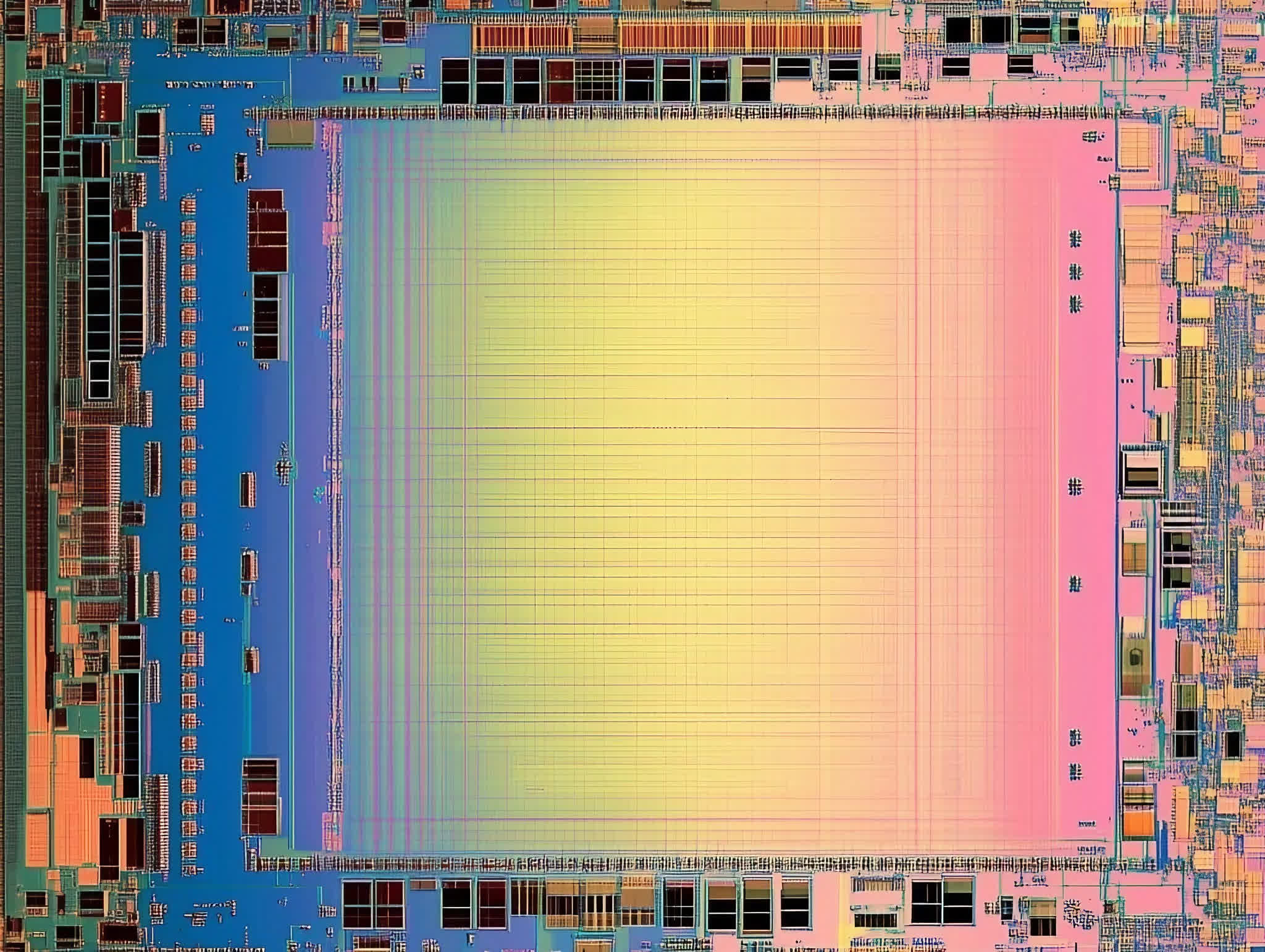
Ubitium claims to be developing a groundbreaking processor architecture capable of handling virtually any workload.

At the heart of this innovation is a "workload-agnostic microarchitecture" built on the open-source RISC-V instruction set. Unlike traditional chips with specialized cores dedicated to specific tasks, the Universal Processor's transistors can be dynamically repurposed to handle a wide range of computing workloads, including simple control logic, general computing, AI, and graphics rendering.

The startup is comprised of veterans from companies like Intel, Nvidia, and Texas Instruments. The key inventor, Martin Vorbach, holds over 200 patents licensed by major chipmakers. However, as Tom's Hardware points out, turning this concept into a fully functional product is a massive challenge in itself.

So far, Ubitium has raised only $3.7 million to move the Universal Processor from the drawing board to working prototypes. This is a small amount for cutting-edge chip development, which can easily run into the hundreds of millions.

Yet, the startup is aiming to deliver its first real Universal Processor chips by 2026. As a result, some are understandably skeptical that such an ambitious startup can deliver a "breakthrough" new architecture on such an aggressive timeline.

Ubitium doesn't just envision a single Universal Processor; they're aiming to build an entire lineup, ranging from tiny embedded devices to high-performance computing systems that could potentially compete with the largest chips from Nvidia, AMD, and Intel.

The potential upsides are tantalizing. For one, Ubitium claims its Universal Processor can deliver 10 to 100 times better performance per cost compared to today's dedicated chips.

"As we reuse the same transistors for various workloads, replacing an array of chips and reducing complexity, we lower the overall cost of the system. Depending on the baseline, this is a performance/cost ratio of 10x to 100x…The reuse of transistors for different workloads drastically reduces the overall transistor count in the processor – further saving energy and silicon area," Ubitium CEO Hyun Shin Cho told Venture Beat.

Cho added that their creation isn't an incremental improvement, but rather a "total paradigm shift" for microprocessors.

Permalink to story:

 
If one part breaks does the device lose all function? Sometimes having GPU separate is way safer for your PC, GPU breaks easy in the real world because people don't use suggested methods and hardware, Let's try 4 monitors!!....Ooops
 
Well, any chips that are going to hold the crown and make money are less than 5nm. Dare I say less than 3nm. Think M1~M4 Apple Silicon. But who will fab these chips, basically there is only one fab currently that is making this tech, and it's yes TSMC --- Apple, Nvidia, Google Pixel, SnapDragon and other companies get the best of the best.... if you are a no name company trying to get your silicon you best be waiting in line or are queuing up your spot with plenty of padded cash, or TSMC, is going to laugh at you.

As far as I'm concerned apple is going to be hard to beat as they already have, GPU/CPU/NPU (AI processing) and have been doing so for quite some time, they have plenty of money for R&D top chip scientist designers... and they have been at it pretty much since iphone since 2010 with A4 chip. Betting on this company to pull though would be a tall order. Better off going with intel or apple ... apple would be my first pick. Second pick would be Nvidia, then Intel... or AMD.

I normally don't give advice about investing, but you should really think hard about this one. Good Luck
 
Behold, the integrated circuit... 2.0. I didn't want to say 2.0 but, for lack of a better modifier, there it is.
 
As I imagine there will be a runtime penalty associated with both HW configuration (reserving a piece of HW and programing it for a particular workflow) and overall efficiency (general-purpose solutions are often less efficient than dedicated ones). Moreover, dedicated chips (e.g. for game consoles, servers) often have components optimized for typical workflows. Additional runtime adjustments might not bring benefits that overshadow the penalty.
 
Last edited:
Today at the high-performance spectrum of computing silicon real estate isn't an issue, the limit is power density, designs from architecture level have to be think from the get-go to give the best performance per unit of energy, so reutilization of silicon may be a thing for cheap devices, IoT, for maximum flexibility rather than maximum performance. There is a big space for those designs but not at the helm, rather at the mud and dirt that is present everywhere, and there is big money there.
 
I don't doubt that the Universal Processor--that can be all things to all people and situations--could theoretically exist. But, the problem is...who is going to buy it?

Let's just say, for the sake of argument, that this or some other startup was successful. They create the One True SoC(TM), or OTS, that can process any workload, any task, using any language, for any machine. Great. Now, you need for there to be a need for it, that isn't already fulfilled by something else on the market, that is better than the alternative and for which the universal functionality of this system is preferable to unchangeable, purpose-built integrated circuits.

I like the idea of a universal processor in principle, but to be blunt, it's not going to sell or its going to be a solution in search of a problem. For better or worse, the lack of interoperability in modern computing is a feature, not a bug. Apple isn't one of the most valuable companies on Earth because its products inherited Lack of Compatibility, like some kind of unmitigated genetic anomaly that infected their product stack, when they weren't looking. They were built that way.
 
It seems to me that what they're proposing to build is some kind of more advanced FPGA, so that it isn't hopelessly inefficient as a way to build a CPU or GPU. If that is the case, I'm not too optimistic about their chances, since if we had an efficient technology for making an FPGA that's configurable at the level of individual transistors or gates, that would have been the way FPGAs were built all along. I could be wrong, though; technologies like memristors might be able to provide microchips with a component that behaves enough like an old-fashioned relay to pull this off.
 
Back