Swarming drones could overwhelm air defenses, changing the future of combat

Skye Jacobs

Posts: 2,002   +58
Staff
Forward-looking: AI-driven drone swarms – once a distant battlefield concept – are edging closer to frontline deployment as defense contractors roll out new software enabling large groups of unmanned aircraft to operate in unison. Industry executives and military officials say this technology could transform the dynamics of warfare by allowing massed drone attacks capable of overwhelming traditional air defenses.
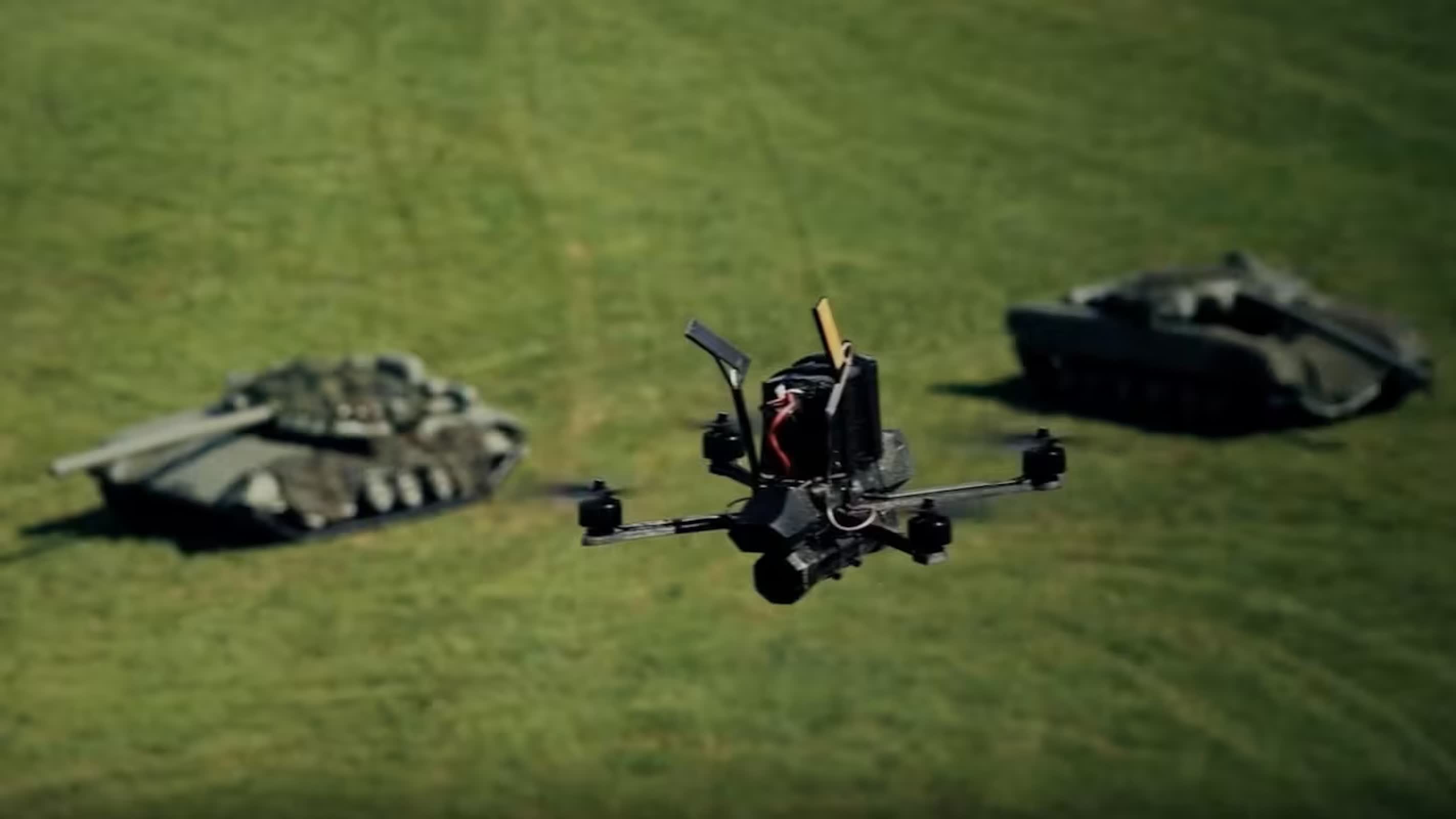
Auterion, a US-German defense start-up, has unveiled Nemyx, a system it describes as a "drone swarm strike engine." Delivered as an app running on Auterion's existing operating system, Nemyx can be installed on compatible drones through a simple upgrade. Once activated, the software enables drones to fly and fight as a single coordinated force, making large-scale attacks possible without multiple operators.

The company plans to deliver 33,000 AI-equipped "strike kits" to Ukraine later this year under a Pentagon contract. These units can be upgraded with the Nemyx system, giving Ukraine access to swarming capabilities not yet tested in combat. Auterion's chief executive, Lorenz Meier, told The Financial Times that militaries around the world are closely watching the technology. "They know that it will saturate their defenses," he said, calling the advent of swarming "a very big moment."

Ukraine has been a crucial testing ground for drone warfare since Russia's full-scale invasion in 2022. Local defense firms, including Kyiv-based Swarmer, have built their own swarming solutions and tested them in live combat. Swarmer claims its AI-driven communication systems have enabled more than 82,000 operations to date.
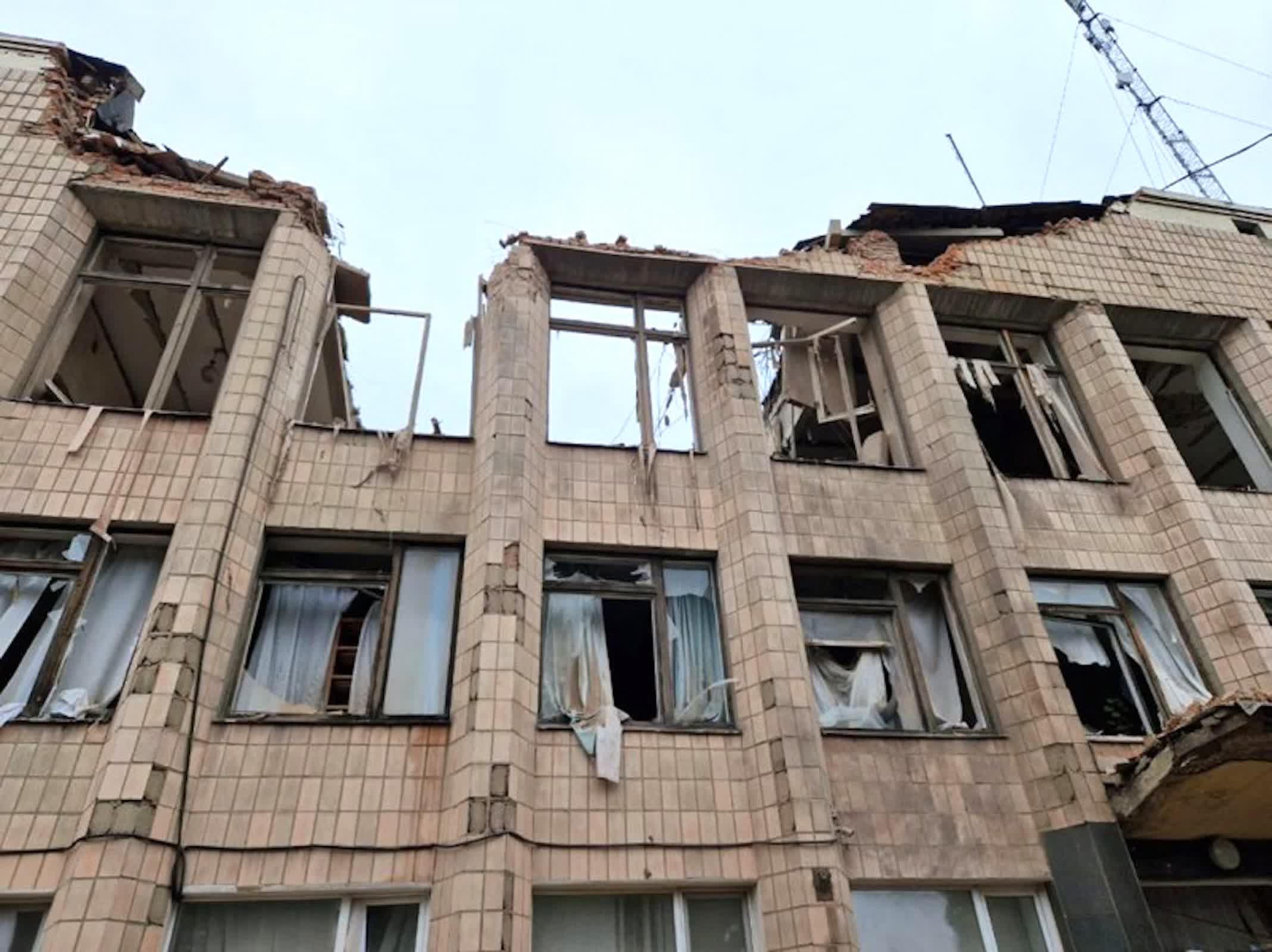
Serhii Kupriienko, Swarmer's chief executive, likens a swarm to a "living organism," with drones communicating, adapting flight patterns, and deciding when to strike. In one experimental operation last year, Ukraine deployed a coordinated set of drones that autonomously moved toward Russian positions and launched attacks without direct operator commands. "Autonomy and automation are the rule," Kupriienko said, adding that the technology allows systems to react to changing battlefield conditions in real time.

Ukraine may hold a competitive advantage in developing swarm technologies thanks to its access to an extensive classified database of combat drone footage known as the Universal Military Dataset. Local defense groups argue that this archive of wartime video material is a valuable resource for training AI models, giving them an edge over foreign competitors.
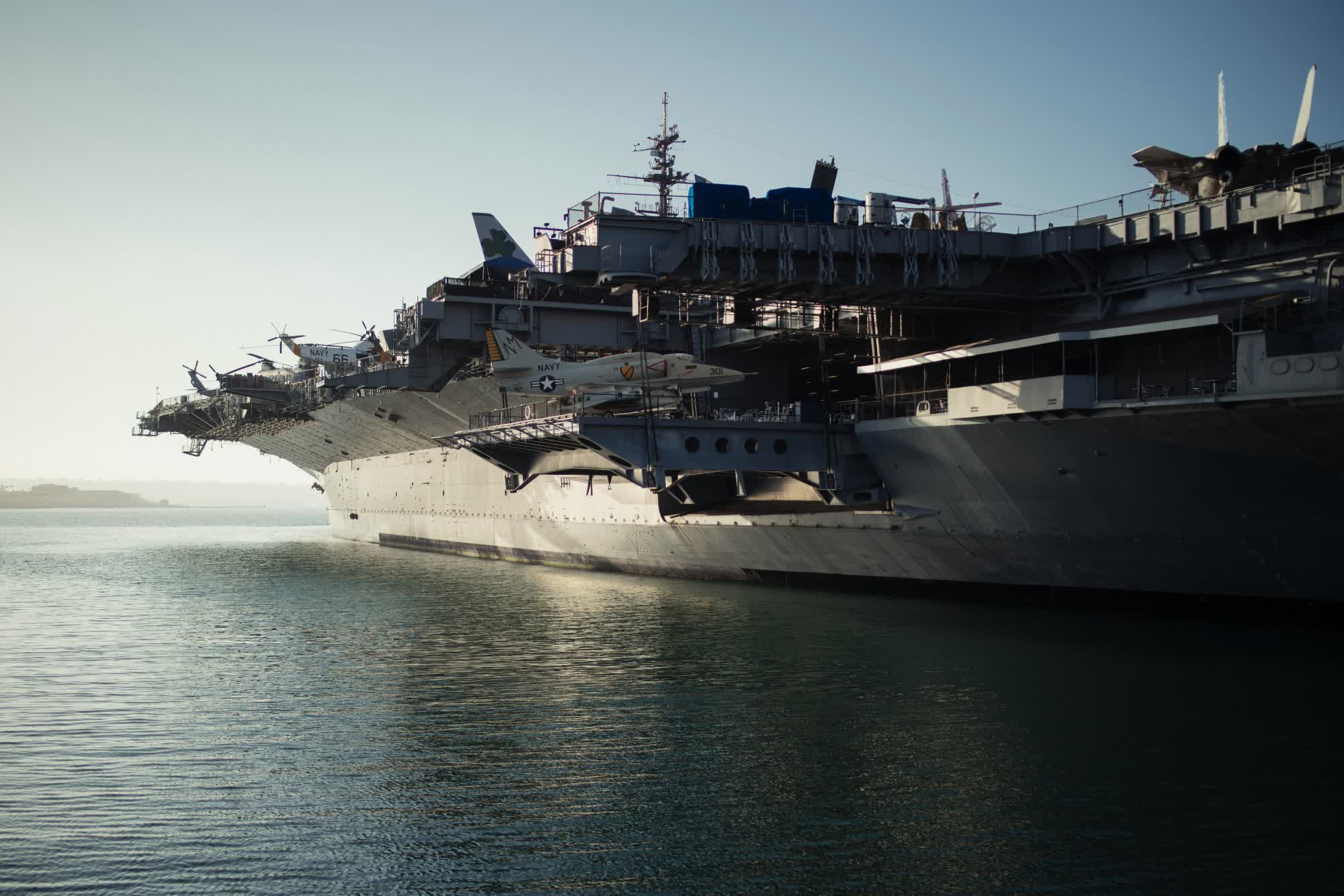
The US conducted its first large-scale drone swarm tests in 2016, when Navy fighter jets released microdrones in coordinated maneuvers. China followed suit the next year with its own demonstrations of large formations of unmanned aircraft. Russia has employed a different approach, using groups of inexpensive, long-range Shahed drones in coordinated attacks designed to overwhelm Ukrainian air defenses.

European firms are also moving into the field. Helsing, a defense technology start-up, announced a partnership with German software group Systematic last week to launch its own swarming platform.

Gundbert Scherf, Helsing's co-founder, said the main benefit of swarm technology is that "you are force multiplying. You're leveraging the single human." Michael Holm, Systematic's chief executive, added that open software systems are making it easier to integrate swarm capabilities into existing military drones. We're talking days and weeks, not months and years, to integrate and make the swarm operational, he said.

Despite its promise, the technology faces obstacles. Drone swarms must maintain constant communication to operate as a group, leaving them vulnerable to electronic warfare. If frequencies used for navigation or communication are jammed, swarms risk collapsing mid-operation.

There are also ethical and legal concerns. While companies emphasize that operators remain "in the loop," critics warn that advanced swarm designs could shift decision-making power further toward algorithms. Fully autonomous strikes – where no human input is required – are restricted under international law. "We've of course built autonomy in," Scherf said, but insisted European firms are committed to keeping human oversight in line with "European values and European doctrine."

Beyond military use, the same underlying algorithms could reshape industries far from the battlefield. Swarming drones could be applied to logistics, agriculture, and emergency services, with potential uses ranging from warehouse automation to pipeline inspections and disaster response. Technology firms in Silicon Valley, Shenzhen, and Tel Aviv are already experimenting with commercial swarms to manage firefighting efforts, plant crops, or monitor large crowds.

Analysts caution, however, that widespread adoption in civilian industries will depend on regulators establishing standards for safety and data handling. Until then, the battlefield will likely remain the most visible proving ground for this technology.

Masthead credit: The Financial Times

Permalink to story:

 
Yeah, drones are changing the nature of warfare.

It's a further democratization of military strength with smaller states and even non-state actors being able to leverage some amount of airpower in their campaigns where they would not have been able to before.

To paraphrase a great American general "War is cruel, war is cruelty, and the crueler it is, the sooner it will be over"

If drones make infantry "obsolete" then maybe a silver lining of robots fighting wars is less actual people getting killed. Pie in the sky, but one can hope.
 
They will be greatly nerfed as anti-drone defenses improve. They are so good because they are a new weapon in a sense, at least in the new ways they are used today.
But as every other new weapon, they are not invincible.
The best direction for improvement is drones that do not need satellites and connection to the operator. Drones are already becoming harder to use because jammers keep improving too. It isnt a whim to literally use drones connected by a wire as both RUssians and Ukrainians do today. It is possible that soon the only drones that are still effective are those who fly on their own and only need camera to recognize the target.
 
For military use I only see downsides.

Despite its promise, the technology faces obstacles. Drone swarms must maintain constant communication to operate as a group, leaving them vulnerable to electronic warfare. If frequencies used for navigation or communication are jammed, swarms risk collapsing mid-operation.
This is already the biggest problem drones face on the battlefield. This makes them even more sensitive to it?

There's a reason why both Ukraine and Russia are betting on fiber optic cables to go on for miles attached to the drones lately. Can't jam that.

---

Are drone operators in short supply? I don't think so, the whole advantage of drones is that the operator is very unlikely to get killed and thus building up a big number of them should be fairly easy.

So the down sides are:
Easier to jam
Easier to predict movement if they're flying in formation making them easier to intercept
Higher chance of collateral damage from being in the same line of fire (fast firing gun defenses), AoE damage (missile blowing up multiple) or Shrapnel - either from a burst munition or from parts of one drone hitting another
Higher costs I imagine because now you need more processing and intercommunication (likely to bring down operational range down as well).

I'm not a military analyst but this seems to be a solution looking for a problem instead of the other way around.

Upside:
One operator can control multiple drones.
 
If drones make infantry "obsolete" then maybe a silver lining of robots fighting wars is less actual people getting killed. Pie in the sky, but one can hope.

Infantry won't go obsolete; you still need boot on the ground to hold onto territorial gains. Its other equipment: Tanks, Artillery, large capitol Ships that are going to be questionable financial investments going forward.

But yes, drones, especially the cheap (~$20k per) disposable ones you can deploy en masse have changed warfare. The countries that pick up on this will do well, the ones that don't will be haunted by all the billions of dollars worth of equipment set ablaze.
 
Infantry won't go obsolete; you still need boot on the ground to hold onto territorial gains. Its other equipment: Tanks, Artillery, large capitol Ships that are going to be questionable financial investments going forward.

But yes, drones, especially the cheap (~$20k per) disposable ones you can deploy en masse have changed warfare. The countries that pick up on this will do well, the ones that don't will be haunted by all the billions of dollars worth of equipment set ablaze.

- Perhaps not obsolete in an occupation sense, but obsolete in a front line warfare sense (as Russia/Ukraine are demonstrating, the casualties are horrific for minimal actual battlefield gains).

Russians/Chinese/Indians might be able to absorb those kinds of battlefield casualties (in a political sense, squashing dissent at home, drawing from marginalized minority populations for their meat waves) but no western country is going to be OK with those kinds of numbers.

Ultimately, the actual troops will be 30+ miles behind whatever the true "drone" front line is at all times.
 
- Perhaps not obsolete in an occupation sense, but obsolete in a front line warfare sense (as Russia/Ukraine are demonstrating, the casualties are horrific for minimal actual battlefield gains).

Russians/Chinese/Indians might be able to absorb those kinds of battlefield casualties (in a political sense, squashing dissent at home, drawing from marginalized minority populations for their meat waves) but no western country is going to be OK with those kinds of numbers.

Ultimately, the actual troops will be 30+ miles behind whatever the true "drone" front line is at all times.
Tbf, Ukraine's entire strategy is to bleed Russia dry and wait for their economy to collapse (which it's finally starting to do).

You can't keep infantry that far back from the front; that's too far to hold anything or contest any movement, and APCs that try and rush them there would be immediate targets. That's why most actions you see are taken by dozens of men at a time, in order to make troop movements harder to detect.
 
Infantry won't go obsolete; you still need boot on the ground to hold onto territorial gains. Its other equipment: Tanks, Artillery, large capitol Ships that are going to be questionable financial investments going forward.

But yes, drones, especially the cheap (~$20k per) disposable ones you can deploy en masse have changed warfare. The countries that pick up on this will do well, the ones that don't will be haunted by all the billions of dollars worth of equipment set ablaze.
Why couldn't they just use ground based drones/bots to hold territory? If they're already doing AI based target acquisition, it seems like the next step.
Imagine automated units patrolling, getting ambushed, summoning the swarm.
 
"Ukraine's entire strategy is to bleed Russia dry"...
"and wait for their economy to collapse (which it's finally starting to do)"...
Bleed dry? How so?
It seems that the Russians' superiority in firepower, including the number of drones (declared by the Ukrainians themselves), doesn't make a dent in the Ukrainian side, right? What do you think is happening in those Ukrainian positions where FABs, TOS, and drones are raining down?
And the manhunts in the streets where we see them happening are in Ukraine, with the poor devils thrown onto buses, a week of "training" and they're off to the front. so, one should ask, who's really drying?
Sometimes we like to believe our our PR , PsyOps and propaganda.
 
Last edited:
The drones may not occupy the terrain, but they can deny it to some extent.

The Russians have been using AI for terminal guidance of Lancet drones for years, to assist FPV operators for almost two years, and according to some rumors, a type of kamikaze drone (I don't remember the model) has apparently incorporated target selection and coordination in groups of three drones.

But here the issue is the communication between drones for collaboration, if it is broken by EW its effectiveness is reduced because they would be isolated and would operate with limited information from each one separately.
 
Ever wonder how swarms bees etc., communicate? Not likely by RF.

For that matter, use swarms of insect-killing drones to wipe-out swarms of hungry insects, licking their chops & looking at your crops.:D

There could be other non-military uses, also.

A child lost in the woods could be found quicker with hundreds of drones assisting dozens of human searchers.

use them to pick-up roadside litter, etc.
 
Bleed dry? How so?
It seems that the Russians' superiority in firepower, including the number of drones (declared by the Ukrainians themselves), doesn't make a dent in the Ukrainian side, right? What do you think is happening in those Ukrainian positions where FABs, TOS, and drones are raining down?
They're holding, and quite well, because Ukraine is focused entirely on destroying any supply/staging bases and ongoing assaults, rather then wasting its efforts attacking Russian positions directly.

The strategy has basically worked; Russia's summer offensive not only collapsed with minimal gains but its spearheads were ultimately isolated, cut-off, and reduced. Russia simply doesn't have the capability to do anything more then localized assaults, and even then they don't have any way to exploit any gains they make, given the fact they're basically out of mechanized resources.
And the manhunts in the streets where we see them happening are in Ukraine, with the poor devils thrown onto buses, a week of "training" and they're off to the front. so, one should ask, who's really drying?
Sometimes we like to believe our our PR , PsyOps and propaganda.
Assuming you're talking about the Russian side, that's an accurate statement. As I noted previously, Ukraine is keeping its main forces back to react to any breakthrough attack, and it's using it's armor/F16s in *very* controlled circumstances to protect their firepower. By contrast, Russia keeps trying to do the same thing over and over again, and bleed all its forces dry to the point they have no ability to run a sustained offensive.

Pretty much all my news comes from independent sources who's reporting have been verified by events on the ground. None of that "Putin is dying of cancer" (which I noted at the time sounded an awful lot like the "Castro has gone insane" reporting from the 60s) or "with this, Ukraine will liberate Crimea and march into Russia" nonsense.
 
We keep inching forward to Skynet. Next up, someone hacks the drones to be fully automatous and we have human killing drones on the loose. It's war, there are no limitations in practice or reality. Conventions and agreements were made to be broken, history speaks well.

Drones don't scare me as much a Putin's nukes. He's off his freaking rocker and getting worse with age. I pray for the good people of Russia, they're being run by a true dictator.
 
Reminds me of the machine gun in WW I
The simple and effective solution against drones still today. An M134 sentinel with an automatic drone targeting system would certainly do the job with as little as a 1 second burst.

This guy tries with a homemade setup. lololol

 
Yeah, drones are changing the nature of warfare.

It's a further democratization of military strength with smaller states and even non-state actors being able to leverage some amount of airpower in their campaigns where they would not have been able to before.

To paraphrase a great American general "War is cruel, war is cruelty, and the crueler it is, the sooner it will be over"

If drones make infantry "obsolete" then maybe a silver lining of robots fighting wars is less actual people getting killed. Pie in the sky, but one can hope.
Less military killed, more civilians. It has been like this since WW1 if I'm not mistaken and the ratio has gone worse each subsequent conflict.
People will still be killed. Defenceless ones to be more exact.
 
The simple and effective solution against drones still today. An M134 sentinel with an automatic drone targeting system would certainly do the job with as little as a 1 second burst.

This guy tries with a homemade setup. lololol

Looks ferocious
 
Back