What we know so far: The conflicts in Ukraine and Iran have revealed a hard lesson for modern militaries: cheap, expendable drones deployed at scale can be just as strategically valuable as expensive precision weapons. A Japanese startup is now pushing that logic further, swapping composite airframes for something far more humble – cardboard.
Japan's defense ministry recently sat down with Air Kamuy, a drone manufacturer whose signature design relies on corrugated cardboard construction. The meeting signals Tokyo's broader ambition to carve out a leadership role in low-cost drone production as mass-market models reshape the calculus of modern warfare.
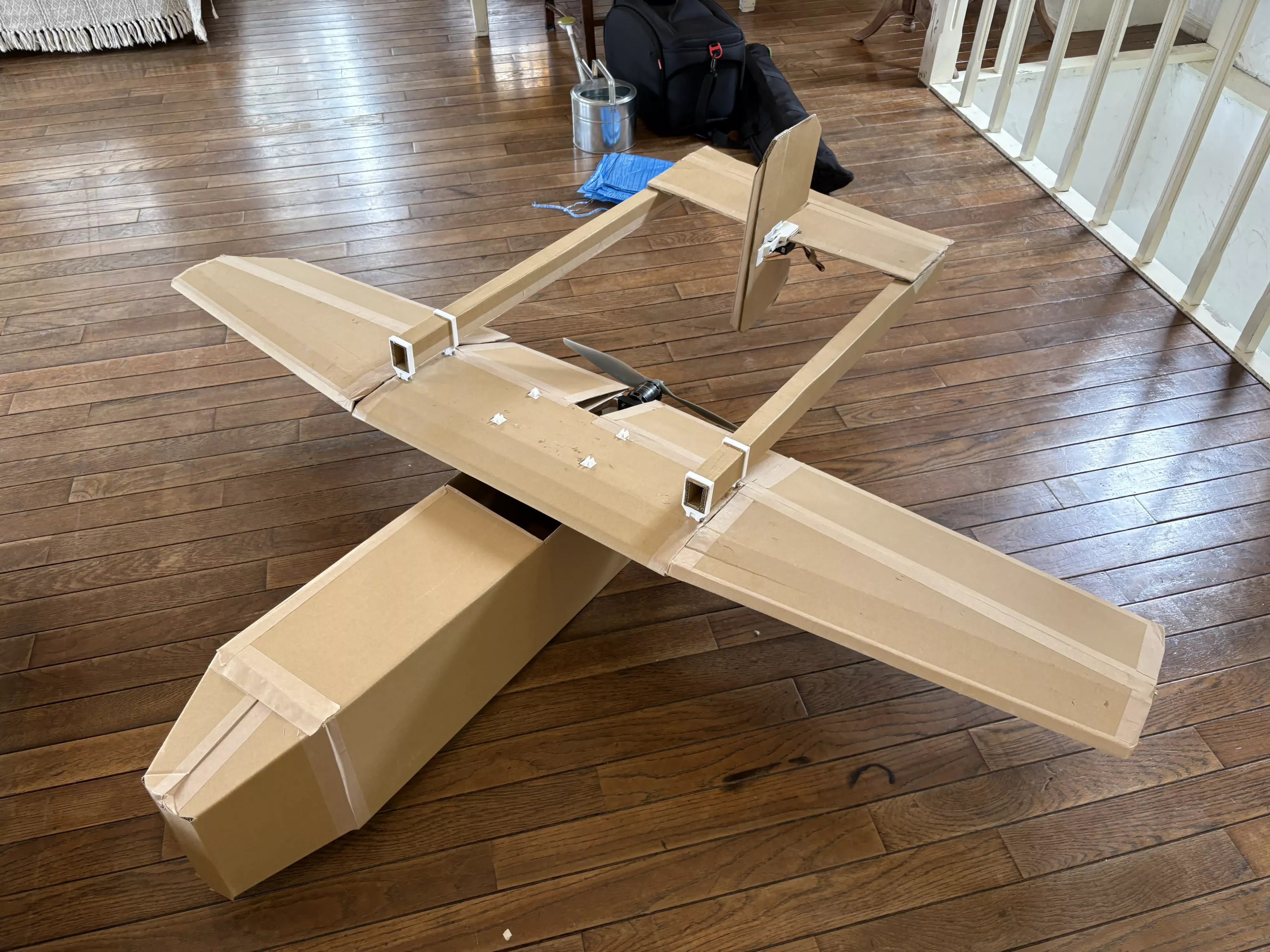
The ministry's interest centered on the AirKamuy 150, a multirole fixed-wing drone that draws conceptual comparisons to the American-made Lucas and Iran's Shahed, two designs that have already proven their battlefield relevance. The AirKamuy 150, however, could prove far easier to deploy than either of them.
– 小泉進次郎 (@shinjirokoiz) April 27, 2026
Iran's Shahed design gained notoriety after Russia began deploying it in large numbers following its 2022 invasion of Ukraine. Its appeal lay in cost and volume: these drones can be launched rapidly at a fraction of what a Tomahawk missile runs.
The US later reverse-engineered the design into the Lucas, which was subsequently deployed against Iranian targets.
The AirKamuy 150 takes that cost-efficiency argument even further. Where each Lucas drone carries a build cost of around $10,000, Air Kamuy's cardboard design comes in at up to $3,000 per unit. It's also slightly faster, topping out at roughly 74 mph versus the Lucas's 63 mph. It's also considerably lighter.
The manufacturing case may be just as compelling as the economics. Assembly takes approximately five minutes by hand, requires no specialized facilities, and can theoretically be carried out by any company with access to standard cardboard stock. The airframe also folds flat, simplifying transport and logistics in the field.
Air Kamuy has so far positioned its drones primarily for target practice, testing, and potential civilian applications such as package delivery and emergency response. But the defense ministry's engagement hints at a trajectory toward military use.
Heavy armor is beside the point when the mission is a one-way trip.
While the AirKamuy 150 is not battle-tested, the company advertises "swarm attacks" as one of its possible uses. Since suicide drones by their nature do not require thick armor, disposable cardboard might prove ideal for building them.
One significant limitation remains: range. The Lucas, powered by a conventional gas engine, can fly up to 512 miles. The AirKamuy 150 runs on electric power and carries roughly 80 minutes of flight time, a constraint that would limit its operational reach in anything beyond short-range missions.
That tradeoff aside, the broader implications of the design are worth watching.
As drones become increasingly autonomous, the development of AI swarm software could enable them to overwhelm conventional air defenses. Experiments over the past several months have demonstrated how large numbers of drones can act in unison with minimal human involvement. If cheaper materials like cardboard lower the barrier to building larger swarms, the strategic arithmetic of air defense could shift once more.
Japan is building military drones out of cardboard, and they're faster and cheaper than you'd expect