Take-Two's CEO predicts streaming will 10x gaming's install base within three years

Daniel Sims

Posts: 2,510   +76
Staff
Looking ahead: As the RAM crisis makes high-end hardware increasingly unaffordable, it's unsurprising to hear companies float streaming as a possible alternative for gaming. Despite the technology's past failures, the head of Grand Theft Auto publisher Take-Two is bullish on its future.

During Take-Two's first-quarter fiscal 2027 earnings call, CEO Strauss Zelnick put a number on it: he expects cloud gaming to reach commercial, low-latency viability within three years, potentially multiplying the effective installed base tenfold. He made the comments while addressing the rising cost of gaming hardware.

Due to tariffs, rising costs of TSMC's semiconductors, and memory shortages stemming from AI data center construction, game consoles and PC components have gotten more expensive rather than cheaper over the past several years. The Xbox Series consoles and the PlayStation 5 launched at $500, but their successors might double that price.

Zelnick believes the popularity of Take-Two's major franchises, likely referring to Grand Theft Auto and NBA 2K, will cushion the impact of hardware price hikes, though he acknowledged the price hikes could still limit the company's addressable market.
Cloud gaming, meanwhile, has long been floated as a route for bringing high-end games to low-cost devices, and Zelnick believes its moment is finally near.

The CEO argued that advances in networking technology and infrastructure will make cloud gaming more viable than ever for a wider swath of users, potentially growing the installed base by an order of magnitude. While he doesn't expect revenue to climb by a similar amount, he sees it as a way to reach players beyond Take-Two's traditional core market.

According to Zelnick, those advances are what will separate this next wave from the technology's most spectacular recent failure, Google Stadia. The major cloud gaming players today are Amazon's Luna, Nvidia's GeForce Now, Microsoft's cloud functionality for Xbox Game Pass, and Sony's PS5 cloud streaming through PlayStation Plus Premium.

The latter two have proven that streaming can succeed as a complementary feature for games users already own, but success via other business models remains elusive.

Strauss Zelnick noted that 90% of Take-Two's business is already digital, though he left the door open for occasional physical releases going forward, comparing the practice to the enduring demand for vinyl records.

Zelnick also weighed in on Grand Theft Auto VI's upcoming digital-only launch and the broader industry shift away from physical disc games on PlayStation. He noted that 90% of Take-Two's business is already digital, though he left the door open for occasional physical releases going forward, comparing the practice to the enduring demand for vinyl records.

Unlike vinyl (and music CDs), though, no single company controls the pressing of physical games; console manufacturers alone manufacture their platforms' discs, which makes a comparable resurgence less likely.

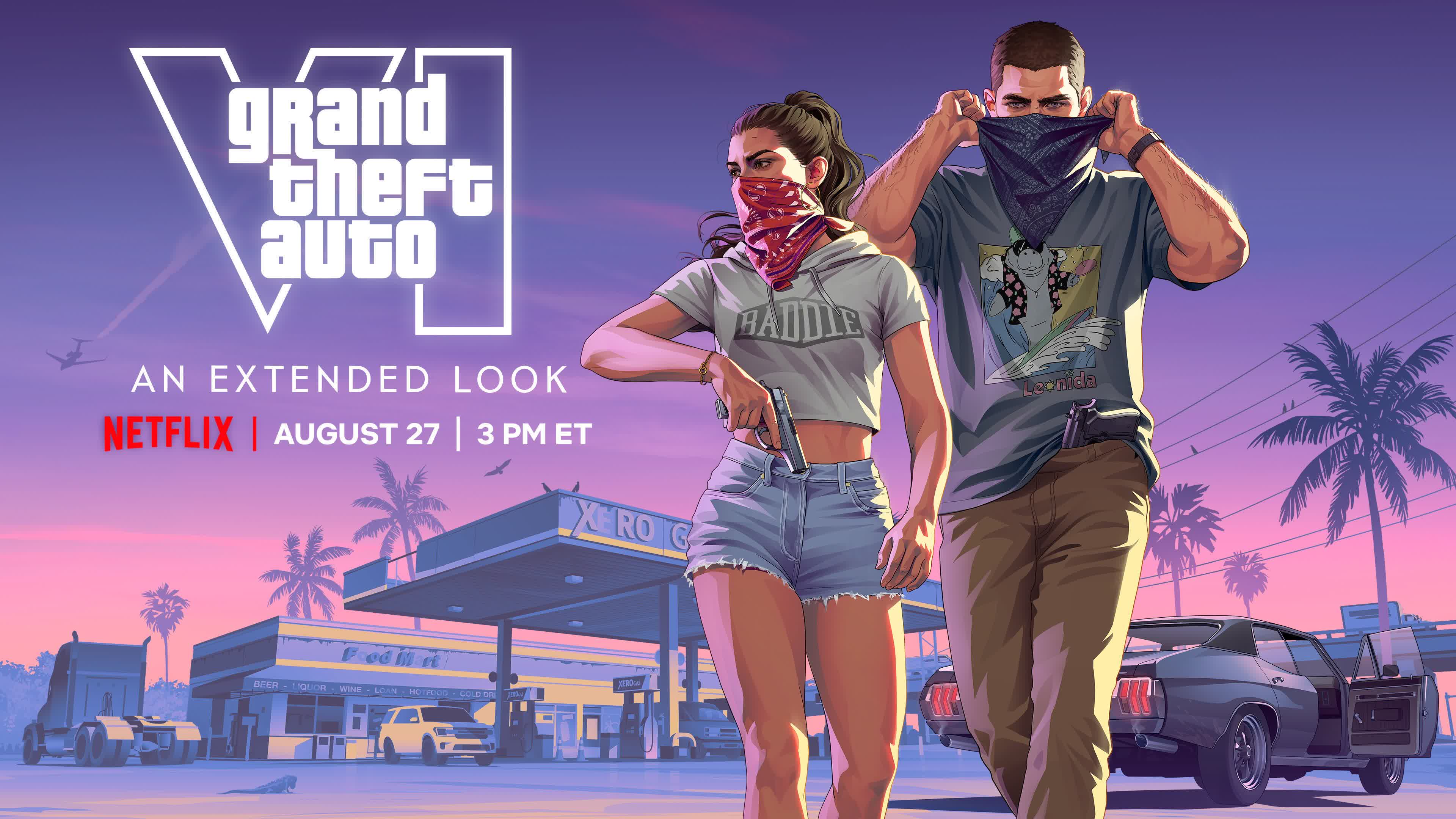
Grand Theft Auto VI is set to launch on November 19 for PlayStation 5 and Xbox Series consoles, with a PC version expected sometime later. An extended early look at the game will premiere exclusively on Netflix on August 27.

Permalink to story:

 
The only way streaming can increase any install base is if the user is forced to buy the game and install it on the server themselves. If you're streaming the game you're not installing it, are you?
 
"advances in networking technology and infrastructure will make cloud gaming more viable"

Such as? The primary issue is latency. Latency from distance is not changing anytime soon. Latency from delayed server processing was not previously characterized as the main problem; and in any event, in a current era where server hardware for the same capacity is getting more vs. less expensive, this doesn't seem like it's going to solve a gaming platform affordability problem either.

The only part I maybe agree on is that consumers who simply could not afford a gaming device will at least be more motivated to give streaming a try. Whether they'll like it, or be able to afford it at current market prices for the capacity required, I don't know.

 
"advances in networking technology and infrastructure will make cloud gaming more viable"

Such as? The primary issue is latency. Latency from distance is not changing anytime soon. Latency from delayed server processing was not previously characterized as the main problem; and in any event, in a current era where server hardware for the same capacity is getting more vs. less expensive, this doesn't seem like it's going to solve a gaming platform affordability problem either.

The only part I maybe agree on is that consumers who simply could not afford a gaming device will at least be more motivated to give streaming a try. Whether they'll like it, or be able to afford it at current market prices for the capacity required, I don't know.
You are not completely wrong about latency, but I think you are defining the problem too narrowly.

Nobody is going to invent faster than light networking. Distance will always impose a latency floor. But cloud gaming doesn’t improve only by making signals travel faster. It improves by putting data centers and edge nodes physically closer to users, improving routing and peering, reducing wireless last mile latency, improving codecs and encode/decode times, and reducing the server side time between receiving an input and producing the next frame.

That’s why “advances in networking technology and infrastructure” actually does mean something here. Research on cloud gaming already shows that network quality, server placement, bandwidth stability, wireless conditions and congestion management all materially affect the experience.

Where I agree with you most is the economics. Streaming doesn’t magically eliminate expensive gaming hardware...it moves a large portion of that hardware into somebody else’s data center and adds bandwidth, power and infrastructure costs. And cloud gaming can require tens of Mbps continuously rather than the tiny amount of network traffic needed for locally rendered gameplay.

So I can absolutely see streaming expanding gaming to people who don’t want to buy a console or gaming PC. But Zelnick’s idea that the potential install base could become 10X larger within three years is a much bigger leap. Even his fuller statement makes clear he isn’t predicting 10X revenue, only a materially larger addressable audience.

There’s a legitimate technological trend here. There’s also a CEO doing what CEOs occasionally do...extrapolating that trend all the way to the moon.
 
Interesting timing for such a statement.
he expects cloud gaming to reach commercial, low-latency viability within three years, potentially multiplying the effective installed base tenfold
Based on what?
All the AI servers are going to run games and be installed with a direct glass fiber link towards our homes that are nearby?

Because NVIDIA is already offering a 'commercial, low-latency' viable solution right now to quite a few people. Afaik there's no new tech on the horizon that would lower latency of the internet connection any further (other than simply having more datacenters available increasing the odds of them being geographically closer) and pretty much all other latency in the entire chain is of minimal influence / won't be improved that much any time soon.

The only thing that can make it more appealing than it is at the moment is higher prices of consoles and PCs still. But even then I don't see how it would 10x cloud gaming, we still have our old PC/Console and if no one is upgrading and you make your title so that it only runs on the latest hardware or cloud gaming a good chunk of people will simply ignore it.


The CEO argued that advances in networking technology and infrastructure will make cloud gaming more viable than ever for a wider swath of users.
....
According to Zelnick, those advances are what will separate this next wave from the technology's most spectacular recent failure, Google Stadia.
What advances?
WiFi 7 has matured since then but ehhh how many people actually have a device they want to game on with that along with a router that actually supports it? And even then what's the benefit over wifi 6 in that case?
Did that many more people get a faster/lower latency connection since then? I had glass fiber in 2023 and I still have it, no data centers that would host the hardware for this have been opened any closer to me. Think it's the same story for the vast majority of people, not that much has changed network/network infrastructure wise since 2023.

Perhaps he's one of the people that think 5G connections are some magical thing that now that the rollout is more complete and basically every phone ships with it that we can have low latency mobile cloud gaming?
If the game isn't natively available on mobile, I don't want to play it on my phone in the first place and I think that goes for most people. Besides that... 5G is flakey AF, what's worse than a bit of latency is inconsistent latency. I'll take a consistent 80ms over one that bounces between 10 and 70 constantly. I got pretty decent results even in multiplayer FPS with a consistent ~180ms, my brain can adapt to a constant delay but not to inconsistent behavior.
 
Where are these people who have been holding off playing on their phones until the games are laggier and fuzzier?
 
Back