TCL begins mass production of cheaper inkjet-printed OLED panels, starting with 21.6-inch model

midian182

Posts: 11,726   +177
Staff member
What just happened? TCL's pledge to make cheaper and less power-hungry OLED monitors began in earnest this week when the Chinese company officially started mass production of inkjet-printed OLED displays. The first product isn't something consumers would be interested in, though: a 21.6-inch 4K OLED panel designed for medical monitors. However, TCL did also unveil a 27-inch prototype.
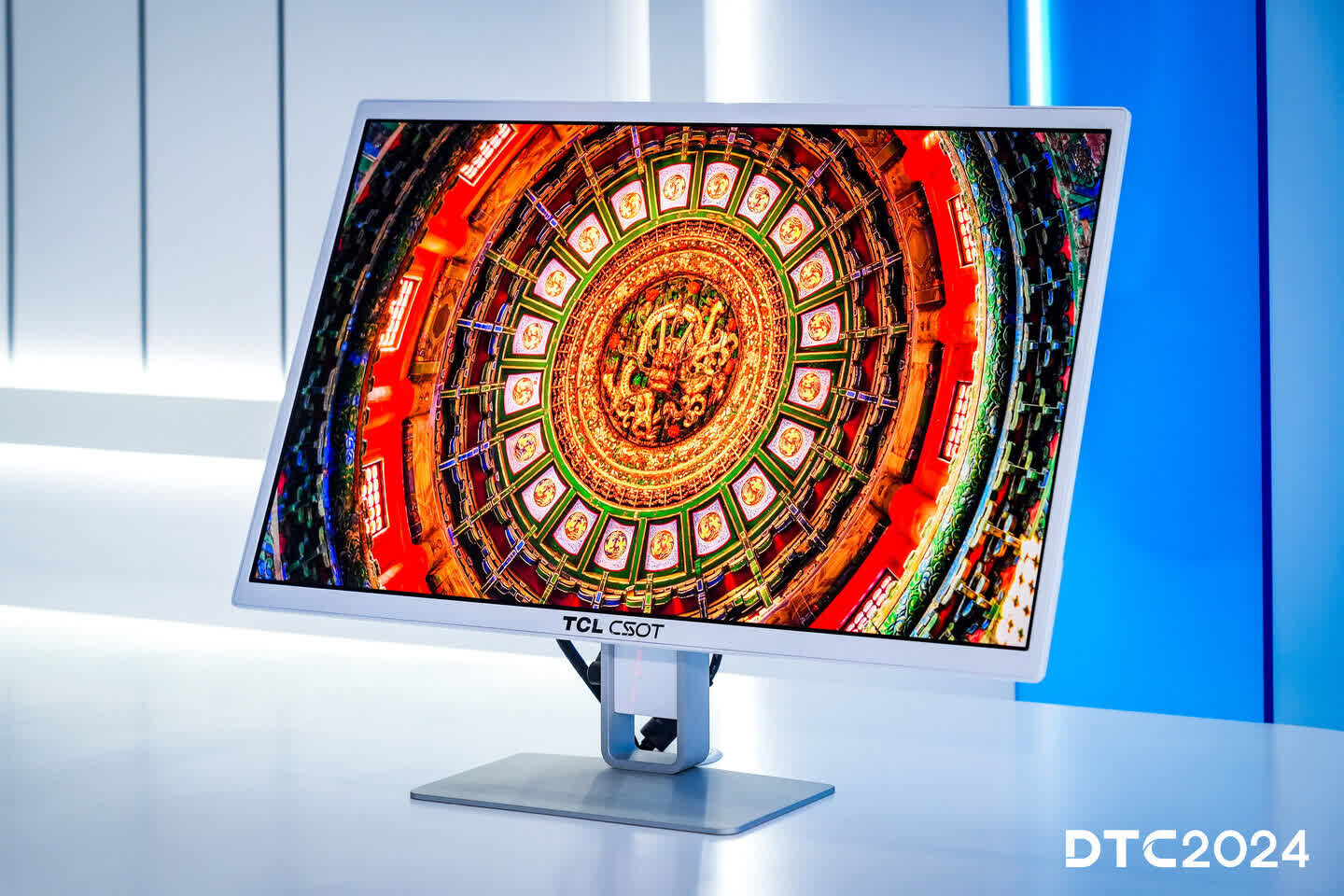
TCL CSOT, the display making subsidiary of TCL, has been talking about its longer-lasting, cheaper to make, and less power-hungry inkjet-printed OLEDs for a while, having shown off several prototypes in the past.

The company says it has now begun mass production of these panels, the first of which is a 21.6-inch 4K model. That's an unusual size, but TCL CSOT said it's designed for professional use, mainly within the medical industry.

The panel features a 204 PPI density, 99% coverage of the DCI-P3 color space, a contrast ratio of more than 1,000,000:1, and a maximum brightness of 350 nits.
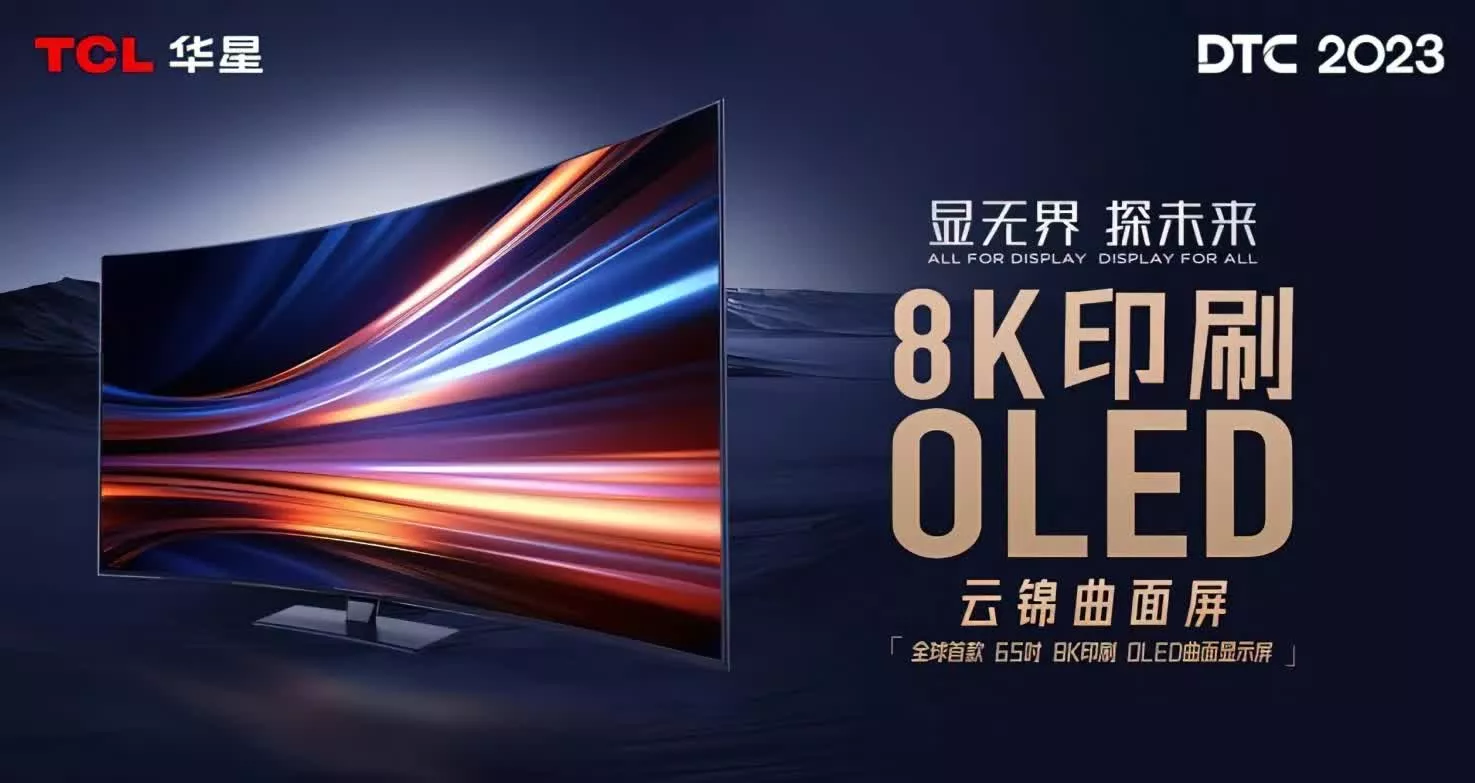
TCL CSOT also unveiled a more traditional 27-inch inkjet-printed panel designed for monitors. It has a 4K resolution, along with side-by-side RGB OLED pixels, a 120Hz refresh rate, 250 nits of full-screen brightness, and 600 nits of peak brightness.

These panels aren't as bright as the ones from LG Display and Samsung Display, but they do have advantages. As the name suggests, the technique uses large, precise inkjet printers to produce the displays. This reduces the amount of generated waste material compared to traditional OLED production, which relies on evaporation processes in which the organic materials are deposited onto a glass sheet through a thin metal stencil.

This means that TCL CSOT's panels can be produced at a lower price – a 20% reduction in total costs, according to the firm – so they could find a place in more wallet-friendly OLED products. It's also claimed that the manufacturing process is 30% faster.

TCL CSOT says its printed RGB OLED has a 50% reduction in light loss due to internal reflection, and a 1.5 times improvement in light output efficiency. The lifespan has also been significantly enhanced thanks to a higher aperture ratio and more durable materials.

TCL CSOT will produce its OLED panels using Gen 5.5 glass substrates measuring 1,300 × 1,500 mm. The process utilizes technology acquired from Japanese inkjet-printing pioneer JOLED, which filed for bankruptcy in 2023.

As reported by oled-info, TCL CSOT will expand its lineup in 2025 with more panel options. The company still hasn't decided whether to proceed with a larger 8.5-Gen inkjet production line.

Inkjet printing is currently used in the encapsulation layer deposition process in most modern OLED production and to deposit the quantum dots in Samsung QD-OLEDs. TCL is expanding it into the emitters and other stack materials.

TCL CSOT also unveiled the world's first 2.8K 14-inch QD-EL display, made using the inkjet-printing process. Also known as NanoLED, QDEL, or QD-LED, this "Quantum Dot Electroluminescent" (QD-EL) technology eliminates the need for LED backlights or OLED layers. Instead, quantum dots generate color and brightness directly from electrical energy, enabling thinner, cheaper displays.
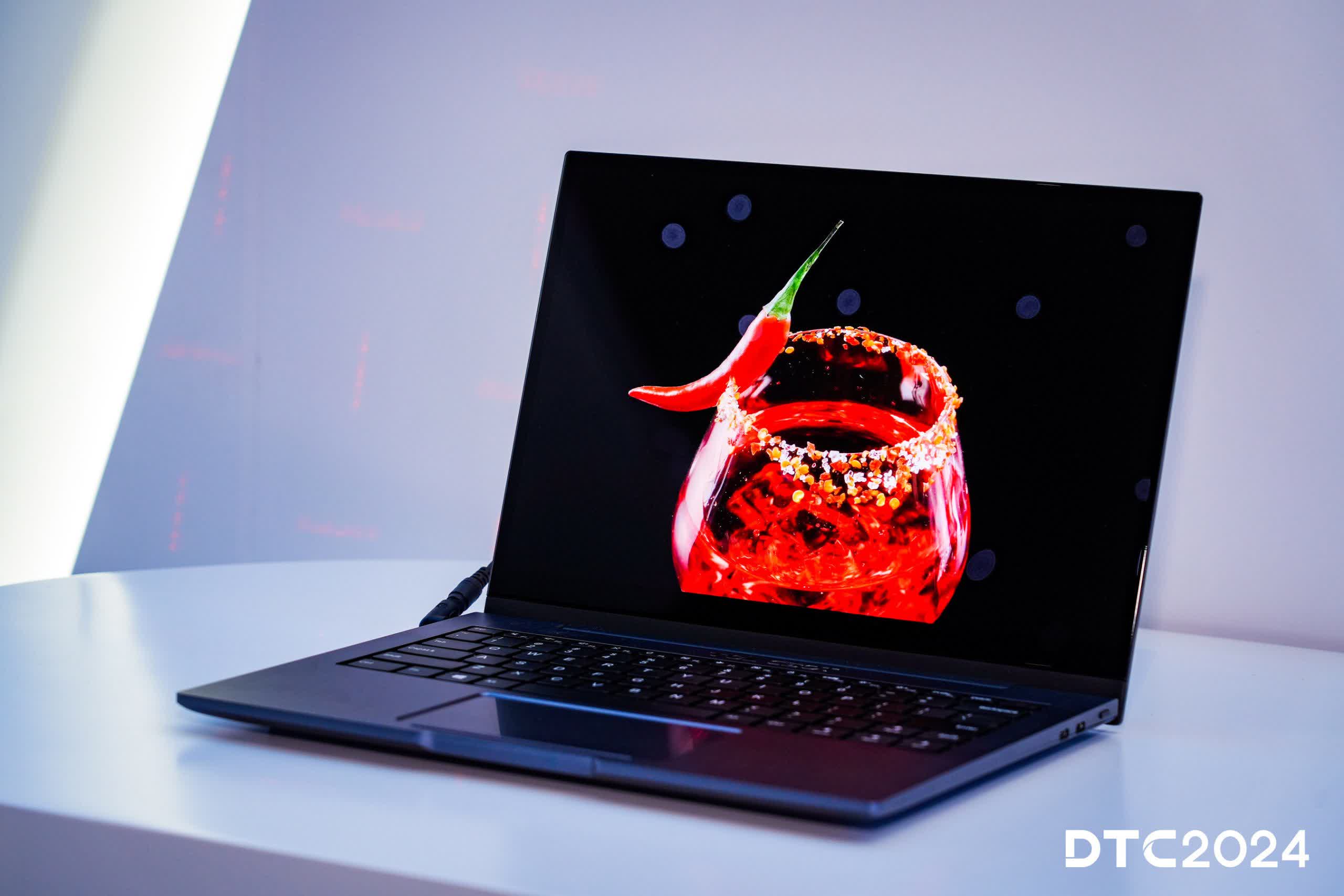
Compared to OLED and LCD, QD-EL offers superior color purity, brightness, and viewing angles, while covering a larger portion of the BT2020 color gamut for richer, more detailed visuals. The display supports variable refresh rates from 30Hz to 120Hz, though it's still just a prototype.

Permalink to story:

 
As far as I can tell Quantum Dot ElectroLuminescent seems like we might see it before 2030, more and more companies are showing off working prototypes. Might never need MicroLED tech at this rate.
 
As far as I can tell Quantum Dot ElectroLuminescent seems like we might see it before 2030, more and more companies are showing off working prototypes. Might never need MicroLED tech at this rate.
Very promising to already see working prototypes that aren't pie in the sky either, but seemingly more so at the refinement and mass market feasability stage vs figuring out how to make it work properly in the first place, having this tech on the market in 2027 wouldn't be that far fetched, maybe even 2026 in a "early bird" expensive display or two to start seeing how people react and if there are any real world issues with customers
 
Last edited:
Manufacture them in USA please.
Sorry, TCL is Chinese company.
I know It's kinda brutal, but American companies might still manufacture what they do best - Stock Market Bubbles.
Eventually make America Great Again by doing what made America Great: raising cattle and growing corn.
Everything else those great not-paying-taxes corporations will move offshore to make a penny at Our expense.
 
I know It's kinda brutal, but American companies might still manufacture what they do best - Stock Market Bubbles.
Eventually make America Great Again by doing what made America Great: raising cattle and growing corn.
Oh please. This statement only displays your ignorance.
Everything else those great not-paying-taxes corporations will move offshore to make a penny at Our expense.
Ok, there's some truth to that point.
 
Oh please. This statement only displays your ignorance.
Yes. That was a little provocative.
America became great when bunch of immigrants eager to make a living moved there, and some creative people setting up companies that supplied folk with entartainment, cars and other stuff, almost selflessly, making them cents on a dollar. There was First and Second World Wars, and some other wars that America joined becoming This powerhouse of global politics and heavy industry and trade.
And now They've just chosen a president who will Make America Great Again by doing opposite what really made It great.
For Me, simple outsider, just funny.
 
TCL leveraging inkjet printing for entire OLED stacks feels like the beginning of a shift in how displays are made. If TCL can scale QD-EL tech affordably, we might be looking at the next leap in display technology. Thinner, brighter, ... and cheaper?
 
As far as I can tell Quantum Dot ElectroLuminescent seems like we might see it before 2030, more and more companies are showing off working prototypes. Might never need MicroLED tech at this rate.

Use to get on AV forums , people dooling for microLED
But it is kind of risible, given how expensive , all the technical problems , who knows about dead pixels or whatever/reliability

Lots of great tech never comes to fruition ( though this may a later day - with new manufacturing etc ) .
Truth is someone can amble down to BigBoxStore, buy a 85" LCD or 75" miniLCD for $700 and that is most the Joe Bloggs wants.
OLED TVs are a smaller part of the market - maybe higher % in NZ/AUS.Europe where people will increase quality for size as smaller lounges.
 
As far as I can tell Quantum Dot ElectroLuminescent seems like we might see it before 2030, more and more companies are showing off working prototypes. Might never need MicroLED tech at this rate.
The big question is whether they suffer from burn-in like OLEDs do. The biggest benefit of MicroLED is that they shouldn't suffer from burn-in as much as OLED panels do. If QD-EL screens do suffer from burn-in then people are still going to be waiting for MicroLED panels...
 
The big question is whether they suffer from burn-in like OLEDs do. The biggest benefit of MicroLED is that they shouldn't suffer from burn-in as much as OLED panels do. If QD-EL screens do suffer from burn-in then people are still going to be waiting for MicroLED panels...
Precisely why they're probably going to overtake MicroLED before it even arrives for normal people. Quantum Dot's don't degrade or burn-in, When Sharp did their demo earlier this year, they specifically stated they do not have any burn-in issues and fundamentally fixes the flaw typical OLED's have.
 
Yes. That was a little provocative.
More than just a little bit.
America became great when bunch of immigrants eager to make a living moved there, and some creative people setting up companies that supplied folk with entartainment, cars and other stuff, almost selflessly, making them cents on a dollar.
You have no idea what you're talking about.
For Me, simple outsider, just funny.
You don't live here? What a shocker.

Moving on.
According to an article on OLED Info, TCL is likely to make many different screen sizes. So anyone wanting a 24/25" model will get their wish granted.
 
Back