Something to look forward to: Most gaming monitors these days adopt designs that are at least adjacent to the well-known "RGB gamer aesthetic," but TCL's latest flagship 4K panel looks more like Apple's recently released Studio Display than a typical gaming display. It squeezes most of the features users expect from high-end models into a thickness of just 3.5cm.

The recently unveiled 32X3A is a 31.5-inch display that can switch between 4K at 240Hz and 480Hz at a lower resolution, likely 1080p, with a grayscale response time of 0.03 milliseconds. According to ITHome, the OLED display covers 99% of the sRGB and DCI-P3 color gamuts. Anti-glare and anti-reflective coating should enhance visibility in bright rooms, and TCL claims that the monitor's matrix pixel arrangement improves the readability of text.
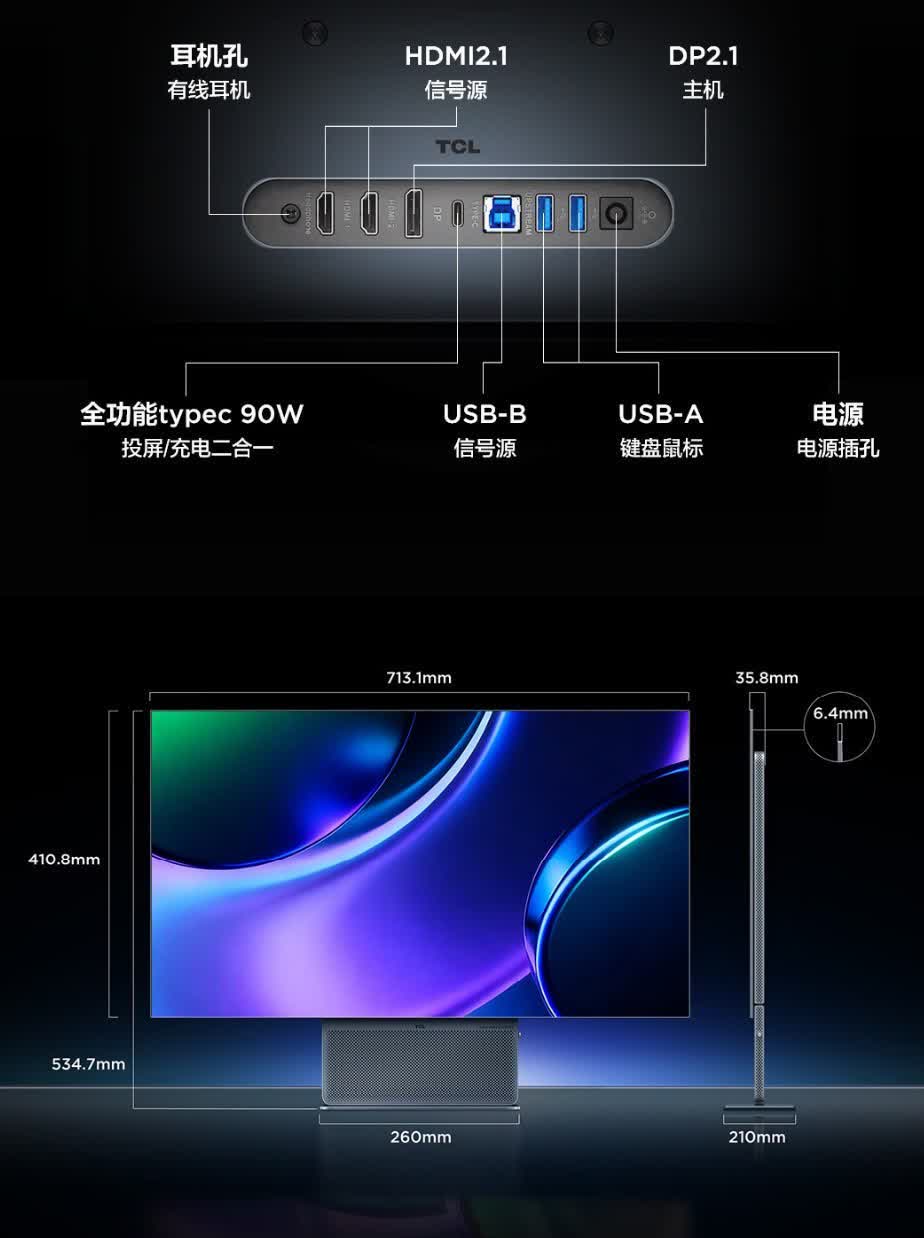
To stand out from other gaming monitors, the company opted for a flush, ultra-sleek design, with the panel measuring just 6.4mm thick. The screen and stand together are approximately 3.58cm, only about 40mm thicker than the new Studio Display that Apple unveiled earlier this week. The stand base is similarly subdued, measuring just 2.1cm thick. Including the base, the monitor weighs just 10.7kg.
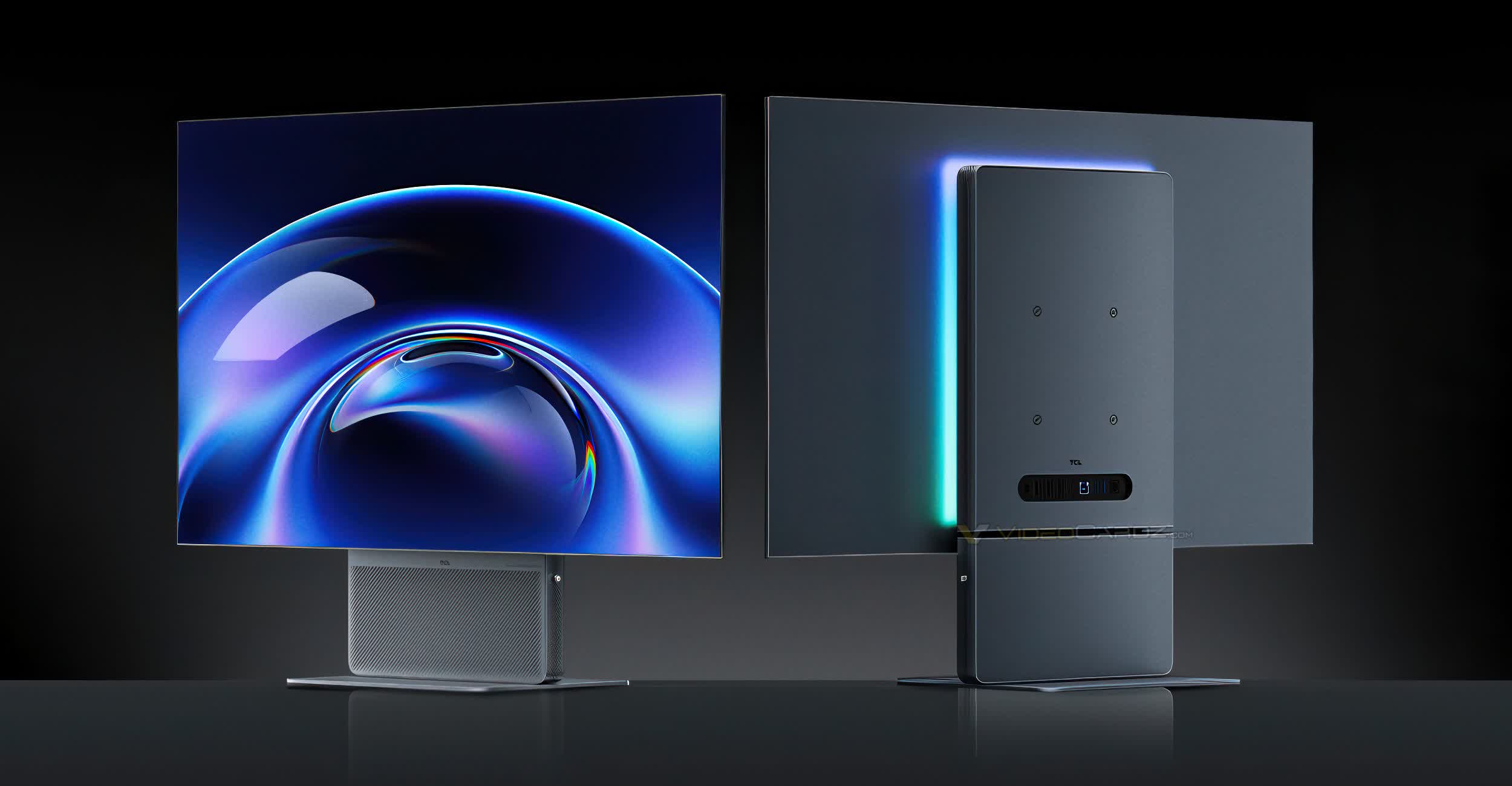
Despite seemingly avoiding the usual RGB aesthetic, the 32X3A includes RGB-style ambient lighting behind the panel, which is visible through the metal backplate's reflection. Meanwhile, Bang & Olufsen provided the speakers, which occupy the stand's bottom portion.
TCL's ultra-slim design does not sacrifice the connectivity features that users expect from a high-end gaming monitor. It includes two HDMI 2.1 ports, a DisplayPort 2.1 port, two USB-A ports, a USB-B port, and a USB-C port that provides 90W charging.
The 32X3A is currently available at Chinese retailer JD.com for 5,999 yuan, or approximately $870. Whether a global release is planned remains unclear, but it is certainly possible. Pricing for a US release might also be difficult to determine. Among TechSpot's recent choices for gaming monitors, TCL's new flagship most closely resembles the feature set of the $1,100 Asus ROG Strix XG32UCWMG.
Two other, more conventional-looking high-end gaming monitors accompanied the 32X3A in TCL's announcement this week. The 27C3A Pro is a QD-Mini LED panel that switches between 165Hz in 4K and 320Hz in 1080p and supports HDR 1400 with 2,200 nits of brightness. It is available for approximately $465.
Meanwhile, the 27P2A Ultra is the world's first 1,040 Hz Mini LED display. It includes AI-controlled brightness and a 0.1ms response time.
TCL unveils 4K 240Hz OLED dual-mode monitor that's just 6.4mm thick