TDK and NHK Spring accused of fixing prices on components used in 97% of hard drives for over a decade

Skye Jacobs

Posts: 2,010   +58
Staff
Recap: Inside every traditional hard drive is a component most people never think about, but one that has to work with extraordinary precision. The suspension assembly, a thin mechanical arm that positions the read-write head, operates at incredibly tight tolerances as it hovers over spinning platters. It is a small part, but without it, disk drives would not function at all. That component is now at the center of a US class-action lawsuit that highlights how concentrated parts of the storage hardware supply chain are.
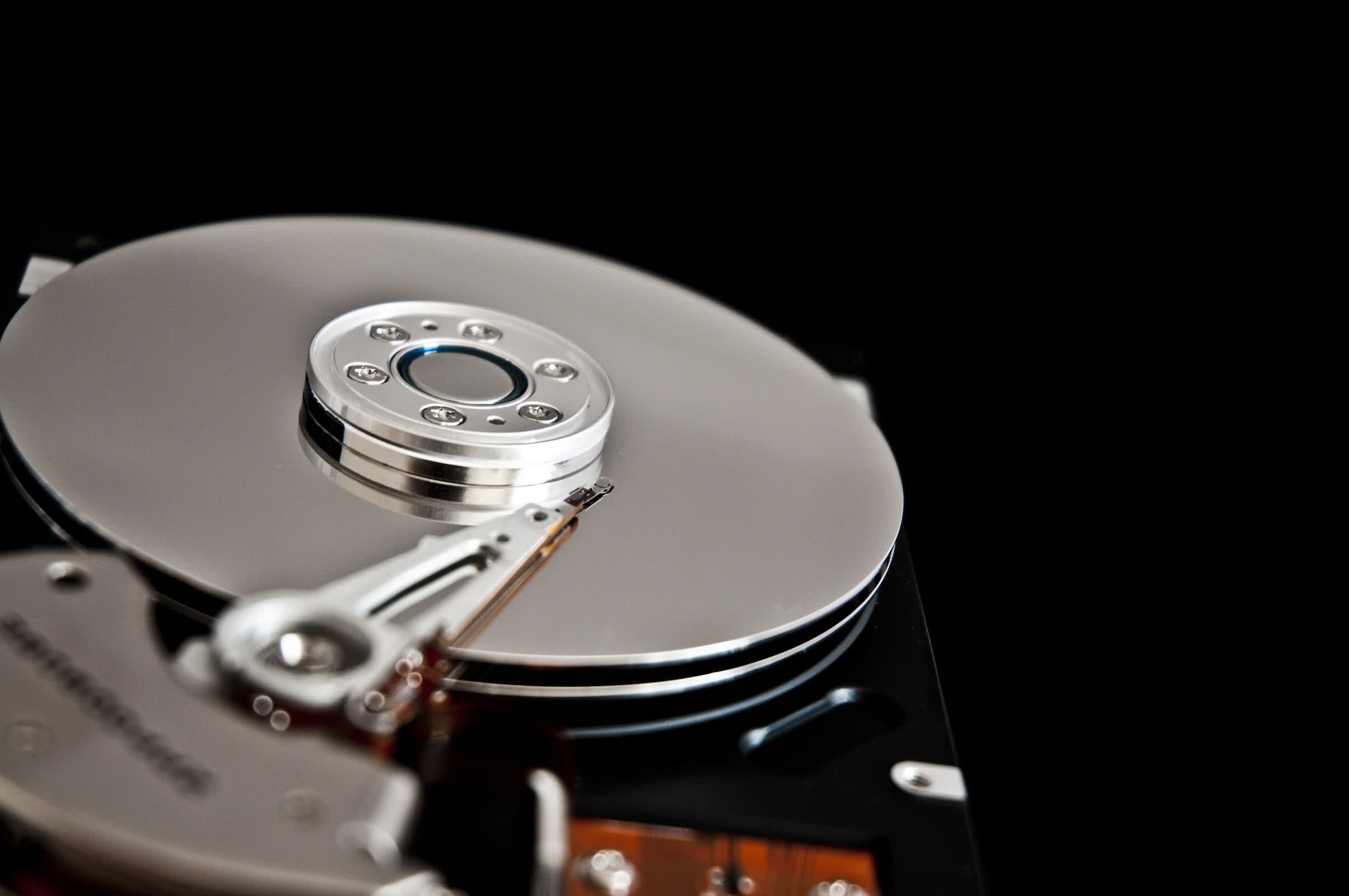
Filed in the US District Court for the Northern District of California, the lawsuit accuses major suspension assembly manufacturers of engaging in price-fixing over more than a decade. The defendants are grouped around two key players, TDK Corporation and NHK Spring, whose components are used across nearly the entire hard drive industry.

According to the complaint, suspension assemblies produced by these companies are found in about 97% of hard disk drives globally. That reach effectively ties the case to the broader HDD market, including drives sold by Seagate, Western Digital, and Toshiba. While those brands are not named in the lawsuit, their products rely on the same underlying components.

The allegations focus on conduct between January 1, 2003, and December 31, 2016. During that period, the lawsuit claims, suppliers coordinated pricing in a way that pushed manufacturing costs higher. Those costs did not stay confined to component makers. They moved through the supply chain, eventually showing up in the prices paid by resellers and end users buying standalone drives or computers that included them.

From a technical standpoint, the case turns on a highly specialized, hard-to-build component at scale. The suspension assembly is responsible for positioning the read-write head with extreme accuracy while the disk spins at high speed. As storage densities have increased, the margin for error has shrunk, forcing tighter engineering tolerances and more advanced production techniques. The result is a market with a limited number of major suppliers, which is part of what makes its structure important in an antitrust case.

But this is not the first time the issue has surfaced in court. A similar 2019 case filed in Canada, has already moved forward after being certified as a class action. An appeal against that certification was rejected in 2022, allowing the case to proceed. While the US lawsuit is separate, it follows the same core allegations and targets the same segment of the industry.

There is no trial date yet in the US case, and there is no guarantee of a payout. Still, if the plaintiffs succeed, businesses and consumers who purchased affected products during the 2003 - 2016 period could be eligible for compensation.

For those who fall within that group, participation in the class action is automatic unless they choose to opt out. A website has been set up for that purpose, with an opt-out deadline of August 23, 2026.

Permalink to story:

 
I really hope this lawsuit is successful with substantial amount of money for them to pay. I don't care about the $2.00 dollars we get but the maximum damage the lawyers get to cause in those scummy companies.
 
What happened in 2016 that changed this? HDD prices haven’t decreased since then either….
Not sure where you got that idea from. HDDs, per TB, have continued to decline in price since 2016. One could easily argue they had gotten tot he point here wasnt much headroom left to decrease the price short of giving the things away. We're talking about these things hitting $0.015 per GB.

https://www.backblaze.com/blog/hard-drive-cost-per-gigabyte/
 
Not sure where you got that idea from. HDDs, per TB, have continued to decline in price since 2016. One could easily argue they had gotten tot he point here wasnt much headroom left to decrease the price short of giving the things away. We're talking about these things hitting $0.015 per GB.

https://www.backblaze.com/blog/hard-drive-cost-per-gigabyte/
They are getting more expensive now. HDDs I mean. I was eyeing 20tb drives before AI began to screw up us all.
Now those I was going to buy rose in price between 60-100%
 
We need to destroy the remnants of the Japanese computer industry. Let them make PlayStations from store-bought parts.
 
Not sure where you got that idea from. HDDs, per TB, have continued to decline in price since 2016. One could easily argue they had gotten tot he point here wasnt much headroom left to decrease the price short of giving the things away. We're talking about these things hitting $0.015 per GB.

https://www.backblaze.com/blog/hard-drive-cost-per-gigabyte/
No - I don’t look at cost per GB… the “top of the line” HDD is what I look at. They’ve remained $700 or higher since then…
 
No - I don’t look at cost per GB… the “top of the line” HDD is what I look at. They’ve remained $700 or higher since then…
OK.....and the capacity of the top end drives has grown significantly larger during that time.

The largest consumer drive available in 2016 was a 15TB drive, in 2025 it was a 32TB drive.

Your argument doesnt make any sense here. You're mad that the 32TB drive in 2024 was $700 when in 2016 such a drive didnt even exist? Under what arbitrary rule are you running that the halo HDD must be cheaper then previous generation halos, even though it isnt the same product?

That isnt how anything works. Technology is supposed to get cheaper over time, as in the SAME tech level gets cheaper, and newer better tech takes the old price point. You're not going to get a top of the line HDD for a bargain price just because time has passed, the top of the line is still top of the line.
They are getting more expensive now. HDDs I mean. I was eyeing 20tb drives before AI began to screw up us all.
Now those I was going to buy rose in price between 60-100%
I know they are, that wasnt the argument being presented.
 
OK.....and the capacity of the top end drives has grown significantly larger during that time.

The largest consumer drive available in 2016 was a 15TB drive, in 2025 it was a 32TB drive.

Your argument doesnt make any sense here. You're mad that the 32TB drive in 2024 was $700 when in 2016 such a drive didnt even exist? Under what arbitrary rule are you running that the halo HDD must be cheaper then previous generation halos, even though it isnt the same product?

That isnt how anything works. Technology is supposed to get cheaper over time, as in the SAME tech level gets cheaper, and newer better tech takes the old price point. You're not going to get a top of the line HDD for a bargain price just because time has passed, the top of the line is still top of the line.

I know they are, that wasnt the argument being presented.
"Not sure where you got that idea from. HDDs, per TB, have continued to decline in price since 2016"

Not true anymore. The price is "declining" in the opposite direction
 
OK.....and the capacity of the top end drives has grown significantly larger during that time.

The largest consumer drive available in 2016 was a 15TB drive, in 2025 it was a 32TB drive.

Your argument doesnt make any sense here. You're mad that the 32TB drive in 2024 was $700 when in 2016 such a drive didnt even exist? Under what arbitrary rule are you running that the halo HDD must be cheaper then previous generation halos, even though it isnt the same product?

That isnt how anything works. Technology is supposed to get cheaper over time, as in the SAME tech level gets cheaper, and newer better tech takes the old price point. You're not going to get a top of the line HDD for a bargain price just because time has passed, the top of the line is still top of the line.

I know they are, that wasnt the argument being presented.
No... when you look at tech being sold, the price tends to remain about the same for the highest end products (adjust for inflation) regardless of capacity/speed.

The highest end laptops, for instance tend to cost the same now as they did 10 years ago. Does that mean they're cheaper because you're getting a faster laptop now?

HDDs are trending the wrong direction, if anything. In 2016, you could get an 8tb HDD (which was about as good a consumer drive you could find) for about $250-275 USD. Now, you can get a 24tb HDD for $800... and that's not even top of the line!

Explain how that's decreasing prices?!?!?
 
They are getting more expensive now. HDDs I mean. I was eyeing 20tb drives before AI began to screw up us all.
Now those I was going to buy rose in price between 60-100%

Now, yes, during AIpocalypse. That is, in the last two years. Before that, they continued to decline in price per GB.
 
No... when you look at tech being sold, the price tends to remain about the same for the highest end products (adjust for inflation) regardless of capacity/speed.

The highest end laptops, for instance tend to cost the same now as they did 10 years ago. Does that mean they're cheaper because you're getting a faster laptop now?

HDDs are trending the wrong direction, if anything. In 2016, you could get an 8tb HDD (which was about as good a consumer drive you could find) for about $250-275 USD. Now, you can get a 24tb HDD for $800... and that's not even top of the line!

Explain how that's decreasing prices?!?!?

24tb equals three 8tb drives $800 divided by three equals $266. So, in 2016, for 24tb of storage, you'd have paid $750 (at $250 base) or $825.
Adjusted for inflation - three 8tb drives in 2016, $750 to $825. That's the equivalent of $1040 to $1144 today.

24tb=Cheaper.
 
The word of God says, we're all depraved. Which, describes this company to a T. I have everything I need, I have refused to pay the "greedy" prices for computers and computer related items in the past several years. Although, depraved individuals doesn't stop at computer parts, it encompasses all areas and companies in our society.
 
What happened in 2016 that changed this? HDD prices haven’t decreased since then either….
imo they went up to silly levels during the 2012 Thailand floods and have never properly recovered since.

How it goes in most markets it seems, companies up prices due to some external factor to offset potential losses. Then realize people will keep buying and instead of competing they'll just all happily settle for a fatter margin even once whatever the external factor was has been negated.
*cough cough* post mining-boom/covid graphics card market *cough cough*
 
We need to destroy the remnants of the Japanese computer industry. Let them make PlayStations from store-bought parts.
shows how ignorant you are. American ?

Japanese high-tech has been/is and will be the de-factor supplier of high-end tech for major and small companies for decades, China and Singapore following close. Just because you see a lawsuit for a piece of hardware does not mean anything in the grand-scheme of things.
 
24tb equals three 8tb drives $800 divided by three equals $266. So, in 2016, for 24tb of storage, you'd have paid $750 (at $250 base) or $825.
Adjusted for inflation - three 8tb drives in 2016, $750 to $825. That's the equivalent of $1040 to $1144 today.

24tb=Cheaper.
Again - tech progresses . You’re not expecting to pay the same for the same amount of storage years later when tech has improved. It costs the HDD makers the same (approximately) to make a 24 tb HDD today as it did for them to make an 8tb 10 years ago. So we should be paying about the same amount now for a 24tb as we paid for an 8tb back then!

Same goes for computers… a 286 PC system 35 years ago cost about the same for a PC maker to make a Ryzen 9 system today… and they sell for about the same as well…

But by your logic, since the Ryzen has about 10000 times the processing power, we should be paying tens of millions of dollars for it now…

Understand my point now?
 
Again - tech progresses . You’re not expecting to pay the same for the same amount of storage years later when tech has improved. It costs the HDD makers the same (approximately) to make a 24 tb HDD today as it did for them to make an 8tb 10 years ago. So we should be paying about the same amount now for a 24tb as we paid for an 8tb back then!

Same goes for computers… a 286 PC system 35 years ago cost about the same for a PC maker to make a Ryzen 9 system today… and they sell for about the same as well…

But by your logic, since the Ryzen has about 10000 times the processing power, we should be paying tens of millions of dollars for it now…

Understand my point now?

Actually, I think it's you don't understand your own point. You just made my argument for me.
 
Actually, I think it's you don't understand your own point. You just made my argument for me.
lol… guess we agree to disagree… top of the line, regardless of specs, tends to cost the same… so why are top of the line HDDs triple the cost of what they were 10 years ago?

Much like I can purchase a computer for the same price as 10 years ago - but vastly more powerful - I should be able to purchase more storage now at an equivalent price to what was “max” 10 years ago…

But I can’t …
 
lol… guess we agree to disagree… top of the line, regardless of specs, tends to cost the same… so why are top of the line HDDs triple the cost of what they were 10 years ago?

Much like I can purchase a computer for the same price as 10 years ago - but vastly more powerful - I should be able to purchase more storage now at an equivalent price to what was “max” 10 years ago…

But I can’t …

The problem is comparing an entire system - CPU, GPU, RAM, NVMe storage, screen quality/resolution - to just one component. The arc of improvement over time (pseudo-'moore's law') of _individual components_ are rarely identical - in fact, they're highly variable component to component.

Before AIpocalypse, a 24tb HDD could be had for as little as $240. Since then, your 'three times higher' argument is supportable - but that's basing the argument on an extraordinary 'out of band' demand that's making _all_ components scarce and thus more expensive.

So, no, you cannot buy a 'top of line' pc or laptop _today_ for the same as you would in 2016 - not even close. Two years ago? probably.
 
The problem is comparing an entire system - CPU, GPU, RAM, NVMe storage, screen quality/resolution - to just one component. The arc of improvement over time (pseudo-'moore's law') of _individual components_ are rarely identical - in fact, they're highly variable component to component.

Before AIpocalypse, a 24tb HDD could be had for as little as $240. Since then, your 'three times higher' argument is supportable - but that's basing the argument on an extraordinary 'out of band' demand that's making _all_ components scarce and thus more expensive.

So, no, you cannot buy a 'top of line' pc or laptop _today_ for the same as you would in 2016 - not even close. Two years ago? probably.
That’s also my point - prices have gone nuts on most PC parts… but until recently, you COULD get most stuff at the high end for similar prices year over year - with tech improving, and slight adjustments for inflation.

The last few years have been an explosion due to supply chain issue - and helped along by greed…

HDDs, GPUs, RAM, etc… prices are higher than they should be…
 
I dont think the article have something with the HDDs as storage unit, but more like tech licenses, business, monopoly.
After all, it needs to be uncovered and judged.
No one here will be benefited from this, no price change, some money will change their pockets.
Am I right?
 
Back