What just happened? The Seoul Central District Prosecutors' Office has indicted 10 former Samsung Electronics employees for violating South Korea's Industrial Technology Protection Act, which restricts the overseas disclosure of national core technology. Five of the individuals are described as key development personnel, including a former executive, while the others reportedly held section-level roles in development and research. CXMT, China's leading DRAM maker, is alleged to have recruited these former Samsung engineers.

Prosecutors classify the stolen intellectual property as Samsung's state-designated core technology for 10-nanometer-class DRAM, developed over about five years at a cost of roughly 1.6 trillion won, at a time when Samsung was the only company mass-producing 10-nm-class DRAM. The ten defendants are accused of using shell companies and frequently changing office locations to conceal their activities while supporting CXMT's development programs.
Samsung's 10-nanometer-class DRAM process is a highly integrated flow encompassing hundreds of sequential steps, from front-end patterning and cell formation to back-end metallization and testing. Authorities believe "hundreds of DRAM process steps" were copied and leaked, amounting to a near-complete process recipe for volume 10-nm production. Prosecutors argue that the alleged transfer allowed CXMT to bypass much of the trial-and-error typically required to bring a new DRAM node into mass production.
Two figures identified only as "A" and "B" in the Korean reporting played central roles in the scheme. The Asia Business Daily describes A as a former Samsung executive who later headed development at CXMT, overseeing work on 10-nanometer-class DRAM for the Chinese firm. B is a key research staffer who obtained detailed information on DRAM manufacturing before later moving into CXMT-linked roles.
The Chosun Daily reports that B "transcribed 12 pages of information manually to avoid detection," a tactic shaped by the strict information-security rules standard in semiconductor fabs. According to the newspaper, companies in the sector treat process documentation as highly sensitive, and directly copying digital files or photographing screens with smartphones can be more easily flagged by internal monitoring systems.
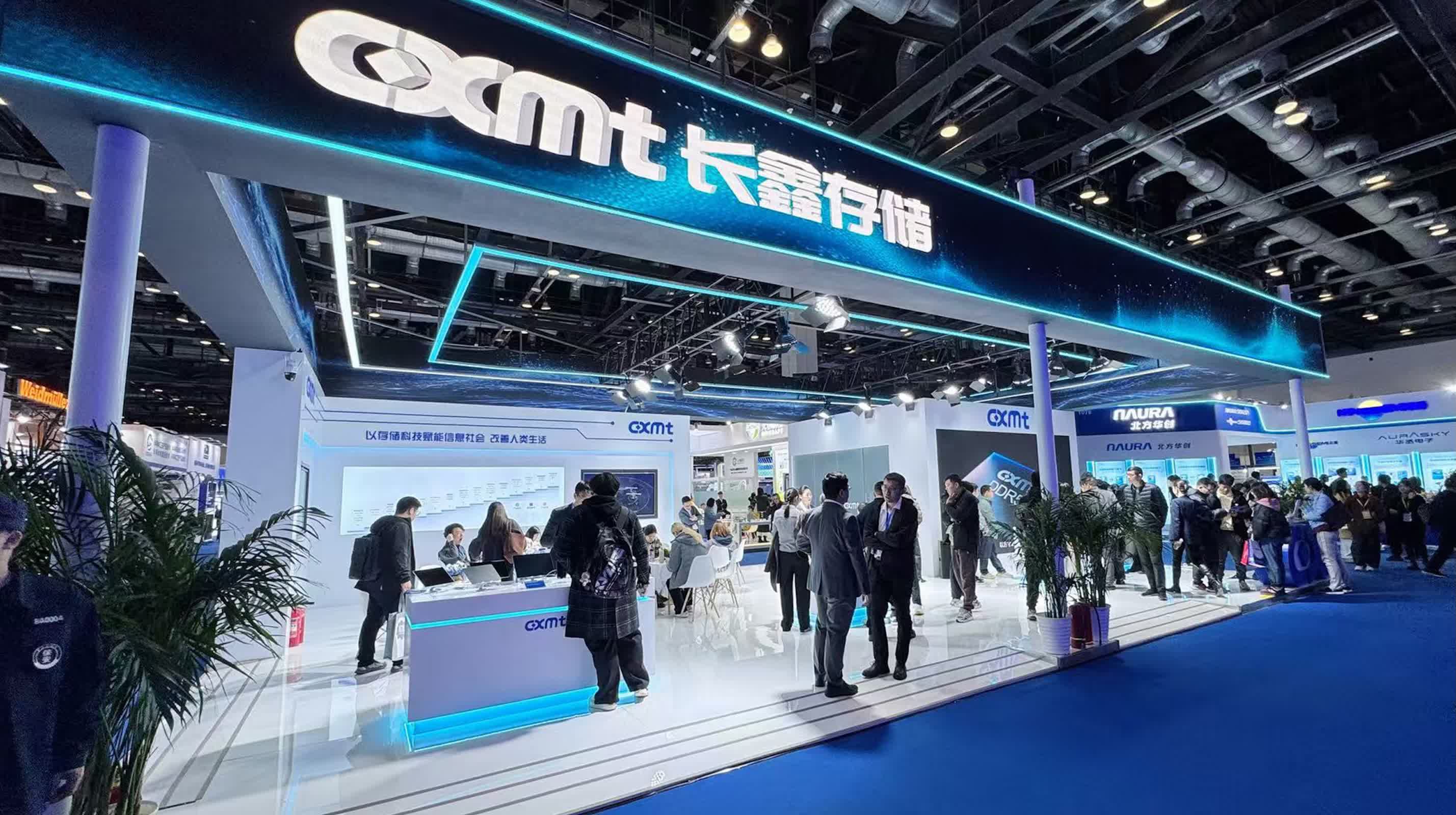
CXMT, China's leading DRAM maker, is alleged to have recruited former Samsung engineers at the center of the 10-nm DRAM leak case
CXMT went on to mass-produce China's first 10-nanometer-class DRAM in 2023, an achievement prosecutors say is "difficult to explain" without access to Samsung's process roadmap. CXMT subsequently consolidated its position as China's leading DRAM maker, using the node as a foundation for more advanced products.
CXMT began volume production of HBM2 in 2024, roughly two years ahead of earlier public expectations. CXMT's HBM2 relies on a 1,024-bit interface with per-pin data rates up to around 3.2 GT/s, putting the company several generations behind HBM3 and HBM3E leaders but still marking a major step for China's AI and high-performance computing ecosystem.
Analysts believe CXMT could capture as much as 15 percent of the global DRAM market in the coming years as it ramps DDR5, LPDDR5, and HBM output. However, the actual share will depend heavily on yield and capacity utilization.
As CXMT expands 10-nm-class DRAM output and ramps up HBM2 production, South Korean officials are warning that price competition and share erosion could compress margins in the next cycle, especially if Chinese supply grows faster than demand in AI and data center markets.
The CXMT case follows a series of prosecutions involving South Korean semiconductor engineers and Chinese firms. A former SK hynix engineer was arrested earlier this year at an airport before boarding a flight to China on suspicion of attempting to leak HBM-related technology. Another SK hynix engineer received an 18-month prison sentence for smuggling confidential documents in shopping bags as part of an alleged attempt to sell information to Huawei.
Taken together, these incidents have prompted South Korean authorities to expand investigations into outbound semiconductor technology leaks and tighten enforcement of the Industrial Technology Protection Act. Prosecutors and national-security officials describe DRAM and HBM process technology as critical infrastructure for the country's economic competitiveness and as a strategic asset.
Ten former Samsung employees charged over DRAM technology leak to China


