The hidden risk of driving a car that runs on someone else's code

Skye Jacobs

Posts: 1,913   +58
Staff
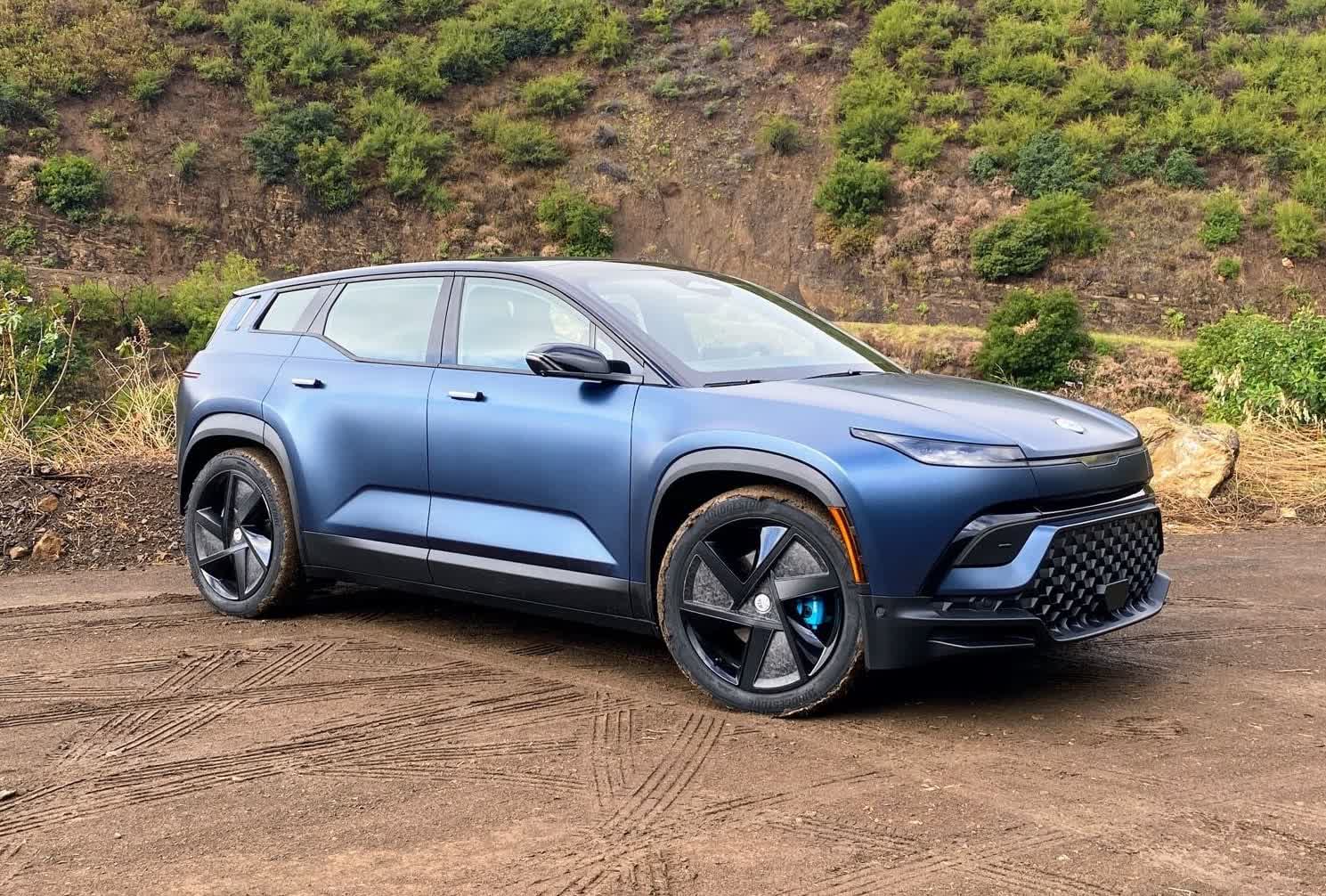
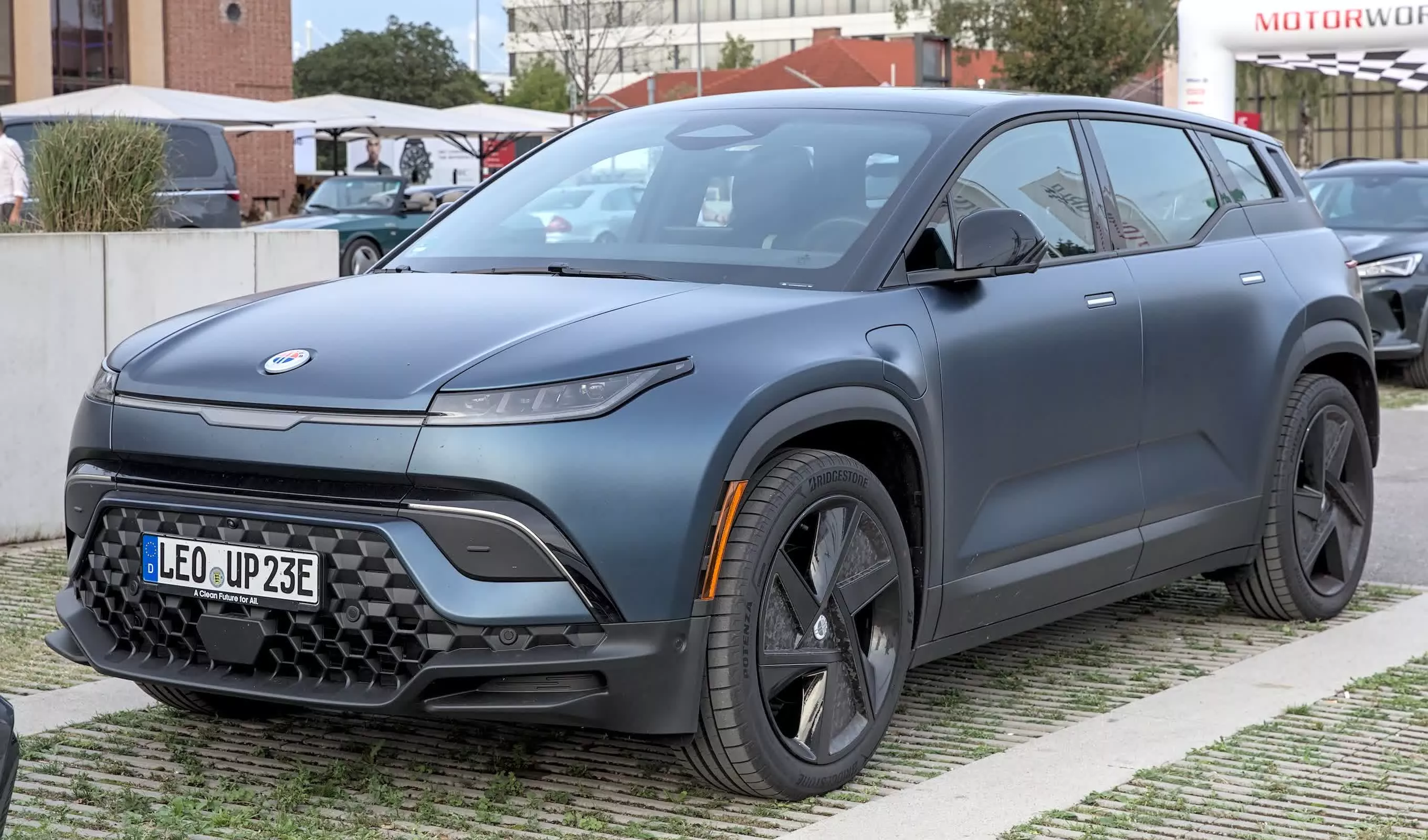
Facepalm: When Fisker filed for bankruptcy in 2024, just 419 of its Ocean electric SUVs had reached customers in the UK. One owner in Southampton discovered her £60,000 crossover stranded in her driveway – not because of a flat battery or faulty motor, but because the car's software refused to boot. The company's servers soon went offline, and its California engineers stopped responding to messages. Nearly a year later, the vehicle remained motionless: a 2.5-ton monument to a reality the auto industry is still grappling with.
The value of a modern vehicle no longer lies primarily in mechanical reliability but in software continuity. Increasingly, the difference between "runs" and "doesn't run" depends on whether a remote authentication system or over-the-air patch remains active. From entry-level hatchbacks with app-based keyless entry to luxury EVs with cloud-connected diagnostics, a car's essential functions are now intertwined with the fate of the company maintaining its software.

This dependence isn't new, but the stakes are higher than ever. Better Place, an ambitious Israeli-Danish venture founded in 2007, learned that lesson a decade earlier. Its entire business model revolved around centralized servers coordinating battery-swap stations and verifying vehicles via proprietary software.

When the firm collapsed in 2013 after losing $850 million, Renault shut down the production line in Turkey. Without active servers, thousands of cars instantly lost access to charging infrastructure and management systems – the world's first large-scale case of bricked EVs.
Today's software-defined vehicles are far more sophisticated and even more dependent on digital infrastructure. Cloud platforms now mediate everything from energy-management algorithms to digital keys, predictive maintenance, and driver-assistance calibration. Each software module may rely on third-party vendors, whose failure can cascade through the system.

Aging vehicles illustrate how this fragility evolves. Owners of older Teslas, for example, can buy bargain Model S sedans but have no guarantee of long-term software updates. Unsupported cars are at risk not only of glitches but also of cybersecurity vulnerabilities.

A vehicle running outdated firmware is effectively an unpatched endpoint connected directly to the internet – and sometimes such systems are responsible for controlling propulsion or braking functions.

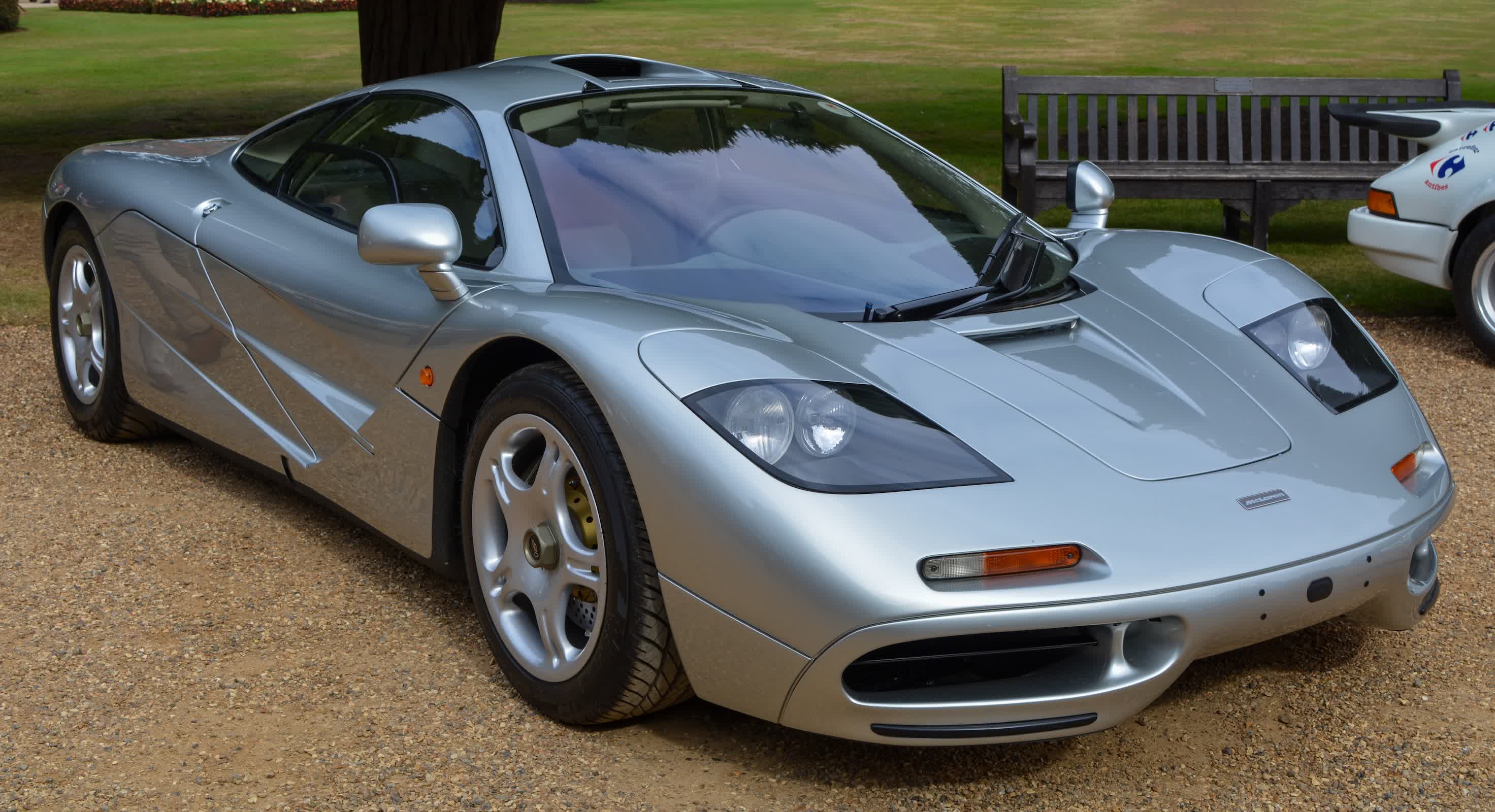
High-end legacy cars face the same dilemma in a different form. Some 1990s McLaren F1s now require period-correct laptops running obsolete Windows systems just to start their engines.
The auto industry's response has been to pursue standardization. Catena-X, a consortium of automakers, suppliers, and software firms, is developing a shared data infrastructure that tracks parts and code dependencies throughout a vehicle's life cycle.

The network aims to make software components more interchangeable by defining common APIs and a digital software bill of materials. In practice, this could allow manufacturers to substitute equivalent modules if a partner fails, extending the functional lifespan of vehicles that would otherwise be tied to defunct vendors.

Yet even with initiatives like Catena-X, cars remain bound to proprietary ecosystems. The industry has not established minimum lifespans for critical software or regulatory requirements for data continuity, leaving both automakers and owners vulnerable to the same risks that sank Fisker and Better Place – a loss of service that can strand millions of dollars' worth of functioning vehicles.

Permalink to story:

 
How about you just make the things open source? I know that shareholders hate the idea of not being able to prove gouge their customers and forcing them to buy another car before they're done paying the first one off, but it'd be a good idea.
 
As a bare minimum first step, how about requiring point-of-sale disclosure that the car is dependent on external resources for continued driving operations. This is where the auto maker could add any extra details on what arrangements if any it has made to guarantee continuity.

This basic first step costs little to implement and wouldn't impede any businesses right to develop the products it chooses, but the consumer reaction to it could hasten solutions if indeed consumers demonstrated they cared about this sort of thing.
 
Never buy a subscription for anything on a car, and if you are buying a car and it requires a subscription for something important, walk away. If people don't fight back, we'll eventually be paying a subscription for everything on a car from headlights to wipers to brakes.
 
As a bare minimum first step, how about requiring point-of-sale disclosure that the car is dependent on external resources for continued driving operations. This is where the auto maker could add any extra details on what arrangements if any it has made to guarantee continuity.

This basic first step costs little to implement and wouldn't impede any businesses right to develop the products it chooses, but the consumer reaction to it could hasten solutions if indeed consumers demonstrated they cared about this sort of thing.
If we're talking regulation, and hy not instead mandate that no car shall require any sort of Internet connection to operate? The software should be self sufficient and work with no network access period.
 
Much like spare parts for ICE vehicles then. Manufacturers usually stop making spares at about the 10 year mark. Mind you...some spares can be sourced from independent suppliers, at various grades of quality and fitment. Much harder with copyrighted software.
 
It would be a good thing to introduce open basic-software law for gadget cars. In case the maker goes out of business, the owner can switch to a very basic system that does not require update and can allow the owner to keep basic features.


In any case, this is a big problem because the most negative outcome is unneeded obsolescence. And in times when a lot more people are getting poorer rather than richer, forcing them to shop for a new car that they definitely cannot afford is pure evil.
 
Oh! Here's an idea! Take all the @#$%^) connectivity stuff OUT of the vehicles!
I still drive a 2011 with only 118,000 miles but it's a standard and it's hard to find another
one these days. (I prefer manual transmission).
A couple months ago the stereo stopped working. The APIM module had to be replaced.
THAT took a month because they couldn't get the computer to accept the progamming.
Then after I got it back, the sub woofer in the stereo wouldn't pop out the bass it was
suppose to & one of the tire sensors kept saying one of the tires was low.
Three days later they got the programming correct finally!
And THIS is a 2011 with a not very complicated computer!
Put the buttons, knobs, dials back in the cars and get rid of all of this stupid computerized
nonsense!
 
If we're talking regulation, and hy not instead mandate that no car shall require any sort of Internet connection to operate? The software should be self sufficient and work with no network access period.
This! It's not a security issue, nor a maintenance issue, nor a longevity of parts supply, nor even mistakes. It's purely an issue of customer lock-in. These companies are doing it just because they can and no-one is telling them not to.

PS: It's the same for online user tracking. They'll keep doing it until we say no.
 
How about you just make the things open source? I know that shareholders hate the idea of not being able to prove gouge their customers and forcing them to buy another car before they're done paying the first one off, but it'd be a good idea.
Well we know Chump couldn't care less, but hopefully EU makes this a new battlefront and refuses to allow any car, item or whatever locked behind proprietary software. That would be Nvidia's worst nightmare if they expanded it to other areas.
 
Well we know Chump couldn't care less, but hopefully EU makes this a new battlefront and refuses to allow any car, item or whatever locked behind proprietary software. That would be Nvidia's worst nightmare if they expanded it to other areas.
TDS in action. This issue predates Trump's first term in office. It's been an issue in the farming world for over a decade now, and no state, no government, liberal, conservative, ece has done diddly squat about it. What few "right to repair" bills we have seen have been coy corporate pleasing handies that fix nothing.
This! It's not a security issue, nor a maintenance issue, nor a longevity of parts supply, nor even mistakes. It's purely an issue of customer lock-in. These companies are doing it just because they can and no-one is telling them not to.

PS: It's the same for online user tracking. They'll keep doing it until we say no.
Absolutely. If consumers wholesale refused to buy cars with locked down software requirements, the issue would fix itself very quickly. It wouldn't even take long, 2 consecutive quarters of a 90%+ drop in sales would be sufficient to force change. Most corpos cannot last that long without missing debt payments to the banks.
 
Well we know Chump couldn't care less, but hopefully EU makes this a new battlefront and refuses to allow any car, item or whatever locked behind proprietary software. That would be Nvidia's worst nightmare if they expanded it to other areas.
Keep me out of your partisan politics, Harris wouldn't have cared or done a damn thing about it either
 
Ah yes. My analog TV tuner in my A8 is 'outdated' since europe does no longer broadcast analog TV; no problem you'd say. Lets fire up Ebay and search for a digital one. Yep, perfect fit. Nope. Needs coding, because parts are coded to a car, unique serial and what more. Nothing new.

 
So far, so good. Out of all of the cars/trucks I've reprogrammed from the mass market makes (Ford, GM, Honda, etc.) I've been able to reprogram everything I tried. Most of the updates are service bulletins for minor fixes, emissions, or quality improvements found after initial release of the vehicles. We were just starting to have the connected cars deep enough into the electronics to do a lot of these on their own. From their standpoint, the number one reason for this is not to rely on connectivity for operation, but to get needed improvements and recalls done. You'd be amazed at hoe many people get noticed to have x module reprogrammed and just throw it in the trash.

Most of this :"pay as you go" items so far have been limited to upscale cars as far as I can see.
 
This is not a real issue! It is about a Fisker car, the company that went bankrupt and then tried to sell some of its stock for much less than half the price (like 80% discount), while warning that future support issues are likely.

So whoever bought those cars, cannot really complain. And publishing it here like it's a real situation is to confuse the car owners.
 
So far, so good. Out of all of the cars/trucks I've reprogrammed from the mass market makes (Ford, GM, Honda, etc.) I've been able to reprogram everything I tried. Most of the updates are service bulletins for minor fixes, emissions, or quality improvements found after initial release of the vehicles. We were just starting to have the connected cars deep enough into the electronics to do a lot of these on their own. From their standpoint, the number one reason for this is not to rely on connectivity for operation, but to get needed improvements and recalls done. You'd be amazed at hoe many people get noticed to have x module reprogrammed and just throw it in the trash.

Most of this :"pay as you go" items so far have been limited to upscale cars as far as I can see.
The same excuses were used for iPad dashboards that eliminated buttons. Now look where we are.

Starting in 25, manufacturers began encrypting their cars to prevent tampering. Programming modules now requires expensive cloud connected software from the manufacturer. That is a huge issue.
 
Last edited:
I don't understand markets anymore, you would have thought having competition in the auto industry, other car manufacturers would make it a feature that their cars don't need a constant connection, that the car runs entirely on it's own etc...

Yet what seems to actually happen is, they all follow each other, even when it's incredibly anti-consumer, Isn't that when government is supposed to step in and regulate terrible practices like, bricking your car because the company went under?

Then again, the gaming industry gets away with it, so I guess can manufacturers can as well, looking forward to buying a house and being in-debt until I die, just for the house to lock me out one day because the people who built it went under...
 
Back