Woman discovers a hidden AI camera in her rental car recording her and warning about unsafe driving

An interesting fantasy, but out here in the real word individual ownership of transportation continues to increase. In 1965, there were 0.45 cars per person in the US. By 1995 that had increased to 0.77, and today it stands at 0.85 -- or, if restricted to vehicles per licensed drivers: 1.2.
On the other side:

Price of most common car (with VAT) vs average income (before tax)
1993: 9.46
2025: 13.25

For average Jon now it takes ca 40% longer to get enough money to buy new most common car.
Prices of BEVs are higher than prioces of ICEs and not everybody may charge them at home.
And it would not come better with the ban for new ICEs after 2035.
 
On the other side:

Price of most common car (with VAT) vs average income (before tax)
1993: 9.46
2025: 13.25

For average Jon now it takes ca 40% longer to get enough money to buy new most common car

I appreciate your attempt to argue with actual data, rather than the emotional diatribes favored by others here. But there are many factors you're forgetting. First, "the average vehicle" of today is a large expensive SUV or large sedan, whereas in 1990 compacts and sub-compacts were commonplace. People are choosing to buy larger, more expensive cars because they can afford to.

Secondly, in 1990, the average age of a US vehicle before it was retired was just 7.9 years. Today, it stands at 12.8 years. Cars today last much longer, meaning the cost per year of ownership has declined -- despite the fact that the cars of today are larger and far better equipped than those of 30 years ago.
 
Please try to think logically. The entire purpose of monitoring drivers is to separate the careful drivers from the reckless ones, and more fairly charge them based on their level of risk. These means that young, safe drivers subsidize LESS the dangerous ones.

The entire basis of insurance is spreading risk. If you know of some magic crystal ball that can identify drivers before they have accidents, let us know.

Crystal ball? No. But I can think of some tests...
 
Oops! It's not involuntary. No one forced this individual to rent a car from this particular firm. It's inane to compare that to mandated continual government monitoring of you in the privacy of your own home. Did you even read 1984?

This was not a voluntary rental. It was a loaner giver by the dealership during repairs of their own vehicle. Semi-voluntary???
 
Last edited:
First, "the average vehicle" of today is a large expensive SUV or large sedan, whereas in 1990 compacts and sub-compacts were commonplace. People are choosing to buy larger, more expensive cars because they can afford to.
Good try.
I have compared 2 mini vans from the same car maker.

Secondly, in 1990, the average age of a US vehicle before it was retired was just 7.9 years. Today, it stands at 12.8 years. Cars today last much longer, meaning the cost per year of ownership has declined -- despite the fact that the cars of today are larger and far better equipped than those of 30 years ago.
Some of that equipment was chosen by car maker company to give some extra and get some advantage at market.
Some was forced by law.

Some of that equipment may not be sustainable as long as old tech it replaced.
Good mechanic may do a care of 100+ years old ICE.
For how long will be serviceable all of those modern "Computers on Wheels" after the EOL of chips used in them?

And for TCO?
In 1996 I was able to change cylinders and piston in family car on our backyard.
At this new car (Nov 2025) I am not sure If I could change lightbulb.
 
Good try.
I have compared 2 mini vans from the same car maker.
Was that a joke? Young drivers struggling to purchase their first vehicle don't buy minivans.

Some of that equipment may not be sustainable as long as old tech it replaced.
Nice try, but in place of your hypothetical "may not be", I have real world data: cars today are lasting much longer -- both in years on road and actual miles driven -- than those of 30+ years ago.

In 1996 I was able to change cylinders and piston in family car on our backyard.
At this new car (Nov 2025) I am not sure If I could change lightbulb.
You realize that the integration of countless computer chips and sensors in autos began as a necessity to meet the tightening of clean-air standards through the '90s and 2000s? Are you suggesting that was a bad idea?
 
Not only the young.

Individual transportation is moving out of reach for ordinary people.
Slowly but steadily.

... and in the end
"You'll own nothing and you'll be happy"
Maybe if Americans would stop buying SUVs all the time, we can move on to more affordable vehicles. Some of the cars not being sold in the U.S. are not here because they aren't "big" enough to attract buyers. Stupid, IMHO. Why are you sacrificing your hard-earned dollars on a larger vehicle when you can save your money for retirement and other expenses by getting a smaller more economical, climate and environmentally friendly vehicle? I joked with someone that my sister likes SUVs because if she becomes homeless, it's more comfortable to sleep in. Is that where you all are now?
 
Some of the cars not being sold in the U.S. are not here because they aren't "big" enough to attract buyers. Stupid, IMHO. Why are you sacrificing your hard-earned dollars on a larger vehicle when you can save your money
Tiny vehicles aren't popular in the US because most US residents can afford better; the same reason we tend to purchase roomy comfortable homes when we could merely subsist in the tiny apartments favored by Europeans.

I joked with someone that my sister likes SUVs because if she becomes homeless, it's more comfortable to sleep in. Is that where you all are now?
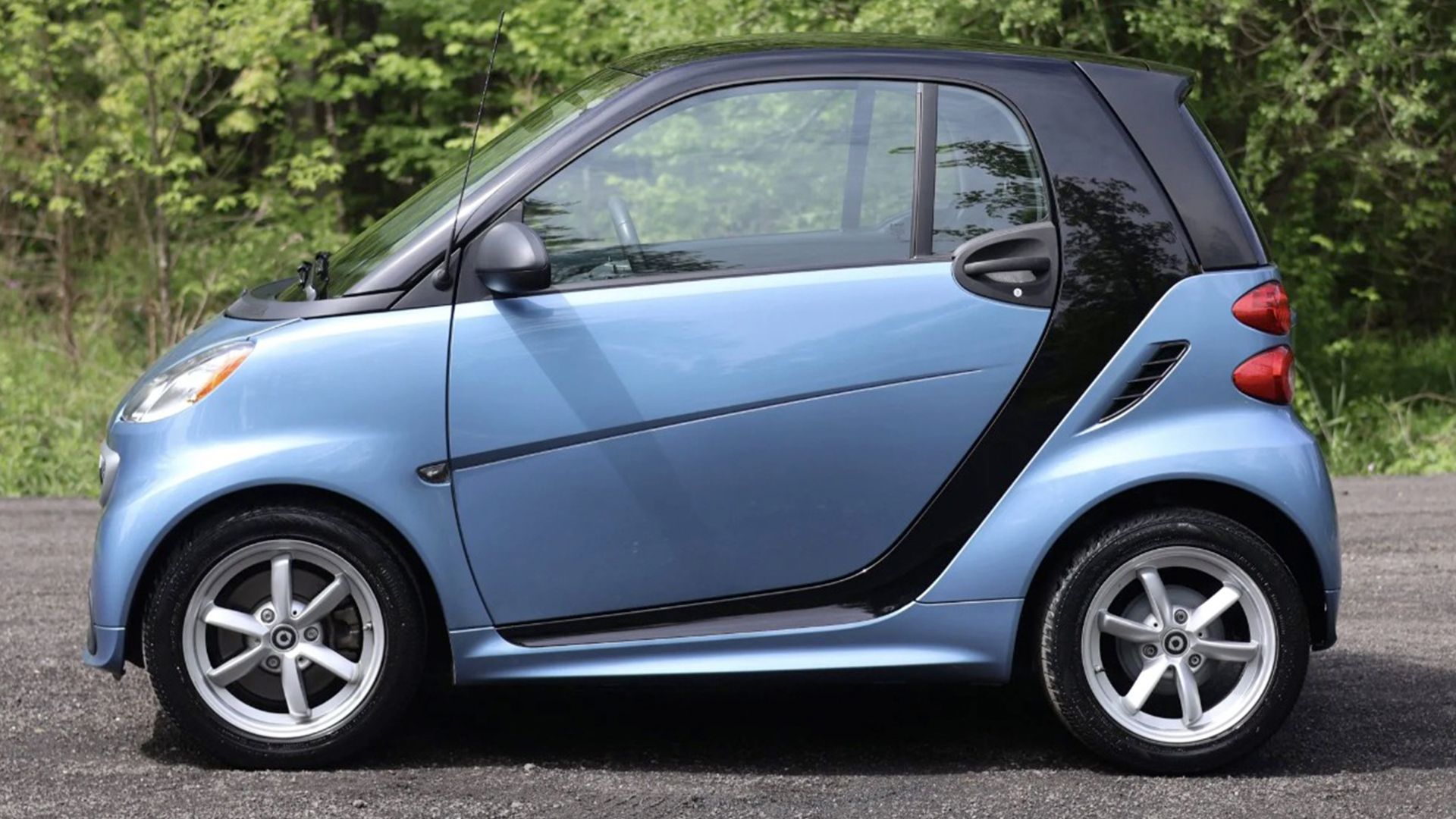
I'll hazard a guess that those who purchase this vehicle are more likely to wind up homeless than those buying new Lincoln Navigators or Chevy Suburbans:

smart-car.jpg
 
The drawback of this vehicle is that the occupants are in the crumple zone. & the thing with the safety ratings is that it only compares the vehicle with others of similar size & weight.

Most other cars are much larger and heavier. Make sure your last will & etc. is up to date before driving one of these!
 
The drawback of this vehicle is that the occupants are in the crumple zone. & the thing with the safety ratings is that it only compares the vehicle with others of similar size & weight.

Most other cars are much larger and heavier. Make sure your last will & etc. is up to date before driving one of these!
Did you look up the brand, model and safety data on this car before forming an opinion about it, or are you just making assumptions based on a single picture? This Smart Fortwo, still has to pass the same regulations a larger car has to. There are still crumple zones that protect the occupants. The crumple zones still protect the occupants they are just designed to function in a smaller area.
 
This Smart Fortwo, still has to pass the same regulations a larger car has to. There are still crumple zones that protect the occupants...
No regulation can override the laws of physics, and crumple zone crash tests are performed against fixed barriers, which negates vehicle mass from the equation. When a 2,000 lb smart car collides with a 6,000 lb SUV at 50mph, the occupants of that SUV experience a 25mph equivalent crash, but those in the smart car 75mph. Or, in simpler terms: the SUV wins.
 
Back