The big picture: The Commerce Department is weighing a funding model that would make Washington a direct shareholder in US quantum-computing firms, a move that signals a deeper shift in how the government backs strategic technologies. Instead of traditional grants, federal support could come with equity stakes, reflecting Washington's view of quantum as a core national priority rather than a niche research field.

The Trump administration is exploring equity-based partnerships with several American quantum-computing companies, a move that could deepen federal involvement in emerging technology sectors deemed critical to national security and economic competitiveness, according to people familiar with the discussions.
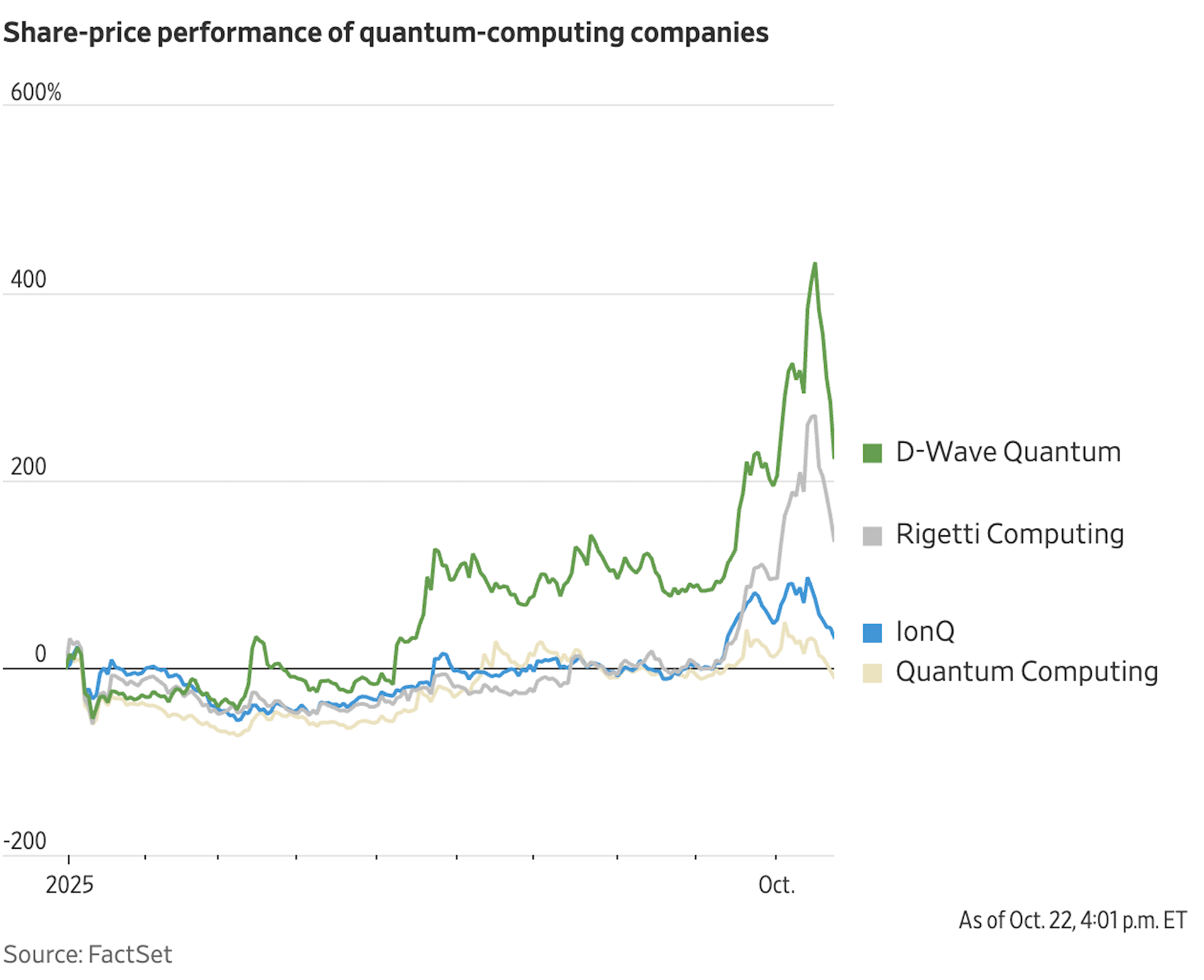
The Commerce Department has held preliminary talks with IonQ, Rigetti Computing, and D-Wave Quantum about awarding federal funds in exchange for government ownership stakes, several sources told The Wall Street Journal. Other firms, including Quantum Computing and Atom Computing, are also considering similar agreements. The proposals reportedly involve minimum funding levels of around $10 million per company, although final terms have not yet been determined.
Funding would come through the department's Chips Research and Development Office, reorganized earlier this year by Commerce Secretary Howard Lutnick to centralize oversight of industry partnerships under the 2022 CHIPS Act program.
Officials familiar with the plan said the agency is weighing whether to structure investments as direct equity, convertible warrants, or royalty agreements. A Commerce official added that negotiations remain informal and that no deals have been signed.

Deputy Commerce Secretary Paul Dabbar, left, is said to be leading the talks.
President Donald Trump and Commerce Secretary Lutnick have both argued that the federal government should share in the financial upside of commercial ventures that receive taxpayer-backed support. The same approach guided Washington's previous deal with Intel, when the government converted $9 billion in CHIPS Act grants into a roughly 10 percent stake in the chipmaker earlier this year.
That move made the US government Intel's largest shareholder and marked one of the first significant conversions of industrial subsidies into direct equity. Similar arrangements have been reached with MP Materials and Lithium Americas, both key suppliers of rare-earth minerals and battery materials.
The proposed quantum-computing investments would represent the government's first major ownership venture in the sector. Quantum systems, which rely on the physics of qubits rather than binary bits, have the theoretical capacity to solve complex problems far faster than conventional computers, particularly in areas such as materials science, logistics optimization, and pharmaceutical development.
Although practical quantum computing remains limited by qubit stability and challenges in error correction, researchers expect rapid advances as hardware scales and hybrid quantum-classical frameworks mature.
Paul Dabbar, the deputy commerce secretary and a former energy official with a background in quantum computing, is leading the department's engagement with the industry, according to people familiar with the matter. A Commerce Department representative said Dabbar's former company, Bohr Quantum Technology, is not being considered for funding.
In a statement, Quantum Computing CEO Yuping Huang described the potential equity participation as "an encouraging signal" of federal confidence in the technology's commercial future. A Rigetti spokesperson confirmed the company remains in "ongoing dialogue" with government officials about funding opportunities. D-Wave's head of government relations, Allison Schwartz, said her firm is focused on aligning government use cases with measurable returns on public investment.
Image credit: The Wall Street Journal
The US government considers taking equity in quantum computing firms through CHIPS program


