Why it matters: The White House is weighing whether subsidies under the $52.7 billion CHIPS and Science Act should come with government equity stakes in leading semiconductor firms. The move would expand federal involvement in a sector Washington views as critical to economic competitiveness and national security.

Two sources familiar with the discussions told Reuters that US Commerce Secretary Howard Lutnick has floated the idea in connection with an ongoing plan to acquire a 10 percent stake in Intel in exchange for federal aid. He has also raised the possibility of extending the approach to other subsidy recipients, including Micron Technology, TSMC, and Samsung Electronics, though much of the funding remains undistributed.
On Tuesday, the White House indicated that negotiations with Intel were underway.
"The president wants to put America's needs first, both from a national security and economic perspective, and it's a creative idea that has never been done before," press secretary Karoline Leavitt told reporters.
Micron, Samsung, and the White House declined to comment further. Taiwan chip giant TSMC also had nothing to say.
If completed, the effort would mark the first time Washington has taken direct ownership stakes in major technology manufacturers as part of an industrial policy initiative. Lutnick has said publicly that the government would not direct business decisions at Intel or other companies, but acknowledged earlier this year that such a move would be without precedent. During the 2008 financial crisis, the federal government injected capital directly into corporations, acquiring stakes in several banks and automakers to restore liquidity and confidence.
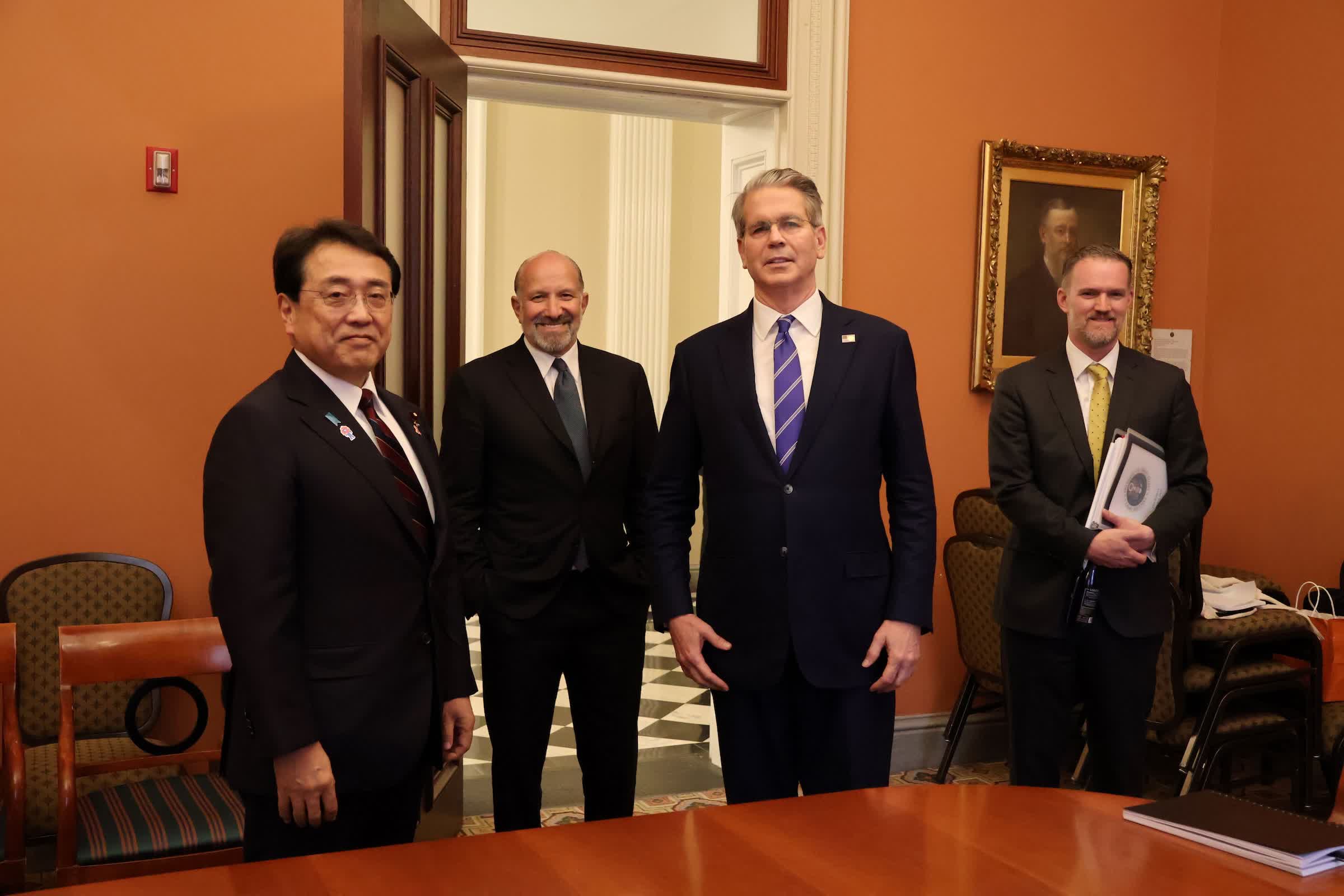
US Commerce Secretary Howard Lutnick, center left, has been the main advocate for the proposal. Treasury Secretary Scott Bessent, center right, has also taken part in internal discussions.
Additionally, the administration has applied elements of this approach in another industry. Earlier this year, President Donald Trump approved Nippon Steel's takeover of US Steel, contingent on the Japanese firm granting Washington a "golden share" that prevents plant closures or offshoring of production without presidential approval.
The CHIPS and Science Act, passed in 2022, aims to boost domestic semiconductor production through subsidies, research funding, and incentives for new manufacturing plants. The Commerce Department administers the program, while Treasury Secretary Scott Bessent has participated in internal discussions.
The government finalized subsidies late last year, allocating $4.75 billion to Samsung, $6.2 billion to Micron, and $6.6 billion to TSMC to support new US fabs. Intel has also received substantial backing, with Micron ranking among the largest recipients after Intel.
In June, Lutnick indicated that the administration was reassessing some awards previously announced under President Joe Biden, calling them "overly generous." He added that Micron had committed to expanding its US investments in response to the renewed negotiations.


