
What just happened? The world's largest privately owned laser has switched on in Denver, though it's not part of a Bond villain's plan to carve their name into the moon, sadly. Fusion startup Xcimer Energy has begun operations at Phoenix, a prototype system designed to test whether laser-driven fusion could one day produce commercial electricity.
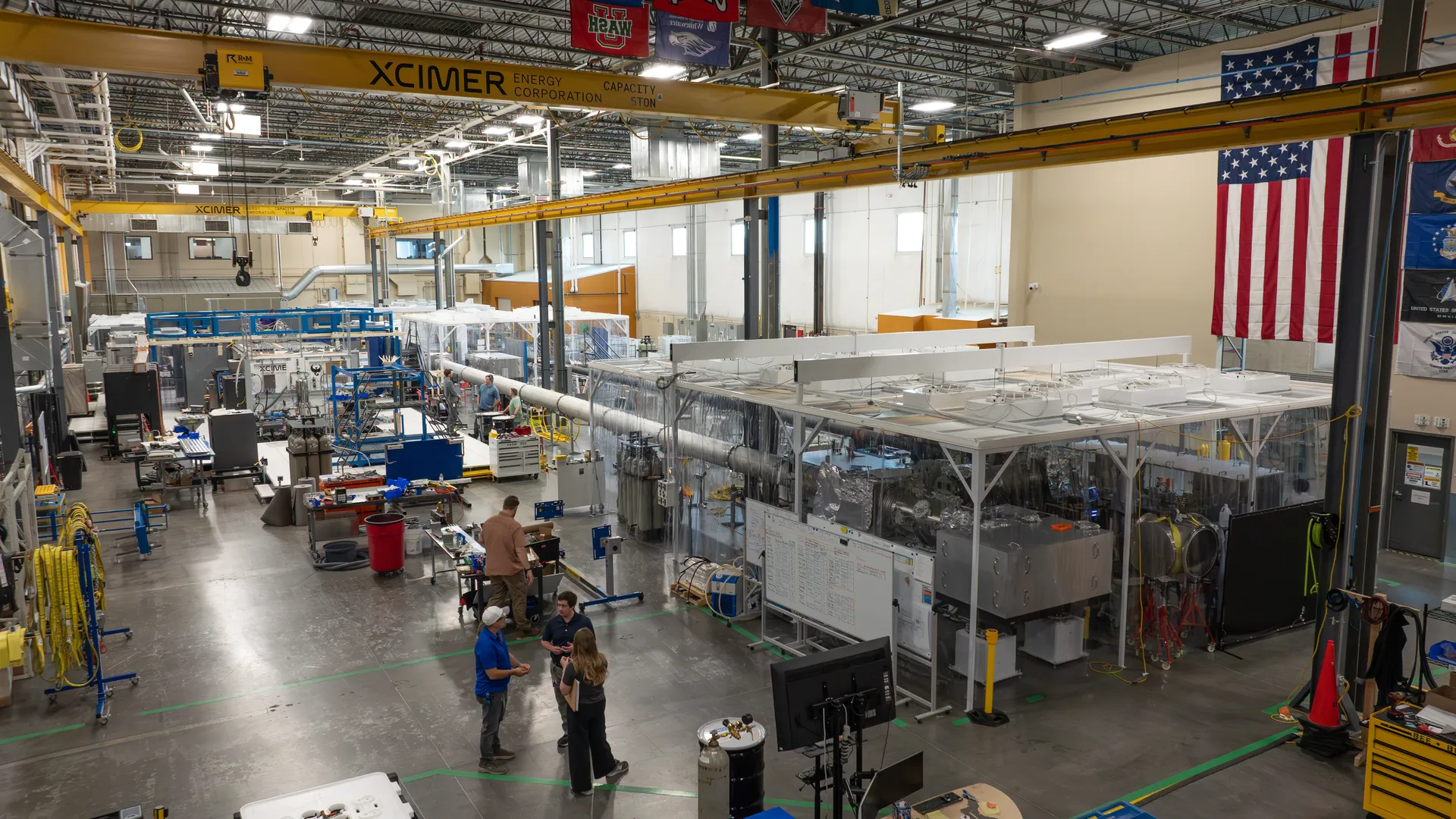
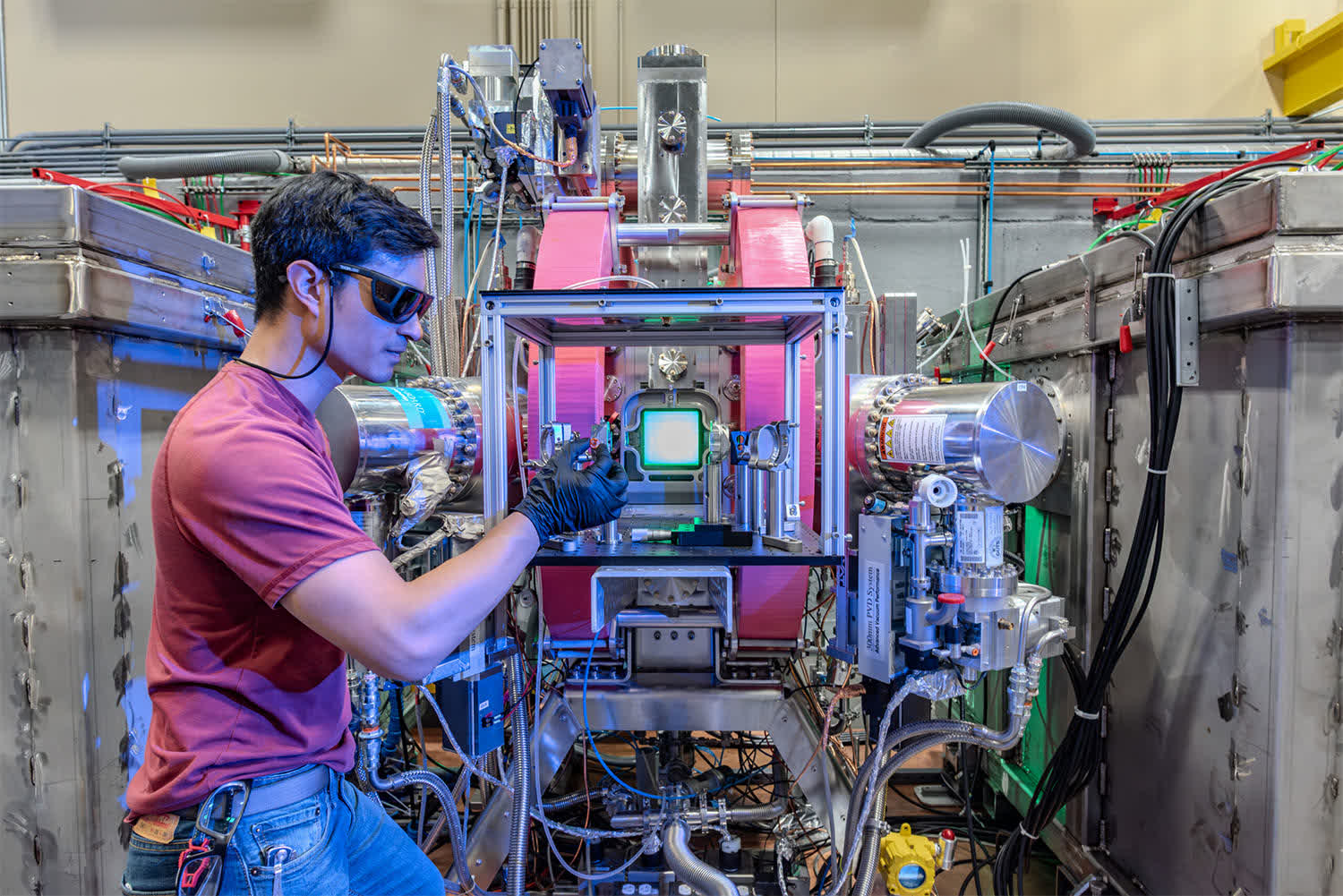
Housed inside Xcimer's 74,000-square-foot laser facility, Phoenix uses a krypton fluoride excimer laser, a gas-laser design related to technology used in semiconductor manufacturing, albeit at a much larger scale.
The system's light source operates at pulse energies of more than 1 kilojoule, while its core optical system includes a 38-meter-long gas optic used for stimulated Brillouin scattering pulse compression.
Xcimer's approach involves taking a relatively long, microsecond-scale laser pulse and compressing it into the nanosecond timescales needed for inertial fusion. The goal is to deliver an enormous amount of energy to a tiny fuel target quickly enough to force atoms to fuse, releasing energy in the process.
The company's fusion work is modeled after the National Ignition Facility, which in 2022 became the first lab to demonstrate scientific breakeven in a controlled fusion experiment. NIF uses 192 laser beams to blast a tiny fuel target, and in 2025 produced 8.6 megajoules of fusion energy from about 2 megajoules of laser energy delivered to the target.
The big caveat is that NIF was designed as a research facility, not a power plant. Its enormous solid-state laser system is expensive, complex, and not built for the sort of operation that a grid-scale fusion plant would require. Xcimer believes its excimer laser architecture can be cheaper and simpler by using two beamlines instead of NIF's 192.
"NIF proved laser fusion physics works," said Xcimer co-founder and President Alexander Valys. "Our thesis is that commercial laser fusion becomes possible only if the laser system itself becomes dramatically simpler, cheaper, and more manufacturable."
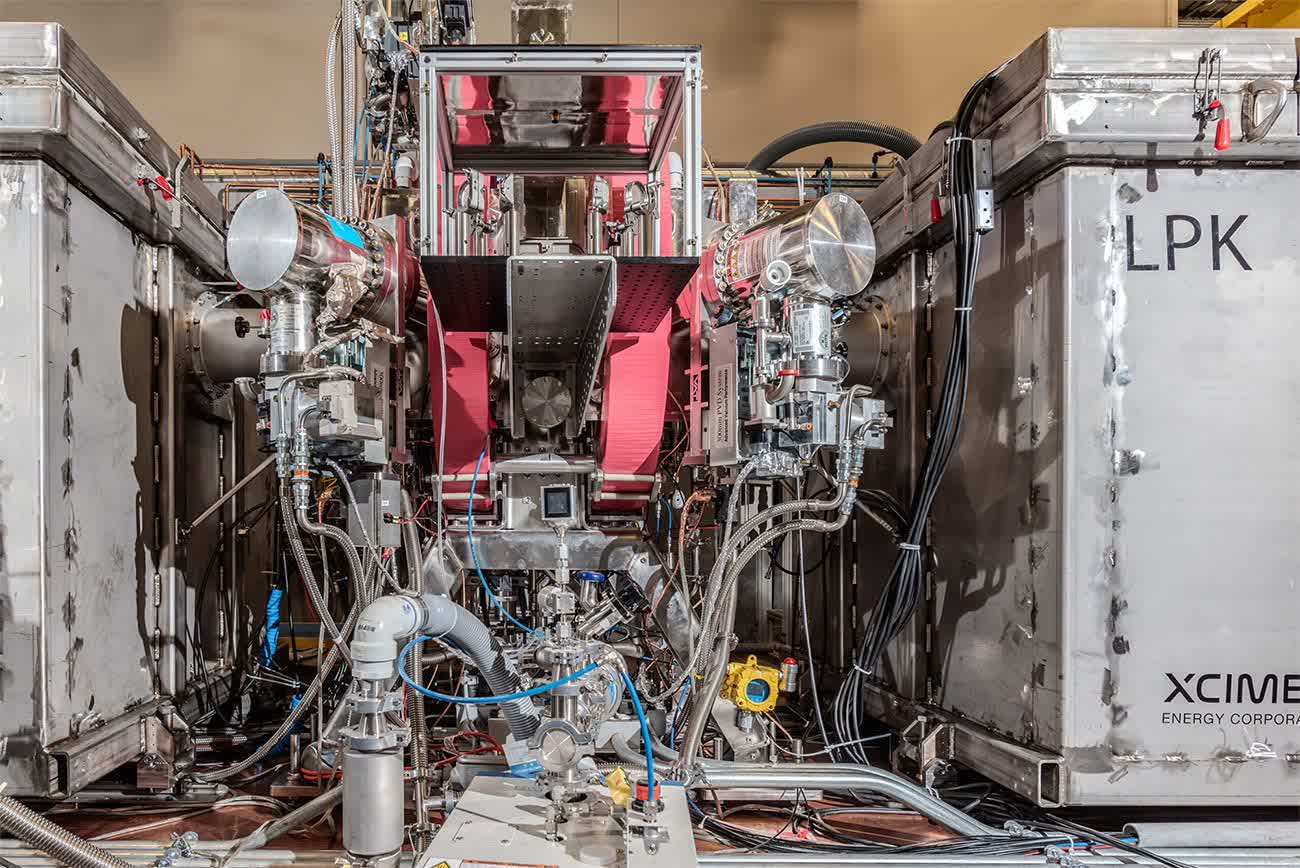
While the Phoenix system is being described as the world's largest privately owned laser, its 1-kilojoule output is tiny compared with what would be needed for a commercial plant.
Xcimer's roadmap toward commercial fusion energy includes Anvil, a 200-kilojoule commercial-scale excimer amplifier, in 2028, followed by Vulcan in the early 2030s, a 4- to 12-megajoule laser system aimed at wall-plug breakeven. Athena, the company's first commercial fusion power plant, is penciled in for the mid-2030s.
The world's largest private laser just fired up in race to make fusion power real


